Abstract Art Interpretation Simulator
According to psychological research, abstract art invites you to co-create meaning. Generate a unique abstract composition below and describe what you feel. There is no right answer—only your reaction.
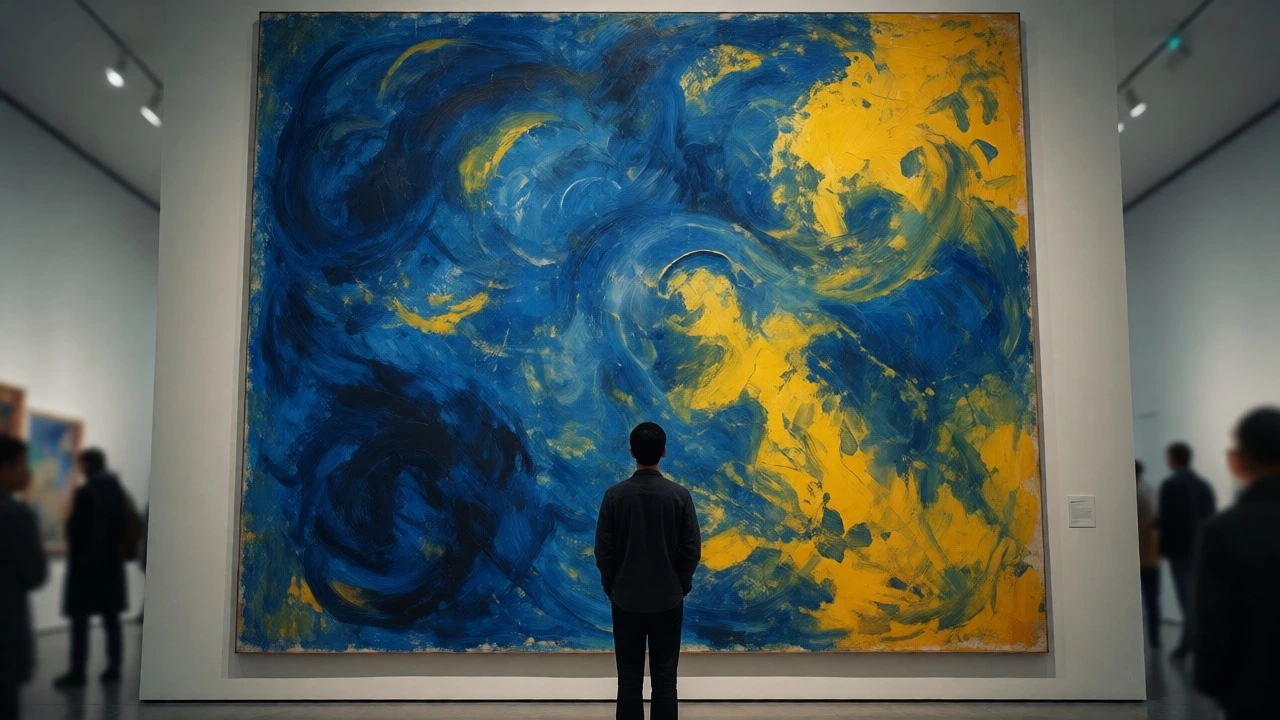
You stand in front of a canvas. It’s a swirl of blue and yellow. No faces, no landscapes, no obvious story. You glance at your friend, who shrugs. "I could do that," they say. But you? You feel something. Maybe it’s calm. Maybe it’s chaos. Maybe it’s just... interesting. This reaction is exactly what makes abstract art so compelling to millions of people worldwide.
The question isn't whether abstract art is "good" or "bad." That debate ended decades ago. The real puzzle is why so many people actively prefer it over realistic paintings. Why does a Rothko color field move someone to tears while a hyper-realistic portrait leaves them cold? It turns out, the answer lies deep in how our brains process information, seek meaning, and handle uncertainty. It’s not about lacking skill; it’s about having too much freedom.
The Brain Loves A Puzzle
Here’s a counter-intuitive fact: humans are wired to dislike complete information when it comes to art. When you look at a photorealistic painting, your brain finishes its job quickly. "That is a horse," your visual cortex says. Done. Next. There’s little cognitive work left to do. The image is solved.
Abstract art, however, denies you this closure. It presents an incomplete puzzle. Your brain hates loose ends. So, it starts working. It tries to find patterns, assign emotions, and create narratives where none explicitly exist. This active participation creates a deeper sense of ownership over the experience. You aren’t just seeing the art; you’re co-creating it.
Psychologists call this the "processing fluency" paradox. Easy-to-process images are pleasant but forgettable. Harder-to-process images require more mental energy, which leads to stronger memory encoding and higher perceived value. When you struggle slightly to interpret a piece by Jackson Pollock, you remember it longer than a clear picture of a bowl of fruit.
Emotion Without Explanation
Try this experiment. Look at a photograph of a crying child. You know exactly why they are sad. Now, look at a black square on a white background (yes, like Malevich’s famous work). What do you feel? Probably nothing specific, or perhaps a vague sense of emptiness, finality, or silence.
This is the superpower of non-representational art. It bypasses the logical part of your brain-the part that categorizes objects-and goes straight for the emotional center. Realism ties emotion to context. If I paint a stormy sea, you feel danger because you know storms are dangerous. If I paint jagged red lines on a dark background, you might feel anger or anxiety without knowing why. That ambiguity is liberating.
People prefer abstract art because it allows them to project their own feelings onto the canvas. If you had a bad day, the chaotic brushstrokes validate your stress. If you’re feeling optimistic, the bright colors reflect your hope. The art becomes a mirror, not a window. This personalization makes the artwork feel uniquely relevant to each viewer, every single time they look at it.
Freedom From Representation
For centuries, the primary goal of Western art was imitation. Artists competed to see who could best trick the eye. Then photography arrived. Suddenly, capturing reality was easy. Any camera could do it better than most painters. Artists had to ask: if we don’t need to copy the world, what should we do instead?
The answer was to explore the things cameras can’t capture: pure form, color relationships, texture, and rhythm. Wassily Kandinsky, often credited with creating the first purely abstract works, believed that color and shape had spiritual vibrations, much like music. He argued that yellow sounded like a trumpet, and blue like a cello. You don’t need to know what a "trumpet-yellow" looks like in real life. You just need to feel the resonance.
Modern viewers, saturated with high-definition images from smartphones and screens, crave this break from literal representation. We are tired of being shown exactly what to see. Abstract art offers a visual vacation from the relentless clarity of digital media. It invites us to stop looking *at* things and start looking *into* sensations.
The Role of Ambiguity in Decision Making
Consider the difference between buying a print of a recognizable landmark versus an abstract geometric composition. The landmark tells you everything: location, history, fame. The abstract piece asks you questions. "Do I like this combination of shapes? Does this color scheme match my living room? How does this make me feel?"
This decision-making process is engaging. It turns art consumption into an interactive dialogue. Studies in consumer psychology suggest that products requiring user interpretation often generate higher satisfaction because the user feels smart for "getting it." Even if there is no right answer, the act of choosing feels significant.
| Feature | Realist Art | Abstract Art |
|---|---|---|
| Cognitive Load | Low (Immediate recognition) | High (Active interpretation) |
| Emotional Path | Context-dependent (Story-driven) | Direct (Sensation-driven) |
| Viewer Role | Passive Observer | Co-Creator |
| Interpretation | Fixed / Shared | Personal / Variable |
Aesthetic Pleasure and Visual Noise
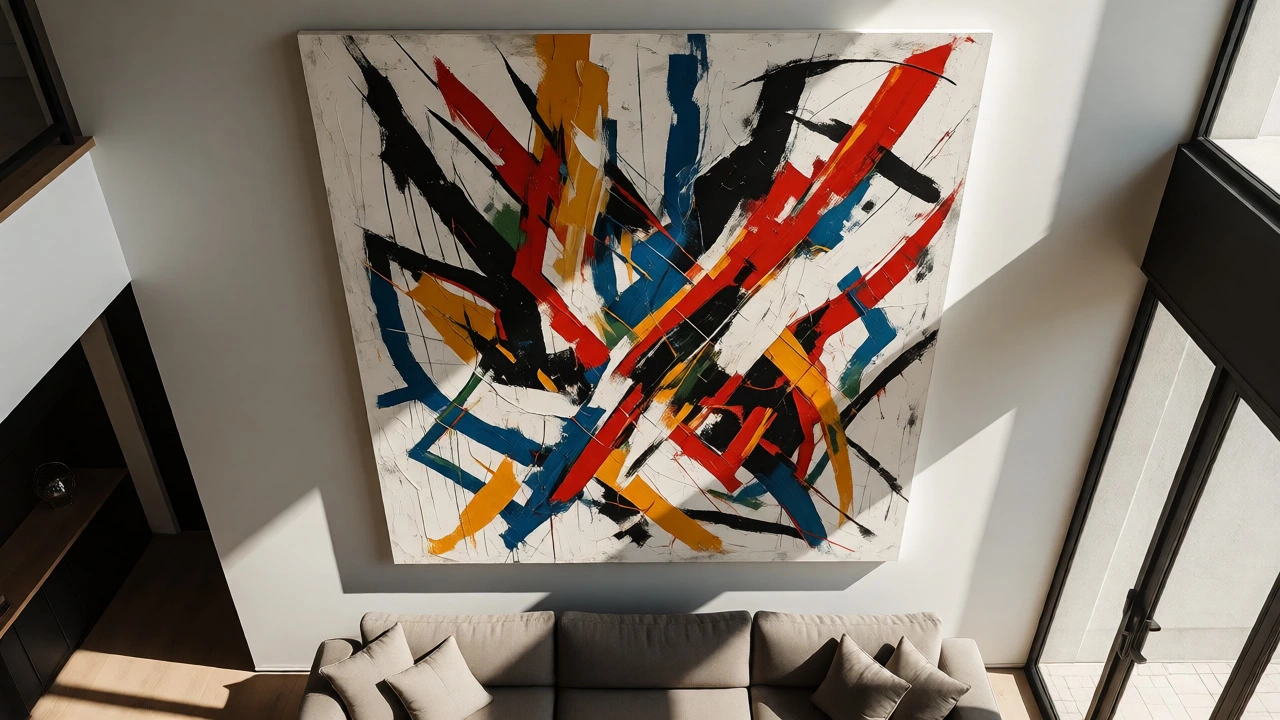
Let’s talk about design. Abstract art is essentially the study of balance, contrast, and harmony. Designers, architects, and interior decorators love abstract art because it integrates seamlessly into spaces without demanding attention through narrative. A detailed historical battle scene might clash with a minimalist Scandinavian sofa. An abstract wash of neutrals? Perfect fit.
But it’s not just about decoration. There is a genuine neurological pleasure derived from viewing balanced compositions. Research using fMRI scans has shown that when people view symmetrical or harmonious abstract patterns, the reward centers of the brain light up similarly to when they view beautiful faces or landscapes. Our brains are pattern-recognition machines. We find joy in detecting order within chaos.
Moreover, abstract art tolerates "visual noise" differently than realism. In a realistic painting, a smudge or a weird shadow looks like a mistake. In abstract art, those same elements can become focal points. This tolerance for imperfection resonates with contemporary tastes, which increasingly value authenticity and raw expression over polished perfection.
The Social Signal of Taste
We can’t ignore the social aspect. Preferring abstract art signals certain cultural traits. It suggests you are open to new experiences, comfortable with ambiguity, and interested in conceptual thinking rather than just literal facts. Sociologists note that appreciation for abstract art correlates strongly with openness to experience, one of the Big Five personality traits.
Of course, some people claim to like abstract art simply to signal sophistication. And sure, that happens. But even if the initial motivation is social, the repeated exposure often changes actual perception. As you learn to look closer, you start noticing the texture of the paint, the layering of glazes, the tension between shapes. The taste becomes genuine. The preference shifts from "I should like this" to "I actually enjoy this."
It’s also worth noting that the market reinforces this. Major auction houses and galleries heavily promote abstract works. Seeing these pieces in prestigious settings conditions us to associate them with value and importance. But once you get past the price tag, the aesthetic appeal stands on its own merits.
How To Start Enjoying It (If You Don’t Yet)
If you’re still skeptical, here is a practical tip: stop trying to identify objects. Go to a gallery, stand in front of a large abstract piece, and close your eyes for ten seconds. Open them and look only at the top left corner. Describe the color. Is it warm? Cold? Aggressive? Soft? Move to another corner. Notice how your body reacts. Do you lean in? Pull back?
Treat the artwork like music. You don’t listen to jazz and ask, "What is this song about?" You just let it flow. Abstract art is visual jazz. It doesn’t need a subject. It needs a vibe. Give yourself permission to have no idea what you’re looking at. That uncertainty is where the fun begins.
Is abstract art easier to create than realistic art?
Not necessarily. While it lacks the technical constraint of accurate perspective and anatomy, it requires a strong understanding of color theory, composition, and emotional intent. Many abstract artists spend years mastering the control needed to make random-looking strokes appear intentional and balanced.
Why do some people hate abstract art?
Some viewers rely heavily on representational cues to derive meaning. If they cannot identify an object, they feel disconnected or cheated. Additionally, if someone values technical virtuosity (like drawing hands perfectly), they may perceive abstraction as a lack of skill rather than a different artistic goal.
Does liking abstract art mean I'm smarter?
No. Liking abstract art correlates with the personality trait of "openness to experience," not intelligence. Intelligent people can prefer realism, and people with lower measured IQs can deeply appreciate abstraction. It’s about cognitive style, not capacity.
Can children understand abstract art?
Often, yes. Children are naturally less concerned with literal representation. They respond strongly to color, movement, and texture. Many educators use abstract art to teach young students about emotions and sensory description before introducing complex narrative themes.
Is there a 'right' way to interpret an abstract painting?
There is no single correct interpretation. However, some interpretations are more supported by the artist's known intentions or historical context. Still, the viewer's personal response is valid. The beauty of abstraction is that the meaning evolves with the viewer.
