Abstract Art Emotion Generator
Select an emotion below to generate a unique abstract composition. Notice how the colors, shapes, and movements change to reflect the "feeling" of the artwork, rather than depicting a specific object.
Select Emotional State
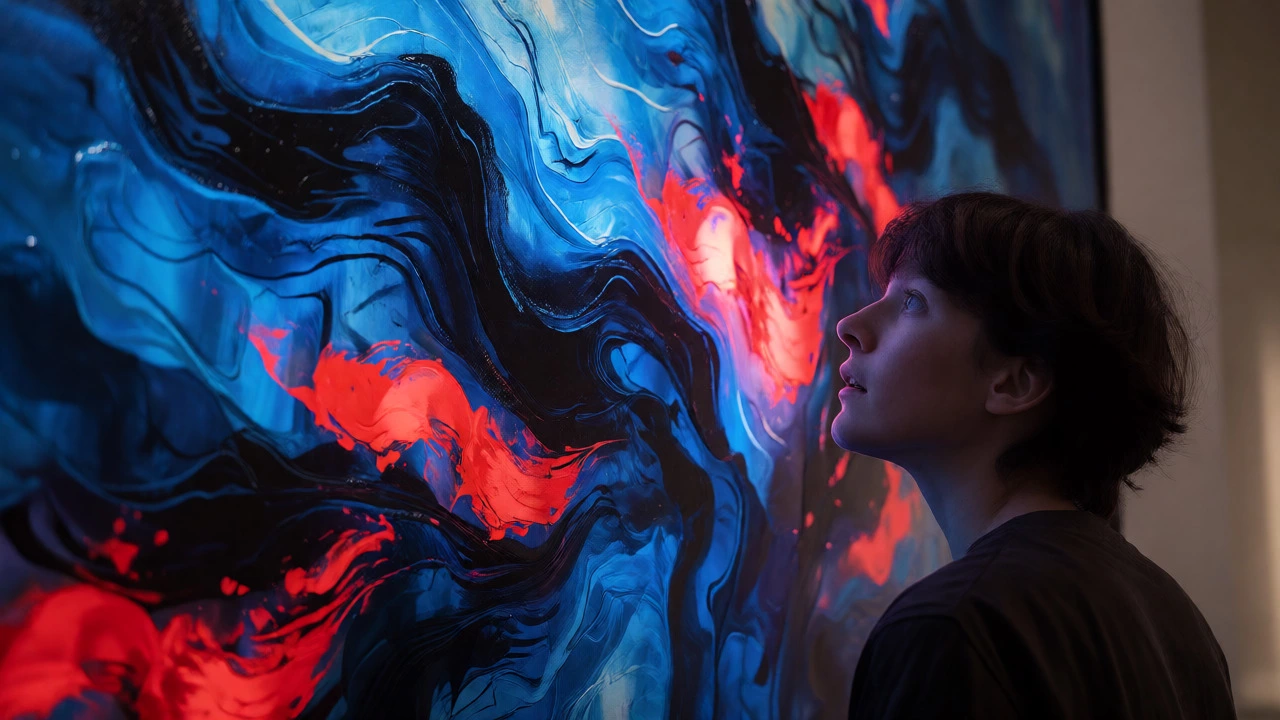
You stand in front of a canvas. There are no trees, no faces, no recognizable houses. Just swirls of blue, jagged lines of black, and patches of red that seem to vibrate against each other. Your brain tries to find a pattern, a hidden meaning, or at least a familiar shape. When it fails, you might feel frustrated. You might ask, "What is this supposed to be?"
This confusion is exactly where abstract art begins its work. It isn't trying to trick you. It isn't failing to draw a picture. The main objective of abstract art is fundamentally different from the goals of traditional realism. While classical art asks, "What does the world look like?", abstract art asks, "How does the world feel?" or "What is the essence of this emotion?"
| Aspect | Traditional Realism | Abstract Art |
|---|---|---|
| Primary Goal | Mimesis (imitation of reality) | Expression of internal states |
| Subject Matter | Objects, people, landscapes | Color, form, line, texture |
| Viewer Role | Passive observer of scene | Active interpreter of sensation |
| Success Metric | Accuracy and detail | Emotional resonance and composition |
The Shift from Eye to Soul
To understand the objective, you have to look at why artists stopped painting what they saw. For centuries, photography didn't exist. If you wanted a record of your grandfather, you hired a painter. The job was technical: capture the light on his cheekbone, the fold of his coat, the specific shade of his eyes. Accuracy was the currency of value.
Then came the camera. Suddenly, a machine could do the "recording" job faster and more accurately than any human hand. Artists faced an existential crisis. What was left for them to do? This technological shift forced a philosophical pivot. Painters realized their unique power wasn't in copying reality, but in interpreting it. They could show things cameras couldn't see: anger, joy, chaos, silence.
This is the first major objective: to express the ineffable. Words often fail when describing complex emotions. A song can make you cry without saying a word. Similarly, abstract art aims to bypass the logical, naming part of your brain and speak directly to your nervous system. When you look at a Rothko, you aren't seeing a rectangle; you're experiencing a heavy, humming presence that might feel like grief or transcendence.
Purifying Visual Language
Think about music. A piano chord doesn't sound like a dog barking or a car honking. It exists as pure sound. It has rhythm, pitch, and harmony, but it doesn't need to mimic nature to move you. Many early abstract pioneers, particularly Wassily Kandinsky, believed visual art should function like music.
Kandinsky argued that colors and shapes have inherent spiritual vibrations. Yellow, he claimed, screams with aggressive energy. Blue hums with deep calm. By removing recognizable objects, the artist removes the distraction of "what is it?" and forces the viewer to engage with "how does it affect me?"
The objective here is purification. Strip away the narrative. Remove the story of the peasant eating potatoes or the queen sitting on her throne. What remains is the raw power of color and form. This allows the artwork to become universal. A realistic painting of a French street corner is specific to France. A swirling vortex of green and gold can feel like "energy" to someone in Sheffield, Tokyo, or New York. It transcends cultural and linguistic barriers because it speaks the language of perception itself.
Challenging Perception and Control
We live in a world obsessed with control and definition. We label everything. This is a chair. That is a bill. Here is the news. We want to know exactly what things are so we can categorize them and move on. Abstract art disrupts this habit.
A key objective of movements like Abstract Expressionism was to return agency to the viewer. In a realist painting, the artist tells you exactly what to think. "This is a sad widow," the title says. In an abstract piece, the artist hands you the ball. The meaning isn't fixed. It's fluid.
This creates a collaborative experience. When you stand before a Jackson Pollock drip painting, you aren't just looking at paint. You're tracking the movement of the artist's body. You're sensing the speed of the brush, the force of the flick. The objective shifts from depicting a static image to capturing a moment of action. It turns viewing into a physical, almost athletic activity. Your eye races across the canvas, trying to keep up with the chaos. This engagement makes the art personal. Two people can look at the same abstract work and have completely different, equally valid experiences. One sees stormy weather; the other sees a tangled web of relationships. Both are correct because the objective wasn't to provide a fact, but to trigger a response.
Exploring the Subconscious
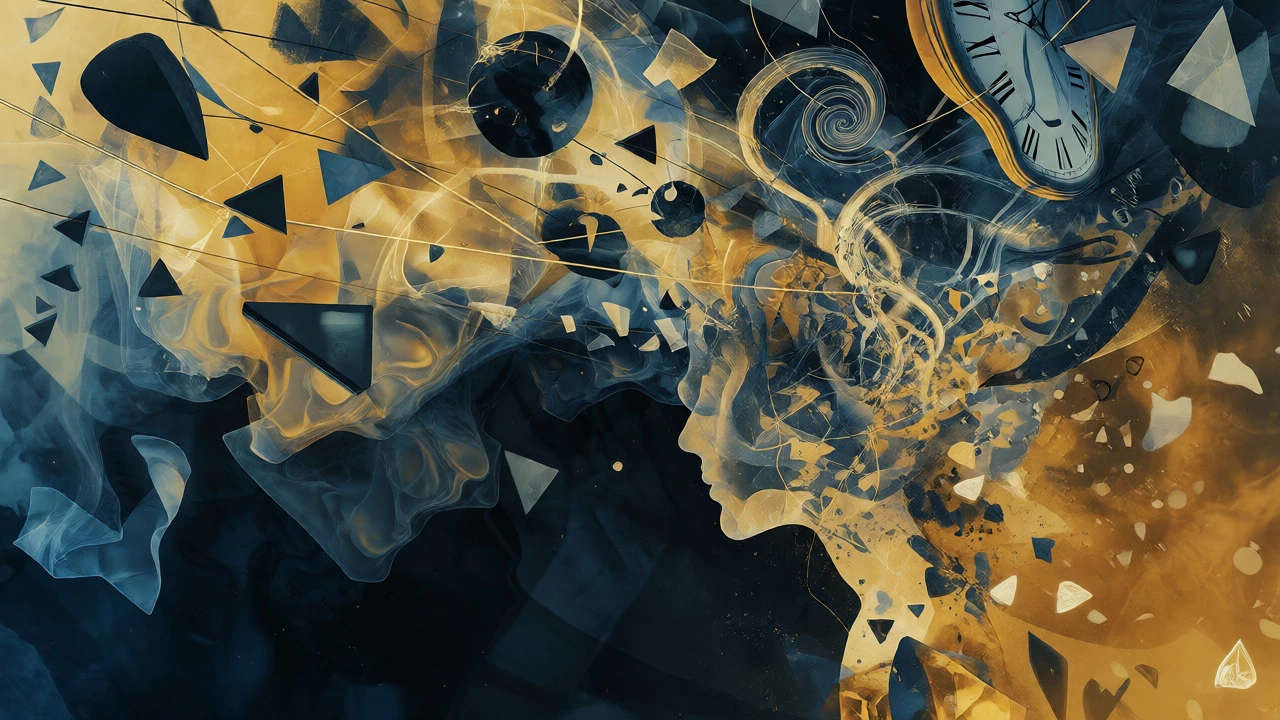
Beyond emotion and perception, abstract art dives into the mind itself. Sigmund Freud and Carl Jung were reshaping how we understood human psychology in the early 20th century. They suggested that beneath our rational thoughts lay a vast ocean of dreams, fears, and primal instincts. Realism struggles to depict this inner world. How do you paint a nightmare? How do you draw a memory that feels fragmented?
Surrealists and later abstract artists found that non-representational forms were perfect for mapping the subconscious. Dreams don't follow linear logic. Objects melt, scale changes arbitrarily, and symbols appear without explanation. Abstract art mimics this dream logic. It allows the artist to externalize internal psychological states without needing to explain them.
For example, consider the work of Hilma af Klint, a pioneer who painted abstract works years before Kandinsky. She wasn't interested in aesthetics alone. She was documenting spiritual communications and geometric truths she believed underlay reality. Her objective was investigative. She used abstraction as a tool to visualize concepts that had no physical form-like evolution, spirituality, or the fourth dimension. In this sense, abstract art acts as a visual research lab for ideas that are too big or too strange for literal representation.
The Role of Materiality
There is another, often overlooked objective: celebrating the material itself. In traditional art, the paint is meant to disappear. You shouldn't notice the brushstrokes; you should only see the sky or the skin. The medium is a window.
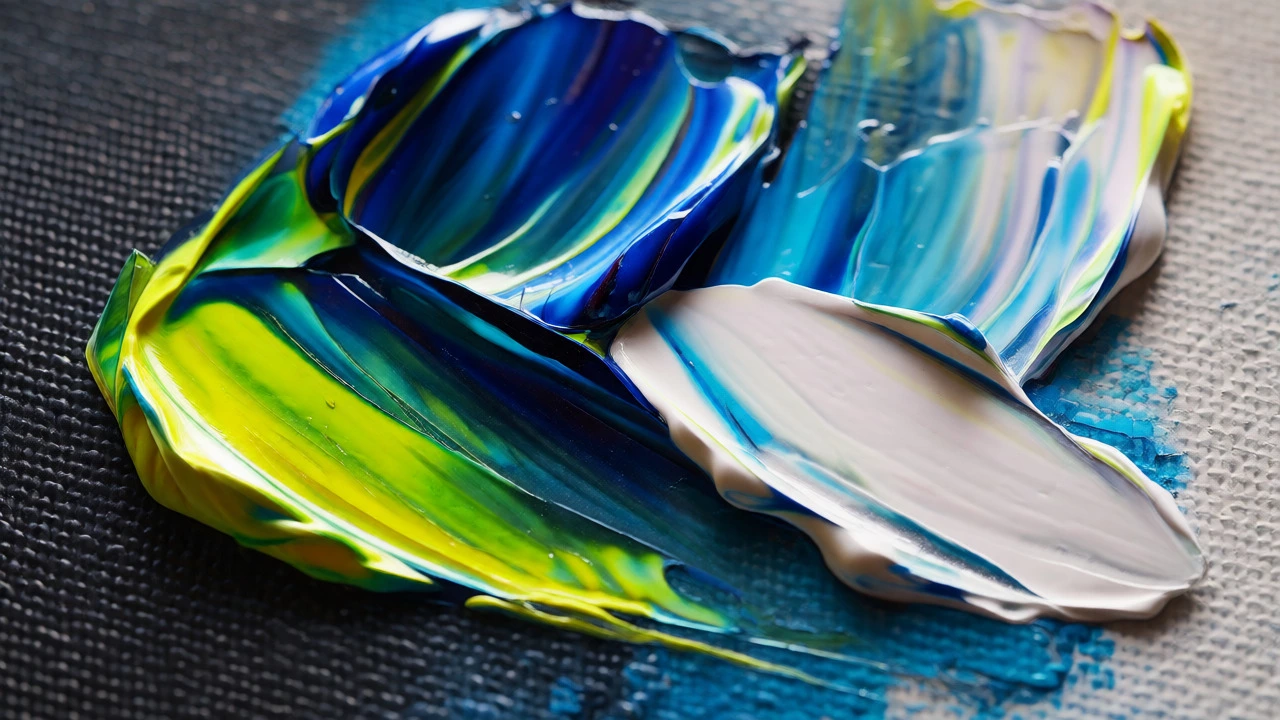
In abstract art, the medium becomes the subject. The texture of the canvas, the thickness of the oil, the scratch of the palette knife-these elements matter. Artists like Barnett Newman or Mark Rothko emphasized the flatness of the canvas. They wanted you to acknowledge that you were looking at a two-dimensional surface, not a hole into another world.
This honesty about materials connects to a broader modernist idea: art should be about what art is. It rejects illusion. It says, "I am paint on cloth." This stripping back reveals the beauty in the substance itself. The way light hits impasto paint creates shadows and highlights that change as you move. The objective is sensory pleasure derived from the physical properties of the artwork, independent of any depicted subject.
Why It Matters Today
You might wonder if this still applies in 2026. We are surrounded by hyper-realistic digital images and AI-generated visuals that can mimic anything instantly. Paradoxically, this makes the objective of abstract art more relevant, not less.
Digital screens are flat, pixelated, and often emotionally sterile. They bombard us with information. Abstract art offers a counter-space. It demands slowing down. It invites contemplation rather than consumption. In a world of noise, a single field of deep blue can offer silence. In a world of rapid scrolling, a complex composition requires sustained attention.
Furthermore, abstract art remains a vital language for contemporary issues. It can represent data flows, climate anxiety, or social fragmentation without resorting to clichés. A chaotic tangle of neon lines might better convey the stress of modern connectivity than a painting of someone staring at a phone.
Key Takeaways
- Expression over Imitation: The primary goal is to convey emotions, sensations, or spiritual ideas rather than copying visual reality.
- Universal Language: By removing specific objects, abstract art uses color and form to communicate across cultural and linguistic boundaries.
- Viewer Participation: The meaning is co-created by the viewer, making the experience subjective and personal.
- Material Honesty: It highlights the physical qualities of paint, canvas, and texture, treating the medium as a subject itself.
- Psychological Mapping: It provides a way to visualize internal states, dreams, and subconscious thoughts that defy literal depiction.
Is abstract art just random scribbles?
No, most abstract art involves deliberate composition and intent. While some techniques involve chance (like dripping paint), artists carefully balance color, weight, and space to create harmony or tension. It’s structured chaos, not randomness.
Do I need to understand art history to enjoy abstract art?
Not at all. Because the objective is often emotional or sensory, your personal reaction is the most important metric. Knowing history helps context, but feeling moved by a color combination is a valid and complete experience.
Why do some abstract paintings cost millions?
Value comes from historical significance, rarity, and the artist's influence on culture. Works by figures like Picasso or Pollock changed how humanity sees the world. Their ability to define new ways of seeing commands high prices in the art market.
Can AI create true abstract art?
AI can generate patterns that look abstract, but it lacks intent and consciousness. It mimics style based on data. True abstract art usually stems from a human desire to express an internal state, which AI currently simulates rather than experiences.
What is the difference between abstract and non-objective art?
Abstract art often starts with a real-world reference (a tree, a face) and distorts it. Non-objective art has no reference to the physical world at all; it is purely invented through geometry and color. All non-objective art is abstract, but not all abstract art is non-objective.