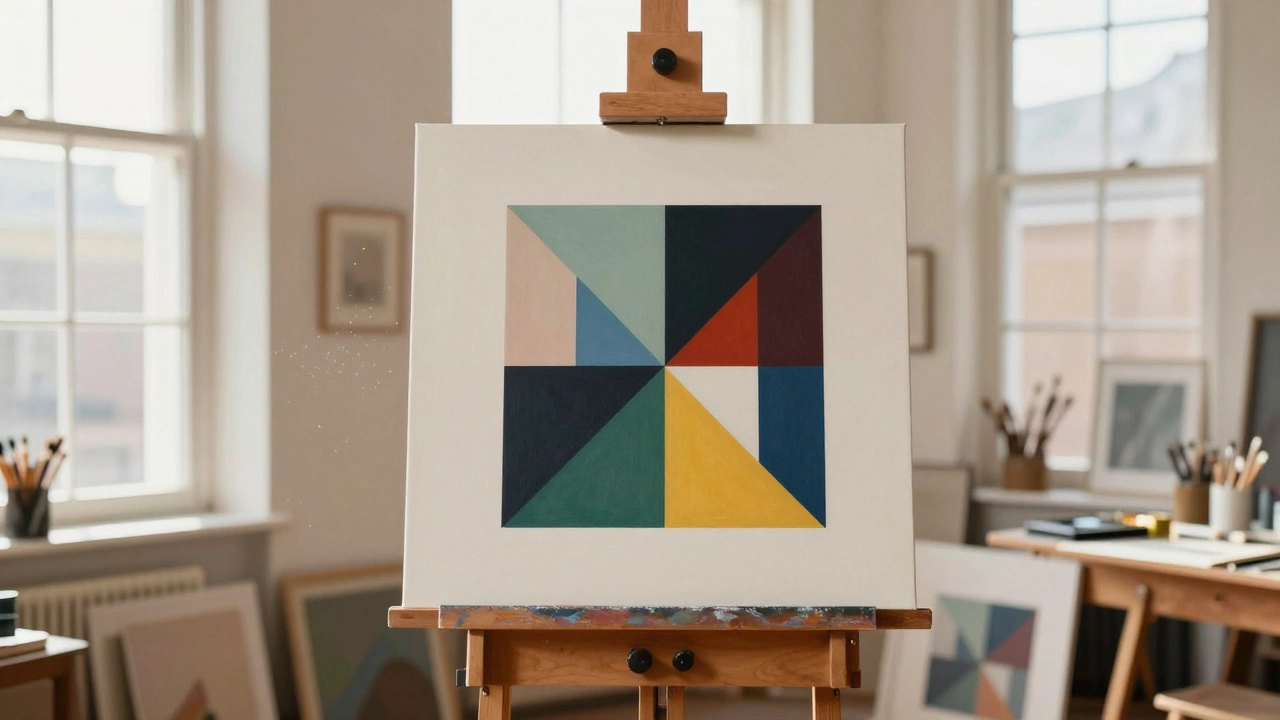
Art Principles Playground
Adjust Parameters
Active Principles Detected
Adjust the sliders to change the composition. The system analyzes your settings to identify which art principles are being demonstrated.
Have you ever looked at a painting and felt it just worked, even if you couldn't explain why? Or maybe you’ve stared at your own canvas, wondering why the composition feels off despite using "good" colors? The difference often isn’t talent-it’s structure. It comes down to understanding the 7 principles of art.
These aren't strict laws carved in stone. They are tools. Think of them as the grammar of visual language. Just as knowing subject-verb agreement helps you write a clear sentence, understanding these principles helps you arrange shapes, lines, and colors so they communicate exactly what you intend. Whether you are sketching in a notebook or planning a large-scale mural, these concepts form the backbone of effective design.
1. Balance: Distributing Visual Weight
Balance is about stability. In physical objects, gravity dictates how things stand up. In art, balance refers to the distribution of visual weight across a composition. If one side of your image feels too heavy with dark colors or complex details, the viewer's eye will feel pulled toward that side, creating tension or discomfort.
You can achieve balance in three main ways:
- Symmetrical Balance: This is like looking in a mirror. Elements on one side reflect those on the other. It creates a sense of formal order, calm, and stability. Think of a classical cathedral facade or a portrait centered perfectly in the frame.
- Asymmetrical Balance: This is more dynamic. You balance a large, simple shape on one side with several smaller, detailed elements on the other. A big red circle might balance out a cluster of small blue squares. It feels more modern and engaging because it requires the eye to work harder to find equilibrium.
- Radial Balance: Here, all elements radiate from a central point. Imagine ripples in a pond or the petals of a flower. The focus is intense and centered, drawing the viewer inward.
To test your balance, squint at your work. Does one area dominate disproportionately? If so, add visual weight-through darker values, larger sizes, or higher contrast-to the lighter areas to even it out.
2. Contrast: Creating Interest Through Difference
If everything in your artwork looks similar, the result can be flat and boring. Contrast is the juxtaposition of differing elements to create visual interest. It is the engine that drives attention.
The most powerful type of contrast is value contrast-the difference between light and dark. High contrast (bright whites next to deep blacks) creates drama, energy, and clarity. Low contrast (grays next to mid-tones) creates mood, subtlety, and mystery. But contrast isn't limited to light and dark. You can also use:
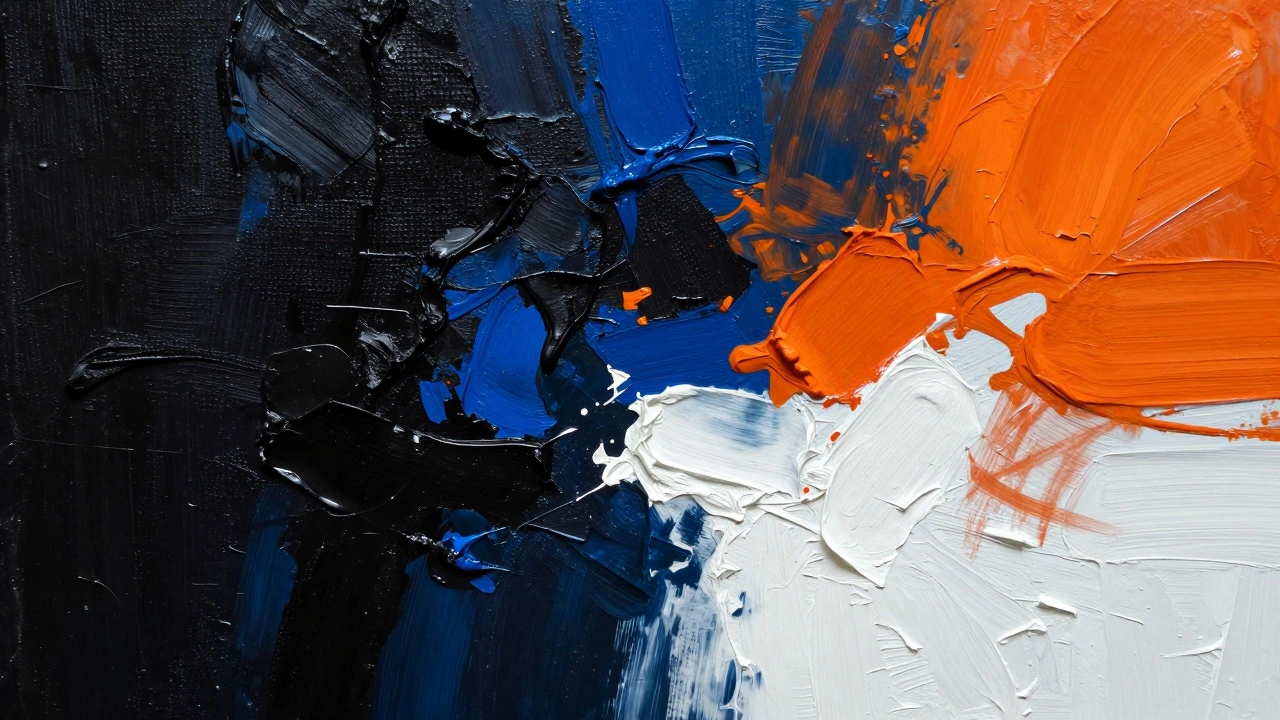
- Color Contrast: Placing complementary colors (like orange and blue) next to each other makes both appear more vibrant.
- Texture Contrast: Pairing a smooth, glossy surface with a rough, matte texture adds tactile depth.
- Shape Contrast: Mixing organic, curvy forms with rigid, geometric shapes creates dynamic tension.
Use contrast strategically. Don't spread it evenly everywhere; that cancels itself out. Use high contrast to highlight your focal point and lower contrast in the background to keep the viewer’s eye anchored where you want it.
3. Emphasis: Directing the Viewer’s Eye
Every successful piece of art needs a focal point-a place where the viewer’s eye lands first. Without emphasis, the eye wanders aimlessly, and the message gets lost. Emphasis is the principle used to make one part of the artwork stand out.
How do you create emphasis? You break the pattern. If your whole painting uses soft pastel tones, introduce one bold, saturated red. If your entire composition consists of horizontal lines, add one strong vertical line. That disruption grabs attention immediately.
You can also use size, placement, and isolation. The largest object often commands attention. Placing an element off-center, following the rule of thirds, can create a more natural focal point than centering it. Isolating an object against a plain background removes competition, forcing the viewer to look at it.
4. Movement: Guiding the Eye Through the Work
Art is static, but it can suggest motion. Movement describes the path the viewer’s eye takes through the artwork. Good movement ensures the viewer sees all the important parts before returning to the focal point.
You create movement through implied action and directional cues. People naturally follow lines. If you draw a finger pointing, an arrow, or even a diagonal brushstroke, the eye will travel along that direction. Repetition also creates rhythm-a type of movement. Repeating a shape or color at intervals creates a visual beat, leading the eye from one instance to the next.
Consider the flow of your composition. Does the eye get stuck in a corner? Or does it loop smoothly around the canvas? Use overlapping shapes, blurred edges, or sequential positioning to guide the journey. Think of it like choreography; you are directing the dance of the viewer’s gaze.
5. Pattern and Rhythm: Establishing Consistency
Closely related to movement, pattern and rhythm involve the repetition of elements to create a sense of organized consistency. While movement guides the eye, rhythm gives the artwork a feeling of tempo and style.
A pattern is a predictable repetition. Think of wallpaper, tiles, or stripes. It creates comfort and order. However, pure pattern can become monotonous. To keep it interesting, artists often introduce a variation-a slight change in size, color, or orientation within the repeated elements.
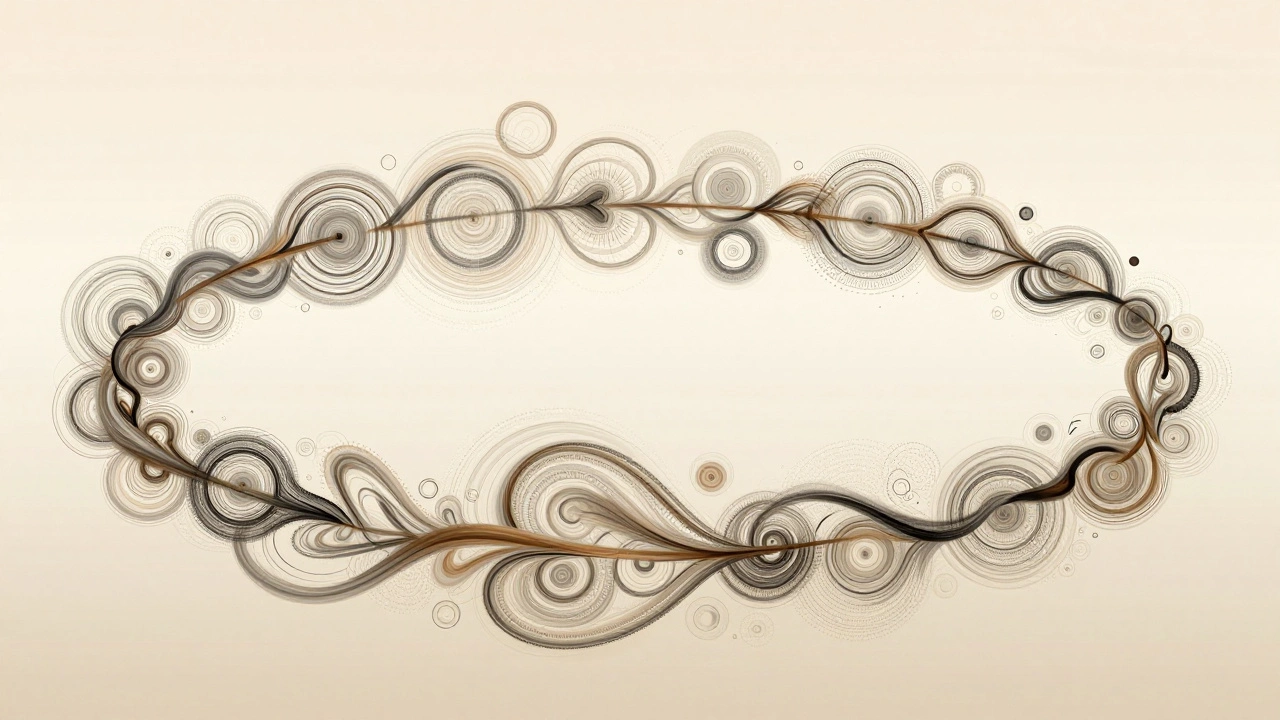
Rhythm is less regular. It suggests a flow rather than a strict grid. You might see a series of dots that start close together and then spread apart, mimicking the acceleration or deceleration of music. This irregularity keeps the viewer engaged, anticipating what comes next. In nature, rhythm appears in the branches of trees or the scales of a fish. Mimicking these natural rhythms can make your work feel more organic and alive.
6. Unity and Harmony: Making It Feel Like One
This is perhaps the most critical principle. Unity means that all elements in the artwork belong together. Harmony is the pleasing arrangement of those elements. When a piece has unity, it feels complete. Nothing seems out of place or accidental.
How do you achieve this? Start with a limited palette. Using variations of the same three colors ensures color harmony automatically. Repeat specific shapes or motifs throughout the composition to tie different areas together. For example, if you have a circular window in the background, echo that curve in the foreground props.
Proximity also aids unity. Grouping related elements close together signals to the brain that they are connected. Conversely, spacing them far apart suggests separation. A unified piece doesn't mean everything is identical; it means everything contributes to the same overall effect. Even chaos can be unified if the chaotic elements share common textures, tones, or styles.
7. Variety: Keeping It Interesting
If unity brings everything together, variety introduces enough difference to prevent boredom. Too much unity leads to monotony; too much variety leads to chaos. The secret is finding the sweet spot between the two.
Variety adds complexity and richness. After establishing a dominant pattern or color scheme, introduce unexpected elements. A single splash of a contrasting color breaks the monotony without destroying the harmony. Changing textures-from smooth to rough, thick to thin-adds visual depth.
Think of variety as the spice in your meal. Unity is the base ingredient that holds it together. You need both. A landscape painting might rely heavily on green tones for unity, but the variety comes from the different shades of green, the bark texture of trees, the smoothness of water, and the sharp angles of distant mountains. These differences give the eye something new to discover every time it scans the image.
| Principle | Primary Function | Key Technique |
|---|---|---|
| Balance | Distribute visual weight | Symmetry, asymmetry, radial layout |
| Contrast | Create interest and definition | Light vs. dark, complementary colors |
| Emphasis | Create a focal point | Isolation, size, breaking patterns |
| Movement | Guide the viewer’s eye | Lines, directional cues, implied action |
| Pattern/Rhythm | Establish consistency and tempo | Repetition, variation in spacing |
| Unity/Harmony | Make elements feel connected | Limited palette, repeating motifs |
| Variety | Add complexity and interest | Texture changes, unexpected accents |
Applying the Principles in Practice
Knowing these definitions is step one. Applying them is where the real learning happens. Many students try to use all seven principles equally in every piece, which often leads to cluttered, confused compositions. Instead, prioritize.
Ask yourself: What is the main goal of this piece? If it’s a logo, unity and simplicity (a form of balance) are paramount. If it’s an abstract expressionist painting, contrast and movement might take precedence over strict symmetry. Context dictates which principles matter most.
Start by mastering balance and emphasis. These two control where the viewer looks and how long they stay. Once you can reliably direct attention, layer in contrast and variety to add sophistication. Finally, check for unity to ensure everything still feels cohesive.
Don't be afraid to break the rules once you understand them. Some of the most iconic artworks deliberately unbalance the composition to create tension or unease. But you must know the rules first to break them effectively. Treat these principles as a checklist during your critique phase. Step back, look at your work, and ask: Is it balanced? Is there a clear focal point? Does the eye move smoothly? Does it feel unified?
What is the difference between the elements of art and the principles of art?
The elements of art are the basic building blocks: line, shape, form, space, color, value, and texture. The principles of art are how you organize those elements. Think of elements as ingredients (flour, eggs, sugar) and principles as the recipe instructions (mix, bake, fold). You use the principles to arrange the elements into a coherent composition.
Can I use only some of the principles in my artwork?
Yes. Not every principle needs to be prominent in every piece. Minimalist art might focus heavily on balance and negative space while ignoring variety. Abstract art might emphasize movement and contrast over unity. The key is intentional choice. Decide which principles support your message and let the others fade into the background.
How do I fix a composition that feels unbalanced?
Identify the "heavy" side. Visual weight comes from dark values, large sizes, bright colors, and complex details. To balance it, either reduce the weight on the heavy side (lighten colors, simplify shapes) or add weight to the lighter side (add a dark accent, increase contrast, or place a larger element). Asymmetrical balance often feels more natural, so try balancing a large dark shape with several smaller bright ones.
Why is unity considered the most important principle?
Without unity, a collection of beautiful elements can still feel disjointed and confusing. Unity ensures that the viewer perceives the work as a single, cohesive entity rather than a random assortment of parts. It provides closure and satisfaction. Even if your piece is chaotic or complex, underlying unity ties it together so the viewer understands it as one complete experience.
How can I improve the movement in my static artwork?
Use directional lines and shapes. Diagonals create more energy than horizontals or verticals. Point gestures, gazes, or arrows lead the eye. Overlapping objects creates depth and flow. You can also use "implied motion" by blurring edges or using streaks of color to suggest speed. Ensure the path loops back to the focal point so the viewer doesn't exit the composition prematurely.