Sculpture Display Planner
Enter details about your sculpture to receive customized advice on lighting, placement, and protection.
You bought a piece of sculpture that speaks to you. It’s got texture, weight, and presence. But now it sits in the corner of your living room, looking awkwardly out of place, or worse, lost among the clutter of daily life. You’re not alone. Most people struggle with how to display three-dimensional art objects because they don’t follow the same rules as flat paintings on a wall.
Displaying sculpture isn’t just about finding an empty spot. It’s about creating a relationship between the object, the space, and the light. If you get it right, the piece becomes a focal point that anchors the room. If you get it wrong, it looks like something you forgot to put away. Let’s fix that.
Understand the Scale Before You Move Anything
The biggest mistake people make is ignoring scale. A small bronze bust might look charming in a gallery but disappear against a large white wall in your hallway. Conversely, a massive abstract steel form can overwhelm a cozy bedroom. You need to measure three things: the height, width, and depth of the sculpture, plus the dimensions of the surface it will sit on.
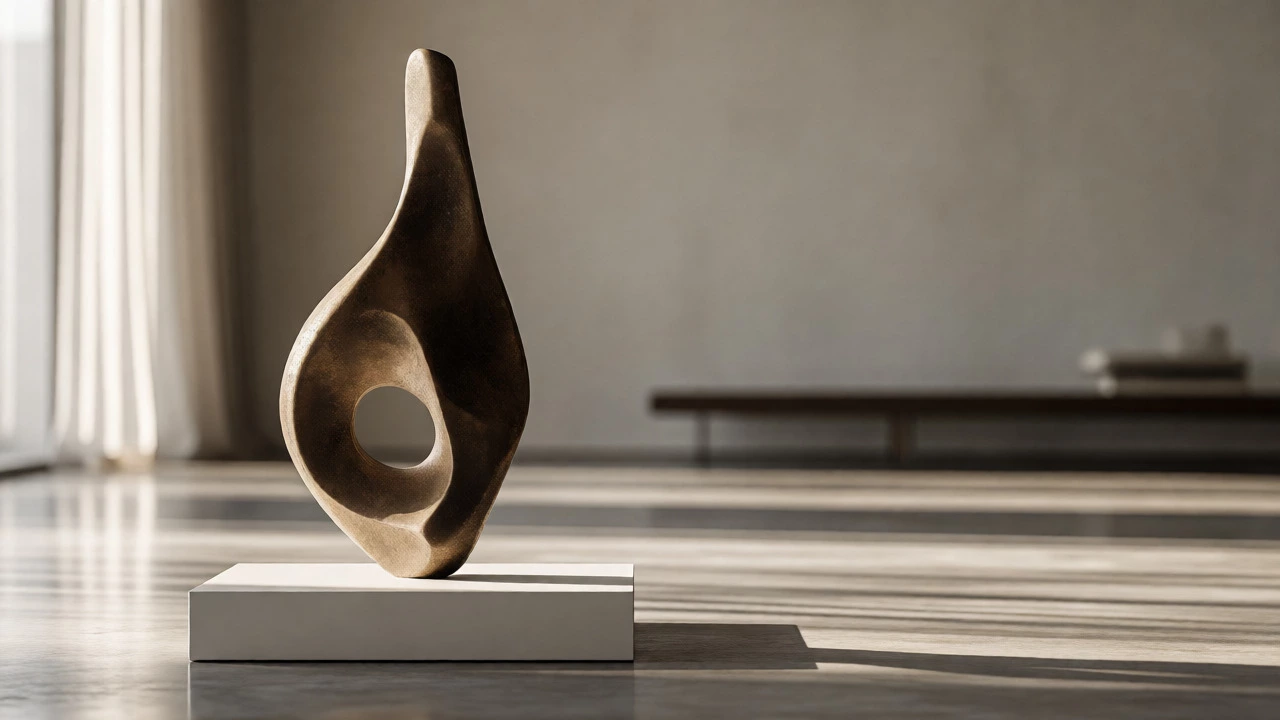
A good rule of thumb? The base or pedestal should be roughly one-third to one-half the height of the sculpture itself for floor pieces. For tabletop pieces, leave at least six inches of clear space around every side. This "breathing room" allows the eye to travel around the object without hitting visual noise immediately.
- Floor sculptures: Need significant negative space. Don’t crowd them with sofas or plants.
- Tabletop pieces: Look best on solid surfaces like stone, wood, or metal tables, not glass.
- Wall-mounted relief: Treat these like paintings but account for shadow depth.
Lighting Is Your Secret Weapon
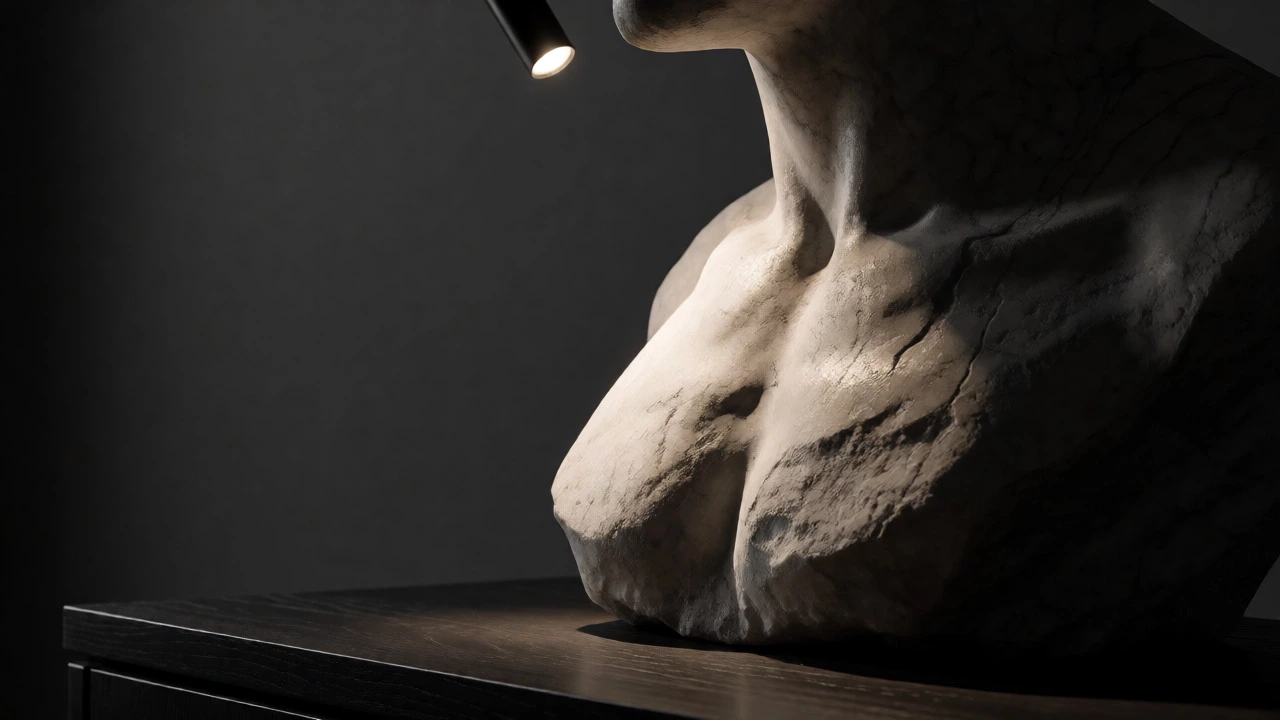
Sculpture lives and dies by light. Unlike a painting, which is lit evenly from the front, a sculpture has facets, curves, and shadows that change throughout the day. Flat overhead lighting often flattens a sculpture, making it look dull and two-dimensional.
You want directional light. Think about where the sun hits your room at different times. Morning light might highlight the texture of a marble piece, while evening lamps could cast dramatic shadows across a jagged metal form. If natural light isn’t enough, add focused artificial sources.
Try this simple setup: use a track light or a dedicated picture light positioned above and slightly in front of the piece. Angle it so it catches the top curves and casts subtle shadows downward. Avoid placing lights directly behind the sculpture unless you want a silhouette effect, which rarely works for detailed indoor pieces.
| Material | Best Light Type | Why It Works |
|---|---|---|
| Marble/Stone | Warm, diffuse LED (2700K-3000K) | Enhances natural veining without glare |
| Bronze/Metal | Directional spotlights | Creates sharp highlights and deep shadows |
| Glass/Crystal | Backlighting or low-angle side light | Makes the material glow and refract light |
| Wood | Soft, warm ambient light | Brings out grain patterns and warmth |
Choose the Right Pedestal or Base
Raising a sculpture off the ground changes everything. It separates the art from the furniture and signals to the viewer: "This is important." But the base matters as much as the art.
If the sculpture is modern or minimalist, go for a clean, simple plinth in white, black, or grey. No ornamentation. If the piece is classical or organic, a wooden stand or a rough-hewn stone block can complement its texture. Never let the base compete with the artwork. If the base is louder than the sculpture, swap it out.
For smaller pieces, consider using a stack of vintage books or a sleek acrylic riser. Acrylic is invisible, making it perfect for delicate glass or ceramic works that seem to float. Just ensure the surface is stable. A wobbly table makes even the most expensive bronze look cheap.
Placement: Where Does It Belong?
Not every room suits every sculpture. Consider the function of the space and the mood of the art.
The Entryway: This is prime real estate. A striking piece here sets the tone for your home. It’s the first thing guests see. Choose something durable if you have high traffic, and keep it visible but not in the direct path of foot traffic.
The Living Room: Use sculpture to break up horizontal lines. Sofas and coffee tables are long and flat. A vertical sculpture adds balance. Place it near a window where natural light can interact with it, or on a console table behind a sofa to create a layered look.
The Bathroom: Yes, really. Humidity can affect some materials, but porcelain, glass, and certain treated metals thrive in steamy environments. A small, smooth ceramic figure on a vanity shelf can feel serene and spa-like.
The Bedroom: Keep it calm. Avoid aggressive, spiky, or overly large pieces that might disrupt sleep. Soft forms, rounded edges, and muted colors work best here. A small headless bust or an abstract organic shape on a nightstand can be surprisingly soothing.
Grouping vs. Solo Display
Should you display one big piece or several small ones? Both approaches work, but they serve different purposes.
A single large sculpture demands attention. It creates a moment of pause. Use this when you want the piece to be the undeniable star of the room. Ensure there’s plenty of empty wall space or floor area around it so nothing distracts from its form.
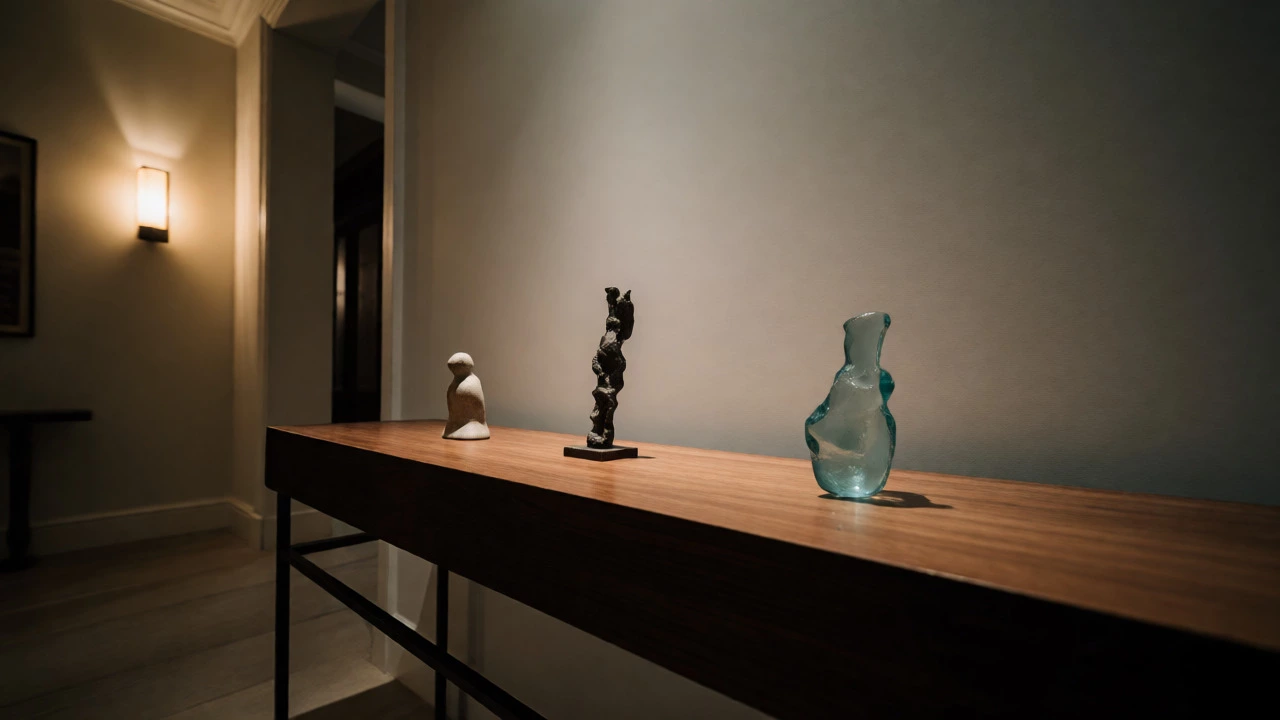
Grouping smaller sculptures creates a narrative or a collection vibe. Try arranging three pieces of varying heights on a mantelpiece. Follow the rule of odd numbers-three or five items look more natural to the human eye than four. Vary the materials too. Pair a matte ceramic with a shiny metal piece to create visual interest through contrast.
When grouping, think about flow. Do the shapes lead the eye from one piece to the next? Or do they clash? Stand back and squint. If the group looks like a jumble, remove one item. Less is almost always more with sculpture.
Protecting Your Investment
Once you’ve found the perfect spot, think about safety. Sculptures, especially those made of brittle materials like clay or thin metal, can tip over easily.
Use museum wax or adhesive putty to secure small pieces to their bases. This prevents accidental knocks from pets, children, or cleaning crews. For larger floor pieces, check the center of gravity. If it feels top-heavy, move it away from high-traffic zones or anchor it discreetly to the wall if possible.
Dust regularly, but carefully. Feather dusters can snag on intricate details. Use a soft makeup brush or a handheld air blower for delicate surfaces. For outdoor sculptures, weatherproofing is non-negotiable. Even if it’s indoors, direct sunlight can fade certain finishes over time, so rotate the piece occasionally if it’s on a turntable or movable stand.
Common Mistakes to Avoid
We’ve all seen them. Here’s what ruins a good display:
- Crowding: Putting a sculpture next to a lamp, a plant, and a photo frame all at once. Visual chaos.
- Wrong Height: Placing a small piece on a high shelf where no one sees it, or a large piece on a low table where it blocks sightlines.
- Ignoring Shadows: Not checking how the piece looks at night under artificial light versus day.
- Matching Everything: Choosing a sculpture only because it matches the couch color. Art should challenge or complement, not just blend in.
Remember, displaying sculpture is experimental. You can move it. You can change the light. You can swap the base. There’s no permanent wrong answer, only better answers over time. Start with one piece, give it space, and watch how it changes the energy of the room.
What is the best height to display a sculpture?
For eye-level viewing, the center of the sculpture should generally be at average eye level, which is approximately 57 to 60 inches from the floor. However, this varies by context. Floor sculptures can sit lower to emphasize their grounding, while tabletop pieces should be raised on pedestals or stands to bring them into the viewer's line of sight. Always adjust based on the typical height of the people using the room.
Can I put a sculpture in direct sunlight?
It depends on the material. Stone and metal are generally resistant to UV damage, though heat expansion can cause issues over decades. Organic materials like wood, resin, or painted surfaces can fade, crack, or warp under prolonged direct sunlight. If you must place it in a sunny spot, consider using UV-filtering window film or rotating the piece periodically to ensure even exposure.
Do I need a pedestal for my sculpture?
Not always, but it helps significantly. A pedestal elevates the piece, separating it from everyday furniture and signaling its artistic value. For small pieces, a simple riser or even a sturdy book can suffice. For large floor pieces, a pedestal may not be necessary if the base itself is aesthetically pleasing and stable. The goal is visibility and stability, not necessarily elevation.
How do I clean dust off intricate sculptures?
Avoid water and harsh chemicals unless specified by the artist. For dust, use a soft-bristled paintbrush, a makeup brush, or a can of compressed air held upright. Blow gently from top to bottom. For stubborn grime on stone or metal, a mild soap solution and a soft cloth can work, but test on a hidden area first. Never use feather dusters on textured surfaces as they can snag and break delicate parts.
Is it okay to group multiple sculptures together?
Yes, grouping can create a dynamic display. Aim for odd numbers (3 or 5) for a more natural composition. Vary the heights, textures, and materials to prevent monotony. Ensure each piece has enough individual space so they don't visually collide. Grouping works well on mantels, consoles, or shelves, but avoid overcrowding; if the arrangement looks messy, remove one piece.