Art Era Identifier
Confused by a pile of bricks or a banana taped to a wall? Use this tool to analyze an artwork's features and determine if it aligns more with Traditional or Contemporary principles.
Select options from the left to classify an artwork.
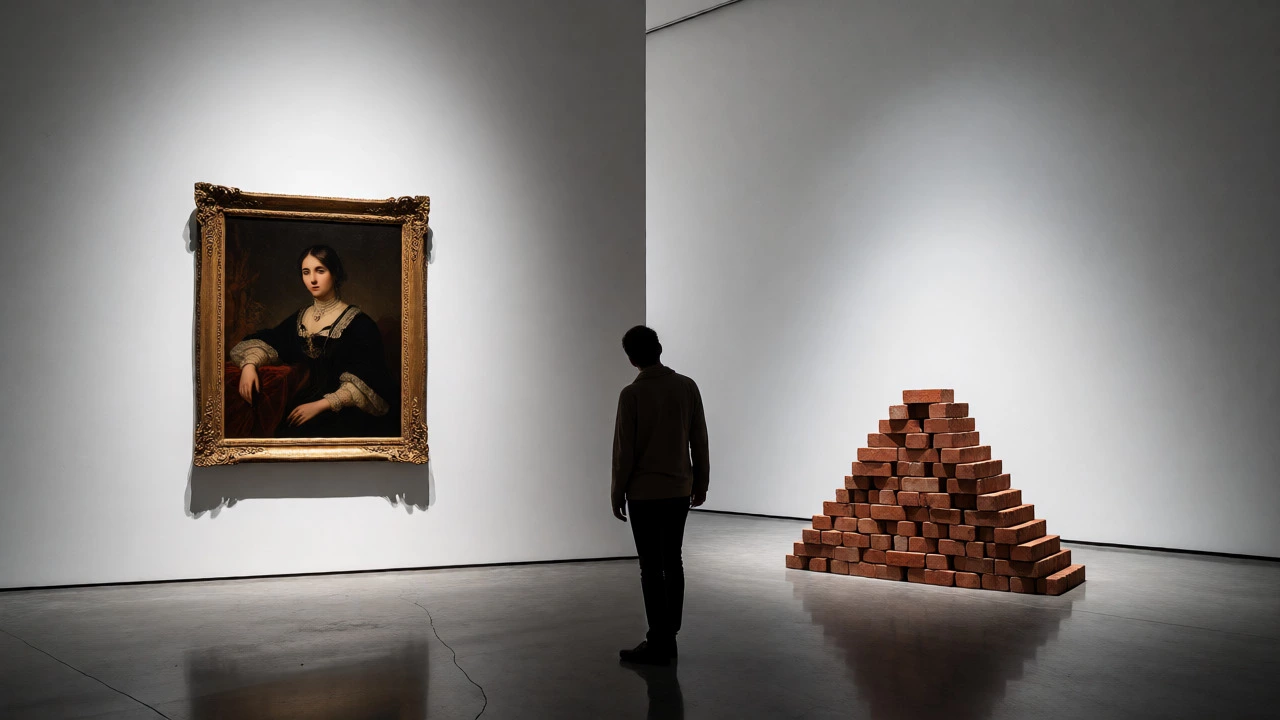
You walk into a gallery. On one wall hangs a meticulously painted portrait of a Victorian lady. On the other, there is a pile of bricks stacked in the corner with a label that reads "Untitled." You might feel confused, maybe even cheated. Is that pile of bricks actually art? Does it belong in the same category as the portrait? This confusion is common because people often use "modern" and "contemporary" interchangeably, or they assume all new art looks weird compared to the old stuff.
The short answer is no, contemporary art is not the same as traditional art. They are distinct categories separated by time, intent, materials, and philosophy. But they are also deeply connected. Contemporary art doesn't exist in a vacuum; it reacts to what came before. To understand why a banana taped to a wall (yes, Maurizio Cattelan's Comedian) costs $120,000 while a Renaissance masterpiece costs millions, you need to look at the shift from craft to concept.
Defining the Timeline: When Did Things Change?
Before we compare them, we have to define when they happened. In art history, timelines matter more than you might think. Traditional art, often referred to as classical or academic art, generally covers the period from antiquity up until the mid-19th century. Think Ancient Greece, the Renaissance, Baroque, and Neoclassicism. The goal here was mastery of technique, religious devotion, or historical documentation.
Modern art then takes over roughly from the 1860s to the 1970s. This is where things get tricky for many readers. Modern art includes Impressionism, Cubism, Surrealism, and Abstract Expressionism. Artists like Picasso and Monet broke the rules of realism but still largely worked within traditional mediums like oil paint and canvas.
Contemporary art begins after World War II, specifically around the late 1940s or early 1950s, and continues through today (including works made right now in 2026). It encompasses everything from Pop Art and Minimalism to Digital NFTs and installation pieces. If an artist is alive and working today, their work is contemporary. If they died before 1950, it’s likely traditional or modern.
Philosophy and Intent: Why Was It Made?
The biggest difference isn't just dates; it's the "why." Traditional art had clear jobs. It was meant to teach biblical stories to illiterate populations, glorify kings, or capture the likeness of wealthy patrons. Beauty and technical skill were the primary metrics of success. If you couldn't draw hands realistically, you weren't a master.
Contemporary art flips this script. It asks questions rather than providing answers. It challenges the viewer. Why is this object considered art? Who decides? What does this say about society? For example, Banksy's street art isn't trying to be pretty in the classical sense; it's trying to provoke political thought. Damien Hirst's preserved shark isn't about the anatomy of the fish; it's about death, money, and the shock value of seeing something dangerous frozen in time.
| Feature | Traditional Art | Contemporary Art |
|---|---|---|
| Time Period | Antiquity to ~1860s | Late 1940s to Present |
| Primary Goal | Aesthetics, narrative, religious/historical record | Concept, social commentary, provocation |
| Materials | Oils, marble, bronze, wood, stone | Anything: plastic, neon, video, code, trash, body |
| Skill Focus | Technical mastery (perspective, anatomy) | Idea execution, conceptual depth |
| Audience Role | Passive observer/admirer | Active interpreter/participant |
Materials and Mediums: Breaking the Canvas
If you judge art by what it's made of, the gap becomes obvious. Traditional artists were limited by the technology of their time. They used natural pigments ground from minerals, stretched animal skins for canvas, and carved stone with chisels. There was a hierarchy of materials-marble was noble, wood was humble, and gold leaf was divine.
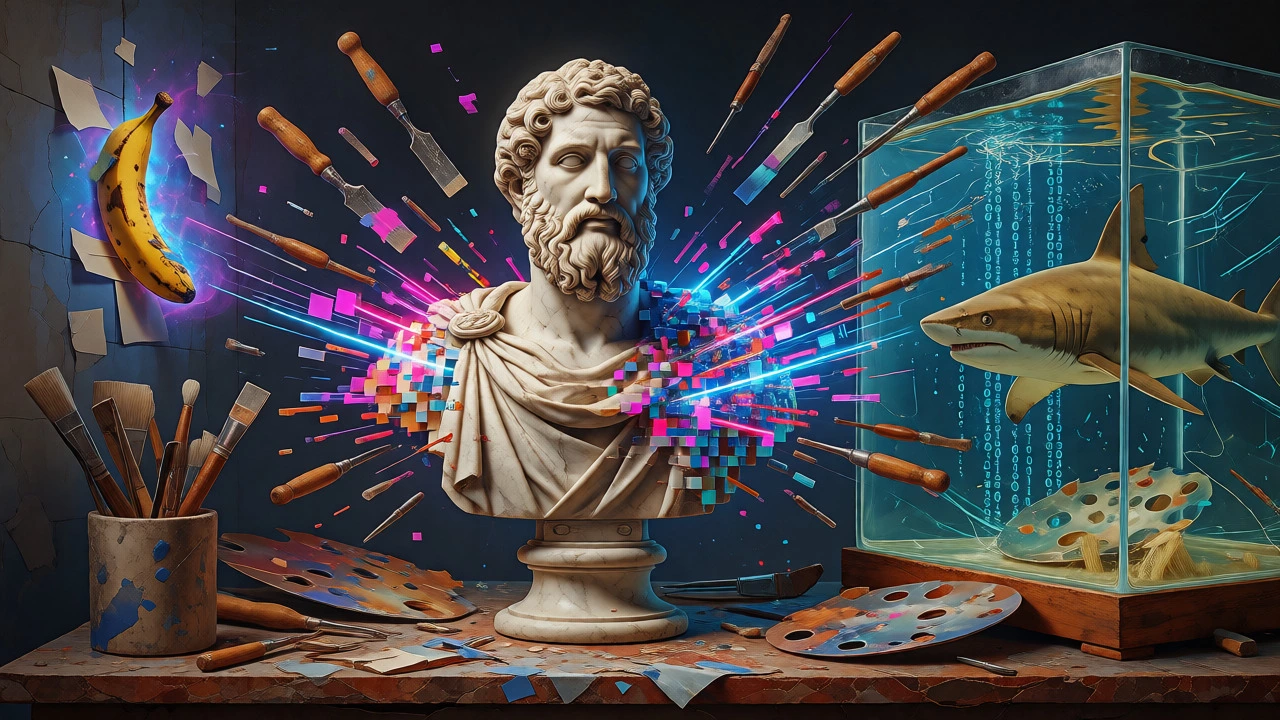
Contemporary artists threw those rules out the window. The medium is whatever serves the idea. Tracey Emin famously exhibited her unmade bed (My Bed, 1998) as a sculpture. It included condoms, cigarette butts, and stained sheets. A traditional critic might call it garbage. A contemporary critic sees it as raw autobiography. Today, digital art uses pixels and algorithms. AI-generated images challenge the very definition of authorship. The material isn't just physical anymore; it can be virtual, ephemeral, or interactive.
The Role of the Viewer: Do You Have to Understand It?
This is where most friction happens. With traditional art, you usually don't need a manual. A sunset looks like a sunset. A king looks regal. The meaning is on the surface. With contemporary art, the meaning is often hidden, ironic, or dependent on context. You might stand in front of a white square painting (like Kazimir Malevich's Black Square, though technically modern, it paved the way for contemporary minimalism) and wonder if your kid could do it.
Here is the secret: You aren't supposed to just "look" at contemporary art; you're supposed to engage with it. The artist provides a prompt; you provide the interpretation. Sometimes, the controversy is part of the artwork. When Jeff Koons unveiled his shiny balloon animals, critics hated them. Now, they are iconic symbols of consumer culture. Your discomfort is part of the experience. Unlike traditional art, which aims for universal appreciation, contemporary art often targets specific cultural conversations.
Market Dynamics: How Value is Assigned
How much is a piece worth? In the traditional market, value is tied to provenance, age, rarity, and condition. A Rembrandt is valuable because few remain, they are old, and they show undeniable skill. The market is stable and driven by collectors who want status and beauty.
The contemporary art market is volatile and speculative. It is driven by hype, gallery representation, auction records, and cultural relevance. A young artist with zero sales history can sell a piece for six figures simply because a major curator liked their Instagram feed. The value is often in the future potential of the artist's career, not just the current object. This makes collecting contemporary art riskier but potentially more rewarding if you spot the next big thing early.
Is One Better Than the Other?
No. That's a false dichotomy. They serve different human needs. Traditional art connects us to our past, offering stability, beauty, and a sense of continuity. It shows what humans valued for thousands of years. Contemporary art holds up a mirror to our present chaos, questioning authority, identity, and reality. We need both. Imagine a world with only traditional art-we'd lack critical discourse on current issues. Imagine a world with only contemporary art-we'd lose the grounding of historical craft and shared aesthetic language.
Many contemporary artists are trained in traditional techniques. They know how to draw and paint before they choose to break those rules. Understanding traditional art helps you appreciate contemporary art because you see exactly what rules are being broken. Conversely, contemporary art keeps traditional practices relevant by forcing them to evolve.
Frequently Asked Questions
What is the main difference between modern and contemporary art?
The main difference is the time period. Modern art refers to the movement from the 1860s to the 1970s, focusing on breaking away from tradition but still valuing aesthetics and formal innovation (e.g., Picasso, Van Gogh). Contemporary art refers to art produced from the late 20th century to the present day. It focuses more on concepts, global issues, and diverse media (e.g., Ai Weiwei, Yayoi Kusama).
Why does contemporary art often look simple or unfinished?
Contemporary art prioritizes the idea over technical execution. Artists may use minimal forms to emphasize the concept, critique the notion of craftsmanship, or invite viewer participation. Simplicity can also be a deliberate choice to highlight the context or the space around the object, rather than the object itself.
Can traditional art styles still be considered contemporary?
Yes. If an artist creates a realistic oil painting today using traditional techniques, it is still classified as contemporary art because of its creation date and context. However, it might be labeled as "neo-traditional" or "realist" within the contemporary sphere. The classification depends on when it was made and the intent behind it, not just the style.
Is contemporary art harder to collect than traditional art?
It can be. The contemporary market moves faster and is more speculative. Artists' careers can rise or fall quickly based on trends. Traditional art has a longer track record of value retention. However, contemporary art offers lower entry points for new collectors and the excitement of discovering emerging talent.
Do I need to understand contemporary art to enjoy it?
No. While understanding the context adds depth, enjoyment is subjective. Many people connect emotionally with contemporary installations without knowing the artist's biography. Trust your instincts. If a piece makes you feel something-curiosity, anger, joy-it has succeeded, regardless of whether you fully grasp the theoretical framework.
