Interactive: Who Is Your First Modern Artist?
Art historians debate who was the "first" modern artist. Your answer depends on what value you prioritize in the shift away from tradition.
Social Honesty
I believe art should reflect the gritty reality of everyday life and challenge social hierarchies.
RealismTechnological Truth
I value the disruption of old mechanics by new technology that reveals how we actually see the world.
PhotographyVisual Perception
I think art is about capturing the fleeting moment, light, and the subjective experience of the viewer.
ImpressionismYour First Modern Artist Is...
Why them?
Key Innovation:
Ask ten different art historians who the first modern artist was, and you will likely get ten different answers. You might hear Gustave Courbet, the grumpy realist who refused to paint angels. You might hear Claude Monet is a French painter who led the Impressionist movement by capturing fleeting moments of light. Or, if you look at technology, you might hear about Eadweard Muybridge is an English photographer famous for his pioneering work in stop-motion photography and motion studies. The confusion exists because "modern art" isn't just a style; it’s a mindset shift that happened over decades, not overnight.
To find the "first," we have to decide what makes an artist "modern." Did they break the rules of perspective? Did they reject the subject matter of the church and state? Or did they use new technology to change how we see reality? The answer depends on where you draw the line between the old world and the new. Here is how we track that pivotal moment when art stopped trying to copy nature and started trying to interpret it.
The Problem with Perfection: The Pre-Modern World
Before the mid-19th century, art had a very specific job description. If you were an artist in Europe, your goal was usually to create idealized images that served religion, monarchy, or mythology. The Academy of Fine Arts is the official institution that dictated artistic standards and hierarchy in 19th-century Europe. held the power. They believed that history painting-grand scenes of battles, saints, or gods-was the highest form of art. Portraiture came next, then landscapes, and still lifes were at the bottom.
This system relied on strict rules. Perspective had to be mathematically perfect. Brushstrokes had to be invisible. The surface of the painting should look like a window into another world, not a flat canvas covered in paint. Artists spent years mastering anatomy and drawing before they were allowed to paint. This wasn’t just about skill; it was about control. The establishment wanted art that reinforced order, tradition, and authority.
But by the 1850s, cracks were appearing in this facade. Industrialization was changing cities. Photography was threatening the need for realistic portraiture. And a new class of people-the middle class-wanted art that reflected their own lives, not just the lives of kings and saints. The stage was set for rebellion.
The Case for Gustave Courbet: Realism as Rebellion
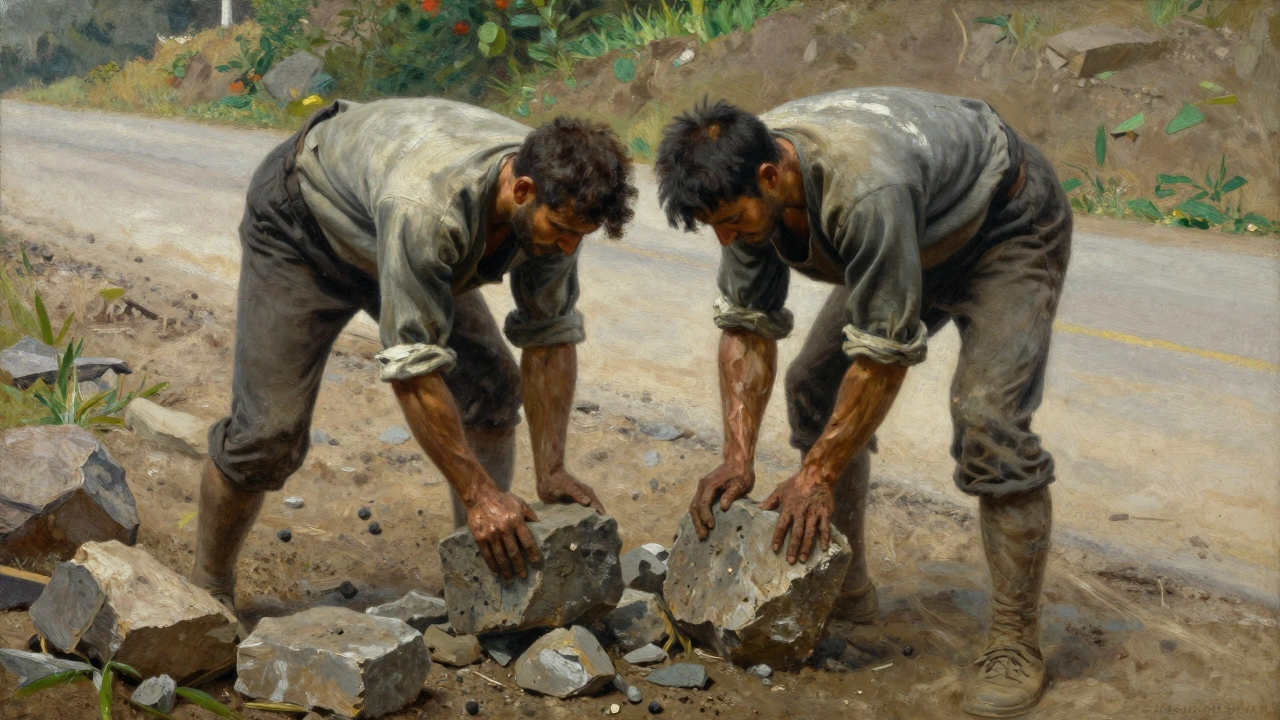
If you want a human face for the birth of modern art, Gustave Courbet is a French painter who founded the Realist movement by depicting ordinary life without romanticization. is the strongest candidate. In 1850, he painted The Stone Breakers. It showed two laborers breaking rocks for road construction. There was no moral lesson, no heroic pose, and no beautiful lighting. Just dirt, sweat, and hard work.
Courbet didn’t just paint poor people; he forced the viewer to confront them. He rejected the smooth, polished finish expected by the Academy. His brushwork was rough and visible. He famously said, "Show me an angel, and I will paint one." He only painted what he could see. This was a radical act. By elevating the mundane to the level of high art, Courbet broke the hierarchy of genres. He declared that the artist’s eye, not the subject’s status, determined the value of the work.
Courbet’s influence went beyond painting. He organized an independent exhibition in 1855, right next to the official Paris Salon, when his works were rejected. This act of creating an alternative space for art became a blueprint for future modern movements. Without Courbet’s insistence on truth over beauty, the path for later artists would have been much harder to clear.
| Aspect | Traditional (Academic) | Early Modern (Realist/Impressionist) |
|---|---|---|
| Subject Matter | Mythology, History, Religion | Everyday life, Nature, Urban scenes |
| Technique | Smooth, invisible brushstrokes | Visible, textured brushwork |
| Purpose | Instruct, Idealize, Flatter | Observe, Interpret, Challenge |
| Lighting | Dramatic, studio-controlled | Natural, outdoor, fleeting |
The Technological Disruptor: Eadweard Muybridge and Photography
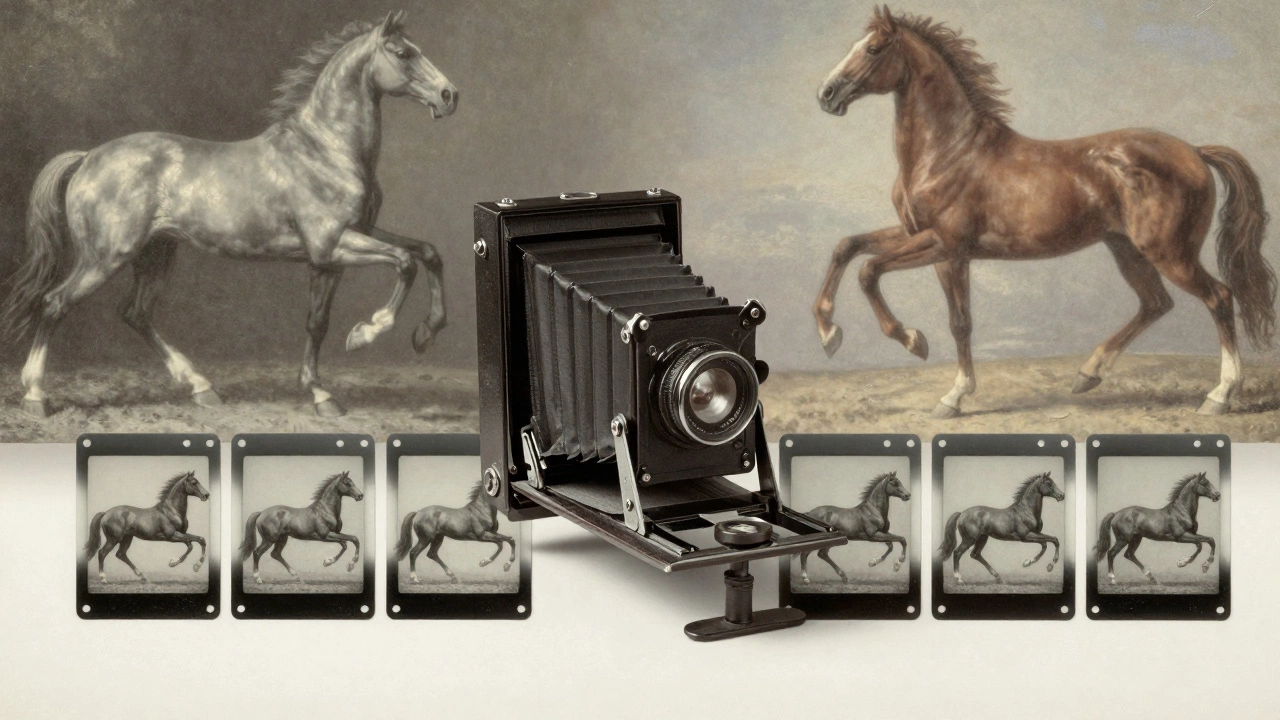
While Courbet was challenging social norms, another force was challenging the very mechanics of seeing. In 1878, Eadweard Muybridge is an English photographer known for his experiments in photographing moving subjects at high speed. took a series of photographs showing a horse galloping. For centuries, painters had depicted horses with all four legs extended in a "wheeling" pose during a gallop. It looked dynamic and powerful. But Muybridge’s cameras proved it was wrong. At certain points, all four hooves were off the ground, but the legs were tucked under the body, not stretched out.
This seems like a minor detail, but it shattered the illusion of artistic authority. If a camera could capture truth more accurately than a master painter, what was the point of realistic painting? Artists realized they couldn’t compete with photography on accuracy. So, they stopped trying. Instead of copying reality, they began to focus on what photography couldn’t do: convey emotion, movement, and subjective experience.
Muybridge’s work directly influenced Edgar Degas is a French artist associated with the Impressionists, known for his paintings of dancers and bathers. and other Impressionists. They started cropping images awkwardly, freezing moments in time, and focusing on the sensation of movement rather than anatomical precision. In this sense, Muybridge is the "first modern artist" because he provided the technological shock that forced painting to reinvent itself.
Impressionism: The Final Break
By the late 1860s, a group of young painters including Claude Monet is a French painter who led the Impressionist movement by capturing fleeting moments of light., Pierre-Auguste Renoir is a French artist known for his vibrant depictions of leisure and light., and Camille Pissarro is a Danish-French Impressionist painter who advocated for painting outdoors. were taking Courbet’s realism and pushing it further. They went outside. They painted quickly. They used bright, unmixed colors applied in short, broken strokes.
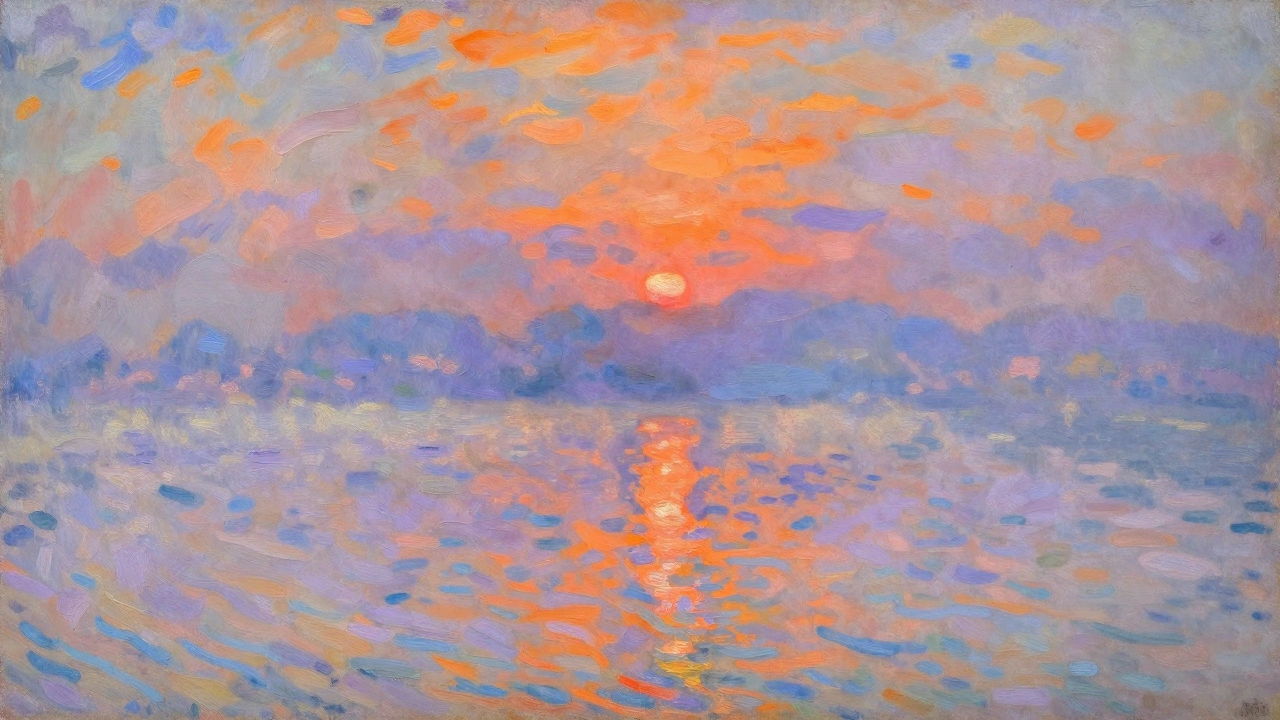
When Monet exhibited Impression, Sunrise in 1874, critics mocked the title and the technique. The painting looked unfinished. The details were blurry. But the artists argued that this was more true to how we actually see the world. Our eyes don’t take in sharp lines and perfect details everywhere; we perceive light, color, and atmosphere. Impressionism shifted the focus from the object to the viewer’s perception of the object.
This was the definitive turn toward modernity. Art was no longer about representing the external world objectively; it was about recording the internal experience of the artist. This opened the door for Post-Impressionism, Fauvism, Cubism, and eventually Abstract Expressionism. Once you accept that art is about perception, there are no more rules.
Why There Is No Single "First" Artist
Trying to name one person ignores the collaborative nature of cultural change. Modern art wasn’t invented in a vacuum. It was a response to:
- Industrialization: Cities grew faster than ever, creating new subjects and anxieties.
- Photography: Freed painting from the duty of documentation.
- Political Upheaval: Revolutions in 1830 and 1848 challenged traditional hierarchies.
- New Materials: Tube paints allowed artists to work outdoors easily.
So, who was first? It depends on what aspect of modernity you value most.
- If you value social honesty, it’s Gustave Courbet.
- If you value technological disruption, it’s Eadweard Muybridge.
- If you value visual perception, it’s Claude Monet.
- If you value spiritual symbolism, some argue for Caspar David Friedrich, whose Romantic landscapes hinted at the inner life long before the Impressionists.
Most historians agree that the period between 1850 and 1875 was the crucible. It was during these twenty-five years that the chain links between tradition and modernity finally snapped. The "first" modern artist is less a single individual and more a collective moment of awakening.
How This Changes How We View Art Today
Understanding this origin story helps us appreciate why modern art can sometimes feel difficult or abstract. When you look at a Picasso or a Pollock, remember that they are standing on the shoulders of Courbet and Monet. They inherited the freedom to prioritize feeling over form, idea over imitation.
The next time you visit a gallery, look closely at the brushwork. Do you see smooth, invisible surfaces, or do you see the energy of the artist’s hand? That distinction is the heartbeat of modern art. It’s the difference between looking at a window and looking at a conversation.
Is Gustave Courbet considered the father of modern art?
Courbet is often called the father of modern art because he founded Realism, which rejected idealized subjects in favor of everyday life. His refusal to follow academic rules paved the way for Impressionism and subsequent movements. However, he is one of several key figures, including Monet and Manet, who contributed to the shift.
What role did photography play in the rise of modern art?
Photography freed painters from the obligation to create realistic representations. Since cameras could capture accurate likenesses and details more efficiently, artists began exploring subjective experiences, emotions, and abstract forms, leading to movements like Impressionism and Cubism.
Why is Claude Monet considered a pivotal figure in modern art?
Monet led the Impressionist movement, which focused on capturing the transient effects of light and color rather than detailed outlines. This shift emphasized the viewer's perception and the artist's personal experience, marking a decisive break from traditional academic painting.
Did modern art start in France?
Yes, the primary developments of modern art occurred in Paris during the late 19th century. France was the center of the art world at the time, hosting major salons and attracting artists from across Europe. Movements like Realism, Impressionism, and Post-Impressionism all originated there before spreading globally.
What is the difference between modern art and contemporary art?
Modern art generally refers to the period from the 1860s to the 1970s, characterized by a break from traditional techniques and a focus on abstraction and self-expression. Contemporary art refers to art produced from the late 20th century to the present day, often engaging with current social, political, and technological issues.
