Find Your Landscape Painting Champion
Ask ten art historians who painted the best landscapes, and you’ll likely get twelve different answers. That’s because landscape painting isn’t just one style-it’s a massive category that spans centuries, cultures, and wildly different philosophies about what nature actually means to us.
Some artists wanted to document the land with scientific precision. Others used mountains and rivers as metaphors for human emotion or spiritual awe. There is no single "best" painter, but there are undeniable giants whose work changed how we see the world. If you’re trying to understand who holds the crown, you have to look at who invented the rules, who broke them, and who made the scenery feel alive in ways we still can’t quite explain.
The Birth of the Genre: Why Nature Became the Star
For most of Western art history, nature was just the background. It was the forest behind the saint or the hills behind the king. The person mattered; the place didn’t. That shifted dramatically in the 17th century with the Dutch Golden Age. Artists like Johannes Vermeer focused on interiors, but his contemporaries turned their eyes outward to the flat, misty skies of the Netherlands.
Jacobb van Ruisdael is often cited as the first true master of this new approach. He didn’t just paint trees; he painted the atmosphere around them. His clouds have weight. His water reflects light with a realism that feels almost photographic. Van Ruisdael established the idea that a view could be a subject worthy of a masterpiece on its own. Without him, the later British and German movements wouldn’t have had a foundation to build on.
- Key Innovation: Treating sky and weather as primary subjects, not just decoration.
- Impact: Moved art away from religious/mythological narratives toward observational reality.
- Must-See Work: View of Haarlem with Bleaching Grounds, which shows how light changes across a vast canvas.
The English School: Constable and Turner’s Duel
If you ask someone in the UK who the greatest landscape painter is, two names will come up immediately: John Constable and J.M.W. Turner. They were contemporaries, rivals, and completely opposite in their methods. This rivalry defines much of what we consider "great" in landscape art today.
John Constable was obsessed with truth. He famously said, "I should paint my own places best." He studied the clouds over his hometown of Suffolk, making hundreds of small sketches to understand how weather moved. His paintings, like The Hay Wain, feel grounded, solid, and deeply familiar. He captured the dampness of the grass and the specific way light hits a riverbank in England. For viewers who value emotional connection to home and memory, Constable is often the top choice.
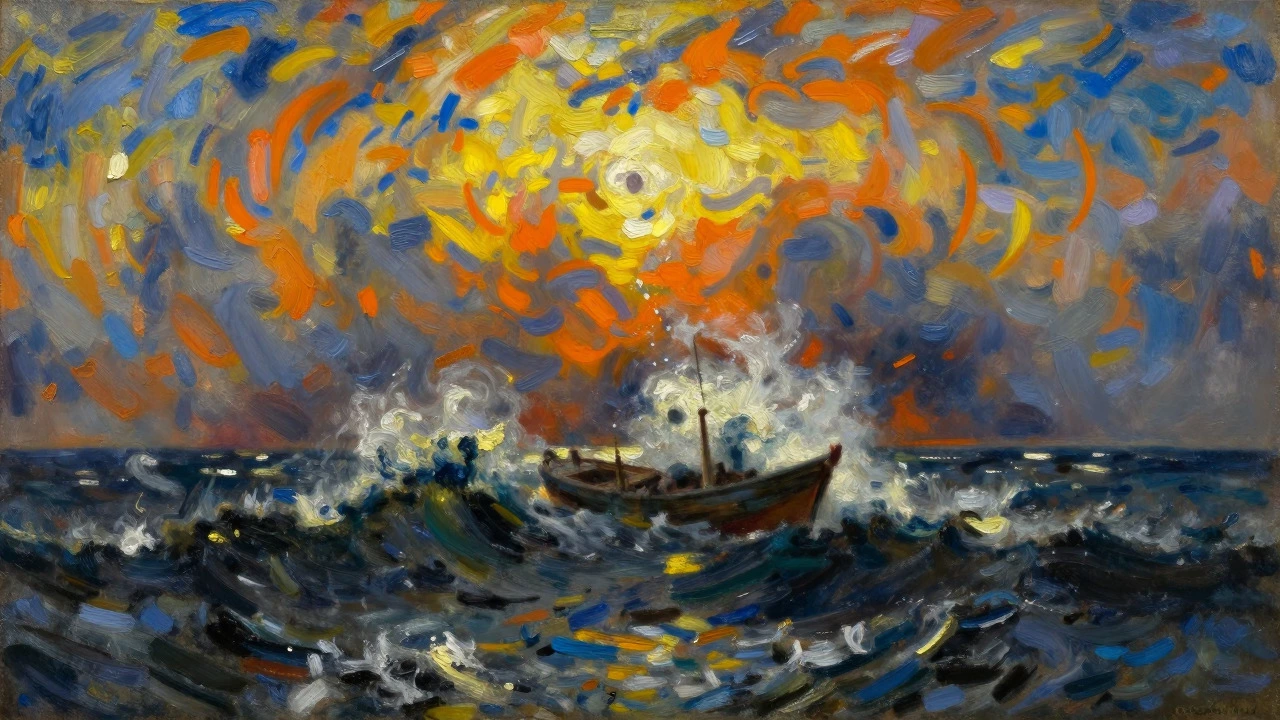
Then there was J.M.W. Turner. Where Constable was precise, Turner was chaotic. He cared less about drawing a tree correctly and more about capturing the feeling of a storm or the blinding glare of the sun. By the end of his life, his landscapes became almost abstract swirls of color. Critics at the time called his work madness; today, we see it as the bridge to Impressionism. If you believe art should evoke raw power and sublime terror, Turner takes the title.
| Artist | Primary Focus | Style Approach | Legacy Impact |
|---|---|---|---|
| John Constable | Rural England, Weather patterns | Observational, Textured brushwork | Influenced Realism and plein air painting |
| J.M.W. Turner | Light, Atmosphere, Catastrophe | Luminous, Loose, Abstract tendencies | Paved the way for Impressionism and Modernism |
The Romantic Soul: Caspar David Friedrich
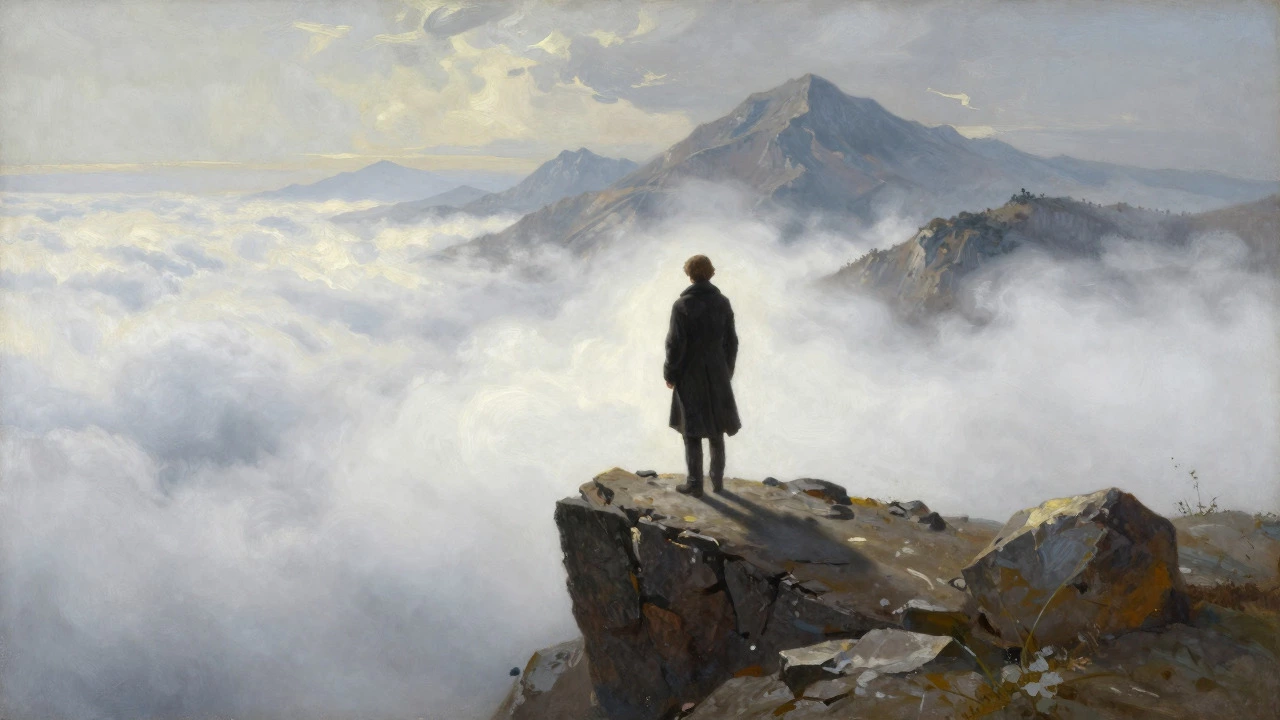
While the British were documenting their countryside, a quiet man in Germany was using landscapes to explore death, faith, and the infinite. Caspar David Friedrich is arguably the most influential landscape painter for modern sensibilities. You’ve probably seen his images reproduced everywhere-from posters to movie backgrounds-without realizing it.
Friedrich’s paintings are rarely just about pretty views. They are staged meditations. He often placed small, solitary figures looking out over foggy forests or icy seas. These figures aren’t characters in a story; they are proxies for the viewer. When you look at Wanderer Above the Sea of Fog, you step into those boots. The landscape becomes a mirror for your own internal state.
His use of symbolism was heavy. A church ruin meant the decline of faith. Bare trees represented mortality. But beneath the symbols was an incredible mastery of light and composition. Friedrich taught us that a landscape could be a spiritual experience. If "best" means most emotionally resonant and philosophically deep, Friedrich is a strong contender.
American Grandeur: Thomas Cole and the Hudson River School
Across the Atlantic, the United States was developing its own artistic identity through the lens of its vast, untamed wilderness. The Hudson River School, led by Thomas Cole, treated the American landscape as a divine revelation. Unlike the cultivated gardens of Europe, these painters depicted rugged mountains, dense forests, and sweeping vistas that felt untouched by humanity.
Cole’s work, such as The Course of Empire series, used landscape to tell moral stories about civilization’s rise and fall. Later artists in this movement, like Albert Bierstadt, took this to a dramatic extreme with huge canvases of the Rocky Mountains. While some critics dismiss them as overly theatrical, their impact on American conservation and national identity is undeniable. They helped create the concept of National Parks by showing people how majestic and fragile these places were.
The Global Perspective: Beyond Europe and America
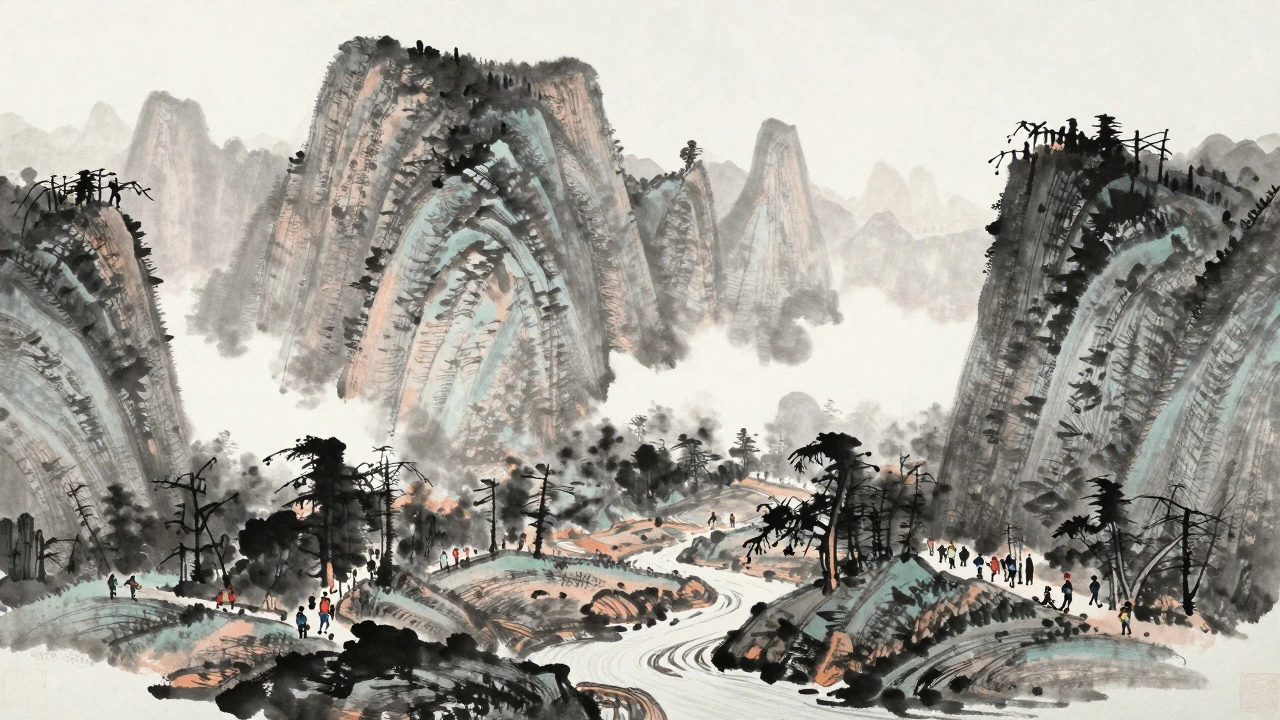
Focusing only on Western art misses half the story. In China, landscape painting (Shan Shui) has been a dominant genre for over a thousand years. Artists like Guo Xi (Northern Song Dynasty) developed techniques to represent depth and scale that differed entirely from European perspective. Instead of a fixed viewpoint, Chinese landscapes invited the eye to wander through the scene, mimicking the experience of hiking through mountains.
Similarly, Japanese ukiyo-e prints by artists like Katsushika Hokusai influenced Western artists profoundly. Hokusai’s The Great Wave off Kanagawa is perhaps the most recognized landscape image in history. Its bold lines and flattened space challenged Western notions of realism and inspired Impressionists like Monet. Ignoring these traditions gives an incomplete picture of who the "best" might be.
How to Decide Who Is the Best for You
Since there is no objective winner, the "best" landscape painter depends on what you want the art to do for you. Here is a quick guide to help you find your personal champion:
- If you love detail and realism: Look to Jacob van Ruisdael or John Constable. Their work rewards close inspection with intricate textures and accurate light.
- If you seek emotion and spirituality: Caspar David Friedrich is unmatched. His scenes feel like silent prayers.
- If you prefer energy and abstraction: J.M.W. Turner offers a visceral experience of light and movement that feels modern even today.
- If you appreciate cultural philosophy: Explore Guo Xi or Hokusai to see how other cultures conceptualize space and nature.
Why This Debate Matters Today
In an age of climate change and digital screens, landscape painting feels more relevant than ever. We look back at these masters not just for beauty, but for a reminder of our connection to the physical world. Constable’s clouds remind us of the complexity of weather systems. Friedrich’s solitude speaks to our need for mental space. Turner’s storms warn us of nature’s power.
Ultimately, the "best" landscape painter is the one who makes you stop scrolling and actually look at the horizon. Whether it’s the moody brooding of a German Romantic or the bright optimism of an American frontier, these artists did something rare: they made us care about the ground beneath our feet.
Who is considered the father of landscape painting?
Jacob van Ruisdael is often credited as the first major artist to treat landscape as a standalone subject rather than just a background for figures. His detailed depictions of the Dutch countryside set the standard for future generations.
Is J.M.W. Turner better than John Constable?
It depends on your preference. Constable is superior if you value realistic detail and emotional connection to specific places. Turner is better if you prefer atmospheric effects, dramatic light, and expressive brushwork that borders on abstraction.
What makes Caspar David Friedrich’s landscapes unique?
Friedrich used landscapes as symbols for spiritual and philosophical ideas. He often included solitary figures facing vast, empty spaces to evoke feelings of awe, melancholy, and contemplation, making the viewer part of the scene.
Are there any famous non-Western landscape painters?
Yes. In China, Guo Xi is a legendary figure from the Song Dynasty known for his monumental mountain scenes. In Japan, Katsushika Hokusai created iconic woodblock prints like "The Great Wave," which heavily influenced Western art movements like Impressionism.
Which landscape painter influenced the Impressionists the most?
J.M.W. Turner had a significant influence on the Impressionists, particularly Claude Monet. Turner’s focus on light, color, and atmospheric effects over precise detail paved the way for the Impressionist style.
