Street Art Popularity Analyzer
Configuration
Adjust the sliders to prioritize different factors (Visibility, Legality, Speed) and see which street art form dominates.
Analysis Results
Adjust settings and click Analyze to see results.
Walk down any major city street today, and you will likely see a wall covered in color. But what exactly are you looking at? Is it vandalism or high art? When people ask what is the most popular form of street art, the answer isn't as simple as pointing to one technique. It depends on whether you define "popular" by sheer volume, global recognition, or legal acceptance.
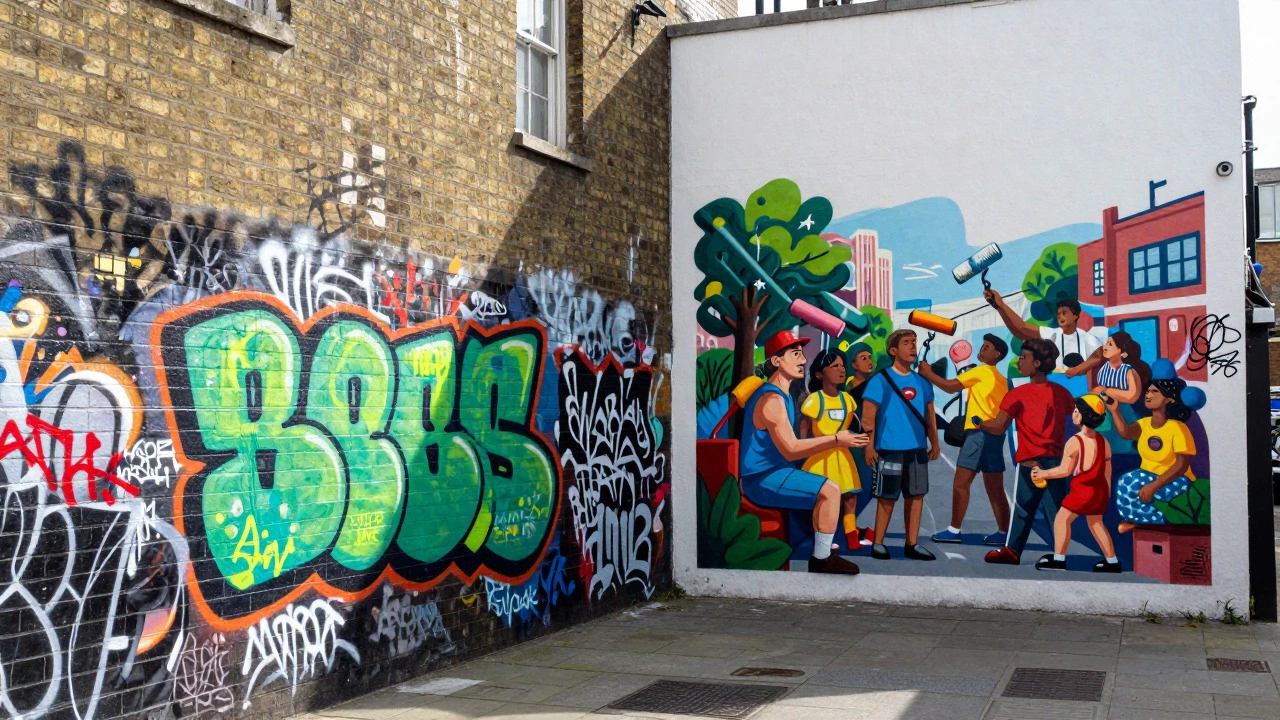
In the world of urban expression, two giants dominate the conversation: Graffiti is a style of writing or drawing on a wall or other surface, typically as a form of artistic expression or criminal activity. Often associated with spray paint, tags, and subway trains, it has roots in hip-hop culture and remains the rawest form of street communication. On the other hand, we have Murals are large paintings executed directly on a flat wall surface. These are often commissioned, highly detailed, and transform entire neighborhoods into open-air galleries.
The Battle for Dominance: Graffiti vs. Murals
If we measure popularity by the number of pieces created globally, Graffiti takes the crown. Its accessibility is unmatched. You need a can of spray paint, a bit of courage, and a wall. The barrier to entry is low, which means millions of artists worldwide create graffiti daily. From New York City to São Paulo, tags and throw-ups cover every available surface. This ubiquity makes it the most visible form of street art in terms of quantity.
However, if we measure popularity by public appreciation and media coverage, Murals win hands down. Cities actively seek out muralists to revitalize districts. Think of the Wynwood Walls in Miami or the vibrant streets of Bristol, where I live. Here, large-scale murals attract tourists, boost local business, and become landmarks. While graffiti is often seen as noise or clutter by the general public, murals are celebrated as community assets. This shift in perception has made murals the most "popular" in terms of social capital and economic impact.
The Rise of Stencil Art and Wheatpaste
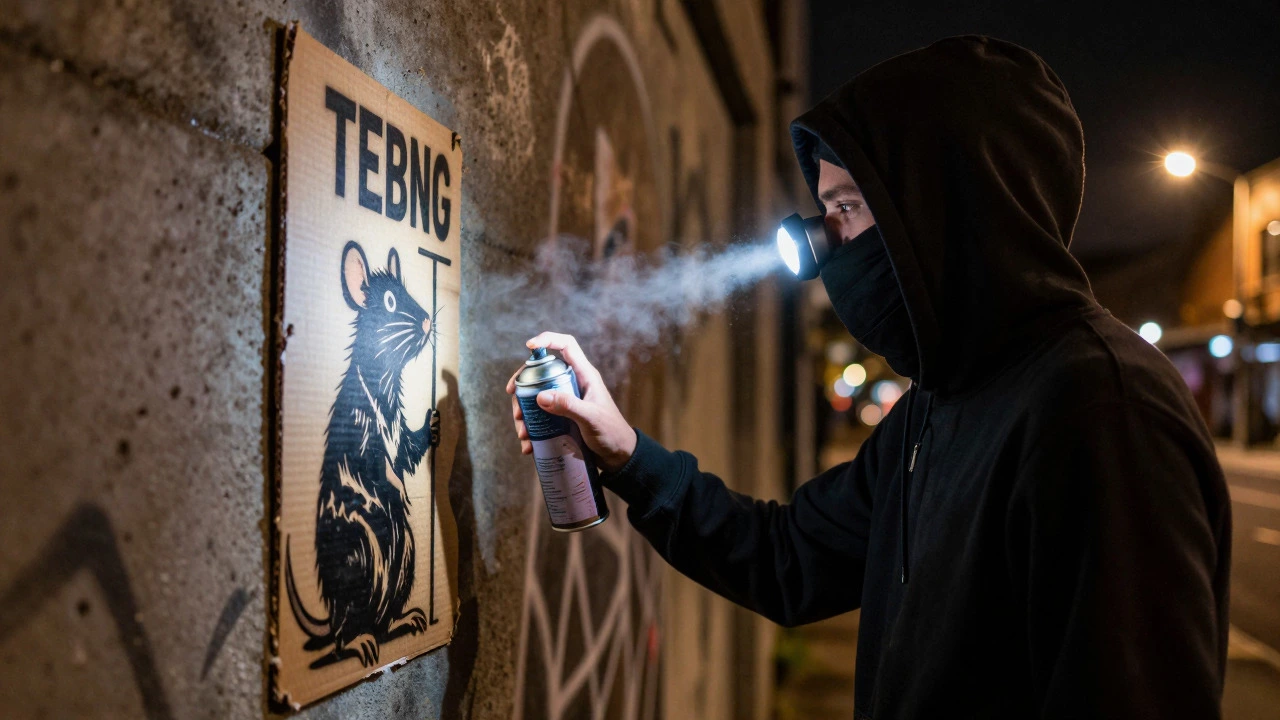
While graffiti and murals grab the headlines, other forms of street art have carved out significant niches. Stencil art is a method of printing using a cut-out design to apply paint to a surface. Pioneered by artists like Banksy, stencils allow for rapid execution and sharp, reproducible images. This speed is crucial for illegal work, allowing artists to finish a piece before police arrive. The precision of stencils also appeals to a broader audience because the imagery is often clear, political, or humorous, rather than abstract lettering.
Another rising contender is Wheatpaste is a technique involving pasting paper posters onto walls using a flour-based adhesive. This method bridges the gap between traditional poster art and street installation. It allows for complex graphics that would be impossible to achieve with spray paint alone. Wheatpaste is less permanent than paint but easier to remove, making it a favorite for temporary campaigns and experimental artists. In recent years, the rise of digital printing has made wheatpaste more accessible, leading to a surge in its popularity among younger creators.
Why Context Matters in Popularity
The definition of "most popular" shifts depending on the geographic and cultural context. In Latin America, muralism has a deep historical tradition tied to political revolution and social justice. Here, murals are not just decorations; they are historical records. In contrast, in Europe, particularly in cities like Berlin and London, graffiti culture emerged from punk and hip-hop movements, emphasizing individual identity and rebellion.
This regional difference affects how these forms are perceived. A tag in Berlin might be respected as part of the city's gritty history, while the same tag in a conservative suburb elsewhere might be immediately painted over. Understanding this context helps explain why certain forms thrive in specific locations. For instance, Yarn bombing is a form of street art that uses knitted or crocheted yarn to cover public objects. This soft, colorful intervention is incredibly popular in suburban areas and smaller towns where harsh spray paint might feel out of place. It’s a gentle form of protest that invites interaction rather than confrontation.
The Role of Social Media in Shaping Trends
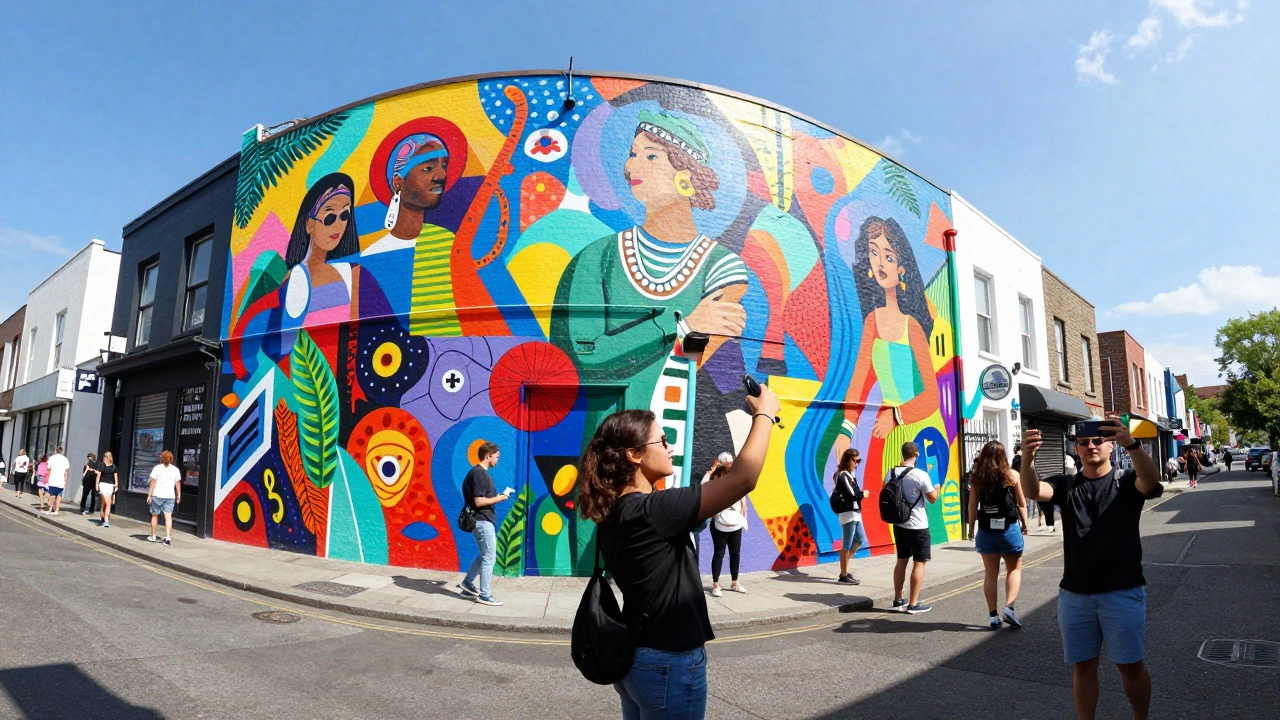
You cannot discuss modern street art without mentioning Instagram and TikTok. Social media has democratized visibility. An artist in a remote village can now gain international fame overnight if their work goes viral. This has led to a homogenization of styles, as artists adapt their work to fit the aesthetic preferences of online audiences. Bright colors, bold lines, and photogenic compositions are favored because they perform well on screens.
This digital influence has boosted the popularity of large-scale, visually striking murals. They make for perfect background photos, encouraging user-generated content. Conversely, subtle or text-heavy graffiti often struggles to capture attention in a fast-scrolling feed. As a result, the physical act of creating street art is increasingly driven by the potential for digital dissemination. Artists are not just painting walls; they are creating content for the cloud.
| Form | Primary Tool | Speed of Execution | Legal Status | Public Perception |
|---|---|---|---|---|
| Graffiti | Spray Paint | Fast (minutes) | Often Illegal | Polarizing |
| Murals | Brushes/Rollers | Slow (days/weeks) | Usually Legal | Positive |
| Stencils | Spray Paint/Stencils | Very Fast (seconds) | Often Illegal | Mixed |
| Wheatpaste | Paper/Glue | Medium (hours) | Varies | Neutral |
The Future of Urban Expression
As cities become smarter and surveillance increases, the landscape of street art continues to evolve. We are seeing a rise in interactive installations and light projections that leave no physical trace. These ephemeral forms challenge the traditional notion of street art as something permanent. Yet, despite these technological advancements, the core appeal remains the same: reclaiming public space and giving voice to the unheard.
Whether it’s a quick tag scrawled on a train car or a massive, commissioned mural depicting local heroes, street art reflects the pulse of society. It is messy, controversial, and beautiful. And while debates about legality and aesthetics continue, one thing is clear: street art is here to stay, constantly reinventing itself to remain relevant in an ever-changing urban environment.
Is graffiti considered a form of street art?
Yes, graffiti is widely considered a foundational form of street art. While some distinguish between "graffiti" (often focused on lettering and tagging) and "street art" (which includes stencils, murals, and installations), both fall under the broader umbrella of urban visual culture. Many contemporary street artists began their careers as graffiti writers.
What is the difference between a mural and a graffiti piece?
The main differences lie in intent, style, and legality. Murals are typically large-scale, representational artworks often commissioned by property owners or municipalities. They use brushes, rollers, and various paints to create detailed images. Graffiti, on the other hand, often focuses on stylized lettering (tags, throw-ups, pieces) and is frequently done illegally without permission. However, the lines are blurring as many graffiti artists now create large, illustrative works similar to murals.
Which street art form is most common in Europe?
Europe has a rich history of both graffiti and political murals. In countries like Germany and France, graffiti culture is deeply entrenched, with dedicated spots for writers. Meanwhile, Southern European countries like Spain and Italy have strong traditions of muralism, often tied to social and political movements. Bristol, UK, is famous for its mix of both, thanks to its association with Banksy and a vibrant local art scene.
Can street art increase property values?
Yes, particularly when it involves high-quality murals. Studies have shown that well-executed street art can reduce crime rates, attract tourism, and revitalize neglected neighborhoods. This phenomenon, known as "creative placemaking," has led many cities to invest in public art programs. However, unauthorized graffiti is still often viewed negatively by property owners and can lead to decreased perceived safety.
How do artists protect their work from being painted over?
Protection varies greatly. Legal murals are often protected by contracts with property owners who agree to maintain them. Illegal works rely on obscurity or community support. Some artists use anti-graffiti coatings to make future removal easier, ironically protecting their own work by making it less likely to be tagged over. Social media documentation also serves as a form of preservation, ensuring the art lives on digitally even if the physical piece is lost.
