Portrait Canvas Size Calculator
Configure Your Space
Standard Three-Quarter Portrait
Visual Aspect Ratio
Enter your wall dimensions to find the perfect canvas size.
Have you ever stood in a gallery or scrolled through an art feed, wondering why some portraits feel intimate while others feel monumental? The answer often lies not just in the brushwork, but in the length of the portrait. There is no single "best" length that works for every subject. Instead, the ideal dimension depends on what story you want to tell, where the painting will hang, and how much detail you plan to render.
Choosing the right scale is one of the first decisions an artist makes. It dictates your workflow, your materials, and even the emotional impact of the final piece. If you pick a canvas that is too small, you might lose crucial facial details. If it’s too large, you might struggle with consistency across the entire surface. Let’s break down the most common portrait lengths and when to use them.
The Intimate Headshot: 8x10 to 12x16 Inches
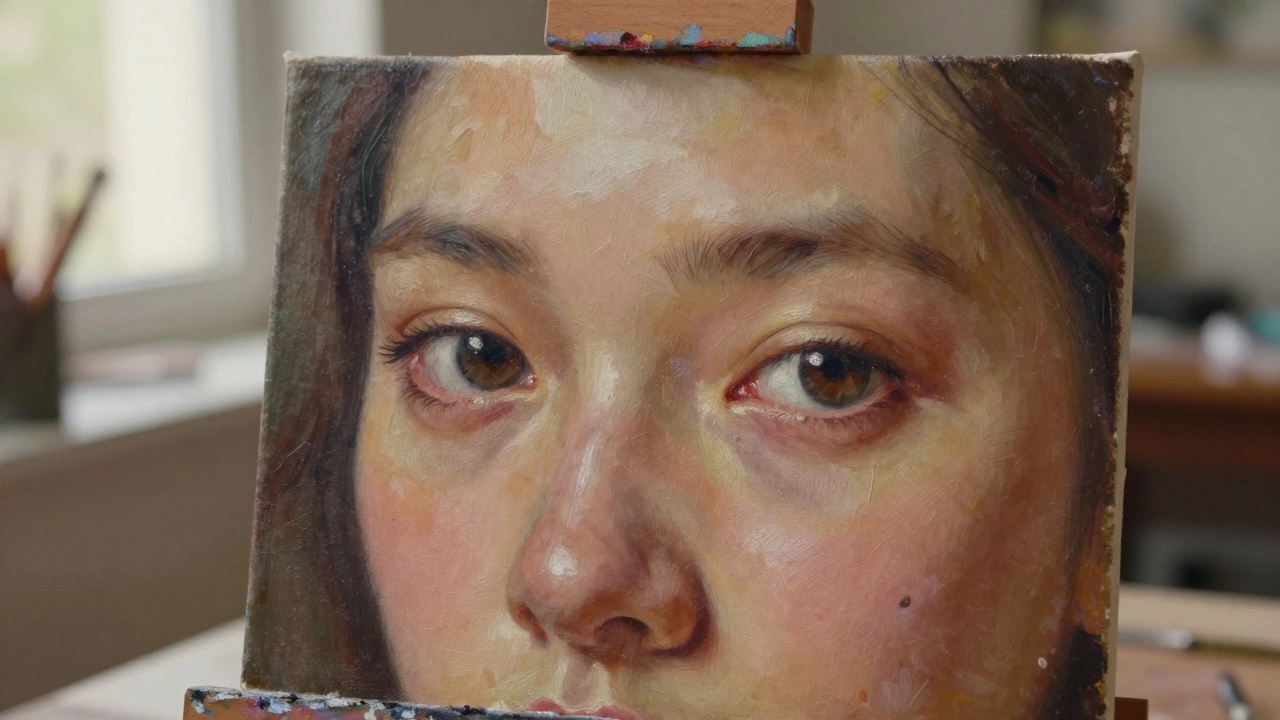
For many artists, especially those starting out or working in tight spaces, the smaller end of the spectrum is the sweet spot. A portrait measuring between 8x10 inches and 12x16 inches focuses almost entirely on the face. This format forces you to be precise. There is nowhere to hide behind broad strokes or background elements.
This length is perfect for capturing subtle expressions-a slight furrow in the brow, the glint in an eye, or the texture of skin around the mouth. Because the area is limited, these paintings often feel personal and direct. They work well for desk displays, small shelves, or as part of a larger series of studies.
- Best for: Quick studies, beginner practice, intimate character studies.
- Challenge: Maintaining proportion without getting lost in tiny details.
- Viewer Distance: Viewed from arm's length or closer.
The Standard Three-Quarter: 16x20 to 24x36 Inches
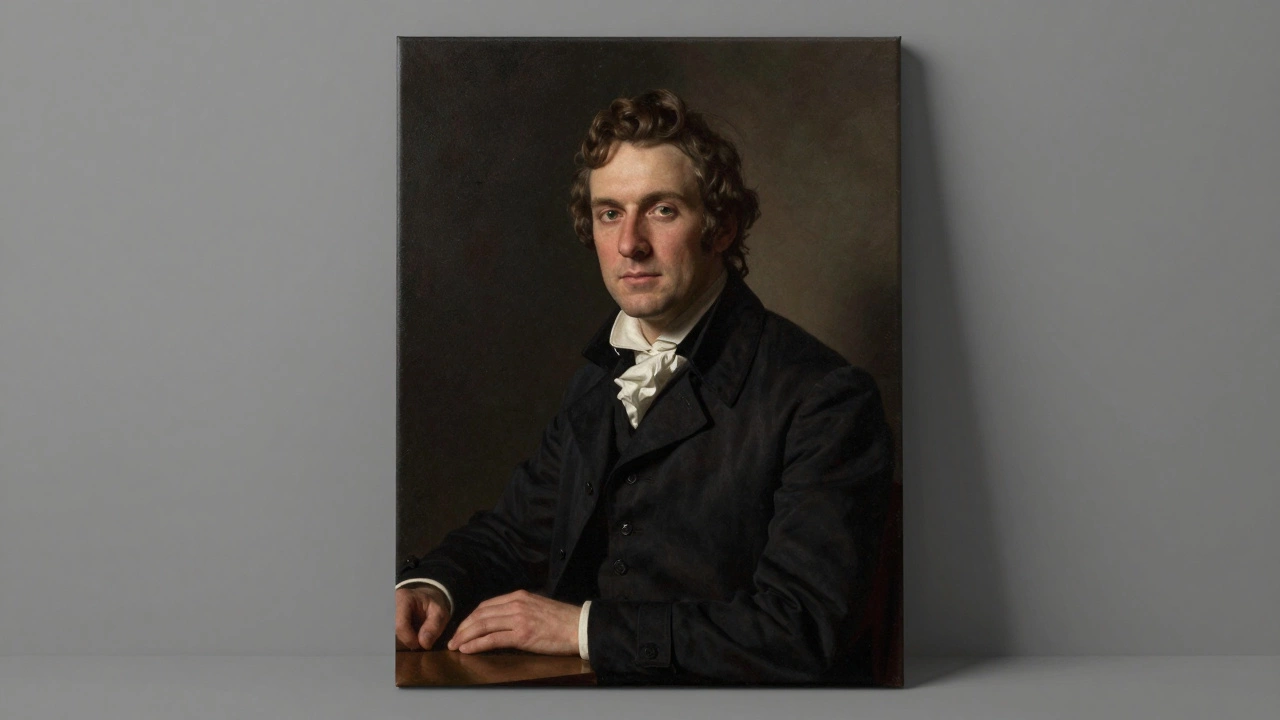
If there is a "gold standard" in portrait painting, it is likely the three-quarter view that includes the head, neck, and shoulders, sometimes extending to the upper chest. Canvas lengths in the 20-inch to 36-inch range are incredibly popular for a reason. They offer enough room to establish the pose and include some clothing or environmental context without overwhelming the viewer.
A 24x36 inch canvas, for example, allows you to paint the hands resting on a table or the collar of a shirt, which adds narrative depth. This size is substantial enough to command attention on a wall but not so large that it dominates a small room. It strikes a balance between detail and composition.
| Canvas Size (Inches) | Portrait Type | Ideal Viewing Distance | Complexity Level |
|---|---|---|---|
| 8x10 - 12x16 | Head Study | Close (1-2 feet) | High Detail / Low Context |
| 16x20 - 24x30 | Bust / Three-Quarter | Moderate (3-5 feet) | Medium Detail / Medium Context |
| 24x36 - 30x40 | Half-Length | Moderate-Far (5-8 feet) | Medium Detail / High Context |
| 40x60+ | Full Body / Grand Manner | Far (10+ feet) | Lower Detail / High Impact |
The Half-Length Portrait: 30x40 to 36x48 Inches
When you extend the length to include the torso and perhaps the lap or hands, you enter the realm of the half-length portrait. These pieces, often ranging from 30 to 48 inches in height, allow for more complex compositions. You can show the subject holding an object, wearing specific attire that denotes status or profession, or interacting with their environment.
This length requires a different approach to lighting and shadow. Because the vertical space is greater, you need to ensure the light source remains consistent from the top of the head to the bottom of the frame. Artists often choose this size for commissioned portraits because it feels formal and respectful, giving the subject presence without requiring the massive scale of a full-body piece.
Full-Body and Monumental Portraits: 48 Inches and Up
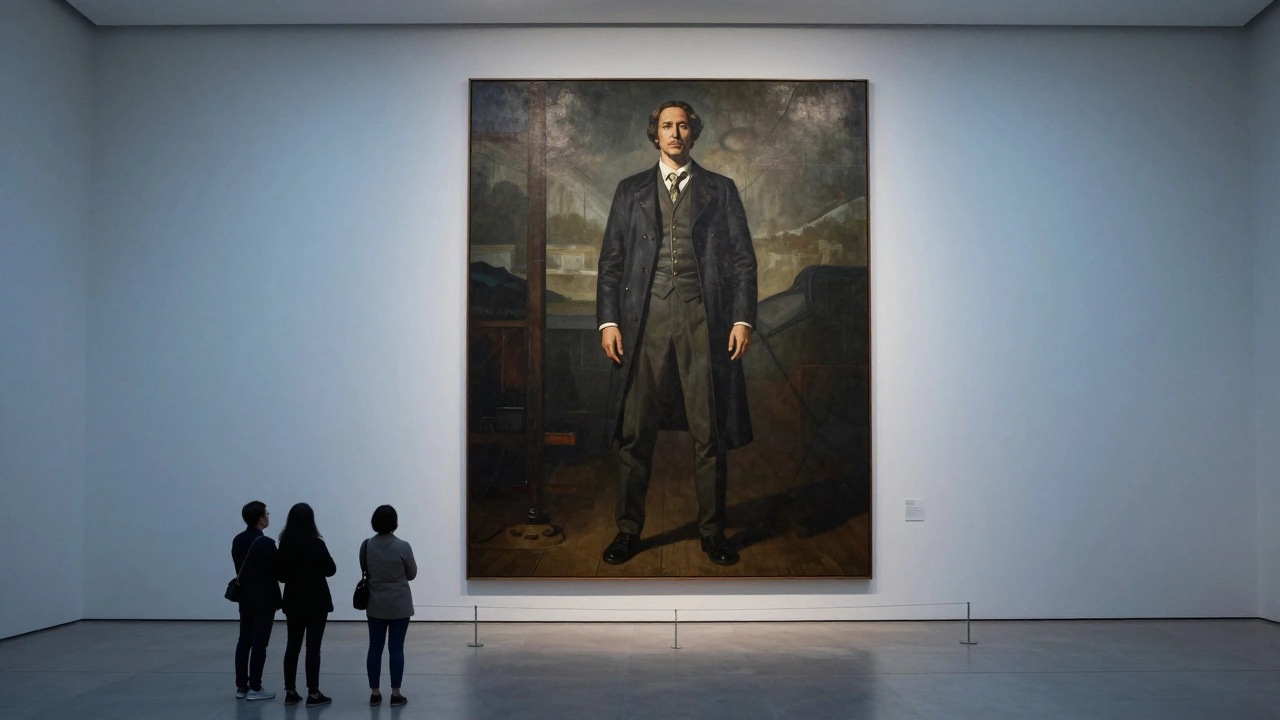
Full-body portraits demand significant length-often 60 inches, 72 inches, or even taller. These are statement pieces. Think of historical royal portraits or contemporary large-scale installations. At this scale, fine details become less important than overall form, color harmony, and energy.
Painting a full-length portrait is physically demanding. You may need a ladder or an easel that tilts back. The challenge here is not rendering the pores of the skin, but ensuring the proportions of the legs, arms, and head remain accurate across a vast surface. One small error in the knee position can throw off the entire figure. These works are designed to be viewed from several feet away, allowing the eye to take in the whole composition at once.
Factors Beyond the Canvas: Aspect Ratio and Orientation
Length doesn't exist in a vacuum. The relationship between height and width-the aspect ratio-changes how we perceive the portrait. A tall, narrow canvas (like 12x24) emphasizes verticality and can make a subject look elongated or elegant. A square canvas (24x24) feels balanced and stable, often used for modern, graphic styles.
Consider the orientation carefully. A landscape-oriented portrait (wider than it is tall) suggests a scene or a moment in time, whereas a portrait-oriented canvas (taller than wide) focuses on the individual. If you are painting a group portrait, a wider canvas might be necessary to fit everyone comfortably without crowding.
Matching Size to Space
One of the biggest mistakes artists make is choosing a size based solely on artistic preference, ignoring where the painting will live. Measure the wall space before you start. A good rule of thumb is that the artwork should occupy about 50% to 75% of the available wall space above furniture like a sofa or bed.
If the wall is small, a massive 48-inch portrait will feel oppressive. Conversely, a tiny 8x10 study on a huge empty wall will look lost. If you are unsure, create a paper mock-up of the intended size and tape it to the wall. Live with it for a day. Does it feel right? Does it draw the eye? This simple test can save you from regretting your scale choice later.
Material Constraints and Cost
Larger canvases cost more, not just in terms of the stretched fabric or wood panel, but also in paint consumption. Covering a 48x60 inch canvas requires significantly more pigment than a 12x16 inch one. For students or hobbyists on a budget, sticking to smaller lengths allows for more experimentation and faster completion times.
Additionally, larger paintings are harder to transport and store. If you don’t have a dedicated studio with high ceilings, painting vertically on a large scale can be awkward. Ensure your workspace can accommodate the physical demands of the size you choose.
What is the most common size for a professional portrait?
The most common sizes for professional portraits are typically 16x20 inches, 20x24 inches, and 24x36 inches. These dimensions provide enough space for detail while remaining manageable for framing and hanging in most homes or offices.
Should I paint my portrait horizontally or vertically?
Vertical (portrait orientation) is traditional for single subjects as it mimics the human shape and focuses attention upward toward the face. Horizontal (landscape orientation) is better suited for group portraits or scenes where the environment plays a major role.
How does canvas length affect the level of detail I can paint?
Shorter canvases allow for higher levels of microscopic detail because the viewer stands closer. As the canvas length increases, you must simplify details because the viewing distance increases. Fine lines that look sharp up close may disappear or look muddy from ten feet away.
Is it better to start with a small or large portrait?
Beginners should generally start with smaller portraits (8x10 to 12x16 inches). Smaller sizes are less intimidating, require fewer materials, and force you to focus on essential forms and values without getting bogged down by excessive detail or compositional complexity.
Can I change the size of my portrait after I start painting?
No, you cannot easily change the physical size of the canvas once you begin. However, you can adjust the composition within the fixed boundaries. If you find the space too cramped, you may need to crop the subject tighter or simplify the background elements to maintain balance.