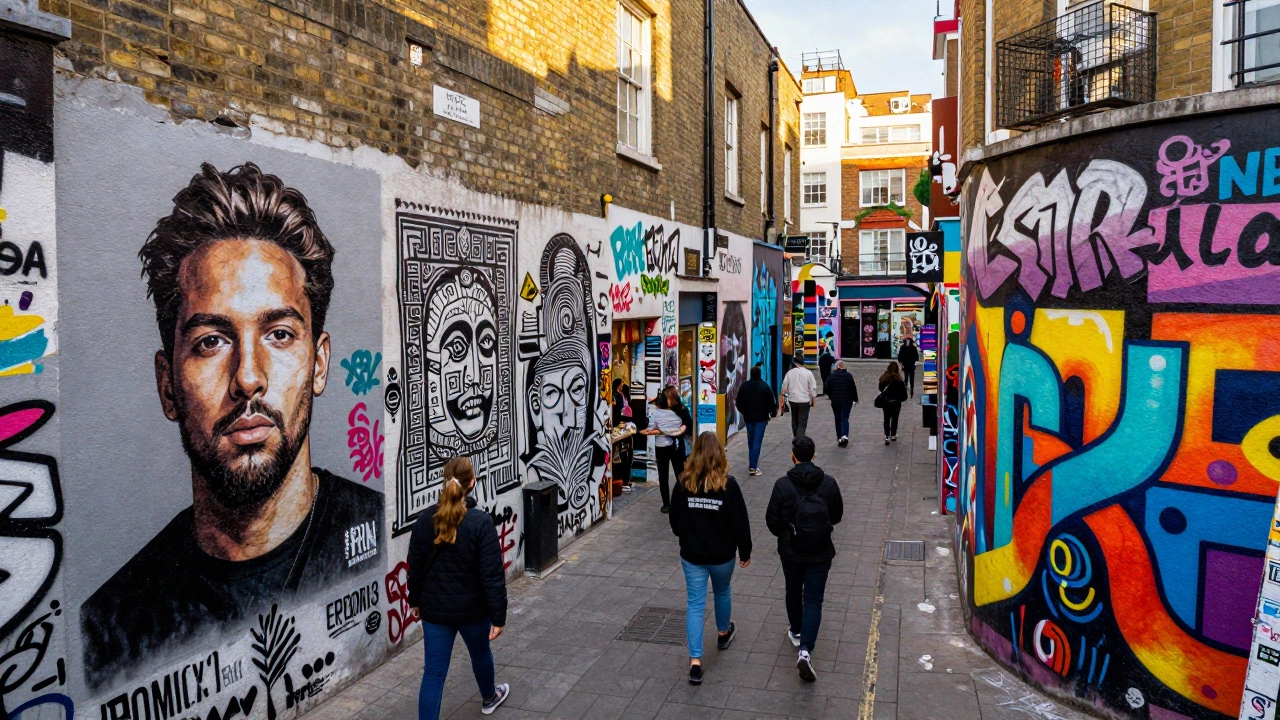
Walk down any high street in London, wander through the alleyways of Melbourne, or just drive past a construction site in New York. You’ll see it everywhere. It’s not just random scribbles on a wall anymore. It’s giant photorealistic portraits, intricate stencils that look like they’ve been there for centuries, and vibrant murals that change the mood of an entire neighborhood. This is street art. But what exactly is it? And why do some people call it vandalism while others hang prints of it in their living rooms?
At its core, street art is visual art created in public locations. Unlike traditional gallery art, which waits for you to visit it, street art comes to you. It’s unsolicited, often unexpected, and always part of the urban landscape. But defining it isn’t as simple as pointing at a wall. The line between "art" and "graffiti" is blurry, debated by critics, loved by fans, and enforced by police.
Is street art the same as graffiti?
Not exactly. While both are forms of public writing or imagery, graffiti traditionally focuses on text, tags, and lettering styles (like wildstyle) and is often associated with subculture identity. Street art is broader; it includes images, stencils, installations, and murals, usually with a message or aesthetic goal beyond just signing your name. Think of graffiti as the ancestor, and street art as the evolved, more diverse offspring.
The Roots: From Tags to Masterpieces
To understand where we are, we have to look back at where this started. Most historians point to Philadelphia and New York City in the late 1960s and early 1970s. Back then, it wasn’t called "street art." It was called tagging. Teenagers like Takemura is an early pioneer of graffiti who used spray paint to sign his name on subway cars and walls. Cornbread in Philly and TAKI 183 in NYC were making headlines not for their artistic technique, but for their sheer volume. They were claiming space.
This evolved quickly. In the 1970s, subway trains became moving canvases. Artists developed complex lettering styles known as "wildstyle," which were nearly illegible to outsiders but highly respected within the community. Then came the boom boxes, the breakdancing, and the hip-hop culture that wrapped around it. By the 1980s, artists like Kenny Scharf is a key figure who bridged the gap between underground graffiti and the mainstream art world. began bringing these styles into galleries.
But the real shift happened in the late 1990s and early 2000s. Artists stopped just writing names and started creating images. Banksy, whose real name remains unknown, emerged from Bristol, UK, using stencils to create sharp, political commentary. His work was easy to reproduce, fast to execute, and impossible to ignore. Suddenly, the public wasn’t just reading tags; they were looking at art. The conversation changed from "who did this mess?" to "what does this mean?"
Techniques: More Than Just Spray Paint
If you think street art is just shaking a can and spraying, you’re missing half the story. The medium has exploded. Here are the most common techniques you’ll see today:
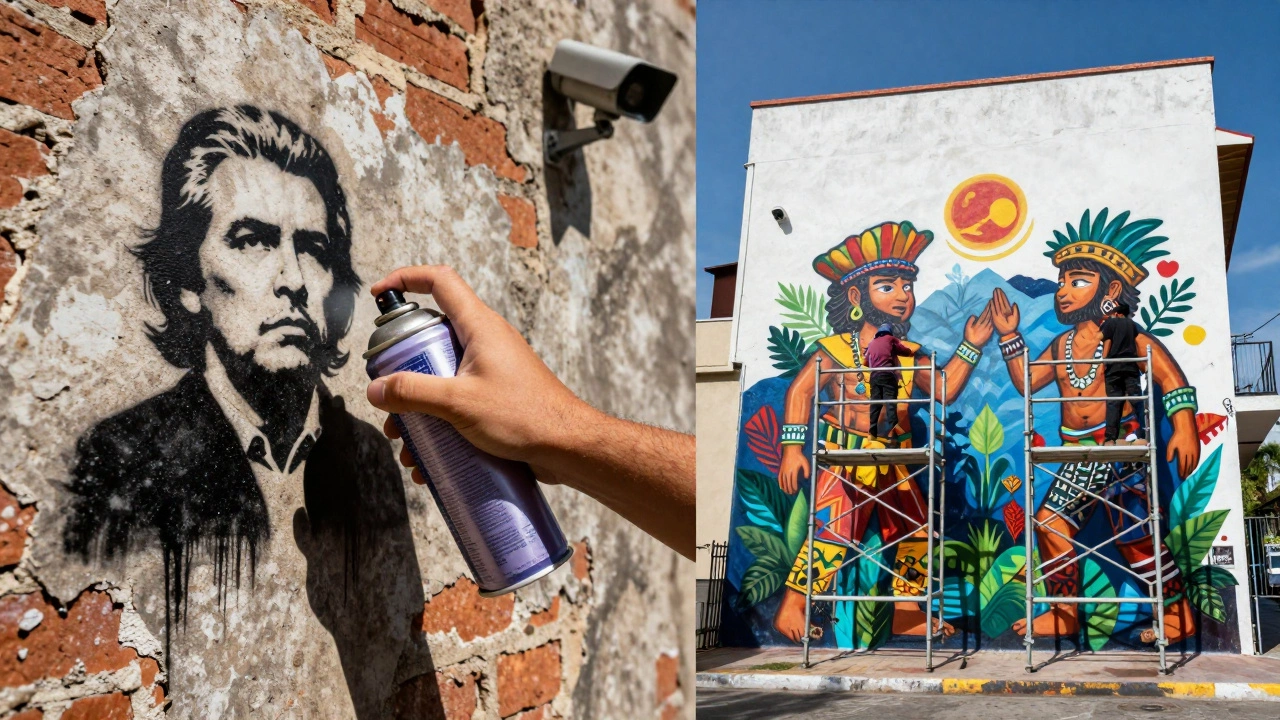
- Stencils: Popularized by Banksy, this involves cutting a design out of card or plastic and spraying over it. It allows for crisp details and rapid execution, which is crucial when you’re trying to avoid security cameras.
- Murals: Large-scale paintings, often commissioned by cities or businesses. These can take weeks to complete and involve scaffolding, rollers, and brushes. Artists like Juan Carlos Alvarado is known as 'Os Gêmeos' and creates colorful, large-scale murals that blend Brazilian folklore with urban life. Os Gêmeos are masters of this style.
- Wheat Pasting: Printing an image on paper, gluing it to a wall with wheat paste (a mix of flour and water). This is less permanent than paint but easier to remove. It’s great for posters and collage-style art.
- Yarn Bombing: Also known as guerrilla knitting. This involves wrapping public objects-benches, trees, statues-in brightly colored yarn or crochet. It’s soft, temporary, and adds a cozy contrast to concrete environments.
- Sticker Bombing: Slapping pre-printed stickers onto surfaces. It’s low-risk and high-reward for spreading a logo or message quickly across a city.
- Installations: Placing 3D objects in public spaces. This could be anything from fake rats crawling up a wall to mannequins sitting on park benches. It interacts with the physical environment in a way paint cannot.
The Legal Line: Vandalism vs. Public Art
This is the biggest tension in the street art world. Is it crime or culture? The answer depends entirely on permission.
In the UK, under the Criminal Damage Act 1971, painting on someone else’s property without consent is a criminal offense. You can be fined or jailed. Cities spend millions annually cleaning up unauthorized work. Yet, the same cities will hire artists to paint murals on blank walls to "beautify" neighborhoods. It’s a double standard that frustrates many artists.
However, the tide is turning. Many local governments now designate "legal walls" or host street art festivals. Places like Shoreditch in London, Wynwood Walls in Miami, and Hosier Lane in Melbourne thrive because they embrace the chaos. Property owners realize that a cool mural can increase foot traffic and property value. It’s a pragmatic deal: artists get a canvas, cities get tourism, and residents get free decoration.
| Aspect | Illegal (Unauthorized) | Legal (Commissioned) |
|---|---|---|
| Risk | Fines, arrest, equipment confiscation | None |
| Timeframe | Fast (minutes to hours) | Slow (days to weeks) |
| Creative Freedom | Total (no client approval needed) | Limited (client may request changes) |
| Longevity | Low (often painted over quickly) | High (protected by owner) |
| Authenticity | High (seen as "real" street culture) | Debatable (seen as commercial) |
Famous Faces of the Movement
You can’t talk about street art without mentioning the giants who shaped it. These artists turned the streets into a global gallery.
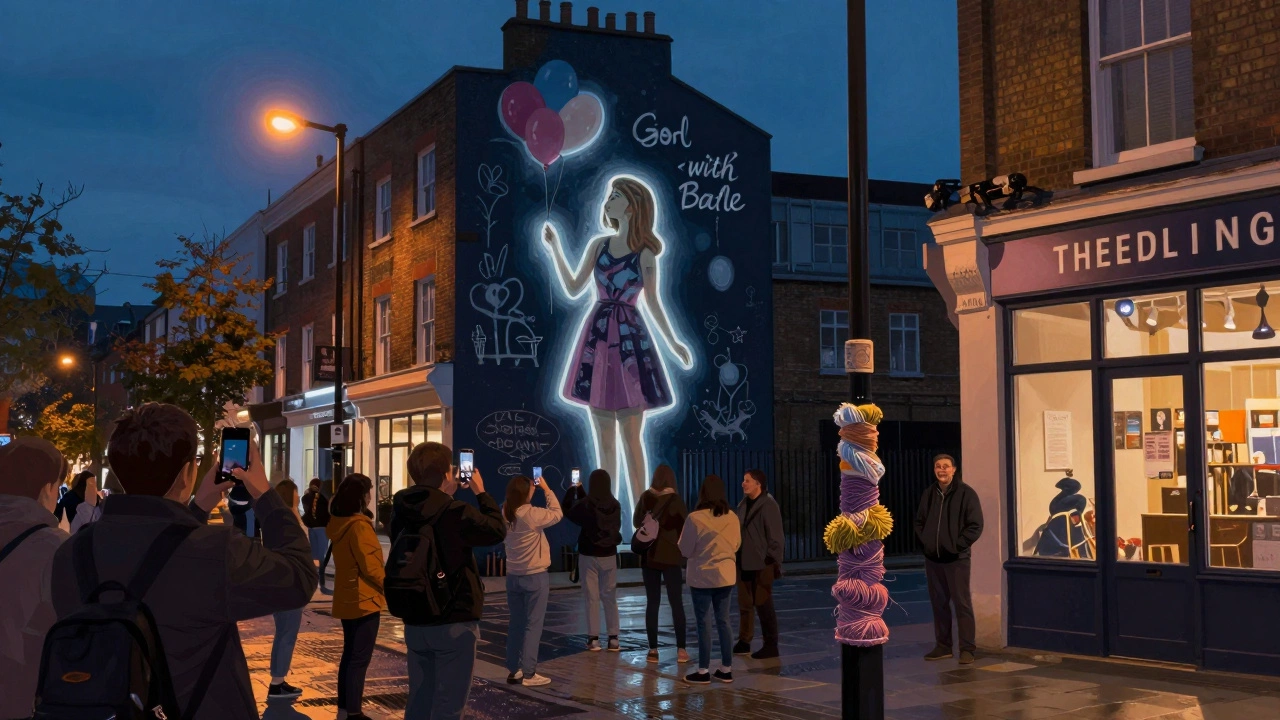
Banksy is the most famous anonymous street artist, known for satirical stencil art and social commentary. He needs no introduction. His works sell for millions at auction, yet he refuses to reveal his identity. His piece "Girl with Balloon" famously shredded itself right after being sold for £1.04 million. That stunt alone proved that street art is performance art too.
Then there’s Jean-Michel Basquiat is a neo-expressionist painter who started as the graffiti artist SAMO before becoming a blue-chip gallery star. Basquiat started as SAMO in New York, writing cryptic poetry on walls. He moved into galleries and died young, but his influence on how street art is valued in the fine art world is immeasurable. His works regularly fetch tens of millions.
Don’t forget Shepard Fairey is the creator of the 'Obey Giant' campaign and the iconic 'Hope' poster for Barack Obama. Shepard Fairey. His "Hope" poster for Barack Obama’s 2008 campaign blurred the line between street art and political propaganda. It was plastered on windows and walls across America, proving that street art can shape national conversations.
And locally, here in Sheffield and across the UK, artists like Ben Eine is a British street artist known for his distinctive typography and use of bright colors. Ben Eine have pushed the boundaries with bold typography and color, showing that street art isn’t just about dark, gritty messages. It can be playful, abstract, and purely aesthetic.
Why Does It Matter?
Street art matters because it democratizes beauty. You don’t need a ticket, a membership, or a car to get to a museum. You just need to walk outside. It forces us to engage with our surroundings. A blank wall becomes a conversation starter. A dull alley becomes a destination.
It also gives voice to the marginalized. Historically, street art has been used to protest war, inequality, and censorship. When official channels shut down, the streets speak up. It’s raw, unfiltered, and immediate.
For collectors, it represents a new asset class. Prints, original pieces, and even canvases taken from walls (with permission) are traded globally. But the true value isn’t financial. It’s cultural. It reminds us that art belongs to everyone, not just those who can afford to buy it.
Can I take photos of street art?
Yes, generally. In most public spaces, you have the right to photograph what you can see. However, be respectful. Don’t climb fences, damage property, or harass the artist if they are working. Some private properties with public views may have restrictions, so check local rules.
How long does street art last?
It varies wildly. Outdoor elements like rain, sun, and wind can fade paint in months. Vandalism by other artists (called "tagging over") is common. Commissioned murals might last years if maintained. Temporary installations might only last days. The impermanence is part of its charm.
Is it okay to copy street art?
Artistically, inspiration is encouraged. Legally, copyright applies. If you want to sell prints or merchandise based on a specific artist’s work, you need permission. Copying a style is different from copying a specific image. Always credit the original artist.
Where can I find street art tours?
Most major cities offer guided street art tours. In London, look for tours in Shoreditch, Brick Lane, or Camden. In New York, check out Bushwick Collective in Brooklyn. These tours provide context, history, and safety tips that you’d miss walking alone.
How do I start making street art?
Start small. Practice on paper or cardboard first. Buy basic spray paint caps and learn control. Find a legal wall or ask a friend if you can paint their garage door. Respect others’ work and never tag private property without permission. Join local communities online to share tips and find safe spots.