Watercolor Paper Buckling Risk Calculator
Painting Parameters
Adjust parameters and click analyze to see your risk assessment.
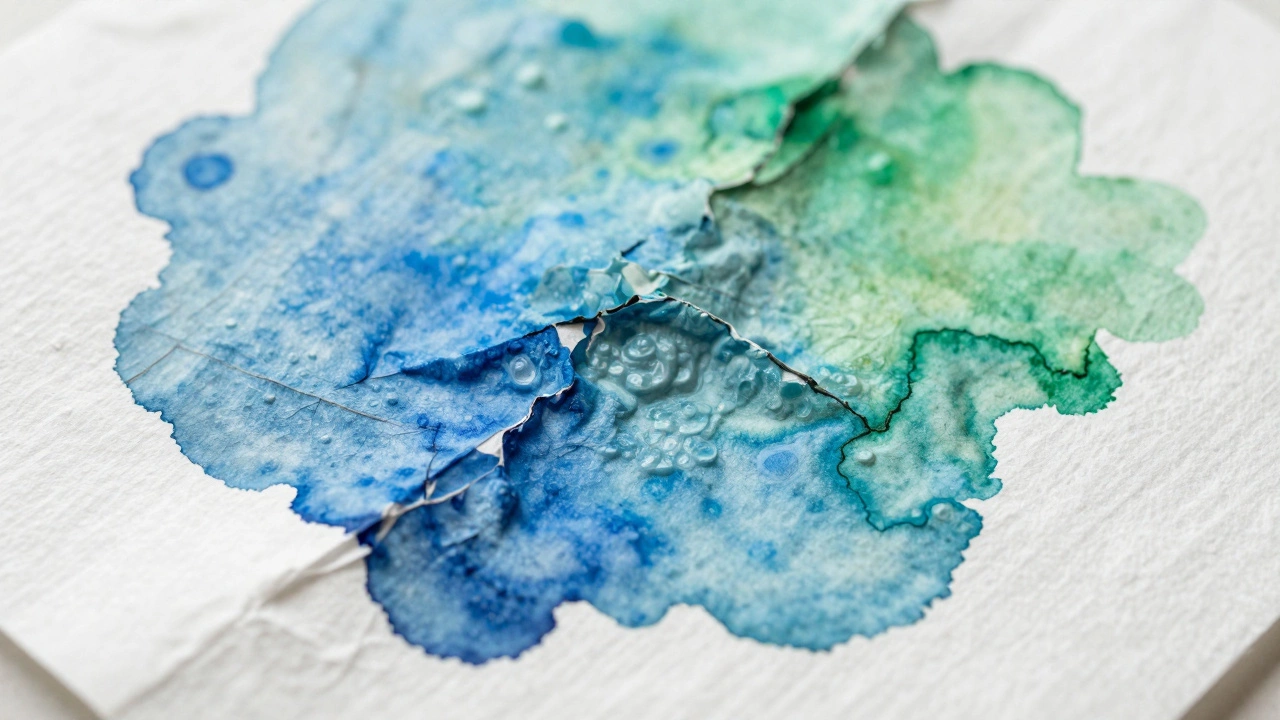
Imagine spending hours on a lush, vibrant landscape. The light is perfect, the colors are singing, and you’re just adding those final delicate highlights to the clouds. Then, disaster strikes. As the paint dries, the center of your paper suddenly ripples like a crumpled piece of foil. Your smooth washes turn into jagged ridges, and that beautiful gradient looks like it was painted on wet cardboard. This is the classic nightmare of every watercolor artist: severe buckling.
This happens because you skipped one crucial step-stretching your watercolor paper. While some artists swear by taping the edges and others prefer to paint directly on loose sheets, understanding what goes wrong when you don’t stretch is key to mastering the medium. It’s not just about keeping the paper flat; it’s about controlling how the water interacts with the fibers.
The Physics of Buckling: Why Paper Warps
To understand why skipping stretching causes problems, we have to look at how cellulose fibers behave. Watercolor paper, especially high-quality cotton rag, is designed to absorb a lot of moisture. When you apply a large amount of water, the fibers swell. Think of it like wood expanding in humid weather, but much faster and more dramatic.
If the paper is free-floating (not stretched or taped), these swollen fibers push against each other. Since the paper has nowhere to expand outwardly, it expands upward and downward, creating waves, ripples, and bubbles. This is called buckling. Once the water evaporates, the fibers shrink back down. However, they often don't return to their original position perfectly. This leaves behind permanent creases, ridges, and a distorted surface texture.
Here is the critical part for your painting technique: pigment settles where the paper is low. When the paper buckles up, the paint pools in the valleys between the ripples. As it dries, this creates hard, dark lines known as "cauliflowering" or uneven granulation. Your soft sky might end up looking like a topographic map instead of a smooth expanse of blue.
Visual Consequences: How Your Painting Changes
Let's break down exactly what happens to the visual quality of your work if you ignore stretching, particularly when working with heavy washes.
- Uneven Washes: Large areas of solid color will dry patchy. Instead of a uniform tone, you’ll see lighter spots where the paper bulged up and darker spots where it dipped down.
- Hard Edges: Watercolor relies on soft transitions. Buckling disrupts the flow of water across the surface. Where two wet areas meet over a ripple, the water stops flowing, creating a hard, unintended edge.
- Cracking Pigment: In extreme cases, if the paper buckles significantly while the paint is still semi-wet, the skin of the pigment can crack as the paper moves underneath it. This is irreversible.
- Drying Distortion: Even if the painting looks fine while wet, the drying process can warp the entire sheet. Imagine trying to frame a piece of art that is now shaped like a saddle or a bowl.
These issues are most prominent with cold-press paper (medium texture) and hot-press paper (smooth). Hot-press paper, being thinner and smoother, tends to buckle more aggressively than cold-press because there is less tooth to hold the structure together.
When Is It Okay Not to Stretch?
Not every situation requires the labor-intensive process of soaking and stapling paper to a board. There are specific scenarios where skipping stretching is actually the better choice.
Light Wet-on-Dry Techniques: If you are working primarily with wet-on-dry methods-applying wet paint to dry paper-you introduce very little moisture. The paper won’t swell enough to buckle significantly. Sketches, detailed studies, and architectural drawings often fall into this category.
Thick, Molded Pulp Papers: Some modern papers, like Arches Cold Press 640 gsm (300 lb), are incredibly robust. Many professional artists paint full wet-in-wet washes on these without stretching, relying on the sheer weight of the paper to resist warping. However, even these papers will ripple slightly under heavy saturation.
Taping Instead of Stretching: Taping the edges of damp paper to a board is a middle ground. It prevents the edges from moving, which reduces buckling, but it doesn’t pull the paper as tight as full stretching. This is often sufficient for smaller pieces (A4 or smaller).
The Traditional Stretching Method: Step-by-Step
If you want to avoid the pitfalls mentioned above, traditional stretching is the gold standard. Here is how professionals do it to ensure a drum-tight surface.
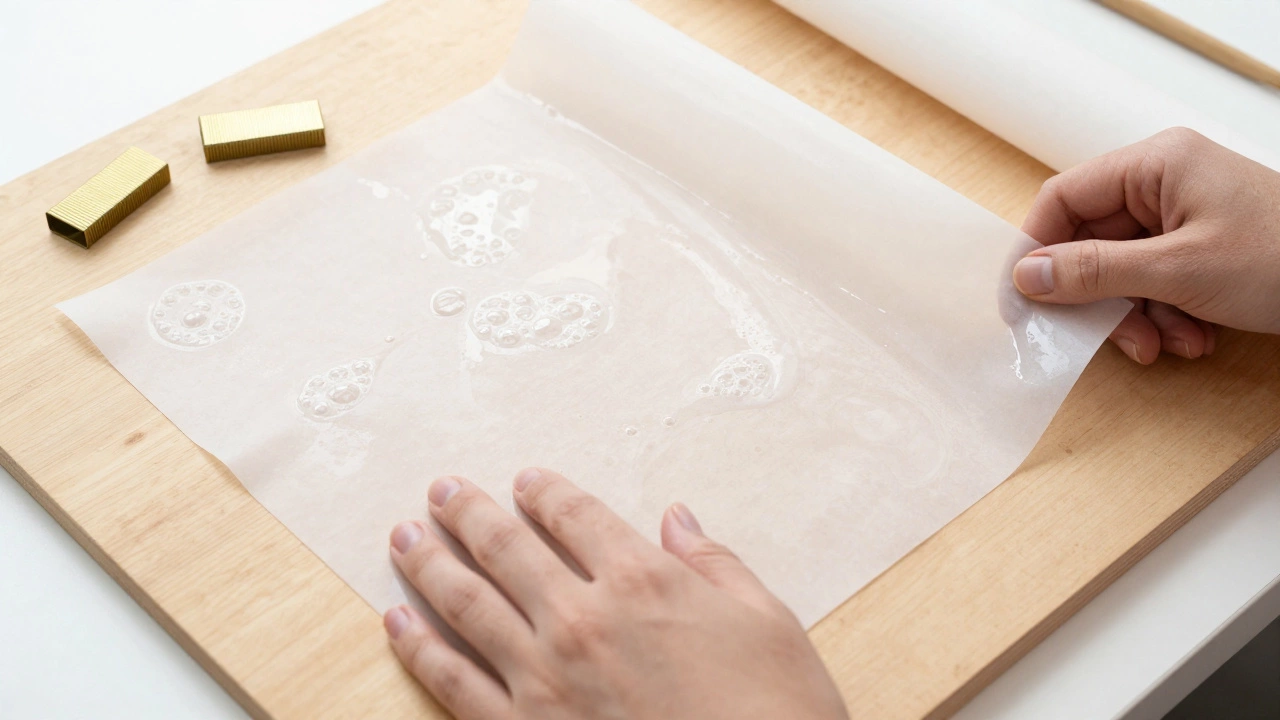
- Prepare the Board: Use a sturdy piece of water-resistant board, such as plywood or a dedicated watercolor mountboard. Make sure it is clean and dry.
- Soak the Paper: Submerge your watercolor paper in a tray of water. For 300 gsm paper, 1-2 minutes is usually enough. For heavier weights, soak longer. The paper should be completely saturated and floppy.
- Position and Secure: Lay the wet paper onto the board. Smooth it out with your hands to remove air bubbles. Immediately staple the paper to the board using brass or stainless steel staples. Start with the center of each side, then move outward toward the corners.
- Pull Tight: As you staple, pull the paper firmly away from the center. The goal is to create tension. The paper should feel tight like a drum skin.
- Wait to Dry: Let the paper dry completely attached to the board. This may take several hours or overnight. As it dries, it shrinks, pulling itself even tighter against the board.
Once fully dry, your paper will be rock-solid. You can now apply heavy washes with confidence, knowing the surface will remain flat throughout the painting process.
| Method | Best For | Buckling Risk | Time Required |
|---|---|---|---|
| No Preparation | Sketches, dry techniques | High (for wet washes) | None |
| Taping Edges | Small works, light wet-in-wet | Medium | 5-10 minutes |
| Traditional Stretching | Large washes, heavy saturation | Very Low | 15 mins + drying time |
Alternative Solutions for Modern Artists
If the idea of soaking and stapling sounds tedious, you are not alone. Many contemporary artists use alternative methods to achieve similar results without the hassle.
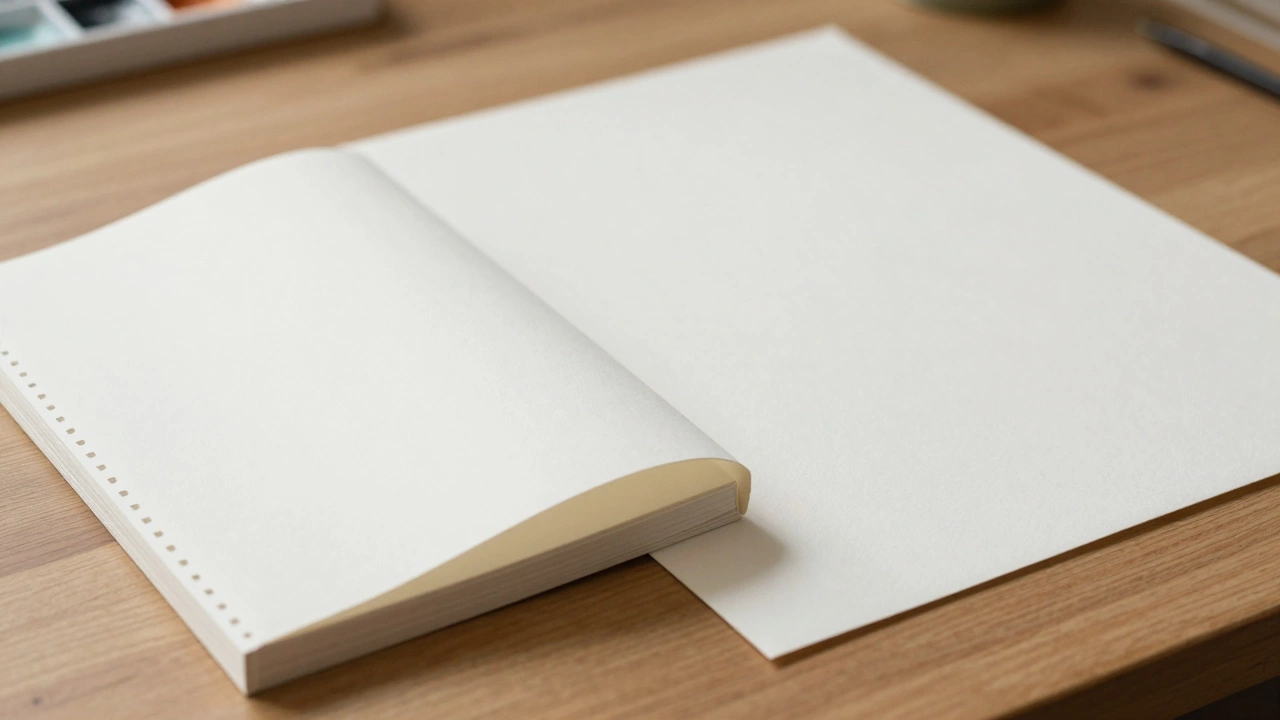
Watercolor Blocks: These are pads of paper glued on all four edges. The glue holds the paper flat while you paint. Once finished, you simply tear the sheet off the block along the perforated edge. This is arguably the most convenient method for studio work. Brands like Canson XL and Strathmore offer excellent blocks.
Suction Tables: Used mostly by illustrators and printmakers, these tables use vacuum suction to hold the paper perfectly flat. They are expensive but allow for incredible precision with no risk of buckling.
Heavyweight Paper: As mentioned, sticking to 640 gsm (300 lb) paper can often eliminate the need for stretching entirely for most applications. It’s an investment, but it saves time.
Troubleshooting Common Issues
Even with preparation, things can go wrong. Here is how to handle common scenarios.
The Paper Bubbles After Drying: If you stretched your paper correctly but it still bubbled after painting, you likely applied too much water too quickly, or the paper wasn't soaked long enough before stretching. Ensure the paper is fully saturated before stapling.
Staples Rust: Always use non-rusting staples. Brass or stainless steel are best. Regular steel staples will rust and stain your white paper margins within weeks.
Paint Cracks: If you see cracks in your dried paint, the paper moved while the pigment was setting. This usually means the paper wasn't stretched tightly enough, or you were painting on a warped surface. Next time, check the tension before starting.
Can I fix a watercolor painting if the paper buckles?
Unfortunately, you cannot fix buckling once the paint has dried. The physical distortion of the paper fibers is permanent. You can try ironing the back of the paper on a low setting with a cloth barrier, but this rarely restores a smooth surface and risks damaging the paint layer. Prevention through stretching or using heavy paper is the only reliable solution.
Do I need to stretch 300 gsm watercolor paper?
It depends on your technique. For light washes and wet-on-dry work, 300 gsm paper is usually stable enough without stretching. However, if you plan to use large, wet-in-wet washes or heavy saturation, stretching is highly recommended to prevent significant rippling and uneven drying.
Why does my watercolor paper ripple even when taped?
Taping only secures the edges. If the paper absorbs a lot of water in the center, it can still swell and ripple inward. Taping is effective for moderate moisture levels, but for heavy wet techniques, traditional stretching or using a watercolor block provides better control over the entire surface area.
How long should I soak watercolor paper before stretching?
For standard 300 gsm (140 lb) paper, 1 to 2 minutes is typically sufficient. Heavier papers (640 gsm / 300 lb) may require 3 to 5 minutes. The paper should be completely limp and saturated. Avoid soaking for too long, as this can weaken the paper fibers and cause them to disintegrate during handling.
Is it better to use a watercolor block or stretch paper?
Watercolor blocks are more convenient and faster, making them ideal for sketchbooks and quick studies. Traditional stretching allows you to use any size of paper and is cost-effective for large formats. Blocks are generally preferred for portability and ease of use, while stretching is favored for large-scale studio paintings.
