Romantic Landscape Style Checker
Identify whether a landscape painting uses the Sublime or Picturesque style based on visual characteristics. This tool uses the criteria from the article to analyze key elements.
When you think of romantic landscape paintings, you might picture stormy skies over jagged mountains, lonely figures gazing at vast horizons, or golden sunsets that make the whole world feel sacred. These aren’t just pretty scenes-they’re emotional experiences painted with purpose. In the early 1800s, artists didn’t just want to show nature. They wanted to make you feel something: awe, fear, peace, or longing. And to do that, they leaned on two clear, powerful approaches: the sublime and the picturesque.
The Sublime: Nature as a Force Beyond Control
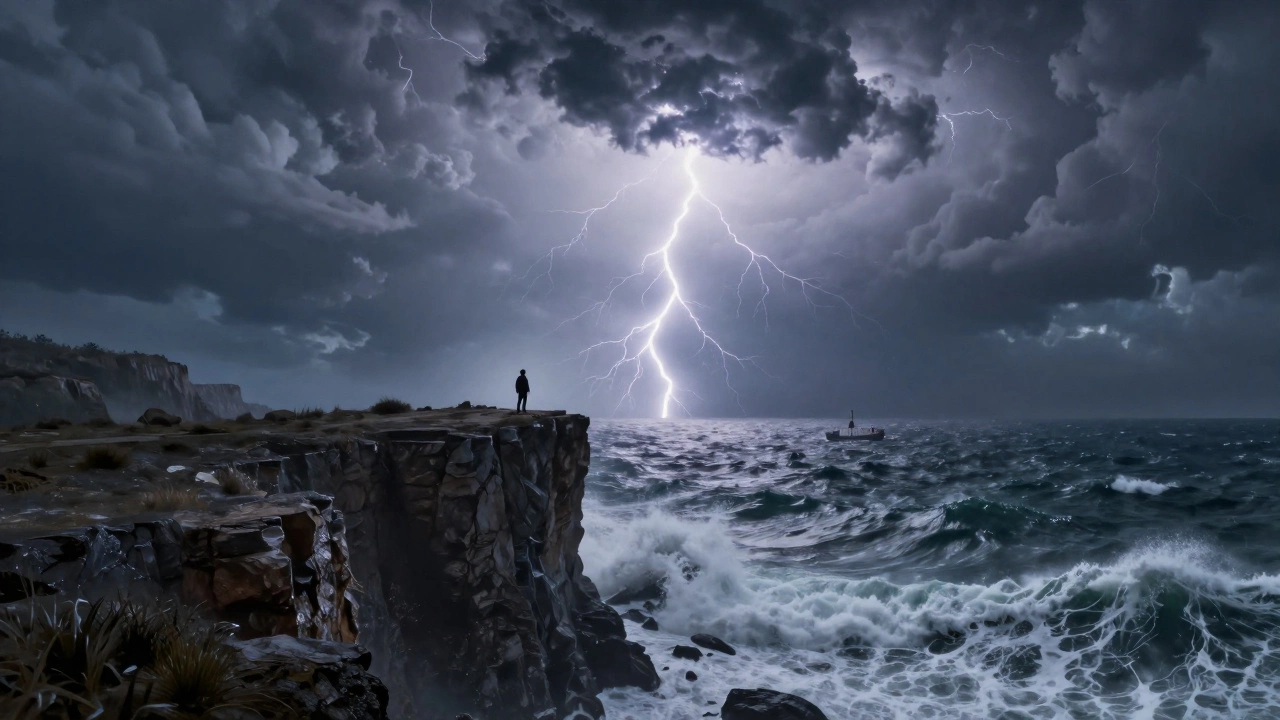
The sublime in landscape painting isn’t about beauty-it’s about power. Think of towering cliffs, lightning splitting the sky, glaciers grinding through valleys, or oceans swallowing ships whole. These aren’t peaceful scenes. They’re overwhelming. Artists like J.M.W. Turner and Caspar David Friedrich used the sublime to show how small humans are in the face of nature’s raw energy.
Turner’s Snow Storm: Steam-Boat off a Harbour’s Mouth (1842) doesn’t just show a boat in a storm. It makes you feel the wind tearing at your clothes, the salt stinging your eyes, the terror of being swallowed by chaos. The boat is barely visible. The storm is the real subject. That’s the sublime: nature as an uncontrollable, almost divine force. It doesn’t comfort you. It humbles you.
These paintings often include tiny human figures-so small they’re almost invisible-to emphasize scale. A single hiker on a mountain ledge, a lone traveler in a foggy forest. They’re not the heroes. Nature is. And that’s the point. The sublime wasn’t just art. It was a reaction to the Industrial Revolution, when cities grew, machines roared, and people felt disconnected from the wild. The sublime reminded them: nature still rules.
The Picturesque: Nature as a Perfectly Framed Scene
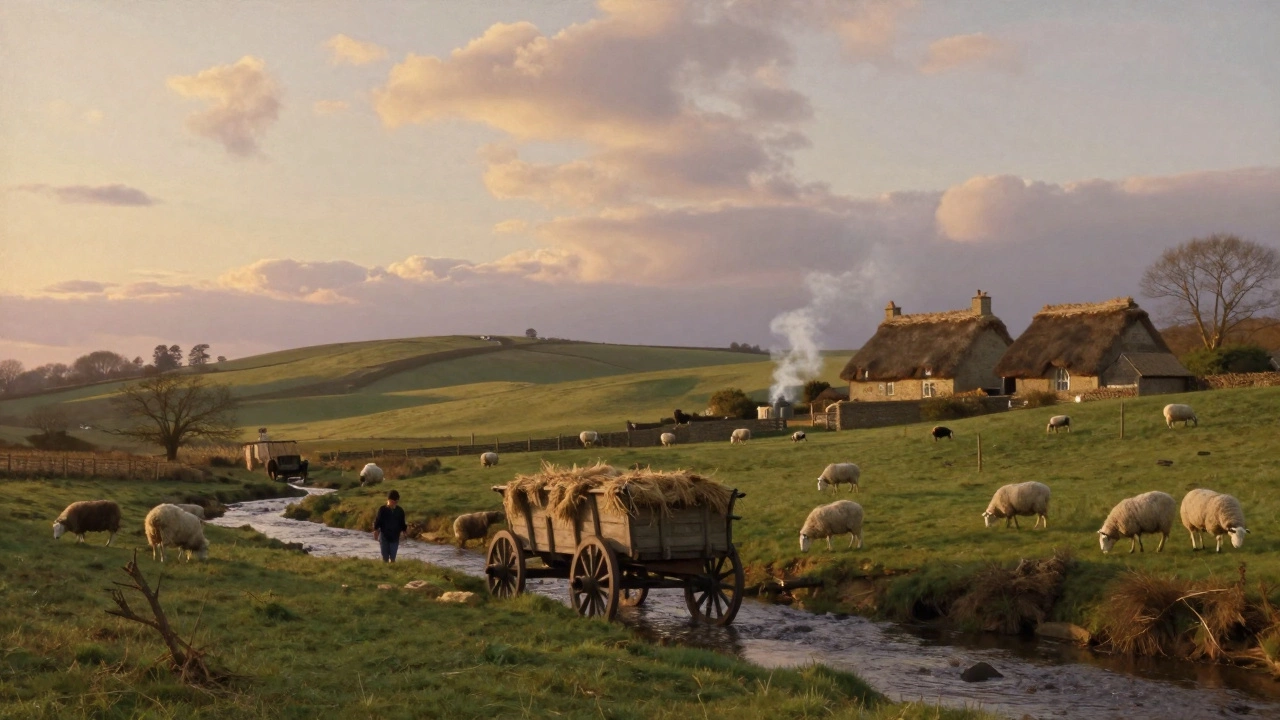
If the sublime makes you feel small, the picturesque makes you feel at home. It’s the calm, balanced, carefully composed view you’d want to hang on your wall. Think of rolling hills with grazing sheep, winding rivers under old bridges, cottages with smoke curling from chimneys, and trees arranged just so. It’s nature as a curated experience.
Artists like John Constable and Thomas Gainsborough mastered the picturesque. Constable’s The Hay Wain (1821) shows a quiet English countryside: a wagon crossing a shallow stream, clouds drifting lazily, leaves rustling gently. There’s no storm. No danger. Just peace. You can almost smell the damp earth and hear the water lapping.
The picturesque wasn’t just about looks-it was about feeling. It reflected a growing middle class who longed for rural simplicity, even as they lived in growing cities. These paintings sold well because they offered escape. Not from danger, but from stress. They were visual vacations.
What made a scene picturesque? Artists followed rules. They looked for irregular shapes, textured surfaces, and natural asymmetry. A crooked tree, a broken fence, moss-covered stones-all added charm. Too perfect? That was boring. Too wild? That was the sublime. The picturesque lived in the sweet spot: nature arranged just enough to feel natural, but still pleasing to the eye.
Why These Two Types Matter
These weren’t just two styles. They were two ways of seeing the world. The sublime said: nature is powerful, mysterious, and dangerous. The picturesque said: nature is gentle, orderly, and comforting. Together, they shaped how Western culture thought about landscapes for over a century.
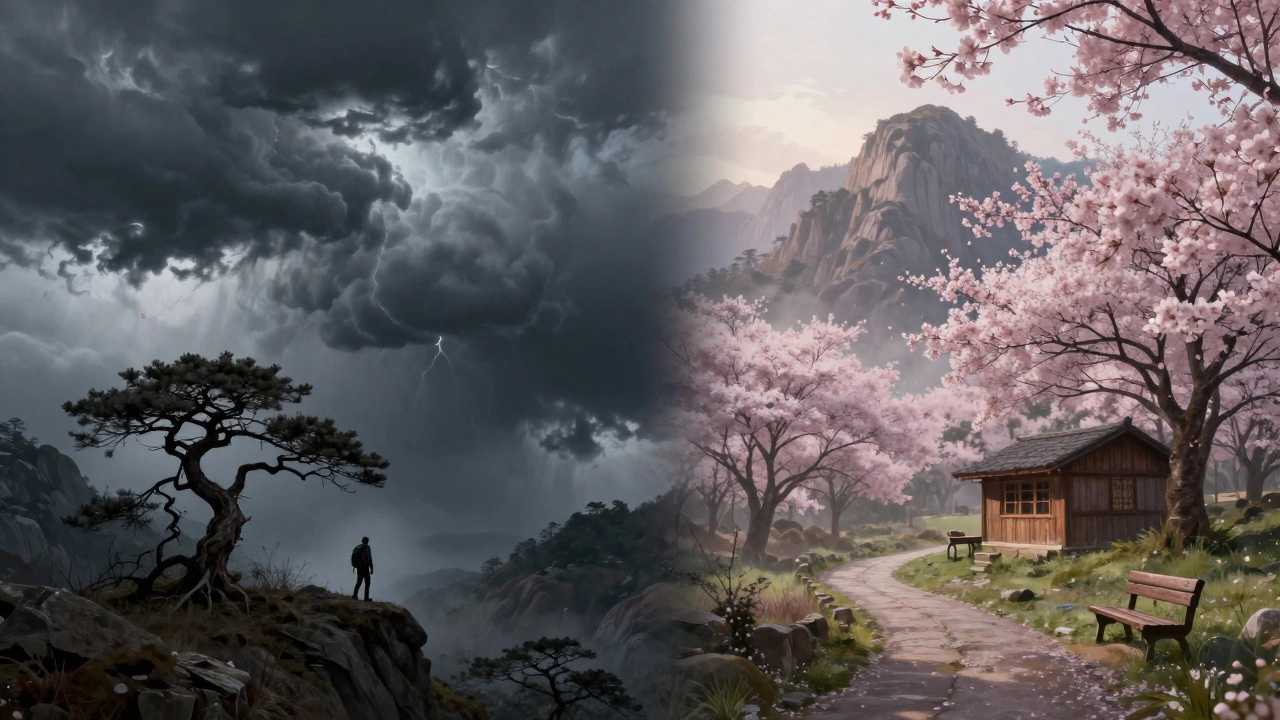
Modern viewers often mix them up. You might see a mountain scene and call it “romantic” without knowing if it’s meant to scare you or soothe you. But the difference matters. A painting of Mount Fuji with dark clouds rolling in? Sublime. A painting of the same mountain with cherry blossoms and a tea house below? Picturesque.
Even today, these two ideas live on. Think of horror movies with thunderstorms and isolated cabins-that’s the sublime. Think of cozy cabin rentals with fairy lights and hot cocoa-that’s the picturesque. The same emotions, just updated for modern screens.
How to Tell Them Apart
Here’s a quick way to spot the difference:
- Sublime: Dramatic lighting, violent weather, steep cliffs, deep shadows, tiny figures, sense of danger or awe.
- Picturesque: Soft light, calm weather, gentle slopes, warm colors, balanced composition, visible human activity (farming, walking, fishing), feeling of peace.
Look at the mood, not just the subject. A forest can be sublime if it’s dark and tangled with twisted branches. The same forest can be picturesque if sunlight filters through neatly spaced trees and a path leads to a wooden bench.
What Happened After Romanticism?
By the late 1800s, photography started capturing real landscapes. Artists no longer needed to invent perfect views. Impressionists like Monet began painting light and color as they saw them-no drama, no rules. The sublime and picturesque slowly faded as dominant styles.
But their influence didn’t disappear. National parks were designed with the picturesque in mind-paths arranged for the best views, overlooks framed like paintings. Even today, tourism ads use the picturesque: sunsets over calm lakes, families picnicking under trees. And when disaster strikes-wildfires, hurricanes, avalanches-the media shows those images in the language of the sublime: overwhelming, terrifying, awe-inspiring.
The romantic landscape wasn’t just about paint on canvas. It was about how people wanted to feel in a changing world. And those feelings? They’re still with us.
What’s the difference between sublime and picturesque landscape paintings?
The sublime shows nature as powerful and overwhelming-think storms, cliffs, and tiny humans to emphasize scale. It’s meant to inspire awe or fear. The picturesque shows nature as calm, balanced, and charming-think gentle hills, cottages, and soft light. It’s meant to comfort and please. One terrifies you; the other invites you to sit down and relax.
Who were the main artists of romantic landscape painting?
J.M.W. Turner and Caspar David Friedrich were the leading figures of the sublime. Turner’s stormy seascapes and Friedrich’s solitary figures in vast landscapes defined the emotional power of this style. For the picturesque, John Constable and Thomas Gainsborough were central. Constable’s quiet English countryside scenes, like The Hay Wain, became the gold standard for peaceful, detailed nature.
Are all romantic landscapes either sublime or picturesque?
Most fall into one of these two categories, but some blend elements. A painting might have a calm foreground (picturesque) and a distant stormy mountain (sublime). Still, the dominant feeling-whether it’s awe or comfort-determines its classification. Artists rarely mixed them equally; they usually leaned hard into one emotional goal.
Why did romantic landscape painting become popular in the 1800s?
It responded to big changes: the Industrial Revolution, urbanization, and the rise of the middle class. People were moving to cities, working long hours in factories, and feeling disconnected from nature. Romantic landscapes offered emotional escape-either through thrilling awe (sublime) or soothing familiarity (picturesque). They weren’t just art; they were emotional medicine.
Do these styles still influence art today?
Absolutely. Modern landscape photography, travel ads, and even film cinematography still use these two emotional frameworks. A drone shot of a canyon at sunset with dramatic shadows? Sublime. A Instagram photo of a cabin with a hammock and morning mist? Picturesque. The same visual language is used to sell vacations, inspire conservation, or evoke nostalgia.
Final Thought: It’s Not Just What You See-It’s What You Feel
When you stand in front of a romantic landscape painting, don’t just ask: "What’s in the scene?" Ask: "How does this make me feel?" Is your heart racing, or are you breathing deeper? That’s the real answer to what kind of painting it is. The sublime doesn’t need mountains-it needs emotion. The picturesque doesn’t need cottages-it needs calm. And both, in their own way, still speak to us today.
