Landscape Composition Builder
Schematic View
Zone Strategy Guide
| Zone | Recommended Action |
|---|
Have you ever looked at a flat photograph and wondered why it lacks the pull of a great painting? The secret isn't just in the colors; it's in the architecture of the image. When artists talk about a Landscape Painting, they aren't just copying nature. They organize the scene into specific zones to trick your eye into seeing three-dimensional space on a two-dimensional surface. These zones create a visual path for you to follow, leading you from the bottom edge of the canvas all the way into the distance.
You've likely heard the terms before, but knowing exactly where one ends and another begins can make or break your artwork. Whether you are picking up a charcoal pencil or loading oil paints onto a palette, understanding these four distinct areas gives you control over how deep your world feels. You don't need to be a master to grasp this, but mastering it makes you look like one.
Quick Takeaways
- The four core zones are the Foreground, Middle Ground, Background, and Sky.
- Foreground details anchor the viewer; they feature high contrast and sharp edges.
- Middle Ground usually holds the main subject, bridging the gap between near and far.
- Background elements soften visually due to atmospheric perspective, appearing cooler and lighter.
- Sky placement dictates the mood and sets the lighting direction for the entire scene.
Why Your Paintings Need Four Distinct Planes
A common struggle for beginners is making a scene feel like a wall rather than a window. We instinctively try to draw everything with the same level of detail. In reality, our eyes see things differently depending on how far away they are. The air acts like a filter. Dust, moisture, and light scatter as they travel through space. Artists call this Atmospheric Perspectivea technique used to create the illusion of depth by changing color, tone, and detail based on distance.. Without breaking your canvas into zones, you lose this natural cue.
Think of these parts not as separate stickers you slap down, but as layers of transparency. If you mix them up-say, putting a crisp tree trunk in the back behind a blurry mountain-you confuse the brain. The image fights against itself. By respecting the order of these planes, you build a logical structure that guides the viewer's eye naturally through the narrative of the piece.
The First Plane: The Foreground
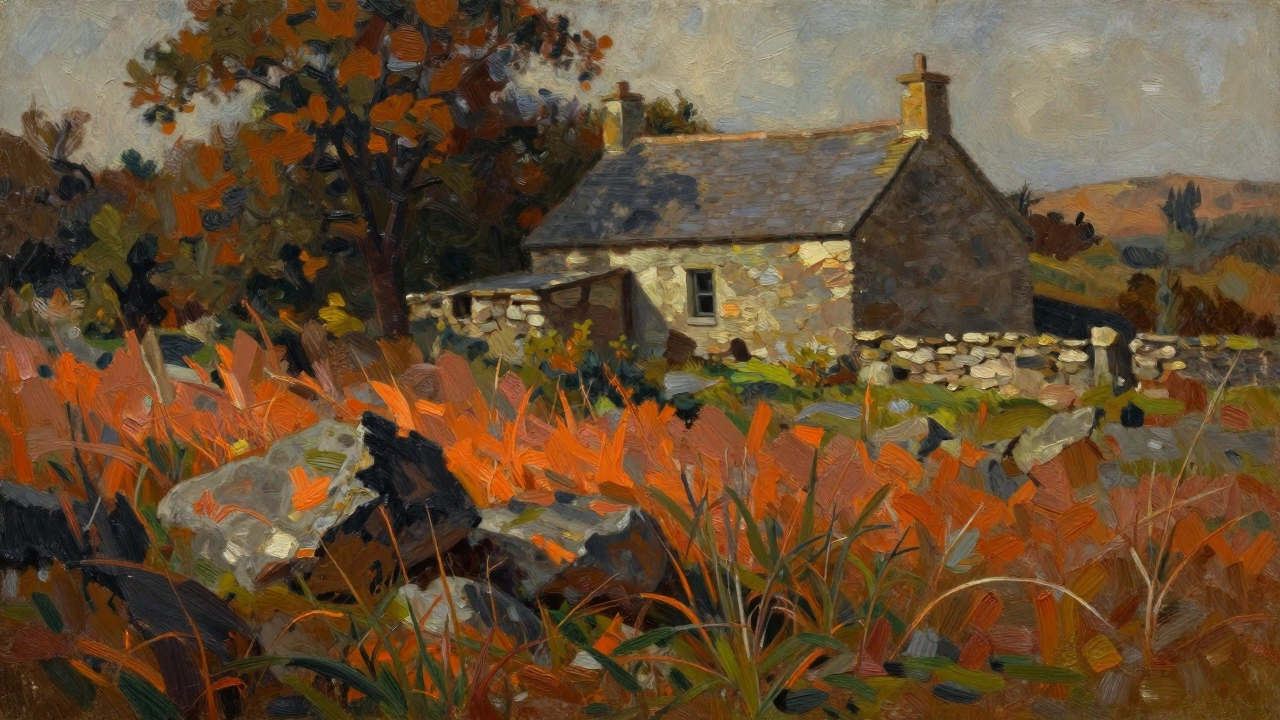
This is the closest area to the "eye" of the viewer. Imagine standing at the water's edge looking out; the rocks under your feet belong to this zone. The foreground needs to grab attention immediately. It is typically the darkest part of the painting in terms of value contrast. Here, you find the most texture. Tree bark looks rough, grass blades are distinct, and stones show clear individual shapes.
When painting this section, you want to use warm tones. Sunlight hits nearby objects most directly, making reds, yellows, and earthy oranges pop. Edges here should be hard and defined. If you blur every line in the front, the viewer loses their starting point. This zone anchors the composition, literally holding the image together so the rest of the scene doesn't float away.
The Second Plane: The Middle Ground
Once you step past the immediate foreground, you arrive in the middle ground. This is often the heart of the landscape story. While the foreground grabs you, the middle ground invites you to stay. In many classic landscapes, this is where the primary subject sits-a cottage, a river bend, a group of figures, or a cluster of prominent trees.
The transition from the foreground to here should be gradual. Colors start to cool down slightly compared to the warmth of the front. Contrast decreases; shadows aren't as black, highlights aren't as bright. Textures become less granular. Instead of drawing every single leaf on a bush, you might suggest the shape with larger patches of color. This plane acts as the bridge. If there is too much empty space between the front and back, the middle ground is where you fill the void to prevent the painting from feeling disconnected.
The Third Plane: The Background
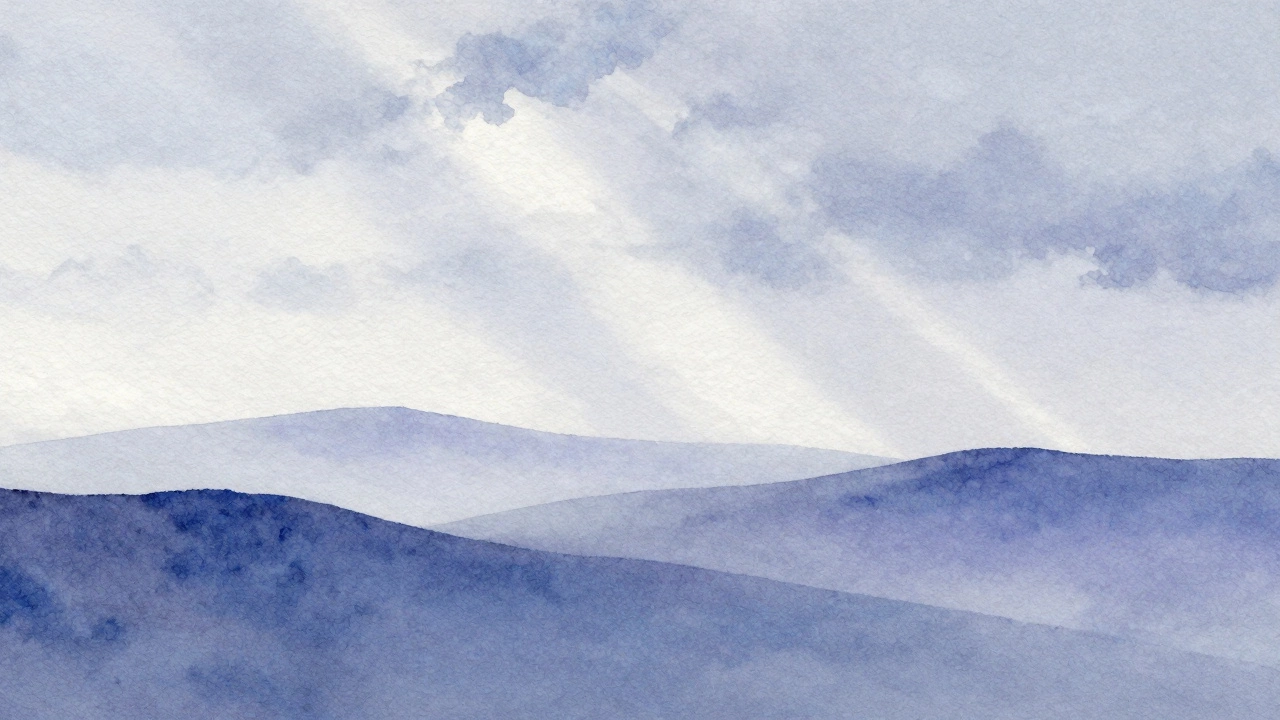
The background represents the furthest visible limit of the physical land. Think of distant mountains, rolling hills, or the skyline of a town far off. Because this is far away, the laws of physics take over again. The air between you and those hills is thick with particles. Consequently, the background appears lighter in value. Darker hues fade into the brightness of the atmosphere.
Crucially, the background contains the least amount of detail. Sharp edges vanish. Trees look like silhouettes, and textures blend into smooth gradients. Colors shift toward blue and violet. Even if the sun is setting, distant objects pick up the ambient color of the sky. Keeping this area simple ensures it stays in the back. If you make the background too dark or detailed, it will jump forward and fight with the main subject, collapsing your sense of space.
The Fourth Plane: The Sky and Horizon
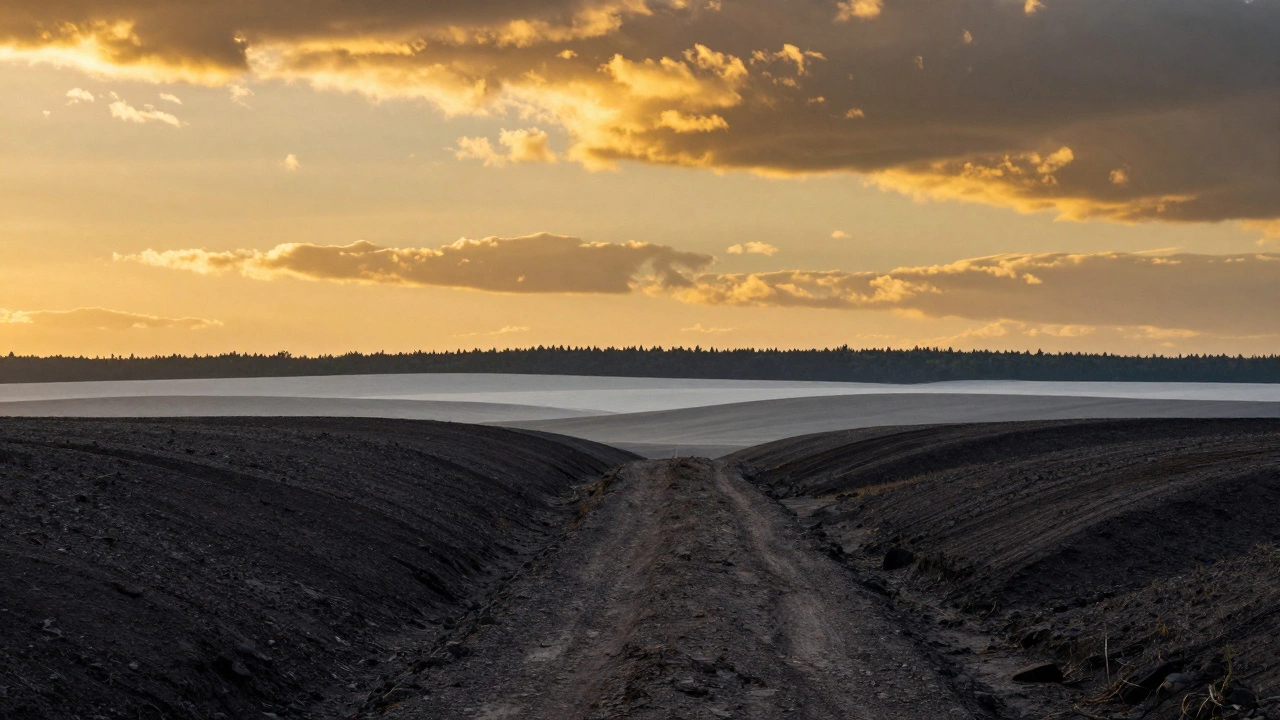
Many forget the sky counts as its own structural element, yet it covers half your canvas. The sky interacts with the ground through the horizon line. Where these two meet depends entirely on what message you want to send. A low horizon line emphasizes a dramatic, towering sky-great for storms or vast open spaces. A high horizon line prioritizes the terrestrial details, like flowers in a meadow.
The sky isn't just a backdrop; it controls the light source. Its hue reflects onto the foreground and middle ground clouds. For example, a sunset sky casts orange light on white buildings, while a twilight sky throws cool purple shadows on grass. When planning your composition, decide on the horizon first. This establishes the boundary for your other three parts. It provides the frame within which the Foreground, Middle Ground, and Background must exist.
Techniques to Separate the Planes
Knowing the names isn't enough; you need tools to make them distinct. One powerful method is adjusting your Value Scale, the range of lightness and darkness in a work.A scale going from 1 (white) to 9 (black) helps manage contrast to define distance.. Start your palette with a full range of values, then limit them as you move back. Your foreground might utilize values 1 through 9. Your background might only use values 4 through 6. This compression creates instant depth.
Another tool is temperature shifting. Warm comes forward; cool recedes. Use this to push the background back without actually moving it. Finally, consider edge quality. Hard edges attract the eye. Soft edges push back. A tree in the foreground needs a hard outline against the sky. That same tree species in the background should have a "lost edge," where the paint blends softly into the atmosphere.
Troubleshooting Flat Landscapes
If your finished piece looks like a greeting card, check your transitions. A common error is having too much contrast in the distance. You painted that last hill too dark. Lighten it until it reads as air, not stone. Another issue is texture consistency. If every layer uses the exact same brushstroke pattern, your brain flattens the image. Vary your technique. Use thick impasto for the front. Use thin, washed glazes for the back.
Also, verify your overlap. Objects closer to us should cover objects further away. Don't let the background sit neatly beside the foreground on the same imaginary sheet of glass. Make sure the tree branch crosses in front of the distant hill. Overlapping is the simplest, strongest way to prove depth exists.
Can you paint a landscape without a horizon line?
Yes, but it limits your ability to convey traditional depth. Close-up abstract studies of grass or macro shots of rocks function as landscapes but focus on texture rather than distance. In these cases, lighting and texture gradients replace the horizon as the primary depth cue.
Which zone should contain the most detail?
The foreground requires the highest level of detail. Human vision focuses sharply on near objects. Using fine lines, sharp contrasts, and specific textures here mimics real-world perception and grounds the viewer.
How does atmospheric perspective affect color choice?
As distance increases, colors shift toward the cool spectrum (blues and violets) and lose saturation. You achieve this by mixing local colors with small amounts of sky color or grey to simulate the haze of the atmosphere.
What is the ideal ratio for the four parts?
There is no fixed rule, but the rule of thirds is a good starting guide. A balanced view often splits the canvas roughly equally between sky and land, though dramatic scenes favor one side heavily to emphasize either the expanse of the ground or the power of the weather.
Can the middle ground be ignored in small paintings?
You can simplify it, but you shouldn't ignore it completely. Even a single path or a strip of water serves as a middle ground connector. Without it, the foreground and background may feel disjointed, leaving no visual transition between the two extremes.
