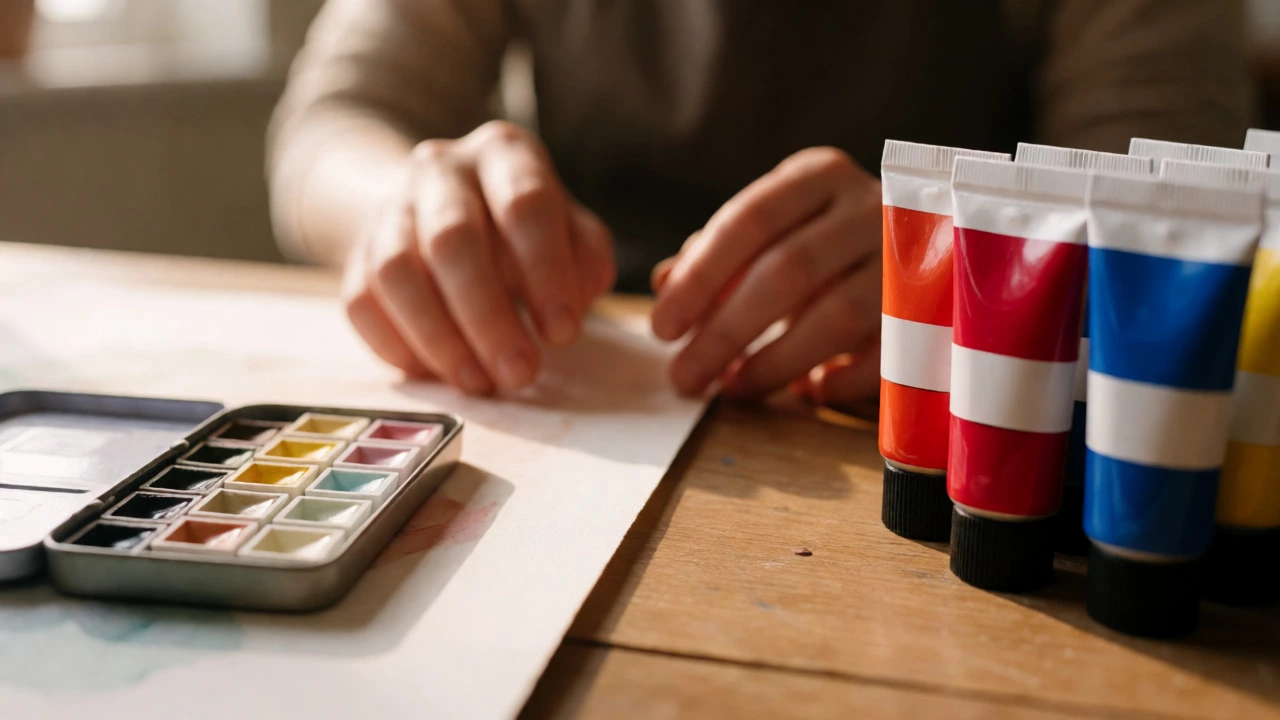
Medium Matcher: Watercolour vs Acrylic
Not sure which paint to buy first? Answer these three questions to find the medium that fits your personality and lifestyle.
Why it fits you:
Keep in mind:
Walk into any art supply shop in Sheffield and you’ll see two massive aisles fighting for your attention. On one side, delicate pans of watercolour that promise ethereal lightness. On the other, vibrant tubes of acrylic that scream versatility. New artists often freeze here, terrified of picking the "wrong" medium and wasting money on a hobby they haven’t even started yet.
The truth? Neither is objectively "easier." They are just different beasts with different temperaments. Watercolour demands humility; it punishes overworking and rewards planning. Acrylic demands speed; it dries fast and forgives mistakes only if you catch them quickly. Your choice depends entirely on how your brain processes error correction and what kind of mess you’re willing to tolerate.
The Core Difference: Transparency vs Opacity
To understand which medium fights back less, you have to look at how they handle light. Watercolour is a transparent medium. It relies on the white of the paper to reflect light back through the pigment. Once you lay down a wash, it’s there forever. You cannot paint white over it unless you use opaque gouache or leave the paper blank from the start. This means watercolour forces you to plan your highlights before you touch the brush to the page. If you accidentally drop a dark spot where a highlight should be, you can lift it slightly while wet, but once dry, it’s permanent.
Acrylic, by contrast, is opaque (though it can be diluted to be semi-transparent). It sits on top of the surface. If you make a mistake, you wait ten minutes for it to dry, then slap another colour right over it. This "paint-over" capability makes acrylic feel safer for people who learn by doing rather than planning. However, this safety comes at a cost: acrylic dries incredibly fast. In the UK climate, especially in a drafty studio, your paint might dry on the palette before you’ve finished mixing your next shade.
| Feature | Watercolour | Acrylic |
|---|---|---|
| Drying Time | Minutes (varies by humidity) | 10-30 minutes (fast drying) |
| Mistake Correction | Difficult; requires lifting or accepting | Easy; paint over when dry |
| Clean-up | Water only | Water while wet; scraper/solvent when dry |
| Surface Required | Specialized cotton paper (cold-pressed/hot-pressed) | Canvas, wood, paper, plastic (primed) |
| Learning Curve | Steep initial curve (control water) | Gentle start, steep mastery curve (texture/blending) |
Why Watercolour Feels Harder (But Isn't Always)
Newbies often quit watercolour because they treat it like oil paint. They try to layer thickly, and the paper buckles. Or they add too much water, and the colours bleed uncontrollably into shapes they wanted sharp. The primary skill in watercolour isn't drawing; it's managing moisture.
Think of it as cooking with sauce. If you want a crisp edge, you need a controlled amount of liquid. If you want a soft blend, you flood the area. There is no undo button. But here is the secret: watercolour teaches you to see values early. Because you can't cover up errors, you become obsessed with getting the lightest lights correct immediately. Many professional illustrators swear by this constraint because it prevents lazy painting habits.
If you live in a humid environment, watercolour behaves differently than in a dry, heated room. In Sheffield, winter air is damp. Paint stays wet longer, allowing for beautiful blooms and granulation effects. In summer, or in a centrally heated house, it dries faster, giving you more control over edges. Understanding your local climate is half the battle.
Why Acrylic Can Be Frustratingly Fast
Acrylic is often marketed as "the easy alternative," but that’s misleading. Yes, you can fix mistakes. But blending colours on canvas becomes a race against time. If you’re trying to create a smooth gradient sky, acrylics might set before you finish the transition. You end up with hard bands of colour instead of a soft fade.
Artists combat this using retarders-additives that slow down the drying process. But adding chemicals complicates the simple premise of "just mix and paint." Furthermore, acrylic brushes get ruined easily. If you let acrylic dry on your expensive sable hair brushes, they turn into stiff sticks. You must clean them religiously between sessions. With watercolour, if you forget to wash your brush, you just rinse it later. No damage done.
Which Medium Fits Your Personality?
Ask yourself these three questions to decide:
- Do you panic when things go wrong? If yes, start with acrylic. The ability to repaint over a bad section lowers anxiety significantly.
- Do you prefer structure and planning? If you like sketching out every detail before starting, watercolour suits you. It rewards precision and patience.
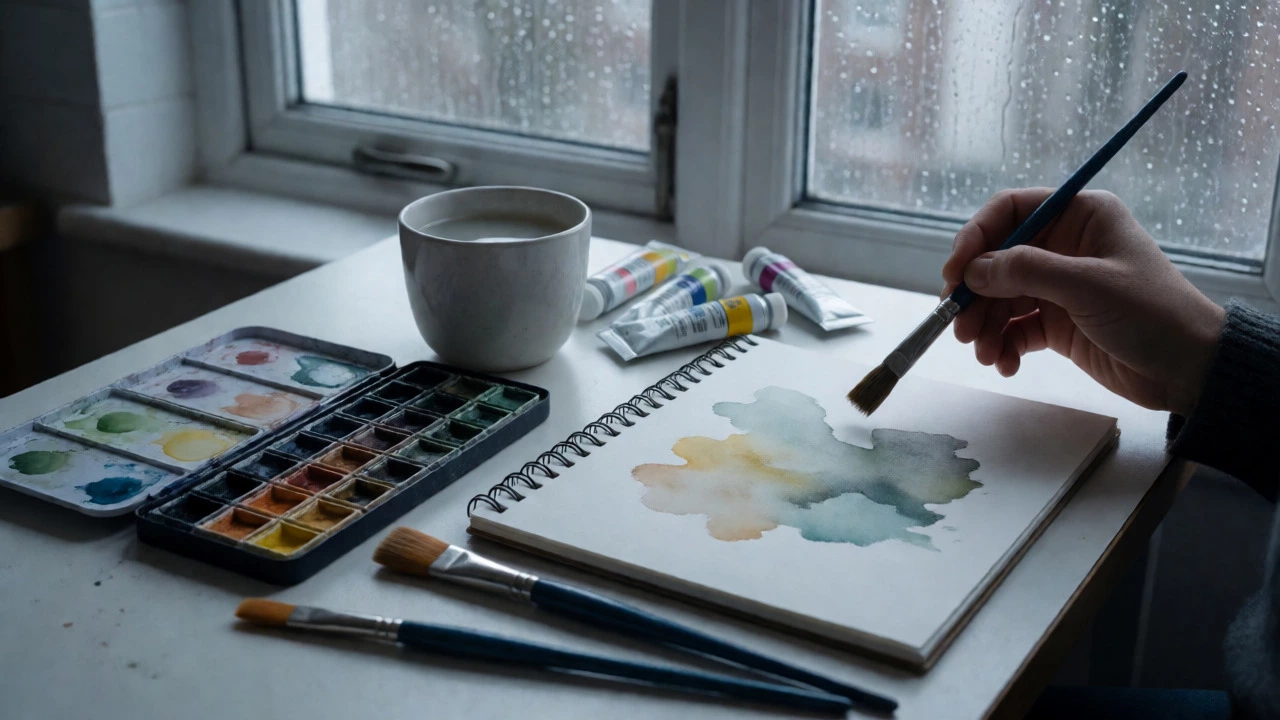
- What space do you have? Watercolour needs minimal setup. A small tray, a cup of water, and a pad fit on a kitchen table. Acrylic requires an easel, larger surfaces, and ventilation if you use heavy body paints. For apartment dwellers, watercolour wins on logistics.
Cost Analysis: Where Does Your Money Go?
Budget matters. Student-grade acrylic sets are cheap, but you’ll burn through tubes quickly because you waste paint on practice canvases. Canvas itself costs more than watercolour paper per square foot. However, high-quality watercolour paper (like Arches or Fabriano) is expensive. Using cheap supermarket paper leads to pilling and poor absorption, making beginners think they lack talent when they actually lack tools.
A practical rule of thumb: Spend 70% of your budget on the surface (paper/canvas), not the paint. Bad paper ruins good watercolour. Good canvas handles mediocre acrylic well. If you choose watercolour, buy cold-pressed cotton paper. If you choose acrylic, buy primed canvas boards rather than stretched canvas to save money while learning.
Practical Starter Projects
Don't attempt a masterpiece first. Try these specific exercises to test each medium:
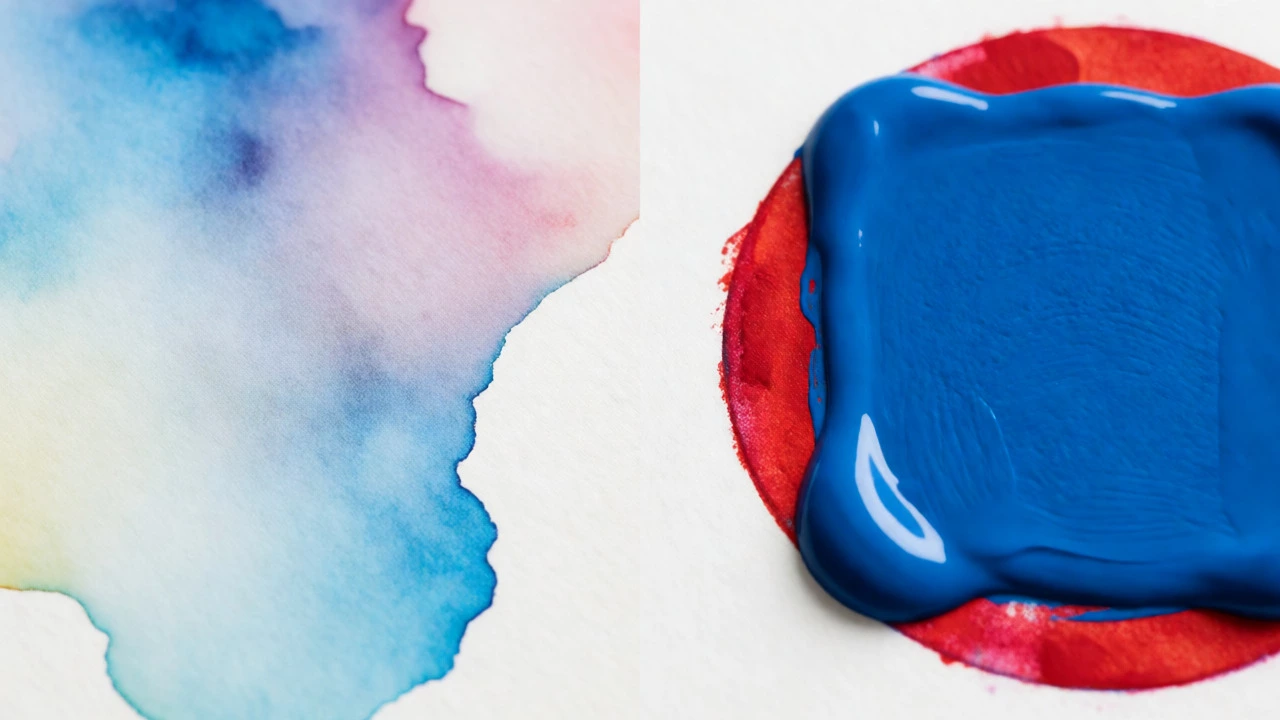
- The Wet-on-Wet Test (Watercolour): Wet a patch of paper with clear water. Drop in blue and yellow pigments without touching them with the brush. Watch them mix on the paper. Did you enjoy the unpredictability? If yes, watercolour might click.
- The Layering Test (Acrylic): Paint a red circle. Let it dry completely. Paint a blue square overlapping the red. Observe how the blue covers the red. Do you like the power of covering things up? Then acrylic is your friend.
You don't have to pick one forever. Many artists use both. They sketch in watercolour for underpaintings and add details with acrylic. Experimentation is free if you buy small sample pots instead of full tubes.
Can I use watercolour on canvas?
Technically yes, but it’s difficult. Standard canvas is too absorbent and textured for fine watercolour work. You need special watercolour canvas, which has a smoother, less porous coating. Without it, the pigment sinks in and loses vibrancy.
Is acrylic toxic compared to watercolour?
Both are generally non-toxic for hobbyists. However, some acrylic pigments contain cadmium or cobalt, which can be harmful if ingested or inhaled as dust. Watercolour is usually safer for children because it’s purely pigment and gum arabic. Always check labels for "AP Certified Non-Toxic" regardless of the medium.
Which medium dries faster?
Acrylic dries significantly faster, often within 10-20 minutes depending on thickness. Watercolour dries via evaporation, which takes longer, typically 5-15 minutes, but remains reactivatable with water even after drying, unlike acrylic which becomes water-resistant.
Do I need expensive brushes for either?
No. Synthetic nylon brushes work excellently for both. Watercolour purists prefer natural hair (sable) for its water-holding capacity, but modern synthetics are very close. For acrylic, synthetic bristles are preferred because they withstand harsh cleaning better than natural hair.
Can I mix acrylic and watercolour together?
Yes, this is called mixed media. Since both are water-based, they interact well. Artists often use watercolour for loose backgrounds and acrylic for detailed foreground elements. Just ensure the underlying layer is fully dry before applying the second medium to prevent muddiness.