Landscape Art Style Identifier
Question 1 of 3
You're looking at a landscape painting. What catches your eye first?
Question 2 of 3
How would you describe the brushwork in this painting?
Question 3 of 3
What's the overall feeling this painting gives you?
Your Landscape Art Style:
Look out your window. What do you see? If you’re in Wellington, it’s likely a mix of rugged coastline, rolling green hills, and maybe a harbor bustling with boats. Now, imagine an artist standing right where you are, trying to capture that view on canvas. They could paint it exactly as it is, down to the cracks in the pavement. Or they might exaggerate the storm clouds to make you feel small and awestruck. Or they might just splash dabs of color to show how the light hits the water at noon.
That choice-how much truth versus emotion versus light-is what defines the genre. When people ask about the three main types of landscape art, they aren’t looking for obscure academic classifications. They want to understand the big shifts in how humans have chosen to depict the natural world over the last few centuries. These shifts changed not just how we look at paintings, but how we value nature itself.
The three dominant pillars are Realistic Landscape Art, Romantic Landscape Art, and Impressionist Landscape Art. Each one tells a different story about our relationship with the earth. Let’s break down what makes each style unique, why it matters, and how you can spot them instantly.
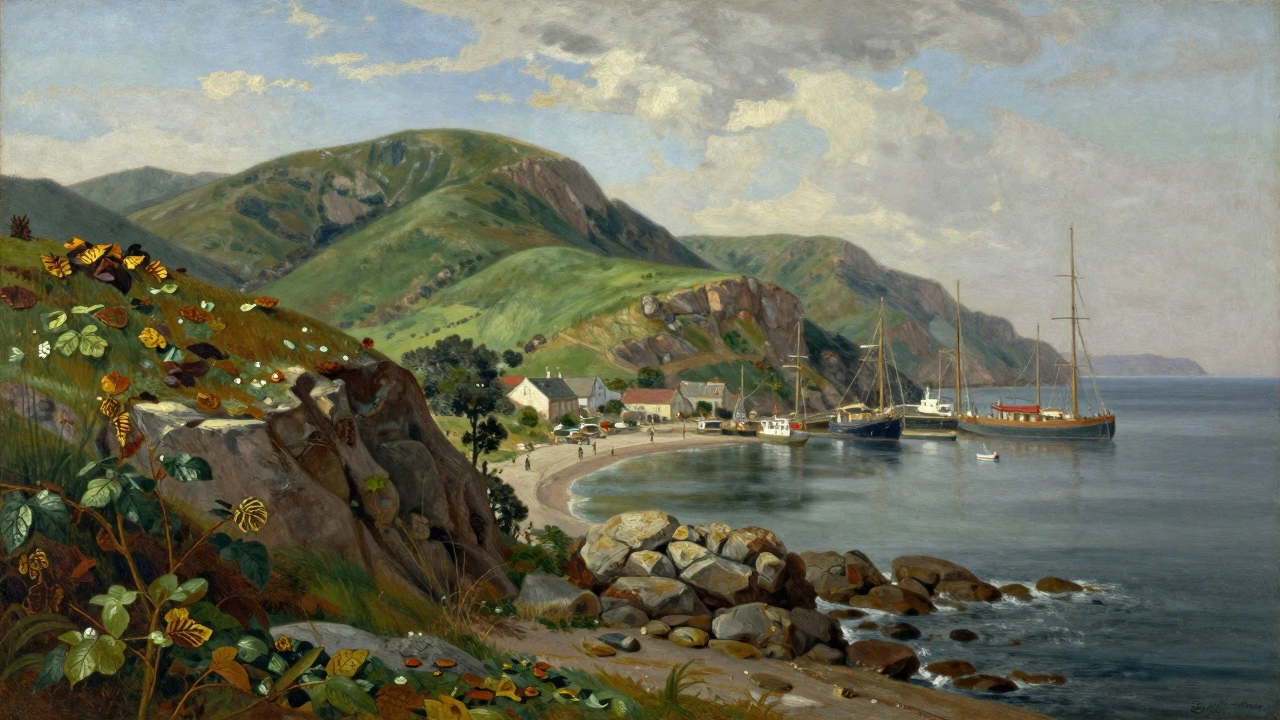
1. Realistic Landscape Art: The World As It Is
Realistic Landscape Art is a style focused on depicting nature with high fidelity to visual reality, avoiding embellishment or symbolic distortion. Think of this as the photographic approach before cameras existed. The goal here is precision. The artist wants you to believe you could walk into the painting and touch the bark of the tree.
This style peaked during the 19th century, particularly with movements like the Hudson River School in America and the Barbizon School in France. Artists like Albert Bierstadt and Thomas Moran didn’t just paint mountains; they painted specific, identifiable locations with geological accuracy. Why did this happen? Because the world was changing fast. Industrialization was spreading, cities were growing, and people felt disconnected from the wild. Realistic landscapes served as a record-a way to say, "This place exists, and it is beautiful, and we should protect it."
| Attribute | Description |
|---|---|
| Detail Level | Extremely high; individual leaves, rocks, and textures are visible. |
| Lighting | Naturalistic; shadows and highlights follow real-world physics. |
| Emotion | Subtle; awe comes from recognition, not dramatic manipulation. |
| Composition | Balanced and structured, often using perspective rules strictly. |
If you’re looking at a painting and you can count the feathers on a bird or see the reflection of a cloud in a puddle without any brushstrokes showing, you’re likely looking at realism. It demands patience. A single realistic landscape could take months to complete because every element must be justified by observation.
2. Romantic Landscape Art: Nature As Emotion
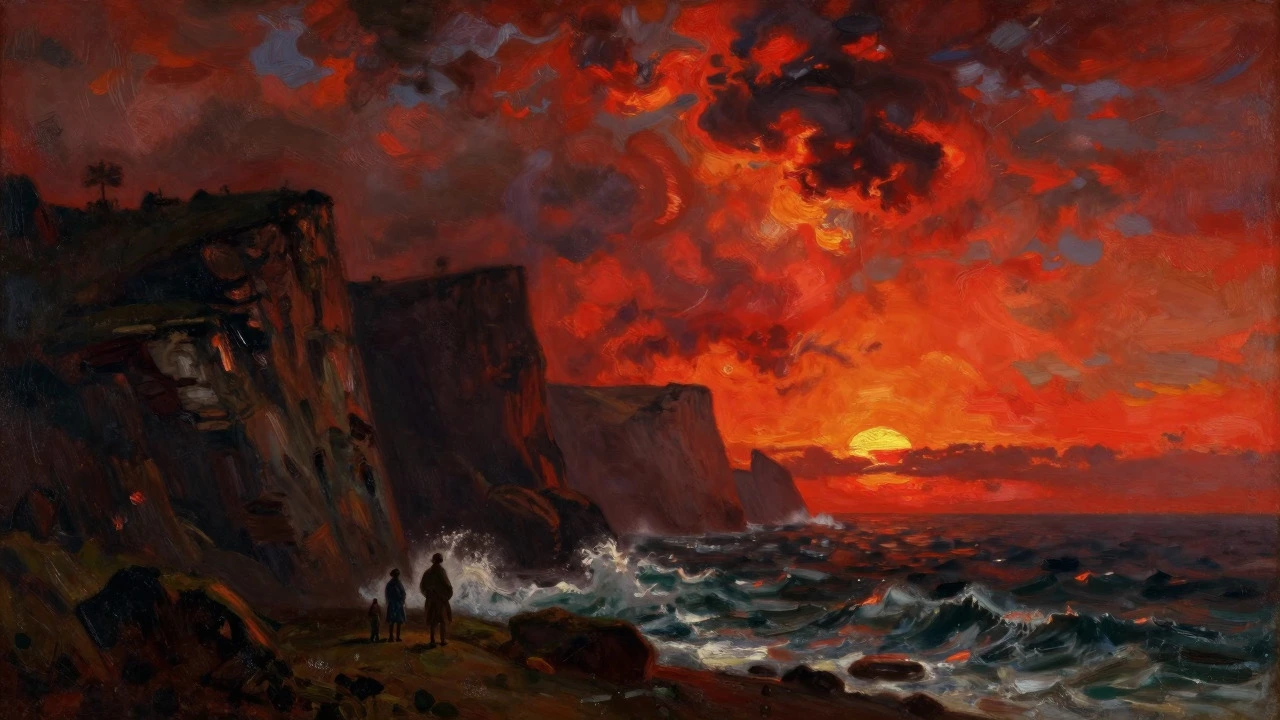
Romantic Landscape Art is a movement that prioritizes emotional response, drama, and the sublime power of nature over strict factual accuracy. While realism says, "Look how pretty this is," Romanticism says, "Look how powerful and terrifying this is." This style emerged in the late 18th and early 19th centuries as a reaction against the cold logic of the Enlightenment and the industrial machine.
Artists like J.M.W. Turner, Caspar David Friedrich, and John Constable didn’t care if the mountain was geologically accurate. They cared if it made you feel small. They used extreme contrasts-bright light against dark shadows, calm seas next to violent storms-to evoke feelings of awe, fear, and spiritual connection. This concept is called "the sublime": the idea that nature is so vast and powerful that it overwhelms human reason.
In a Romantic painting, you’ll often see tiny human figures standing before massive cliffs or raging oceans. This isn’t accidental. It’s a visual argument. The human is insignificant compared to the force of nature. The colors are richer, more saturated, and sometimes unrealistic. Clouds swirl dramatically. Sunsets bleed across the sky in fiery reds and oranges. The brushwork is looser than in realism, allowing for more energy and movement.
Why does this matter today? Because Romanticism taught us to feel deeply about the environment. It wasn’t enough to know a forest existed; we needed to feel its mystery. This emotional connection laid the groundwork for modern environmentalism. When you watch a movie where a character stands alone in a vast desert and feels a sudden sense of peace or terror, you’re experiencing the legacy of Romantic landscape art.
3. Impressionist Landscape Art: Light As Subject
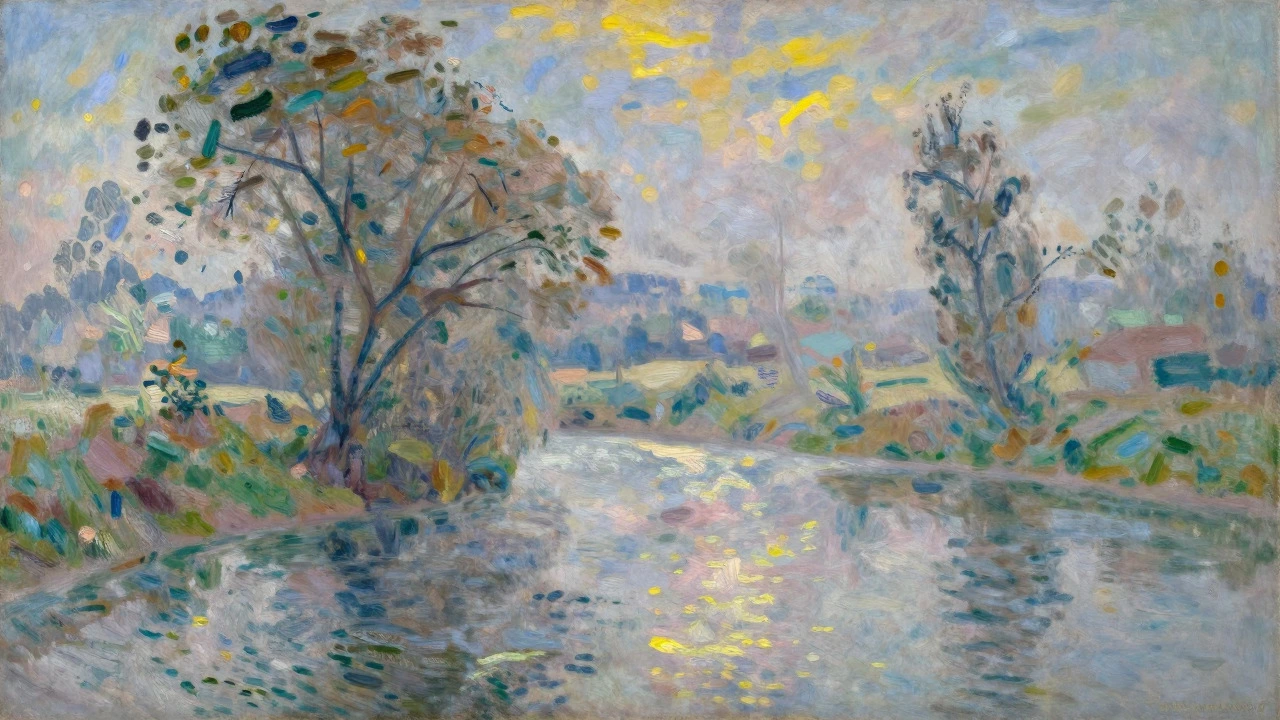
Impressionist Landscape Art is a style that captures the fleeting effects of light and atmosphere using rapid, visible brushstrokes and vibrant, unmixed colors. By the mid-19th century, artists grew tired of both the rigid detail of realism and the heavy drama of Romanticism. They wanted to paint what they saw in the moment, not what they remembered or imagined. Enter Claude Monet, Pierre-Auguste Renoir, and Camille Pissarro.
Impressionism changed everything. Instead of mixing colors on a palette to create smooth gradients, these artists applied pure colors side-by-side on the canvas. Your eye blends them together from a distance. This technique, called optical mixing, makes the painting vibrate with life. They also started painting outdoors (en plein air), which meant they had to work quickly before the light changed. This led to shorter, broken brushstrokes and a focus on atmosphere rather than outline.
Think about a foggy morning in Wellington. You don’t see sharp edges. You see soft blues, grays, and hints of yellow sunlight breaking through. An Impressionist would paint that exact feeling. They wouldn’t define the trees; they’d suggest them with dabs of green and brown. The subject isn’t the tree itself-it’s the light hitting the tree.
| Feature | Realism | Romanticism | Impressionism |
|---|---|---|---|
| Primary Focus | Factual accuracy | Emotional impact | Light and color |
| Brushwork | Smooth, invisible | Dramatic, expressive | Visible, rapid, broken |
| Color Palette | Natural, muted | High contrast, saturated | Bright, unmixed, vibrant |
| Human Presence | Often absent or integrated | Tiny, overwhelmed | Casual, everyday activities |
| Time Period | Mid-19th Century | Late 18th-Early 19th Century | Late 19th Century |
This style paved the way for modern art. Once artists realized that light changes constantly, they stopped trying to freeze time. They started capturing moments. That shift influenced everything from photography to film editing. If you’ve ever seen a video clip that focuses on the shimmer of water or the glow of sunset rather than the objects themselves, you’re seeing Impressionism’s DNA.
How to Identify Which Style You’re Looking At
You don’t need an art degree to tell these apart. Just ask yourself three questions:
- Is it detailed? If you can see every leaf and rock clearly, it’s likely Realism.
- Does it make me feel intense emotion? If the scene looks dramatic, stormy, or spiritually overwhelming, it’s probably Romanticism.
- Does it look unfinished up close? If the painting is made of colorful dots and dashes that only form a picture from afar, it’s Impressionism.
Let’s test this with a hypothetical example. Imagine a painting of a river valley.
In a Realist version, you’d see the specific type of grass on the banks, the texture of the mud, and the exact reflection of the sky in the water. It looks like a photograph.
In a Romantic version, the river might be rushing violently, crashing against jagged rocks under a dark, thunderous sky. A lone figure stands on a cliff edge, looking out. The mood is tense and majestic.
In an Impressionist version, the river is a series of blue, white, and green strokes. The trees are suggested by patches of color. The light is bright and sunny, creating a cheerful, airy atmosphere. You can’t see details, but you feel the warmth of the day.
Why These Three Styles Matter Today
We still use these frameworks when we talk about nature. When we post a photo of a perfect sunset on social media, we’re engaging in a form of Romanticism-we’re sharing awe. When we document a hike with precise maps and clear photos, we’re doing Realism. When we filter a photo to enhance the golden hour glow, we’re channeling Impressionism.
Understanding these three types helps you appreciate not just old paintings, but how we perceive the world now. It shows that art isn’t just about copying what’s there. It’s about choosing what to emphasize. Do we want to know the facts? Do we want to feel the power? Or do we want to experience the light?
The next time you’re outside, try sketching or taking a photo. Ask yourself: Am I trying to capture the detail, the emotion, or the light? Your answer will tell you which artistic tradition you’re following-and that’s a fun way to connect with centuries of history.
What is the difference between Realism and Romanticism in landscape art?
Realism focuses on factual accuracy and detailed representation of nature as it appears. Romanticism prioritizes emotional impact, often exaggerating nature's power to evoke awe or fear. Realism shows you what a place looks like; Romanticism shows you how it feels.
Who are famous examples of Impressionist landscape artists?
Claude Monet is the most famous, known for his Haystacks and Water Lilies series. Other key figures include Pierre-Auguste Renoir, Camille Pissarro, and Alfred Sisley. They all focused on capturing light and atmosphere through loose brushwork.
Can a painting be both Realistic and Romantic?
Yes, many 19th-century paintings blend these styles. For example, some Hudson River School painters used realistic details but composed their scenes to evoke Romantic awe. The line between the two can blur when an artist uses accurate details to support an emotional narrative.
Why did Impressionism move away from detailed landscapes?
Impressionists believed that detailed studio painting missed the true essence of nature: changing light. They wanted to capture the immediate visual impression of a moment, which required faster techniques and less focus on fine details. Photography also reduced the need for art to serve as a precise record.
Are there other major types of landscape art besides these three?
Yes, but these three are the foundational pillars of Western landscape tradition. Later styles like Expressionism, Surrealism, and Abstract Landscapes evolved from these roots. However, Realism, Romanticism, and Impressionism remain the primary categories for understanding historical landscape painting.