Landscape Art Style Identifier Quiz
Loading question...
Quiz Complete!
Walk into any major gallery or scroll through an art history textbook, and you will see the same recurring theme: nature. But not all depictions of nature are created equal. A muddy field in 19th-century England looks nothing like a glowing sunset in 20th-century France. The difference isn't just in the brushstrokes; it is in the philosophy behind them.
When people ask about the three main types of landscape art, they are usually looking for the pillars that hold up the genre. These aren't random categories made up by critics. They represent fundamental shifts in how humans relate to the earth around them. We are talking about Realism, Romanticism, and Impressionism. Each one tells a different story about light, emotion, and truth.
1. Realism: The Unflinching Mirror
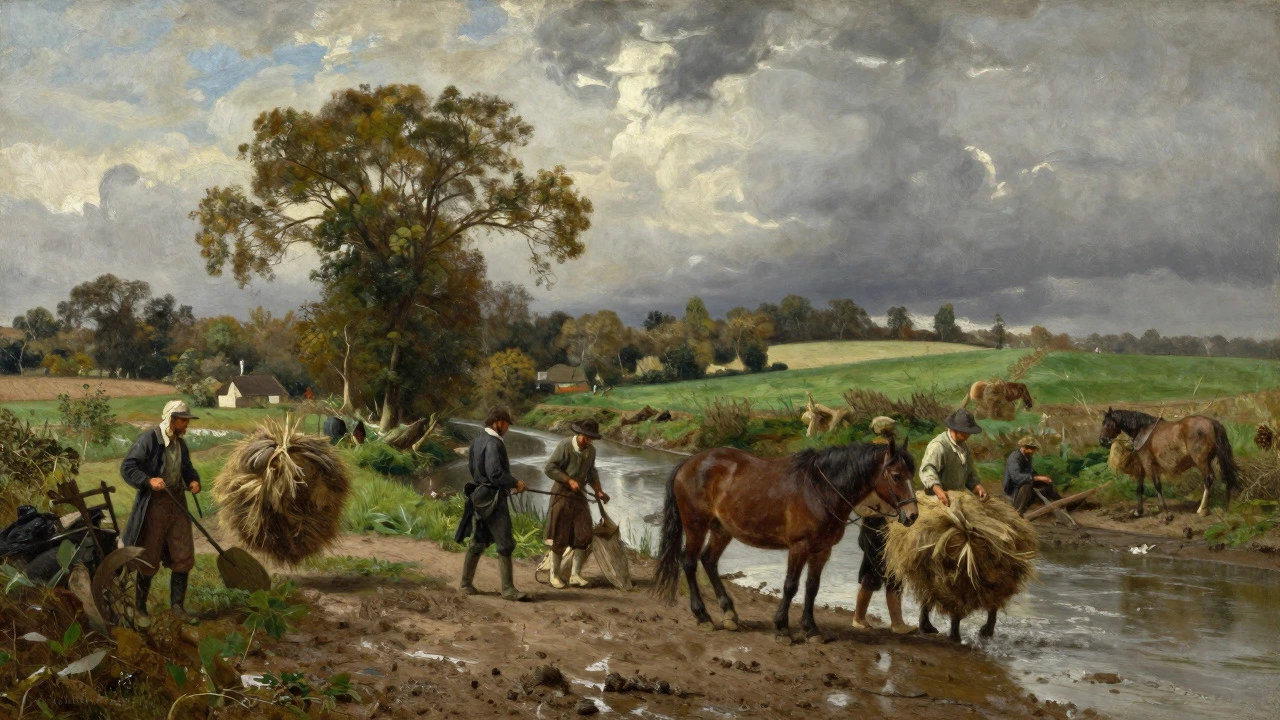
Let’s start with the most straightforward approach. Realism in landscape art is exactly what it sounds like: a commitment to showing the world as it actually is, without idealization or dramatic embellishment. This style emerged strongly in the mid-19th century as a reaction against the overly emotional and historical paintings that dominated earlier periods.
Realist Landscape Painting is an artistic movement focused on depicting everyday scenes and natural environments with accuracy and detail, rejecting romanticized ideals. Key figures include Gustave Courbet and John Constable.Think of John Constable’s *The Hay Wain*. It doesn’t show a heroic battle or a mythical god walking through a forest. It shows farmers moving hay across a river in Suffolk. The sky is turbulent, yes, but the ground is muddy, the animals look tired, and the water reflects the actual light of that specific day. There is no hidden moral lesson. There is just the scene.
- Focus on Detail: Every leaf, rock, and blade of grass is rendered with precision. The artist acts as a camera before cameras existed.
- Ordinary Subjects: Realists painted rural life, working landscapes, and common vistas rather than exotic or imaginary locations.
- Natural Light: Instead of using studio lighting effects, these artists studied how sunlight hit surfaces at different times of day.
Why does this matter? Because Realism grounded art in reality. It forced viewers to look at their own environment with fresh eyes. If you want to understand the texture of bark or the weight of clouds, Realist landscapes are your best reference point.
2. Romanticism: Nature as Emotion
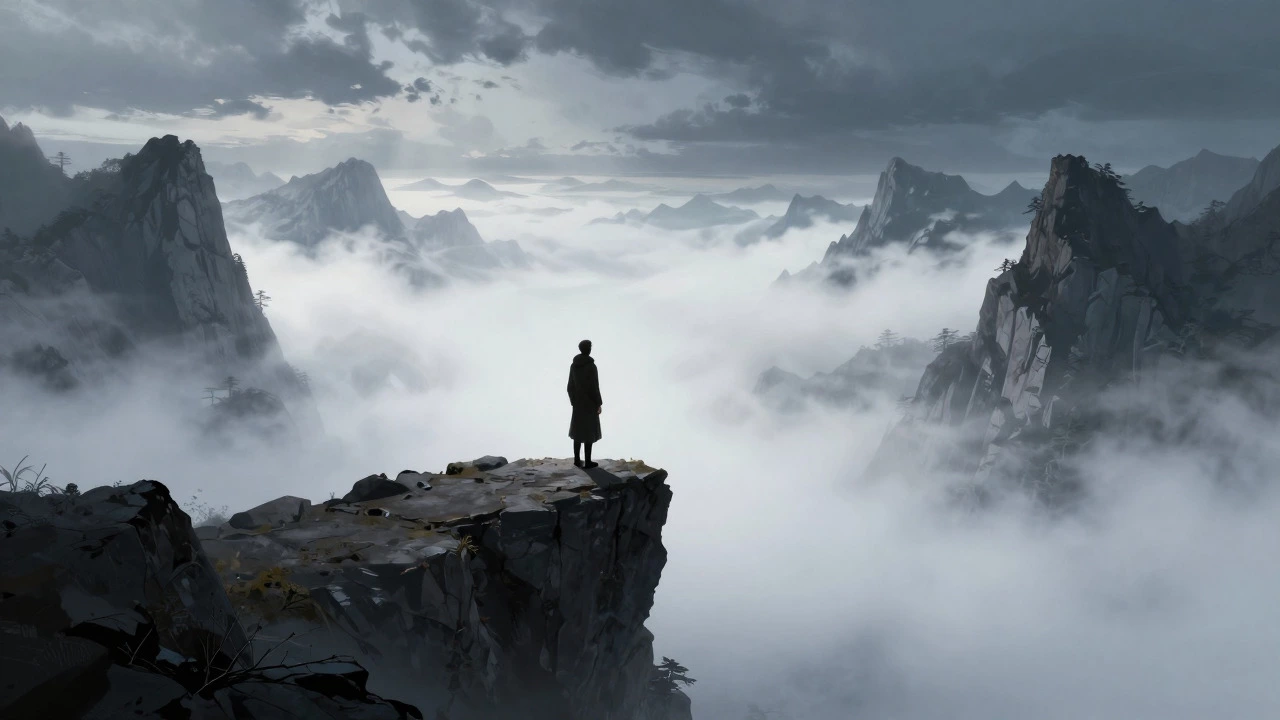
If Realism is a mirror, Romanticism is a dream. Emerging in the late 18th and early 19th centuries, this style wasn't interested in accurate topography. It was interested in how nature made us feel. Specifically, it focused on awe, terror, solitude, and the sublime.
Romantic Landscape Art is a movement that emphasizes intense emotion, individualism, and the glorification of nature's power over human reason. Notable artists include Caspar David Friedrich and J.M.W. Turner.Look at Caspar David Friedrich’s *Wanderer above the Sea of Fog*. You see a man standing on a cliff, back turned to us, looking out at a sea of mist. Is he admiring the view? Or is he contemplating his own insignificance against the vastness of the universe? The mountains are jagged, the fog is thick, and the atmosphere is heavy with mood. The geography matters less than the feeling of isolation.
- The Sublime: Artists sought to depict nature as powerful and sometimes terrifying, reminding humans of their small place in the cosmos.
- Dramatic Lighting: Storms, sunsets, and moonlight were used to heighten emotional impact, often exaggerating contrasts between light and dark.
- Human Scale: Figures in Romantic landscapes are often tiny compared to the surroundings, emphasizing nature’s dominance.
This style was a direct response to the Industrial Revolution. As cities grew dirty and crowded, artists looked to wild, untouched nature as a source of spiritual purity. Romantic landscapes aren't just pictures of places; they are visual poems about the human soul.
3. Impressionism: Capturing the Moment
By the late 19th century, technology had changed how we saw the world. Photography could now capture perfect details faster and more accurately than any painter. So, what was left for the artist? The answer was light itself. Impressionism shifted the focus from the object to the sensation of seeing the object.
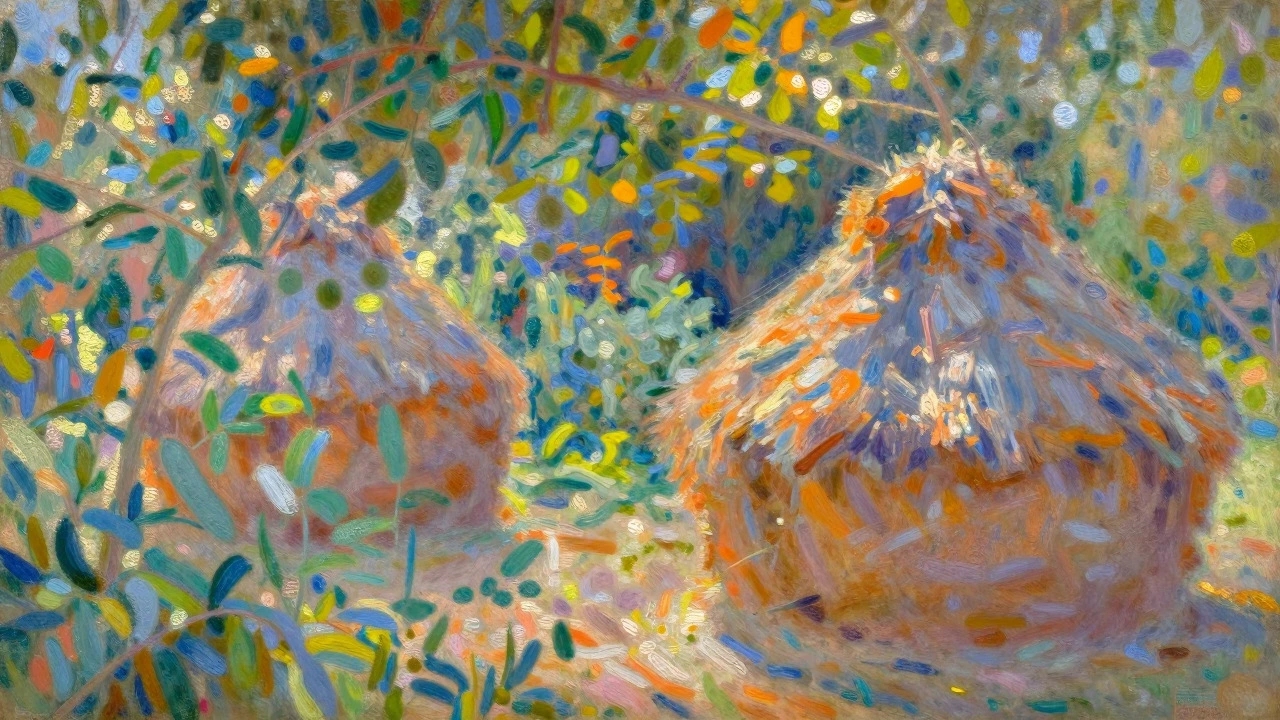
Impressionist Landscape is a style characterized by visible brushstrokes, open composition, and an emphasis on the accurate depiction of light in its changing qualities. Pioneers include Claude Monet and Pierre-Auguste Renoir.Claude Monet didn’t care about painting a tree. He cared about painting the way sunlight filtered through the leaves at 4 PM on a Tuesday in Giverny. His famous *Haystack* series shows the same subject under different weather conditions and times of day. The haystack is barely recognizable in some versions because the color and light have taken over the form.
- Visible Brushstrokes: Paint was applied quickly and loosely, allowing the eye to blend colors from a distance.
- Color Theory: Artists used complementary colors (like blue and orange) next to each other to create vibrancy, rather than mixing pigments on the palette.
- Ephemeral Moments: The goal was to capture a fleeting instant-a breeze moving through grass, a train emerging from smoke-before it vanished.
Impressionism changed everything. It liberated painting from the need for smooth finishes and strict outlines. It taught us that perception is subjective and that light is never static.
Comparing the Three Styles
To really grasp the differences, let’s put them side by side. Here is how each type approaches the same basic elements.
| Feature | Realism | Romanticism | Impressionism |
|---|---|---|---|
| Primary Goal | Accuracy and Truth | Emotion and Awe | Light and Perception |
| Brushwork | Smooth, detailed, invisible | Dramatic, textured, expressive | Loose, rapid, visible dabs |
| Role of Human | Part of the environment | Tiny against nature’s power | Often absent or incidental |
| Light Treatment | Naturalistic and consistent | Theatrical and symbolic | Scientific and fleeting |
| Key Artist | John Constable | Caspar David Friedrich | Claude Monet |
Why These Categories Still Matter Today
You might wonder if these old labels still apply in 2026. Absolutely. Even contemporary digital artists and photographers borrow from these traditions. When you take a photo with high dynamic range to show every shadow detail, you are leaning toward Realism. When you edit a sunset to be apocalyptically bright and moody, you are channeling Romanticism. When you use a long exposure to blur water and light, you are practicing Impressionism.
Understanding these three types gives you a vocabulary for describing what you see. It helps you analyze why a certain image moves you. Is it the technical skill? The emotional weight? Or the play of light? Knowing the difference allows you to appreciate the craft behind the canvas.
How to Identify Them in Your Own Viewing
Next time you visit a gallery or browse online, try this quick test. Look at a landscape painting and ask yourself three questions:
- Is it trying to be exact? If you can count the bricks in a wall or identify the species of every flower, it is likely Realist.
- Does it make you feel small? If the sky is crushing, the storm is violent, or the figure is lonely, you are looking at Romanticism.
- Does it look unfinished up close? If the paint looks like messy blobs until you step back and see a shimmering scene, it is Impressionist.
These styles are not mutually exclusive. Many artists blended them. J.M.W. Turner started as a Romantic but moved toward Impressionist techniques. However, recognizing the core intent helps you decode the artist’s message.
Beyond the Big Three: Brief Mentions
While Realism, Romanticism, and Impressionism are the dominant pillars, other styles have influenced landscape art. Abstract Expressionism reduced landscapes to pure color fields, while Photorealism took Realism to a mechanical extreme. Yet, for understanding the foundational evolution of how we depict nature, the big three remain the essential framework.
What is the difference between Realism and Naturalism in landscape art?
While often used interchangeably, Realism focuses on depicting subjects as they appear in everyday life, often including social commentary. Naturalism is a subset that seeks to portray nature with scientific accuracy and detachment, avoiding any emotional interpretation. In practice, many Realist landscapes are also Naturalist.
Which landscape style is most popular today?
There is no single "most popular" style, as preferences vary widely. However, Impressionist landscapes tend to sell well in the commercial art market due to their vibrant colors and accessible nature. Contemporary artists often blend elements of all three styles to create unique works.
Did landscape painting exist before the 19th century?
Yes, but it was rarely the main subject. In Renaissance art, landscapes served as backgrounds for religious or mythological scenes. It wasn't until the 17th century in the Netherlands and later in Britain that landscape became an independent genre worthy of serious study.
Can a single painting belong to more than one category?
Absolutely. Art movements overlap. For example, a painting might have Realist details in the foreground but a Romantic, stormy sky in the background. Many artists transitioned between styles during their careers, such as Thomas Cole, who bridged Romanticism and American Realism.
Who are some modern artists continuing these traditions?
Contemporary artists like Andrew Wyeth continued the Realist tradition with his drybrush technique. Anselm Kiefer explores Romantic themes of ruin and memory. Many plein air painters today follow the Impressionist method of painting outdoors to capture immediate light effects.
