Discover Your Artistic Path
What resonates with you?
Select all options that describe your ideal creative experience.
Your personalized art recommendations will appear here
Answer the questions above and click "Find My Art Match" to discover which of the 7 traditional arts aligns with your creative instincts.
Walk into any local community center or browse a weekend workshop schedule in Sheffield, and you’ll see a dizzying array of options. Pottery? Watercolor? Digital design? It’s easy to feel overwhelmed by the sheer variety of creative outlets available today. But if you step back and look at the historical foundation of Western education, there is a clear framework that has guided artists for centuries. This framework is known as the seven liberal arts, specifically the subset dedicated to creative expression.
Understanding these seven traditional areas isn’t just an academic exercise. For anyone looking to join an art workshop, it provides a roadmap for finding your true passion. Whether you are drawn to the tactile nature of clay or the spatial logic of architecture, knowing where your interest fits helps you choose the right class, the right tools, and ultimately, the right path for your creative journey.
The Foundation: What Defines the Seven Arts?
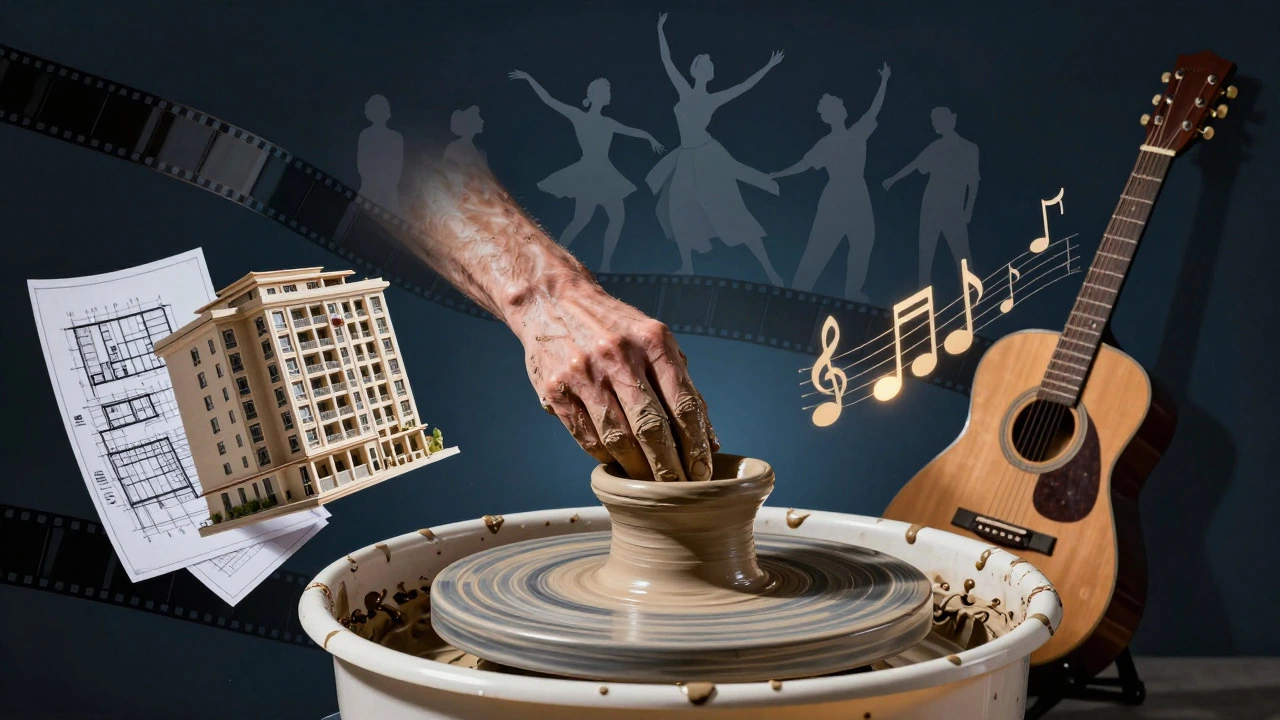
To understand the list, we first need to clarify what we mean by "the seven arts." Historically, this concept stems from the medieval curriculum of the liberal arts. While the "trivium" covered language and logic (grammar, rhetoric, dialectic) and the "quadrivium" covered mathematics and science (arithmetic, geometry, music, astronomy), the term "fine arts" evolved separately. However, in modern casual conversation and many educational contexts, when people ask about the "seven areas of art," they are usually referring to the seven distinct disciplines recognized within the fine arts tradition.
These disciplines are not random; they represent different ways humans interact with their environment through creation. Each one requires a unique set of skills, tools, and mental approaches. By breaking them down, we can see why a painting workshop feels completely different from a dance class, even though both are deeply artistic.
1. Painting: The Mastery of Surface and Color
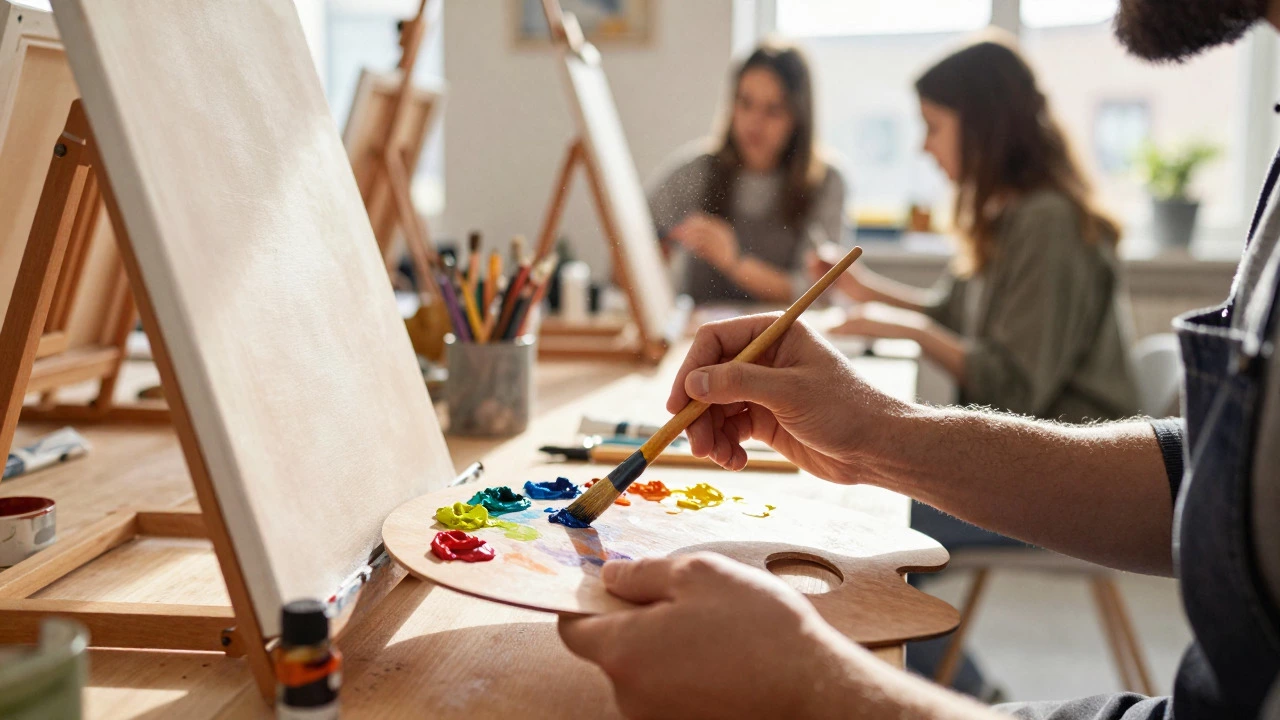
Painting is the practice of applying pigment to a surface, typically canvas, wood, or paper, using brushes, knives, or other tools. It is perhaps the most recognizable form of visual art. In a workshop setting, painting teaches you about color theory, composition, and texture. You learn how light interacts with shadow and how to convey emotion through hue and saturation.
If you enjoy the quiet focus of mixing colors and the satisfaction of seeing a flat surface transform into a window to another world, painting is likely your natural home. Workshops often start with acrylics because they dry quickly and are forgiving for beginners, but oil painting offers a depth and blending capability that many artists spend years mastering.
2. Sculpture: Creating Form in Three Dimensions
Sculpture is the art of creating three-dimensional forms by carving, modeling, casting, or assembling materials. Unlike painting, sculpture occupies physical space. You can walk around it, touch it, and experience it from multiple angles. This discipline demands a strong understanding of balance, weight, and volume.
In a sculpture workshop, you might work with clay, stone, metal, or wood. Clay modeling is particularly popular for beginners because it is additive-you build up the form rather than subtracting material like in stone carving. The tactile feedback of shaping clay provides an immediate sense of accomplishment and helps develop spatial reasoning skills that translate well to other creative fields.
3. Architecture: The Intersection of Art and Function
Architecture is the art and science of designing buildings and structures, balancing aesthetic appeal with structural integrity and human use. While often viewed as a profession, architecture is fundamentally an art form. It shapes our daily lives more than any other art because we live inside it.
Workshops in architecture often focus on model-making, sketching, or digital rendering. They teach you to think about scale, proportion, and how spaces affect human behavior. If you find yourself critiquing the layout of a room or admiring the facade of a building while walking through Sheffield’s city center, you have an architectural sensibility. This area bridges the gap between pure creativity and practical engineering.
4. Literature: The Art of Language
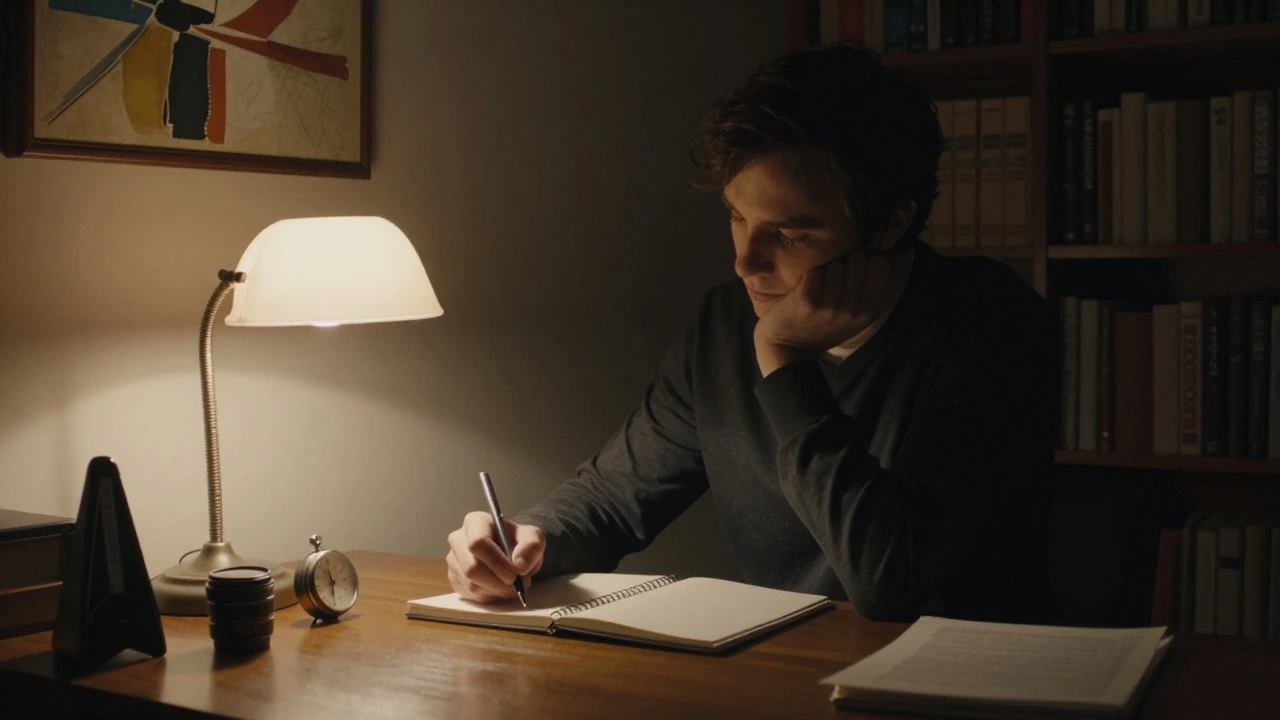
Literature is the use of written or spoken language to create works of artistic merit, including poetry, fiction, drama, and essays. Literature is the only art form that uses words as its primary medium. It relies on imagination rather than physical presence, allowing readers to construct worlds entirely in their minds.
Creative writing workshops are incredibly common and accessible. They focus on narrative structure, character development, and stylistic voice. Unlike visual arts, literature requires no expensive equipment-just a notebook and a willingness to be vulnerable. If you love getting lost in a good book, you might find that writing your own stories is the next logical step in your artistic exploration.
5. Music: The Art of Sound and Time
Music is the organization of sound and silence over time to express ideas, emotions, and cultural values. Music is unique because it is temporal; it exists only in the moment it is performed. It engages the brain in complex ways, connecting memory, emotion, and rhythm simultaneously.
Musical workshops range from learning an instrument like the guitar or piano to songwriting and composition. Even if you don’t consider yourself musical, group drumming or singing workshops can be transformative. They teach discipline, listening skills, and collaboration. The immediacy of music means you hear the result of your effort instantly, providing rapid feedback loops that are highly rewarding.
6. Cinema: The Moving Image
Cinema is the art of capturing and editing moving images to tell stories, often combining elements of painting, music, literature, and performance. Sometimes referred to as the "seventh art" in film theory, cinema is a composite medium. It borrows from all the other arts to create a immersive experience.
Film workshops today are more accessible than ever due to smartphone technology. You don’t need a Hollywood budget to learn about framing, lighting, and editing. These classes teach you how to guide the viewer’s eye and control pacing. If you are interested in storytelling but want a more dynamic, visual approach than literature offers, cinema is a powerful outlet.
7. Performing Arts: Dance and Theater
Performing Arts is the art form where artists use their bodies, voices, and presence to perform before an audience, encompassing dance, theater, and opera. This category emphasizes live interaction and ephemeral moments. Unlike a painting that sits in a gallery, a performance happens once and then disappears, leaving only memory and recording.
Dance workshops focus on movement, rhythm, and body awareness. Theater workshops concentrate on acting, improvisation, and stagecraft. Both require confidence and the ability to connect with others. If you enjoy being in front of people and expressing yourself physically, performing arts workshops offer a high-energy, social way to explore creativity.
| Art Form | Primary Medium | Key Skill Developed | Workshop Accessibility |
|---|---|---|---|
| Painting | Pigment & Surface | Color Theory & Composition | High (Low cost) |
| Sculpture | Clay, Stone, Metal | Spatial Reasoning | Medium (Requires studio) |
| Architecture | Space & Structure | Design Thinking | Medium (Technical) |
| Literature | Language | Narrative & Voice | Very High (No tools needed) |
| Music | Sound | Rhythm & Harmony | High (Instrument access) |
| Cinema | Moving Image | Visual Storytelling | High (Smartphone friendly) |
| Performing Arts | Body & Voice | Presence & Expression | High (Group based) |
How to Choose Your First Workshop
Knowing the seven areas is one thing; picking the right one for you is another. Start by asking yourself what kind of engagement you prefer. Do you want to create something tangible you can hold, like a sculpture or a painting? Or do you prefer something experiential, like music or dance?
Consider your resources. Painting and literature have very low barriers to entry. You can start painting with cheap acrylics and a brush, or write with a pen and paper. Sculpture and architecture often require specific tools or studio space, which makes joining a structured workshop essential. Cinema requires equipment, though basic phones suffice for introductory classes.
Also, think about your social preferences. Performing arts and music workshops are often collaborative and loud. Painting and literature workshops tend to be quieter and more introspective. There is no right answer, but matching the environment to your personality will make the learning process much more enjoyable.
Why Understanding These Categories Matters
In a world saturated with digital content, returning to these foundational categories grounds us in human history. These seven arts have been refined over thousands of years because they address fundamental human needs: to communicate, to beautify our surroundings, to tell our stories, and to connect with each other.
When you sign up for an art workshop, you aren’t just learning a skill. You are participating in a lineage of creators who came before you. Whether you pick up a paintbrush, a chisel, or a script, you are engaging with one of the core pillars of human culture. That perspective can make the learning curve feel less daunting and the final result much more meaningful.
Are photography and digital art part of the seven traditional arts?
Photography and digital art are modern extensions of traditional arts. Photography is often grouped with painting or cinema, while digital art spans across painting, sculpture, and cinema. The "seven arts" classification is historical, so newer mediums are typically mapped onto existing categories based on their techniques and goals.
Which art form is best for complete beginners?
Literature (creative writing) and painting (acrylics) are generally considered the easiest to start because they require minimal equipment and have a gentle learning curve. Group drumming or beginner yoga-dance fusion classes are also great for those who want a physical outlet without prior training.
Can I study more than one of the seven arts?
Absolutely. Many artists are multidisciplinary. For example, a filmmaker (cinema) often understands music, literature (screenwriting), and painting (composition). Exploring multiple areas can enhance your skills in each, as concepts like rhythm in music apply to editing in film.
Is architecture considered a fine art or a science?
Architecture is both. It is included in the seven arts because of its aesthetic and cultural significance, but it also requires rigorous scientific knowledge of physics, materials, and engineering to ensure structures are safe and functional.
Where can I find workshops for these arts in the UK?
Most major cities in the UK, including Sheffield, Manchester, and London, have community centers, universities, and private studios offering workshops. Look for listings on local council websites, platforms like Eventbrite, or specialized art schools. Many libraries also host free creative writing and basic art sessions.