Sculpting vs. Modeling Compatibility Checker
Answer these questions honestly to find out which art form aligns with your brain's natural tendencies.
You stare at a lump of wet clay on your left and a glowing tablet screen on your right. One requires physical strength and an understanding of gravity; the other demands patience with polygons and software menus. The question isn't just about which one is "harder," but which type of pain you are willing to endure. Sculpting and modeling are often used interchangeably in casual conversation, yet they represent two distinct disciplines with different barriers to entry. If you have ever wondered whether picking up a chisel is tougher than mastering ZBrush, you are asking the wrong question. The difficulty depends entirely on what your brain finds intuitive.
| Feature | Traditional Sculpting | Digital Modeling |
|---|---|---|
| Primary Medium | Clay, Stone, Wood | Polygons, Virtual vertices |
| Error Correction | Difficult; irreversible cuts or drying cracks | Easy; Ctrl+Z is infinite |
| Skill Focus | Anatomy, physics, material behavior | Topology, UI navigation, lighting |
| Cost Barrier | Low start-up (clay), High finish (casting) | High hardware/software cost |
The Physical Reality of Traditional Sculpting
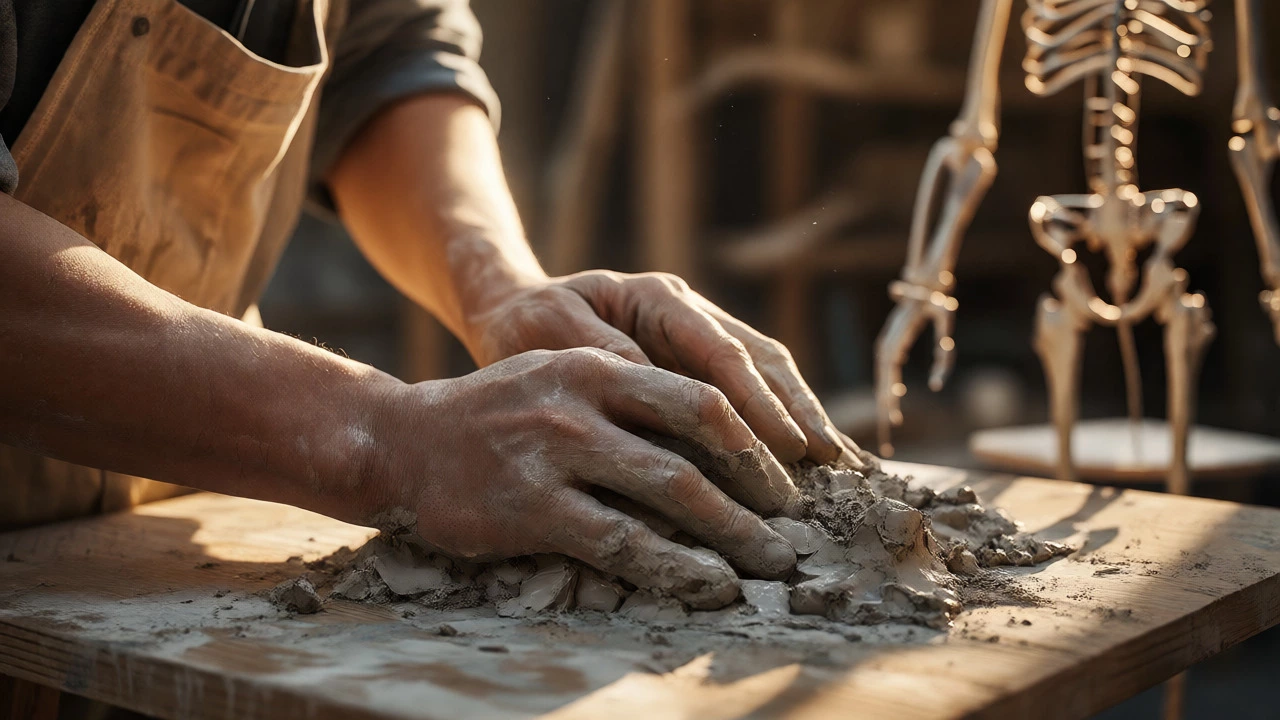
When people say sculpting is hard, they usually mean it hurts their back. Traditional sculpting is a tactile battle against entropy. You are working with materials like oil-based clay, water-based clay, or wax that resist your will. Unlike drawing, where you can lift your pencil, sculpting requires you to physically displace mass. If you carve away too much stone, it’s gone forever. If your armature-the internal skeleton of wire and wood-is weak, your figure collapses under its own weight before you even finish the nose.
This physicality creates a steep learning curve for beginners. You need to understand how gravity affects soft materials. A common mistake among novices is ignoring the center of gravity. In my studio in Sheffield, I’ve seen countless students build beautiful faces that topple over because the base wasn’t wide enough. This isn’t just artistic failure; it’s engineering failure. You must learn to balance aesthetic desire with structural necessity. Furthermore, traditional sculpting is unforgiving regarding time. Water-based clays dry out and crack if not kept moist. Oil-based clays never dry but can become sticky or brittle depending on the room temperature. Managing these environmental variables adds a layer of complexity that doesn’t exist in the sterile vacuum of a computer file.
The Technical Maze of Digital Modeling
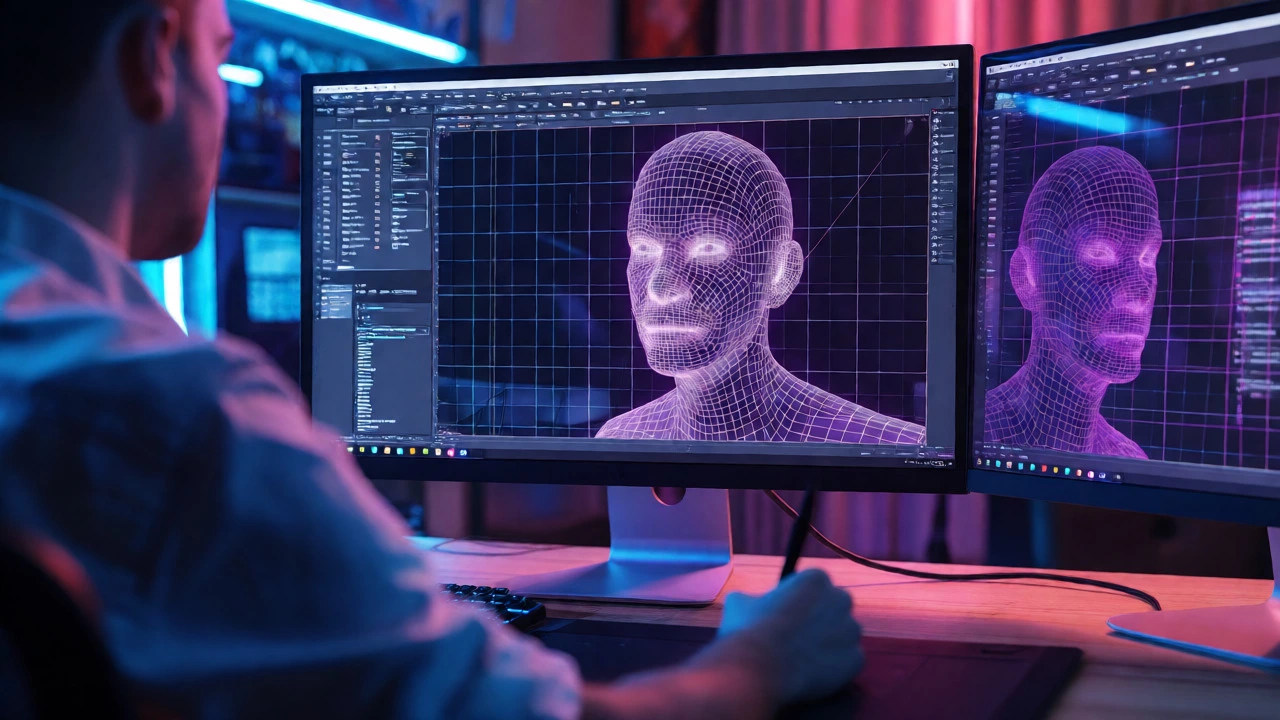
If traditional sculpting fights physics, digital modeling fights logic. When you open software like Blender or ZBrush, you aren’t shaping matter; you are manipulating data points called vertices. The initial barrier here isn’t muscle memory-it’s interface anxiety. Modern 3D suites have hundreds of tools, shortcuts, and settings. For someone coming from a painting background, this feels less like art and more like coding.
The real challenge in digital modeling is topology. Topology refers to the flow of the polygon mesh across your model. Bad topology leads to ugly shading artifacts when you try to animate or render the character later. You might spend ten hours sculpting a perfect face in ZBrush, only to realize the wireframe looks like spaghetti. Fixing this requires retopology-a tedious process of redrawing the mesh lines to ensure they follow the natural contours of the form. This step is purely technical and offers little immediate creative gratification. It is the digital equivalent of sanding wood, but without the satisfying smell of sawdust.
Cognitive Load: Spatial Reasoning vs. Tool Mastery
Both disciplines require strong spatial reasoning, but they apply it differently. In traditional sculpting, you view your subject from all angles physically. You walk around it, touch it, and rotate it. Your brain processes depth through parallax-objects closer to your eye move faster than those further away. This is intuitive for humans because we evolved to navigate 3D space.
In digital modeling, you rely on orthographic views (front, side, top) and perspective cameras. Beginners often struggle with "scale creep," where they lose track of how big their object actually is relative to others in the scene. You might make a sword that looks fine on screen but would be three meters long in reality. Correcting scale errors late in the pipeline is painful. However, digital tools offer undo history. This safety net changes the psychological approach. You take more risks digitally because failure costs nothing but time. In clay, failure costs days of work and ruined material. Some artists find this freedom liberating; others find it paralyzing because there is no external constraint forcing them to commit to a decision.
Material Behavior and Surface Detail
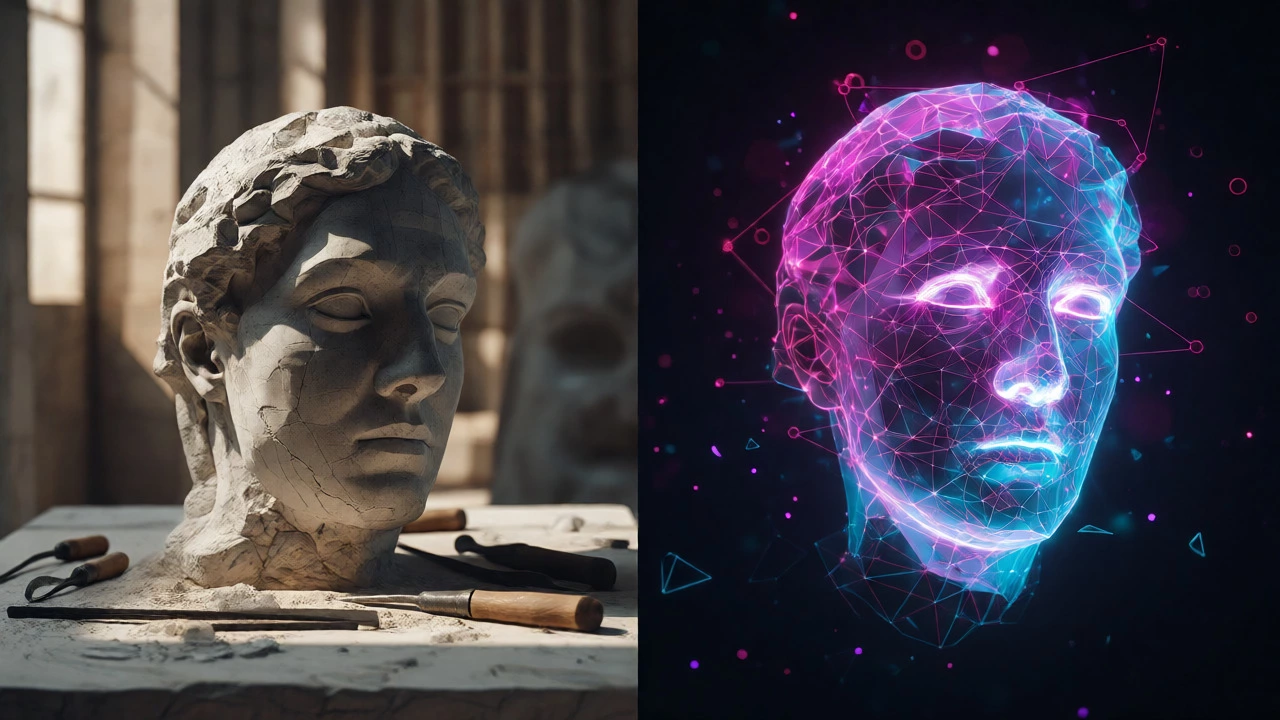
Surface detail is where the paths diverge most sharply. Creating realistic skin pores, fabric wrinkles, or wood grain in traditional media requires specialized tools and immense patience. You might use toothbrushes for texture or burnishing stones for smoothness. The feedback loop is immediate-you see and feel the change instantly.
Digital sculpting simulates this with brushes that add displacement maps or normal details. While powerful, it lacks the visceral satisfaction of removing excess material. There is a phenomenon known as "digital mush," where over-sculpting leads to undefined, blobby forms because the artist keeps adding rather than subtracting. Traditional sculptors often talk about "finding the statue inside the block." Digital artists sometimes get lost in the infinite possibility of adding detail until the form loses its silhouette clarity. The difficulty here shifts from manual dexterity to visual discipline. Can you stop adding buttons and belts to your armor? In both mediums, knowing when to quit is harder than knowing how to start.
Which Path Suits Your Brain?
Deciding which is harder comes down to your personal friction points. Do you hate sitting still for hours staring at a monitor? Then digital modeling will feel like torture. Do you dislike getting dirt under your fingernails and dealing with dust? Then traditional sculpting will drain your energy quickly.
- Choose Traditional Sculpting if: You crave tactile feedback, enjoy problem-solving with physical constraints, and don’t mind slow iteration cycles.
- Choose Digital Modeling if: You prefer non-destructive workflows, enjoy technical puzzles, and want flexibility in changing colors, textures, and poses instantly.
Many professionals now blend both. They rough out forms in clay to understand volume, then scan them into a computer for refinement. This hybrid approach acknowledges that neither method is inherently superior-they are simply different languages for describing three-dimensional space. The "hardness" is subjective. It’s not about which skill is objectively more difficult, but which set of frustrations you are willing to embrace daily.
Is digital sculpting easier than traditional clay sculpting?
Not necessarily easier, but different. Digital sculpting removes physical fatigue and allows for infinite undo, which lowers the fear of mistakes. However, it introduces a steep learning curve for software interfaces and technical concepts like topology and UV mapping. Traditional sculpting has lower technical barriers but higher physical and material management challenges.
Do I need to know traditional sculpting to do digital modeling?
No, but it helps significantly. Understanding anatomy, light, shadow, and form is universal. Artists who study traditional methods often produce better digital work because they understand why shapes look correct, not just how to click buttons. However, many successful digital artists started exclusively on computers.
Which is cheaper to start: sculpting or modeling?
Traditional sculpting is cheaper to start. A basic kit of oil-based clay and tools costs under £50. Digital modeling requires a capable computer (£800+) and software licenses or subscriptions, plus potentially a graphics tablet (£100-£300). However, traditional finishing costs (casting in bronze or resin) can be very high, whereas digital files can be printed or rendered repeatedly at low marginal cost.
Why is topology important in digital modeling?
Topology refers to the arrangement of polygons on a 3D surface. Good topology ensures that the model deforms correctly during animation and renders smoothly without shading errors. Poor topology results in pinching, stretching, or unnatural creases, especially when applying textures or moving joints.
Can I transition from clay to digital easily?
Yes, many artists use 3D scanning to convert clay sculptures into digital meshes. This workflow leverages the strengths of both: the organic intuition of hand-building and the precision/editability of digital tools. It is a popular method in film production and toy design.