Modern Art Engagement Guide
Follow this guide to develop a deeper understanding of modern art. Select an artwork and work through the engagement steps.
Step 1: Choose an Artwork
Select one of these famous modern art pieces to explore:
Red Square
Simple geometric formBlack Square
Minimalist statementAbstract Splatter
Expressionist techniqueReadymade Object
Conceptual challengeYour Analysis Journey
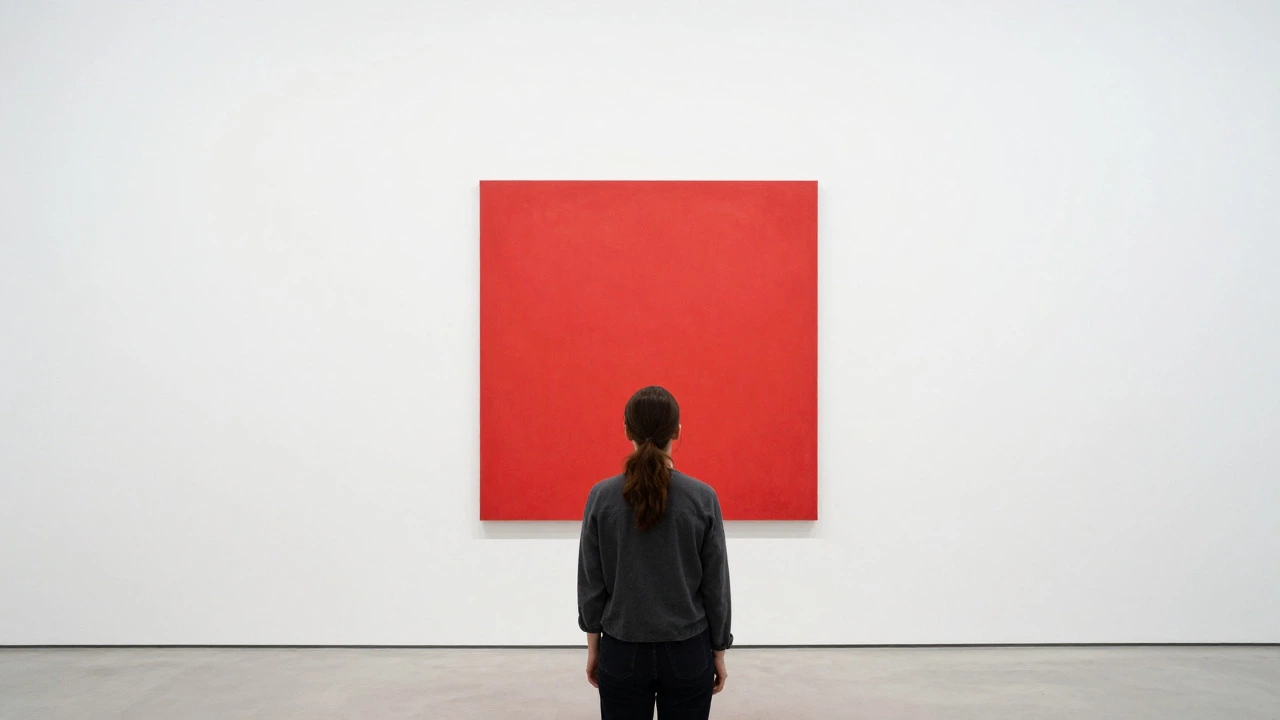
You walk into a gallery. You see a canvas with a single red square. Or maybe it’s a urinal signed "R. Mutt." Your first thought is usually the same: "I could have done that." It’s a fair reaction. If art is just about technical skill-the ability to paint a photorealistic eye or sculpt a perfect marble hand-then modern art fails the test. But if you stop there, you’re missing the point entirely. The question isn’t whether modern artists can draw. It’s whether their work communicates something true, challenging, or new.
For decades, this debate has divided viewers, critics, and collectors. Some call modern art a scam; others call it the most honest reflection of our time. The truth lies somewhere in the messy middle. To understand if modern art counts as "real" art, we have to redefine what art actually does.
The Shift from Skill to Concept
For centuries, art was judged by craftsmanship. Could you render light accurately? Did your perspective look right? This changed drastically in the late 19th and early 20th centuries. Artists like Claude Monet a pioneer of Impressionism who focused on capturing fleeting moments of light rather than detailed realism started painting what they saw, not what they knew. They blurred edges. They ignored strict outlines. Why? Because they wanted to capture the feeling of a moment, not just its physical appearance.
Then came the radical break. In 1917, Marcel Duchamp a French-American artist who challenged traditional definitions of art through his readymades submitted a porcelain urinal to an exhibition. He called it Fountain. It wasn’t painted or carved by him. He bought it at a store. Was it art? Duchamp argued yes. He shifted the focus from the object itself to the idea behind it. By choosing it, he forced us to ask: What makes something art? Is it the maker’s hand, or the viewer’s mind?
This concept-driven approach defines much of modern and contemporary art. When you look at a piece today, you aren’t just looking at paint on canvas. You are engaging with an idea. The value isn’t in the labor hours spent mixing pigments; it’s in the intellectual spark the work creates.
Why We Resist "Simple" Art
There’s a common misconception that modern art is easy because it looks simple. A child can splash paint on a wall. So why is a Jackson Pollock worth millions? The answer lies in context and intention. A child splashes paint randomly. Pollock controlled viscosity, rhythm, and movement. He turned the act of painting into a performance. His work reflects chaos, energy, and subconscious flow.
We resist modern art because it demands more from us. Traditional art gives us a clear subject: a saint, a landscape, a portrait. We recognize it immediately. Modern art often removes the subject. It asks us to feel, to interpret, to question. That effort feels uncomfortable. We prefer art that confirms what we already know. Modern art challenges that comfort zone.
Consider Kazimir Malevich a Russian avant-garde artist known for founding Suprematism and creating Black Square's Black Square (1915). It’s literally a black square on a white background. Critics mocked it then, too. But Malevich intended it to represent the "zero point" of painting-a break from depicting the material world. It was a philosophical statement, not a decoration. Understanding that changes how you see it.

The Role of Emotion and Reaction
If art doesn’t need to be technically perfect, what does it need? It needs to evoke a response. Anger, confusion, joy, boredom-if you feel something, the art is working. Frida Kahlo a Mexican painter known for her deeply personal and symbolic self-portraits exploring identity and pain didn’t use realistic proportions or perfect anatomy. Her faces were stylized, her bodies fragmented. But her paintings scream pain, resilience, and identity. Anyone who has suffered understands her work instantly. The technical "flaws" serve the emotional truth.
Modern art often tackles difficult subjects: war, alienation, consumerism, identity. Banksy an anonymous street artist whose satirical works critique politics, war, and capitalism’s stenciled images appear on walls worldwide. They aren’t museum-quality oil paintings. They are quick, gritty, and accessible. Yet they carry powerful messages about society. Their "imperfection" makes them feel urgent and real.
Market Value vs. Artistic Merit
Let’s address the elephant in the room: money. When a blank canvas sells for $3 million, people lose faith in art. High prices distort perception. Market value is driven by scarcity, provenance, and hype-not necessarily quality. A rare Picasso commands millions because there are few Picassos, and collectors compete for status. That doesn’t mean every expensive piece is good art. It means it’s a valuable asset.
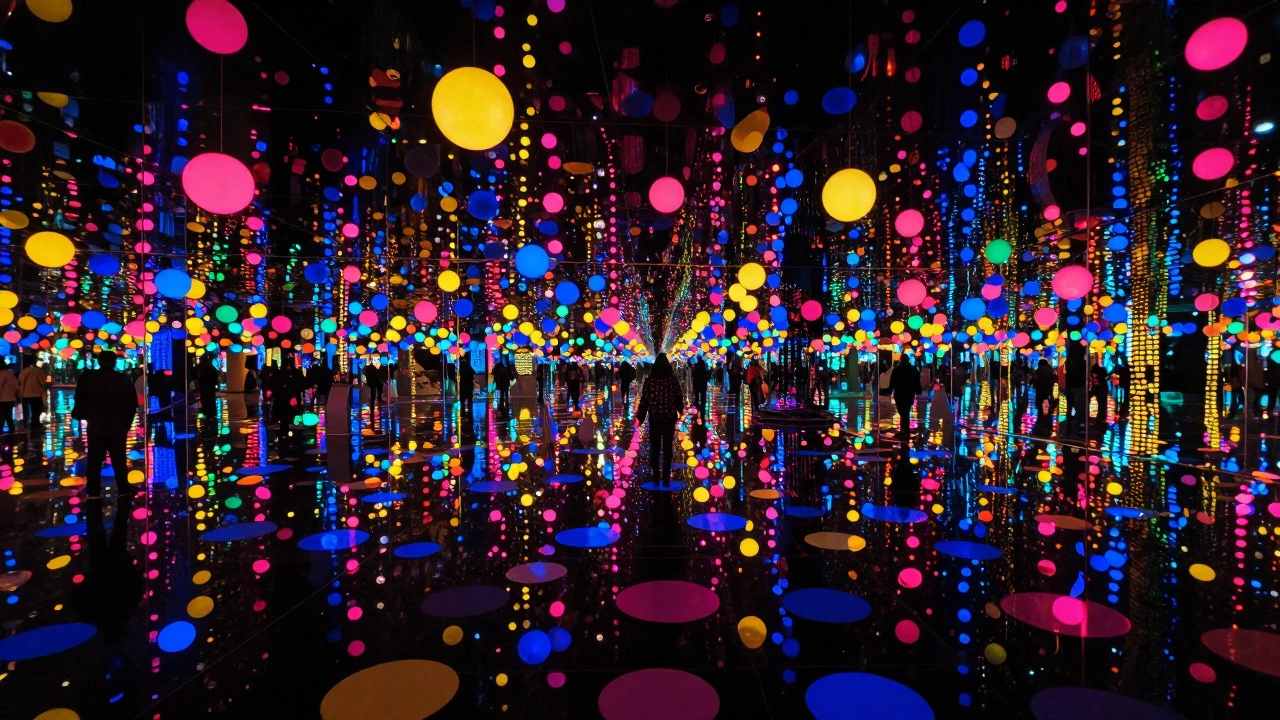
Artistic merit is separate from price. You don’t need to spend anything to appreciate Yayoi Kusama a Japanese contemporary artist known for her immersive infinity rooms and polka dot motifs’s infinity rooms. Standing inside one, surrounded by mirrors and lights, creates a visceral experience of endlessness. That experience is real. Its monetary cost to enter a museum is irrelevant to its artistic impact.
Don’t let auction results dictate your opinion. Judge the work by how it makes you think or feel, not by its resale value.
How to Engage With Modern Art
If you want to move past frustration and start connecting with modern art, try these steps:
- Ask questions, not judgments. Instead of "This is garbage," ask "What is the artist trying to say?" Look for clues in the title, materials, or placement.
- Read the context. Art doesn’t exist in a vacuum. Knowing that Pablo Picasso a Spanish painter who co-founded Cubism, breaking objects into geometric shapes to show multiple perspectives created Guernica in response to the bombing of a Basque town changes everything. The distorted figures represent suffering, not bad drawing.
- Sit with it. Don’t scroll past. Stand in front of a piece for two minutes. Notice your initial reaction. Does it shift? Do you notice details you missed?
- Accept ambiguity. Not all art has a single meaning. Some pieces are meant to be open-ended. Your interpretation is valid.
Conclusion: Art Is a Conversation
So, is modern art real art? Yes. It meets the core definition of art: human expression that communicates ideas, emotions, or experiences. It may not require traditional technical skills, but it requires vision, courage, and intellect. It challenges us to look deeper, think harder, and feel more.
You don’t have to love every piece. You don’t have to buy any. But dismissing it all as a joke closes off a rich conversation about what it means to be human in the modern world. The next time you see a confusing artwork, don’t walk away angry. Walk up closer. Ask yourself: What am I missing? The answer might surprise you.
Why do some modern art pieces sell for millions?
High prices are often driven by market forces like scarcity, historical significance, and collector demand, not just artistic quality. Famous artists create limited works, and wealthy buyers compete for status symbols. This doesn't mean the art lacks merit, but price and value are different things.
Can anyone make modern art?
Anyone can create art, but professional modern art involves deep conceptual thinking, cultural context, and intentional execution. While a child might make a similar-looking mark, the artist's intent, history, and message give the work its depth and recognition.
What is the difference between modern and contemporary art?
Modern art generally refers to works from the late 19th to mid-20th century (roughly 1860s-1970s), focusing on breaking from tradition. Contemporary art refers to art made from the late 20th century to today, often addressing current social, political, and technological issues.
Does modern art require technical skill?
Not always in the traditional sense of realistic drawing or painting. Modern art prioritizes conceptual strength, innovation, and emotional impact over technical perfection. However, many modern artists still possess high levels of craft, even if they choose to hide it for effect.
How should I react if I don't understand a piece of modern art?
It's okay not to understand immediately. Try reading the artist's statement or learning about the historical context. Focus on your emotional reaction rather than seeking a single "correct" interpretation. Art is subjective, and your personal response is part of the experience.
