Artwork Printing Legal Risk Calculator
Scenario Configuration
Result
Configure your scenario and click calculate to see the estimated legal risk.
Imagine you just found the perfect image online-a stunning landscape, a beloved character, or a piece of modern abstract art. You print it out, frame it nicely, and hang it on your living room wall. It looks great. But then a question pops into your head: Did I just break the law? This is a common dilemma for anyone who loves art but isn't a legal expert. The short answer is that printing artwork for strictly personal use usually falls into a gray area, but it rarely leads to legal trouble unless you cross specific lines.
To understand where those lines are, we need to look at how copyright works in the real world, not just in textbooks. Copyright protects the creator's right to control how their work is reproduced. When you download an image and send it to your printer, you are technically making a reproduction. However, enforcement depends heavily on what you do with that reproduction afterward.
Understanding Copyright Basics
Copyright is a legal concept that grants creators exclusive rights to their original works. In most countries, including the United Kingdom and the United States, copyright protection begins the moment a work is created and fixed in a tangible form. This means the artist owns the rights automatically; they don't need to register it or add a © symbol (though doing so helps).
When you see an image online, you have permission to view it. Viewing is different from reproducing. Reproduction involves creating a copy. If you print that image, you are creating a physical copy. Under strict legal interpretation, this requires permission from the copyright holder. However, laws often include exceptions for private study or personal use, which complicates things for the average person.
The key distinction lies in the intent and the outcome. Are you printing it to sell? To share widely? Or just to enjoy in your own home? The law treats these scenarios very differently. For personal enjoyment within your household, the risk is minimal. But once that print leaves your private sphere, the legal risks increase significantly.
Personal Use vs. Commercial Use
The biggest factor in determining legality is whether money changes hands. If you print a poster of a famous painting and keep it in your bedroom, no one is likely to care. But if you print fifty copies and sell them on Etsy, you are infringing on the artist's right to profit from their work. This is called commercial infringement, and it is taken very seriously.
Even non-commercial sharing can be problematic. Printing an image and giving it as a gift to a friend might seem harmless, but technically, you are distributing a copyrighted work without permission. While artists rarely sue individuals for gifting prints, it is still a violation of their exclusive distribution rights. The line blurs when you post photos of your printed art on social media. If the image goes viral and others start selling copies based on your post, you could be held partially responsible for facilitating unauthorized distribution.
Consider this scenario: You love a digital illustration by an independent artist. You print it for your office desk. That’s generally fine. Now imagine you run a small café and print large versions of popular album covers to decorate the walls. Even if you aren't selling the prints directly, you are using them to enhance your business environment. This is considered commercial use because it supports your revenue-generating activity. Many businesses get fined for this exact reason.
Fair Use and Fair Dealing Exceptions
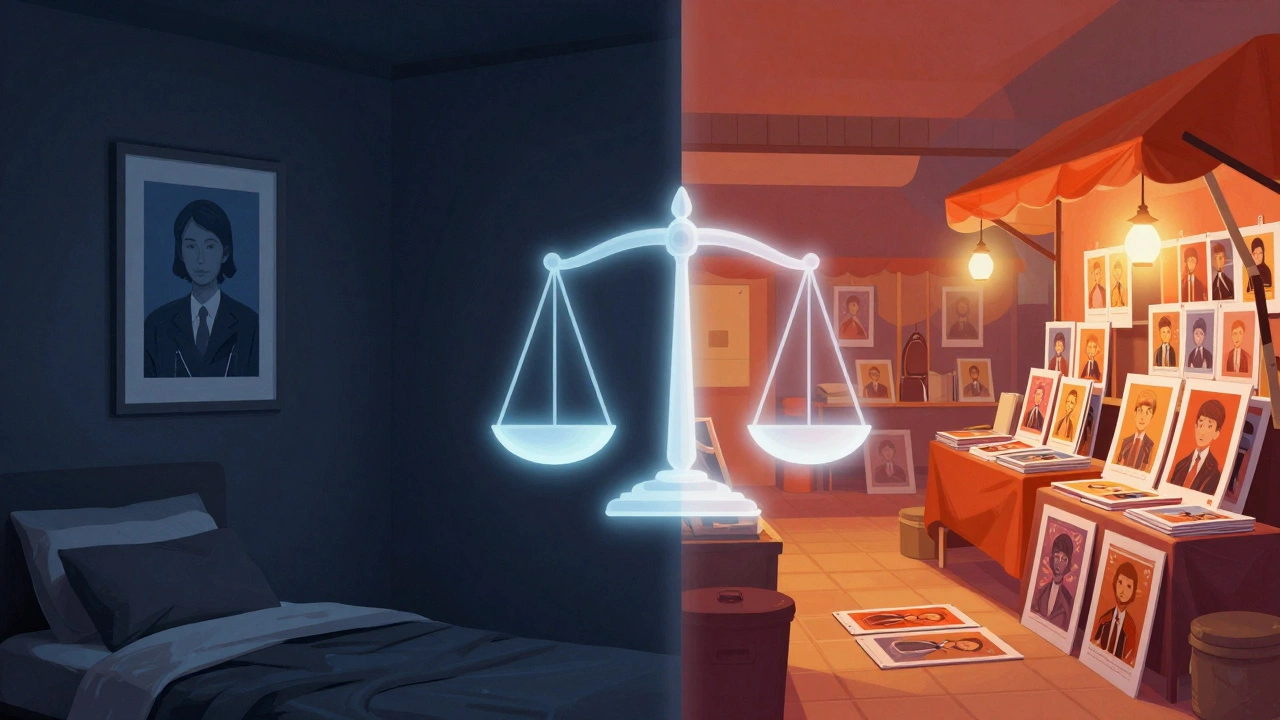
In the United States, there is a doctrine called "Fair Use" that allows limited use of copyrighted material without permission for purposes such as criticism, comment, news reporting, teaching, scholarship, or research. In the UK and many other Commonwealth countries, the equivalent is "Fair Dealing." These exceptions are narrow and fact-specific.
Does printing a photo for your wall count as Fair Use? Probably not. Courts look at four factors: the purpose of the use, the nature of the copyrighted work, the amount used, and the effect on the market value. Printing an entire image for personal decoration doesn’t transform the work (it’s not a parody or critique), and while it doesn’t directly hurt sales, it denies the artist potential licensing fees. Therefore, relying on Fair Use for decorative printing is risky and often unsuccessful in court.
However, if you are printing a small excerpt of an image for a school project or a critical review article, you are much safer under Fair Use/Fair Dealing. The context matters immensely. Always ask yourself: Am I adding new meaning or message to the original work? If the answer is no, you are likely outside the protection of these exceptions.
The Role of Digital Rights Management (DRM)
Many websites protect their images using Digital Rights Management (DRM) technologies. These can include watermarks, low-resolution downloads, or technical barriers that prevent saving. Circumventing DRM is illegal in many jurisdictions, regardless of your intended use. For example, in the US, the Digital Millennium Copyright Act (DMCA) makes it illegal to bypass technological measures that control access to copyrighted works.
If you use a third-party tool to remove a watermark or force-download a protected image, you are committing a separate offense beyond copyright infringement. Even if you never sell the print, breaking DRM protections can lead to legal action. Always respect the technical restrictions placed by the content provider. If a site doesn’t offer a download button, assume you are not supposed to save the file.
Public Domain and Creative Commons
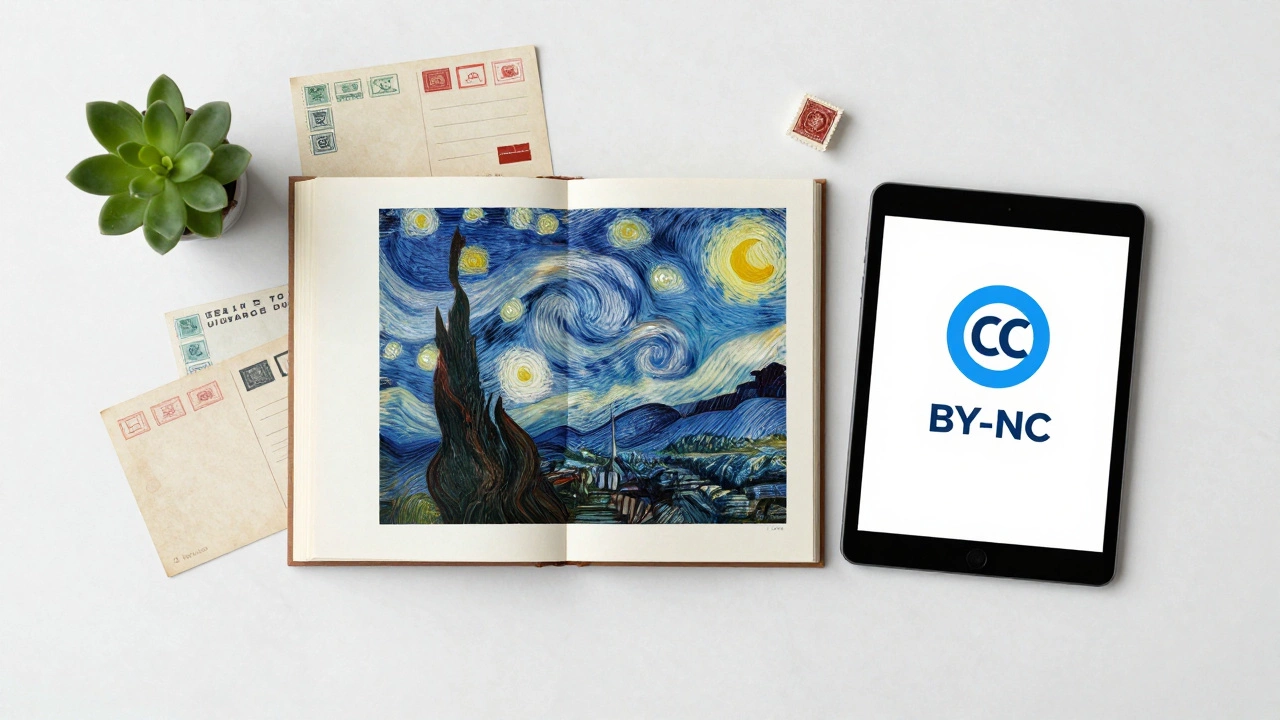
Not all artwork is under strict copyright. Works in the public domain are free for anyone to use, modify, and distribute. In the US, works published before 1929 are generally in the public domain. In the UK, copyright typically lasts for the life of the author plus 70 years. Once that period expires, the work enters the public domain. You can freely print and even sell reproductions of Vincent van Gogh’s paintings because he died over a century ago.
Creative Commons is a licensing system that allows creators to grant certain permissions upfront. Many modern artists use Creative Commons licenses to allow sharing and adaptation. There are several types:
- CC BY: You can use the work as long as you credit the creator.
- CC BY-NC: Non-commercial use only. Great for personal prints.
- CC BY-ND: No derivatives allowed. You must print it exactly as is.
- CC BY-NC-SA: Share alike. If you adapt it, you must share your version under the same license.
Always check the license type. If an image is marked CC BY-NC, you can print it for your home, but you cannot sell it. If it’s CC0, the creator has waived all rights, and you can do almost anything with it. Using properly licensed content eliminates most legal worries.
| Scenario | Legal Risk | Notes |
|---|---|---|
| Printing for home decor | Low | Rarely enforced, but technically infringement without permission. |
| Selling prints online | High | Direct commercial infringement. High chance of takedown or lawsuit. |
| Gifting prints to friends | Medium | Unauthorized distribution. Unlikely to be sued, but illegal. |
| Using Public Domain art | None | Free to use commercially and personally. |
| Bypassing DRM | High | Illegal under DMCA/Copyright Acts regardless of use. |
How to Stay Safe and Support Artists
The best way to avoid legal issues is to obtain proper permission. Many artists sell high-resolution files specifically for printing. Platforms like Adobe Stock, Shutterstock, and Etsy offer licenses that allow personal or commercial use. Buying a license ensures the artist gets paid and you stay compliant.
If you want to print something for free, seek out public domain resources. Websites like Wikimedia Commons, Project Gutenberg, and museum archives (such as the Metropolitan Museum of Art’s open access collection) provide high-quality images that are safe to use. Another option is to commission original art. Working directly with an illustrator gives you clear ownership terms and supports the creative community.
Remember, respecting copyright isn’t just about avoiding fines. It’s about valuing the time and talent artists invest in their work. By choosing legal sources, you contribute to a sustainable ecosystem for creativity.
Can I print a photo from Instagram for my wall?
Technically, no. Photos on Instagram are copyrighted by the photographer. Printing them for personal use is a minor infringement that is rarely enforced, but it is not legal without permission. Always try to contact the photographer first.
What happens if I sell a few handmade prints illegally?
You could receive a cease-and-desist letter, face financial penalties, or be sued for damages. Online platforms like Etsy and Amazon actively monitor for copyright violations and may ban your account permanently.
Is it okay to print memes for personal use?
Most memes use copyrighted images. While printing a meme for your own amusement is unlikely to result in legal action, it is still technically copyright infringement. Memes often fall under fair use due to their transformative nature, but this is not guaranteed.
Where can I find free-to-print art?
Look for public domain collections on museum websites, Wikimedia Commons, or sites offering Creative Commons Zero (CC0) images. These sources explicitly allow personal and often commercial use without attribution.
Does framing a print make it legal?
No. Framing does not change the legal status of the underlying image. If the reproduction was unauthorized, framing it does not grant you any additional rights.