Digital Art Investment & Legitimacy Analyzer
Your Parameters
Results (Year 1 Projection)
Based on the article's principle that digital has high upfront but low recurring costs, while traditional has ongoing material consumption.
Where does your workflow sit?
Based on the "Manual Skill vs. Automation" distinction discussed in the article.
Profile Title
Description goes here...
The question often starts with a sneer. You have probably heard someone say that clicking a mouse cannot possibly match holding a brush. Is pressing 'undo' cheating? Does a file on a hard drive have the same soul as oil on canvas? By March 2026, we are seven years past the initial NFT boom, yet the skepticism lingers. The short answer is yes, digital art is absolutely real art, but understanding why requires looking past the tool and into the intent.
Defining the Medium Beyond the Screen
To settle this debate, we must look at what defines art itself. Historically, art has been defined by expression rather than material. If a sculpture made of trash is accepted, why does a masterpiece made of pixels get rejected? The core of the issue lies in the difference between Digital Art and Computer Graphics. While they sound similar, there is a distinct separation.
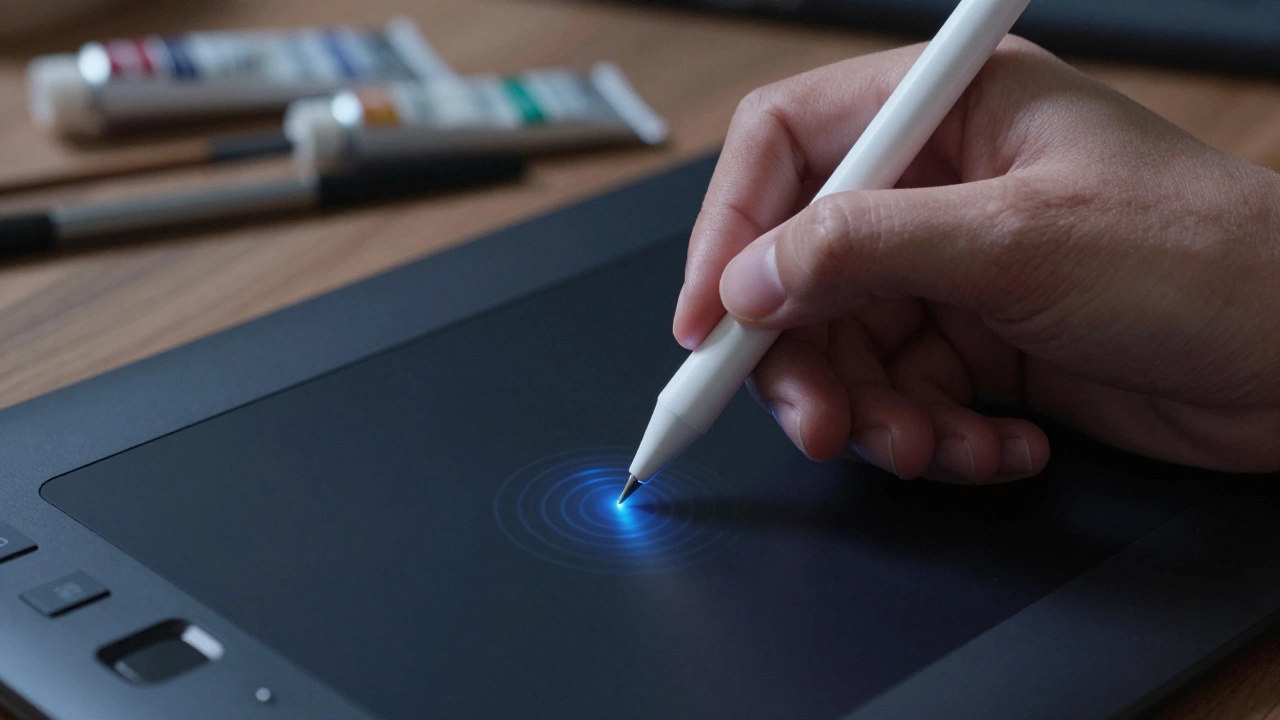
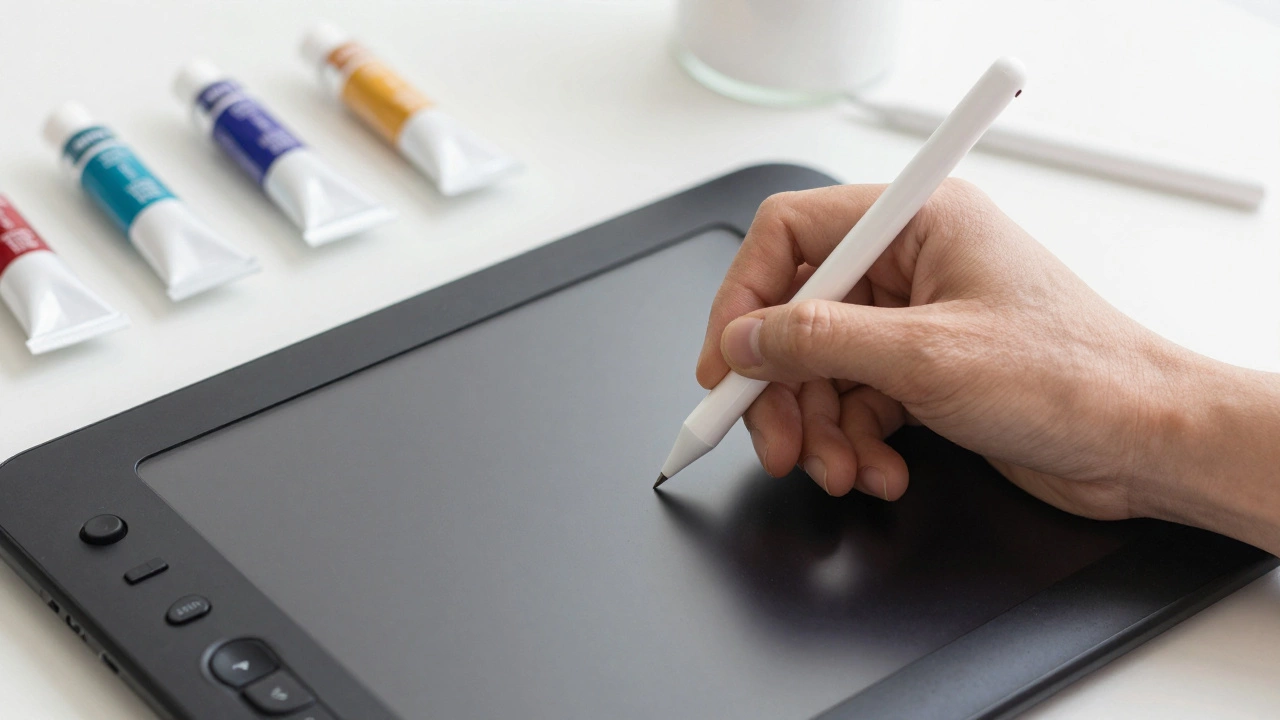
Digital Art is visual art created or modified using electronic technology, involving manual skill and creative vision. It involves tools that require training. Whether you are working in a photo editor or a vector program, the principles remain the same as painting or drawing. Composition, color theory, lighting, and narrative are all present. A person who draws a character for a concept art sheet needs the same anatomical knowledge as a classical painter. The muscle memory might be different-using a stylus versus a pencil-but the cognitive load regarding design remains identical.
| Attribute | Digital Creation | Traditional Creation |
|---|---|---|
| Primary Tool | Graphics Tablet, Software | Brush, Pen, Chisel |
| Material Cost | High upfront, low recurring | Low upfront, ongoing supply cost |
| Editability | Non-destructive layers | Destructive (paint over) |
| Physical Output | Screen, Print, File | Canvas, Paper, Stone |
| Preservation | File migration required | Fading, physical damage risk |
This comparison highlights a crucial point: editability. Skeptics often argue that the ability to undo mistakes makes the process easier. However, professional workflows often disable undo during sketching phases to force decision-making. Furthermore, layer management is incredibly complex. A single image might contain fifty layers of adjustment masks and blending modes. This technical complexity demands discipline. Unlike simply pressing delete, managing a stack of effects to achieve a specific mood requires a deep understanding of light and texture.
The Evolution of Legitimacy
We have come a long way from the pixelated graphics of the early internet era. In the late 20th century, computer imagery was seen purely as commercial illustration. Now, it occupies galleries alongside oils and acrylics. When we discuss Modern Art movements expanded the definition of materials used in creative works, paving the way for digital mediums., we see a pattern. Photography faced the same resistance in the 1800s. Critics claimed cameras captured reality automatically, requiring no human talent. Today, photography is undisputedly an art form. Digital art follows the exact same trajectory.
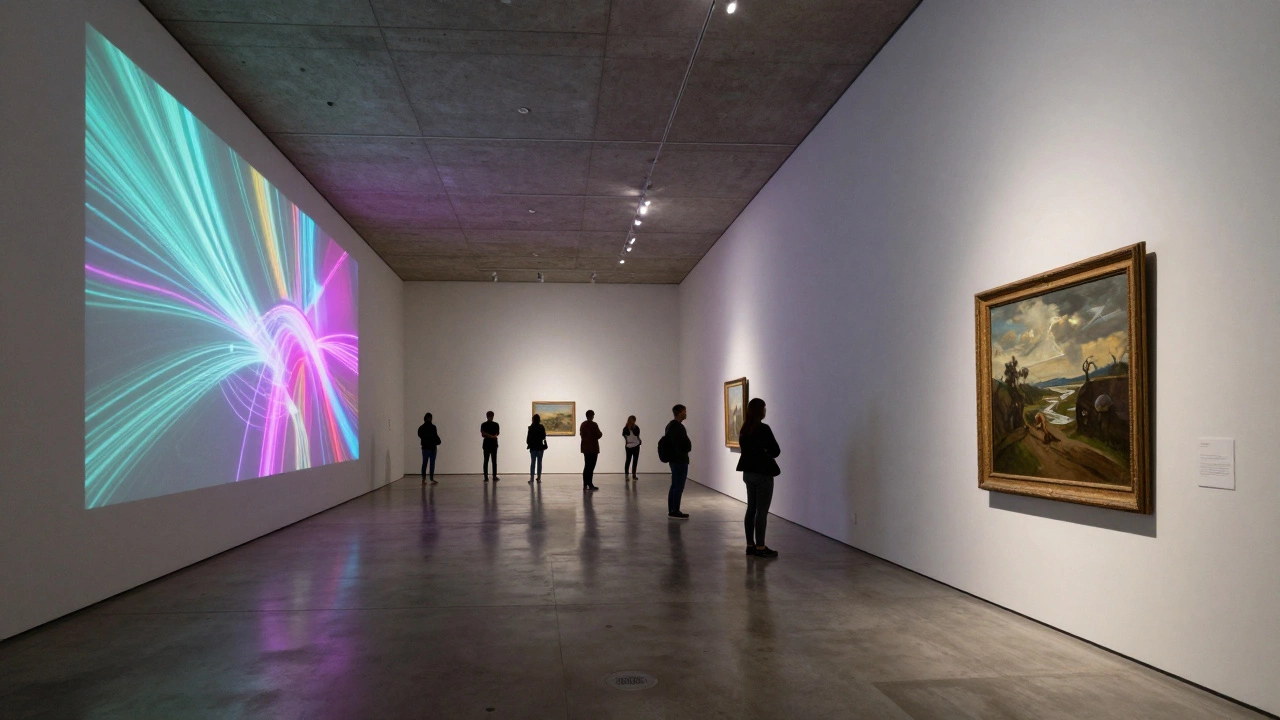
Museums play a massive role in validating these forms. Institutions like the San Francisco Museum of Modern Art and the Centre Pompidou have acquired digital works. When a MuseumA museum curates collections that preserve cultural and artistic history for public viewing. purchases a piece, they vouch for its permanence. Conservation challenges exist for digital media, certainly. Files corrupt, software becomes obsolete, and screens fail. Conservators now develop strategies for "digital conservation," migrating formats to ensure future access. This effort proves the art world sees these works as worth preserving.
Ownership and the NFT Era
You cannot discuss the value of digital pieces without addressing ownership. For a long time, digital files were viewed as infinite copies. If everyone has the same JPEG, nothing holds value. That changed with the rise of blockchain technology. An NFT acts as a certificate of authenticity for digital goods. While the market has cooled significantly from its peak in 2021, the infrastructure remains. Platforms allow creators to sell limited editions directly to collectors without traditional gallery gatekeepers.
A BlockchainA distributed ledger technology that records transactions securely across many computers. allows a provenance trail. Collectors know exactly who bought the piece and who owned it before them. This solves the primary objection to digital scarcity. It turns a replicable file into a unique asset with verifiable ownership. Some might call it speculative, but the mechanism itself validates the medium as something that holds property rights.
The Artificial Intelligence Variable
By 2026, a new layer of skepticism has emerged. With Artificial IntelligenceSystems capable of learning tasks usually associated with human intelligence, such as generating images. tools flooding the market, people ask where the artist ends and the machine begins. This is a critical distinction. Tools like Midjourney or Stable Diffusion are powerful, but they function differently than a graphic tablet.
Using AI is more akin to directing a film crew than painting a picture. You describe the scene, but the computer executes the details. Using software like Procreate or Blender gives you total control over every pixel. If you draw a hand, you decide every line. If you prompt an AI, you negotiate with an algorithm. Both result in images, but the path differs. The art community generally accepts that tools evolve. Paint tubes revolutionized Impressionism. Photography forced painters to stop focusing on realism. AI is the current pressure cooker, forcing us to redefine authorship. However, manual digital creation still exists as a distinct practice from generative prompting.
Market Recognition
Economic value often dictates social acceptance. In the past, digital prints struggled to sell high prices compared to originals. This gap has narrowed. High-end digital files sell for hundreds of thousands of dollars through auction houses. Major brands commission digital artists for commercials and campaigns. A successful campaign relies on the artist's unique voice. Companies do not hire machines for branding; they hire humans who understand emotion. If a corporation trusts your pixels to sell their product, the business world considers it legitimate.
Furthermore, the barrier to entry has lowered the ceiling. Anyone with a laptop can make art. This floods the market, yes, but it also democratizes beauty. More voices mean more styles. In the realm of Contemporary ArtArtistic works produced during the current period reflecting modern life and culture., digital methods dominate. Concept art for video games, movie previsualization, and virtual environments all fall under this umbrella. These industries pay well and offer prestigious careers, further cementing the medium's status.
Perception and Emotional Connection
Ultimately, does the audience feel anything? That is the true litmus test. Walk through a digital installation in a gallery. If viewers pause, cry, laugh, or reflect, the art did its job. There is a tactile connection some prefer with physical objects-the grain of paper, the smell of oil paint. Digital art lacks scent and touch, but it gains immersion. Interactive installations and VR experiences create connections impossible with static frames.
Some purists argue that physical imperfection carries emotional weight. A wobble in a brushstroke shows human vulnerability. In digital spaces, perfection is standard. Yet, intentional imperfection is a style choice in digital painting. Artists simulate texture and noise to mimic the analog world. They reject the default cleanliness of a computer file to connect with the viewer on a human level. The effort to break the machine's smoothness proves the artist's presence.
Frequently Asked Questions
Does the ability to edit digital work lower its artistic value?
Editing capabilities do not inherently reduce value. Professional editors manage complex layer structures that mirror the planning stages of a traditional muralist. The skill lies in the decision-making process, not just the inability to erase.
Can digital art be sold as original pieces?
Yes, digital art is often sold as limited edition prints or via blockchain authentication (NFTs). Originality is verified through certificates of authenticity or secure ledgers, ensuring uniqueness.
How do museums preserve digital files?
Institutions migrate files to newer formats over time to prevent obsolescence. Hardware emulation is sometimes used to run older software required to display the artwork accurately.
Is AI generated art considered real art?
This is debated. Many consider manual digital creation "real art." AI generation is viewed differently because the computer creates the visual execution. Authorship depends heavily on the degree of human intervention.
Do galleries accept digital-only submissions?
Many contemporary galleries now display digital screens and projections. While physical prints are still common, purely digital installations are increasingly accepted as exhibition standards.