Sculpture Identification Assistant
Answer the following questions based on your observations to narrow down the likely material and style of the sculpture.
Identification Result
- Material is the first clue to a sculpture's origin and era.
- The difference between additive and subtractive processes defines the technique.
- Understanding the relationship between the work and its surroundings identifies the style.
- Looking for signatures, hallmarks, or foundry marks provides concrete identification.
Reading the Material: The First Clue
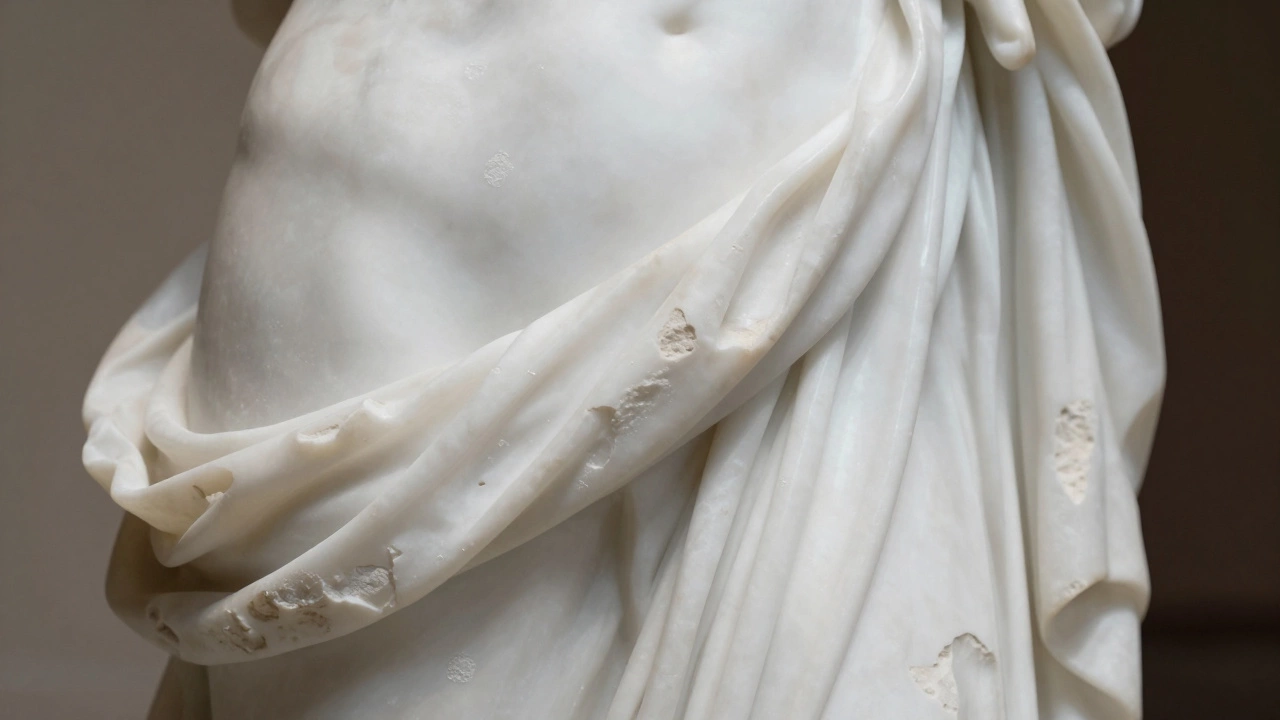
The easiest way to start identifying a piece is by figuring out what it's made of. The material doesn't just change the look; it tells you about the tools used and the likely time period. For example, Marble is a metamorphic rock composed of recrystallized carbonate minerals, widely used since antiquity for its translucency and durability. If you see a white, slightly glowing stone with a smooth, skin-like finish, you're likely looking at a classical or neoclassical piece.
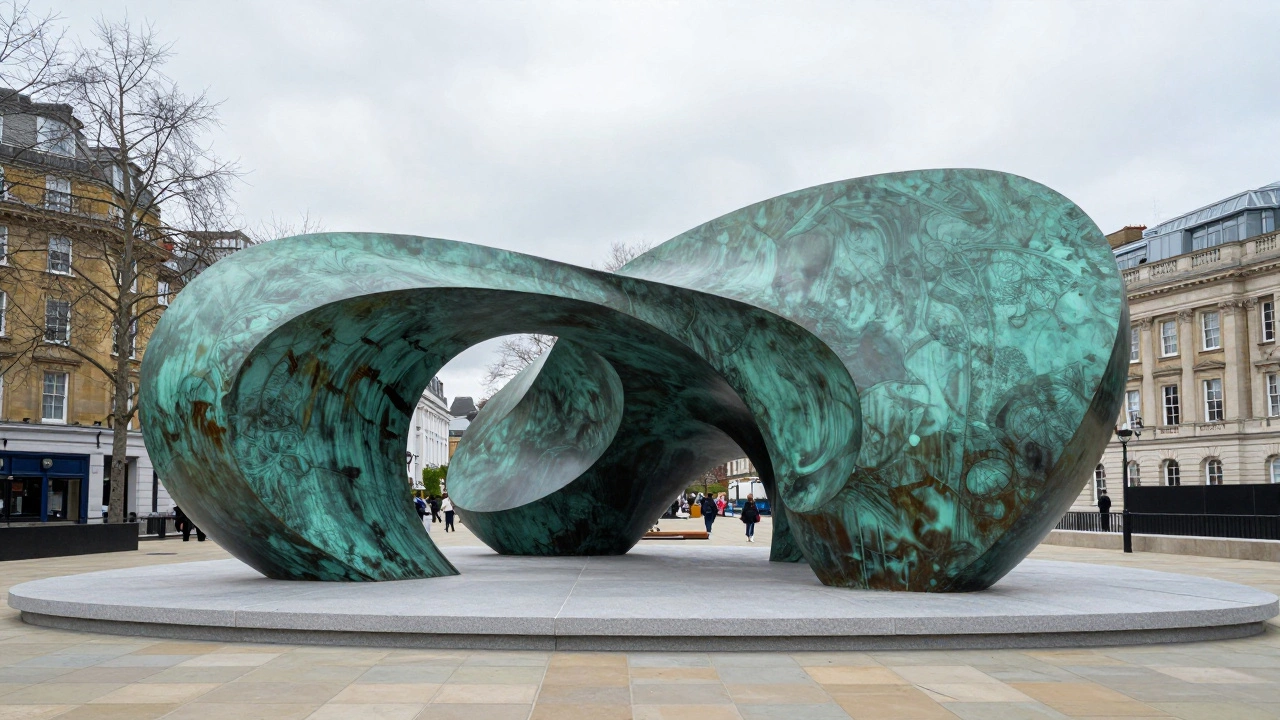
Then you have Bronze, which is an alloy consisting primarily of copper, often used in the lost-wax casting process to create complex, hollow shapes. Bronze allows for much more dynamic movement than stone because it has high tensile strength-meaning arms can stretch out without snapping. If the sculpture has a greenish patina, that's a natural result of oxidation over time, a common trait in outdoor public monuments.
In more modern contexts, look for Terracotta, which is a brownish-red earthenware clay that is fired in a kiln. It's more porous and matte than glaze. If you see something truly contemporary, you might encounter resins, plastics, or even found objects, which often signal a move toward conceptual art where the idea is more important than the craftsmanship of the material.
| Material | Visual Cues | Common Era/Style | Key Characteristic |
|---|---|---|---|
| Marble | White/Grey, slight glow | Classical, Renaissance | Subtractive (Carved) |
| Bronze | Dark brown, green patina | Ancient Greece to Modern | Additive (Cast) |
| Wood | Grain patterns, warm tone | Folk Art, Medieval | Organic, biodegradable |
| Steel | Industrial, grey, smooth | Industrial, Minimalist | Welded or bolted |
The Process: How Was It Made?
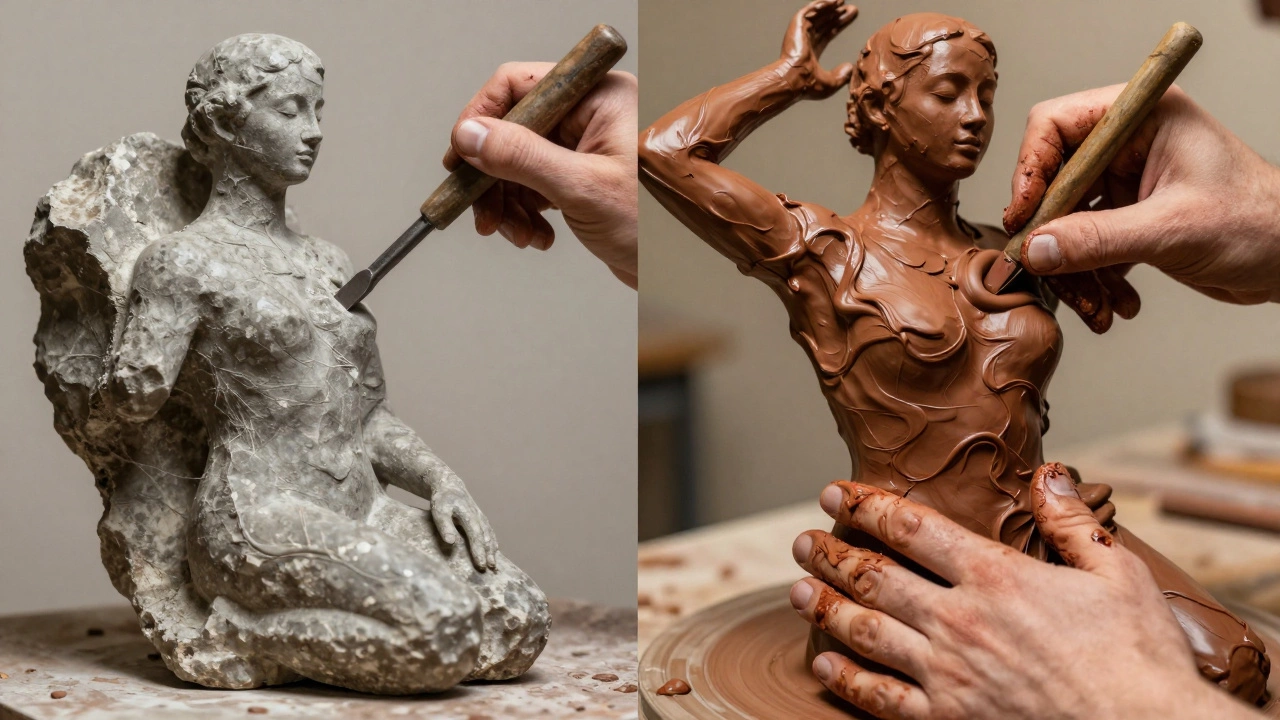
To identify a sculpture, you have to figure out if the artist added material or took it away. This is the divide between subtractive and additive sculpture. Subtractive sculpture is like a puzzle where the artist removes everything that *isn't* the statue. When you look at a marble bust, imagine the artist hitting a block of stone with a chisel. Look for tool marks-tiny ridges or a slightly unfinished texture in the deeper folds of a garment-which can tell you if it was hand-carved or machine-finished.
Additive sculpture is the opposite. Think of Clay. The artist builds the form by adding clumps of material. Even if the final piece is cast in bronze, it usually started as a clay or wax model. Look for the "fingerprints" of the artist-small indentations or organic, flowing lines that suggest the material was pushed and pulled by hand rather than chipped away.
There is also the assembly process. In the 20th century, artists started using welding. If you see a sculpture made of steel beams or scrap metal, it's likely an assemblage. This process allows the artist to create "open" sculptures where the air and the space around the work are just as important as the metal itself.
Analyzing Form and Style
Once you know the material and process, look at the shape. Is it a Figurative work, meaning it clearly represents a human or animal? Or is it Abstract, focusing on lines, planes, and volumes? Figurative work often follows the rules of anatomy. If the pose is stiff and symmetrical, it might be early Egyptian or Archaic Greek. If it looks like it's about to step off the pedestal with a twisting torso-a technique called contrapposto-it's likely from the Classical period or the Renaissance.
Abstract sculptures require a different lens. Look for the "intent" of the geometry. A piece with smooth, sweeping curves might be influenced by Biomorphism, trying to mimic organic life without actually copying a specific creature. On the other hand, a sculpture that looks like a series of intersecting cubes or sharp angles is likely leaning toward Geometric Abstraction or Minimalism. Ask yourself: is this piece trying to tell a story, or is it just exploring how a shape interacts with gravity?
The Relationship with Space
Where the sculpture sits tells you a lot about its identity. We categorize these as "in the round" or "relief." A sculpture in the round is freestanding; you can walk all the way around it. This requires the artist to consider every single angle. If you find that the piece looks great from the front but awkward from the side, it might have been designed specifically for a niche or against a wall.
Then you have Relief Sculpture, which is a technique where the sculpted elements remain attached to a solid background. There are two main types here: bas-relief (low relief), where the figures barely pop out from the surface, like a coin; and high-relief, where the figures project significantly, almost becoming freestanding. If you see relief work, it's often part of a larger architectural structure, like a temple frieze or a commemorative plaque.
Hunting for the "Smoking Gun": Marks and Signatures
If you're lucky, the artist left a trail. Check the base, the back, or the underside of the sculpture. You're looking for a signature, a date, or a foundry mark. A foundry mark is a stamp from the company that cast the bronze. This is a goldmine for identification because it can tell you exactly where and when the piece was produced, even if the artist didn't sign it personally.
Be careful with "signatures" on older pieces. In the 19th century, it was common for copyists to add a famous artist's name to a mediocre work to drive up the price. Look at the quality of the carving compared to the signature. If the signature is deep and clean but the sculpture is clunky and poorly proportioned, the signature is probably a fake.
Common Pitfalls in Identification
One of the biggest mistakes people make is assuming that "old-looking" means "ancient." Many 19th-century artists spent their entire careers mimicking the style of Ancient Greece. This is called Neoclassicism. To tell the difference, look at the surface. Genuine ancient marble often has a specific type of weathering or a crystalline structure that is hard to fake. Modern replicas often have a too-perfect, "sanded" look or a fake patina applied with chemicals that looks streaky rather than organic.
Another trap is the "conceptual" sculpture. In the modern era, an artist might put a common object-like a urinal or a chair-on a pedestal. This is known as a Readymade. In this case, the identity of the sculpture isn't about the craftsmanship of the object, but the act of choosing it. If the object looks like it was bought from a hardware store, don't look for chisel marks; look for the artist's statement or the exhibition context.
How can I tell the difference between cast bronze and carved stone?
Look at the complexity of the shapes. Stone is brittle, so carved stone usually has more "support" (like a tree stump next to a leg). Bronze is stronger, allowing for thin, outstretched limbs and hollow spaces. Also, check the surface: stone is usually matte or polished, while bronze has a metallic sheen or a colorful patina (green/brown).
What is a "lost-wax" cast?
It's a process where an artist makes a wax model, covers it in a ceramic shell, and then melts the wax out to leave a void. Molten metal is poured into that void. If you see a sculpture with incredibly fine detail (like skin pores or fabric weave) in metal, it was likely made using this additive method.
Why do some sculptures have a green color?
That's called a patina. It happens when the copper in bronze reacts with oxygen and moisture in the air over decades. While some artists apply a chemical patina in the studio to get a specific look, natural oxidation usually happens unevenly, focusing on the areas most exposed to rain and wind.
What does "contrapposto" mean in sculpture?
It's an Italian term for "counter-pose." It describes a human figure standing with most of its weight on one foot, causing the hips and shoulders to tilt in opposite directions. It makes the sculpture look natural and alive rather than stiff and robotic.
Where are the best places to look for signatures?
Check the base of the plinth, the back of the ankles (for figures), or the underside of the work. In bronze pieces, look for a raised stamp or an incised name near the bottom edge. If it's a relief, the signature is often in a bottom corner.
Next Steps for Art Lovers
If you're still unsure about a piece, your best bet is to use a visual search tool or visit a local gallery. For those who want to get serious about identifying art, start a "material journal." Whenever you see a sculpture, try to guess the material and the process first, then check the plaque. Over time, your eyes will get used to the difference between a genuine 18th-century marble and a 21st-century resin cast.
If you're dealing with a piece you suspect is valuable, don't try to clean it yourself. Using household cleaners on a bronze patina or a marble surface can permanently damage the value and the history of the work. Instead, contact a professional conservator who can use chemical analysis to date the material and verify the artist's hand.