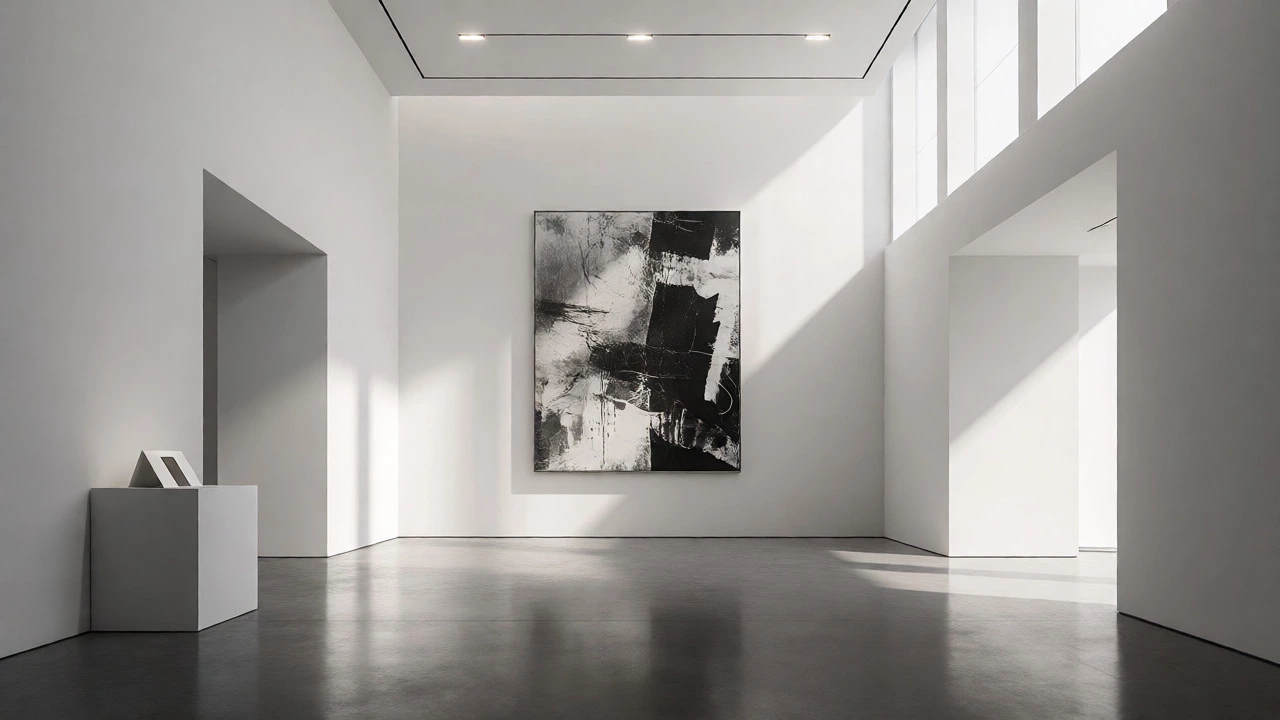
Art Exhibition Planner & Checker
Use this tool to plan your exhibition layout. Calculate the correct nail height for your artworks and ensure your show isn't too crowded.
Standard museum eye level is centered at 57–60 inches (145–152 cm).
Recommended: 15–25 works for a solo show in 40–60 sqm.
You’ve got the art. You’ve got the space. Now what? Most people think arranging an art exhibition is just hanging paintings on a wall at eye level and calling it a day. But if you want people to actually stop, look, and maybe even buy something, you need a plan. It’s less about decoration and more about storytelling through spatial design.
The Core Concept: Why Your Show Exists
Before you touch a single nail, figure out why this show exists. Is it a retrospective of your work? A group show exploring urban decay? Or a solo debut? The "why" dictates the "how." If your theme is chaotic energy, a sterile white cube might kill the vibe. If it’s minimalist precision, clutter will ruin it.
Start with a concept statement. This isn’t just for the press release; it’s your internal compass. When you’re deciding whether to hang a large canvas next to a small sketch, ask yourself: does this juxtaposition support the narrative? If the answer is no, move it. Consistency in tone matters more than variety.
Curating the Selection
More is not better. A common mistake is trying to cram every piece you own into one room. Viewers get overwhelmed quickly. Aim for a cohesive selection that speaks clearly rather than loudly. For a standard gallery space (about 40-60 square meters), 15-25 works is usually the sweet spot for a solo show. Group shows can handle more, but only if the curator acts as a strict editor.
| Element | Guideline | Why It Matters |
|---|---|---|
| Scale Variation | Mix large anchors with smaller details | Creates visual rhythm and prevents monotony |
| Color Harmony | Group by palette or contrast intentionally | Guides the viewer's eye flow naturally |
| Medium Diversity | Combine 2D and 3D if relevant | Adds depth and tactile interest |
| Pacing | Leave breathing room between heavy pieces | Allows viewers to process information |
Think of your artworks like songs in an album. You need openers, ballads, and bangers. Place your strongest piece-the "hero" image-at the entrance or focal point. This grabs attention immediately. Then, guide them deeper into the narrative.
Understanding Gallery Layout and Flow
People don’t wander randomly. They follow paths. In most Western cultures, we read left to right, top to bottom. Use this. Start the journey on the left side of the entrance. Create a natural path that leads visitors through the space without dead ends.
Avoid the "salon hang" unless you are deliberately going for a historical or chaotic aesthetic. Modern exhibitions benefit from clear spacing. Leave at least 10-15 cm between frames. If pieces are too close, they compete for attention. If they’re too far, the room feels empty and disconnected.
Consider sightlines. Stand at the door. What do you see first? That’s your hook. Move around the room. Are there blind spots? Rotate a piece so it catches light or faces the main traffic lane. Accessibility matters too-ensure wheelchairs can navigate aisles comfortably (at least 90cm wide).
Hanging Heights and Technical Details
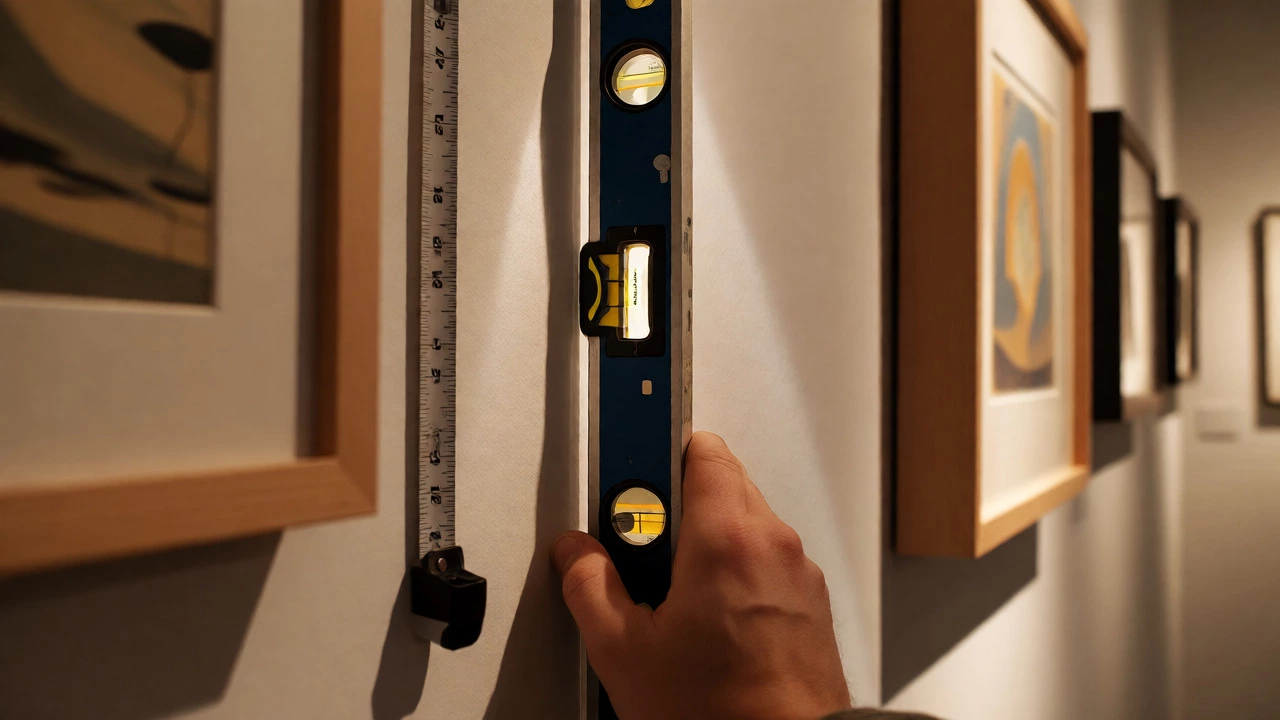
Here’s where amateur shows fall apart. Do not hang art based on the nail height in the wall. Hang it based on human anatomy. The center of the artwork should be at 57-60 inches (approx. 145-152 cm) from the floor. This is the average eye level in museums worldwide. It creates a consistent horizon line across the room.
- Standard Height: Center of frame at 57 inches.
- High Ceilings: Keep the center at 57 inches, even if it looks low against a huge wall. Trust the system.
- Furniture: If placing art above a sofa or console, leave 6-8 inches between the furniture top and the bottom of the frame.
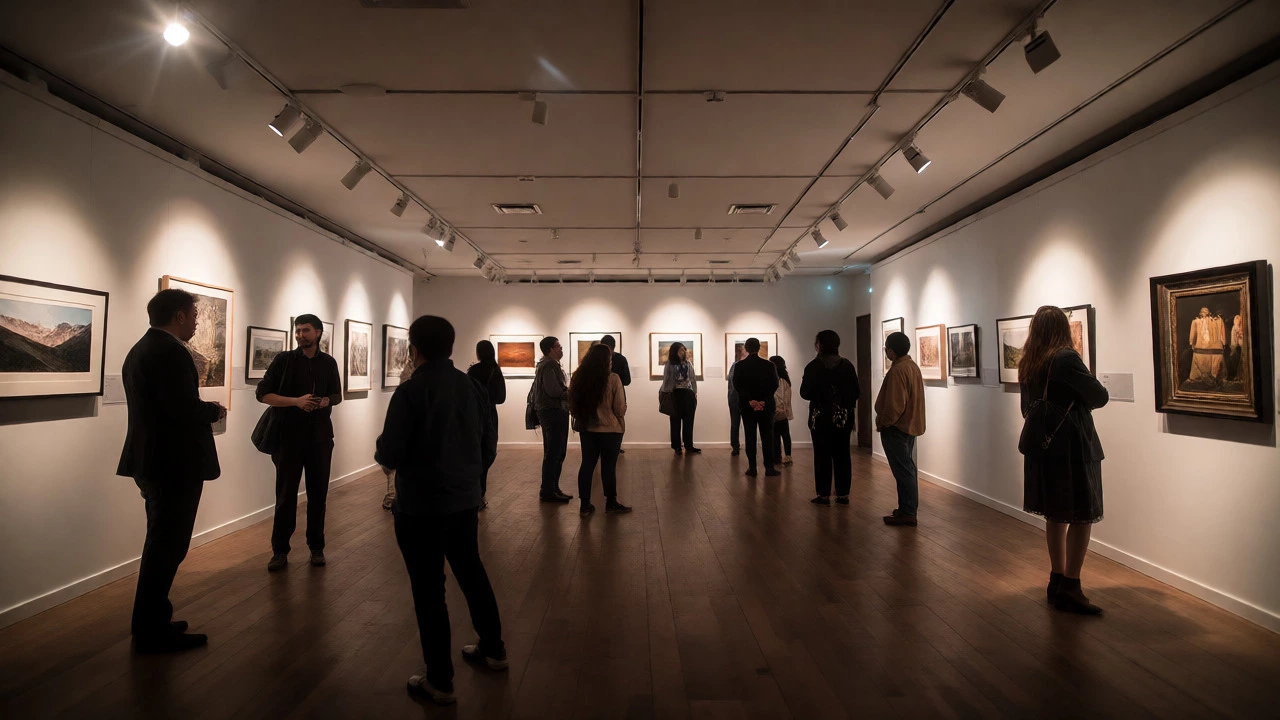
Lighting is half the battle. Natural light is beautiful but dangerous-UV fades pigments and causes glare. Use adjustable track lighting with LED bulbs (high CRI rating, above 90) to render colors accurately. Angle lights at 30 degrees to minimize reflection on glass. Test this before opening night. Walk the room during different times of day if possible.
Labeling and Artist Statements
Labels aren’t just tags; they’re bridges between the viewer and the work. Keep them simple. Title, medium, dimensions, year, price (if applicable). Font size should be readable from 1 meter away. Sans-serif fonts like Helvetica or Arial are cleanest.
Place labels consistently-usually to the right of the work, aligned with the bottom edge of the frame. Don’t hide them behind plants or pillars. If you have an artist statement, put it near the entrance, not buried in the back. It sets the context before people start looking.
Logistics and Installation Day
Installation day is stressful. Bring tools: level, tape measure, pencil, hammer, wire cutters, and plenty of D-rings or sawtooth hangers. Check walls for studs if hanging heavy pieces. Never rely on drywall alone for anything over 5kg.
Do a final walkthrough with fresh eyes. Invite someone who hasn’t seen the setup. Watch where they walk. Do they linger? Do they look confused? Adjust accordingly. Sometimes moving one small piece changes the entire dynamic of a corner.
Finally, prepare for the opening. Have staff or friends ready to greet guests. Offer water. Keep the music low enough for conversation. The goal is comfort. If people feel relaxed, they stay longer. If they stay longer, they connect deeper with the exhibition.
What is the ideal height for hanging art?
The center of the artwork should be 57 to 60 inches (145-152 cm) from the floor. This aligns with average human eye level and ensures consistency across the gallery space, regardless of ceiling height.
How many artworks should I include in a small exhibition?
For a solo show in a standard room (40-60 sqm), aim for 15-25 pieces. This allows each work breathing room and prevents viewer fatigue. Quality and cohesion matter more than quantity.
Do I need professional lighting for an art exhibition?
Yes, proper lighting is critical. Use adjustable LED track lights with a high Color Rendering Index (CRI >90) to show true colors. Avoid direct sunlight to prevent fading and glare. Angle lights at 30 degrees to reduce reflections.
Where should I place the artist statement?
Place the artist statement near the entrance, visible before viewers engage deeply with individual pieces. It provides context and helps guide their interpretation throughout the visit.
How much space should be between framed artworks?
Leave at least 10-15 cm (4-6 inches) between frames. This prevents visual clutter and allows each piece to stand on its own while maintaining a cohesive overall display.