Sculpture Technique Explorer
Discover how different methods like carving, modeling, and casting define the final artwork. Select a technique to learn about its process, materials, and unique characteristics.
Description:
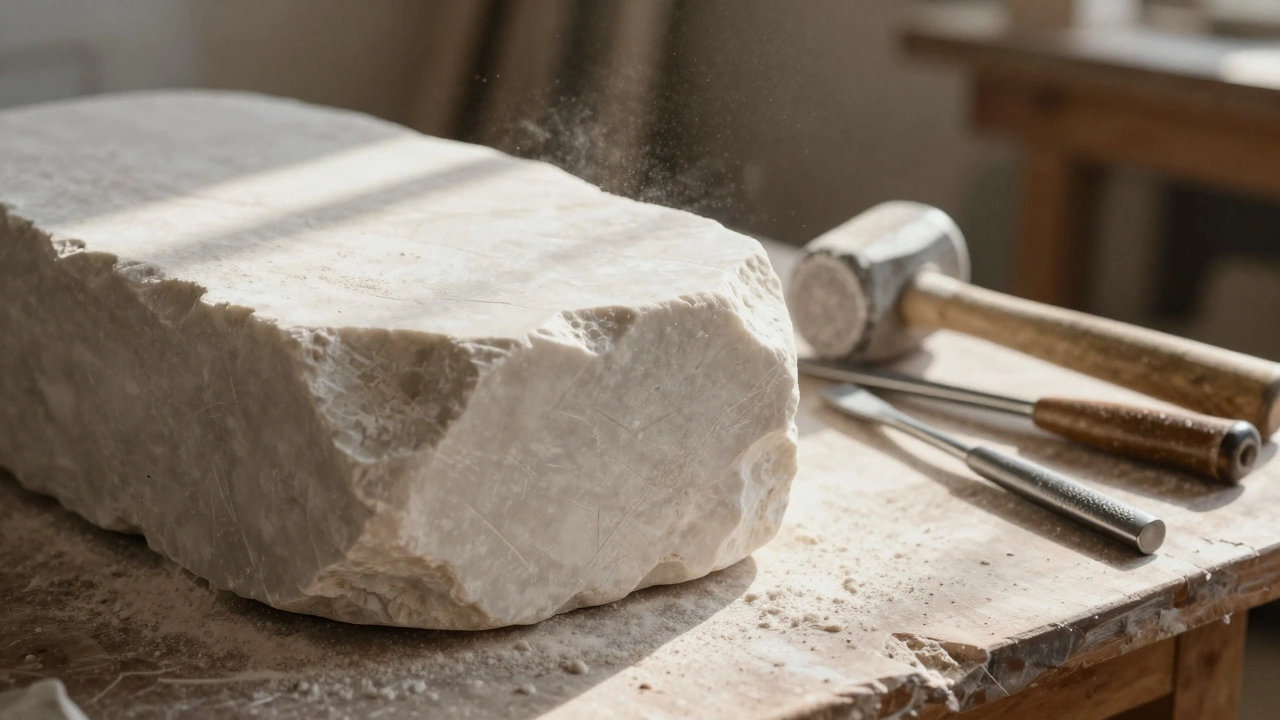
Picture this: you walk into a gallery and see a massive block of marble. You imagine the artist chipping away at it for months, dust flying everywhere. That’s the classic image of sculpture, right? But then you turn the corner and see a twisted piece of wire, a melting clock, or a pile of old tires arranged in a specific shape. Is that sculpture too? The short answer is no, a sculpture does not have to be carved. In fact, carving is just one of many ways artists create three-dimensional art.
If you’re new to making art or just curious about how these pieces come together, it can be confusing. We often use the word "sculpting" as a catch-all term. But in the world of Sculpture is a branch of the visual arts that works in three dimensions to represent figures, objects, or abstract forms. There are distinct methods, each with its own tools, materials, and logic. Understanding the difference between subtractive (carving) and additive (modeling/casting) processes changes how you look at every statue you pass on the street.
The Myth of the Chisel: What Carving Actually Is
Let’s start with the method most people think of first. Carving is what artists call a "subtractive" process. This means you start with a large mass of material and remove parts of it until the form you want emerges. It’s like solving a puzzle by taking pieces away rather than adding them.
This technique requires a lot of planning because you can’t put the material back once it’s gone. If you make a mistake, you might ruin the whole piece. Common materials for carving include:
- Wood: Artists use chisels, gouges, and knives. Think of intricate wooden masks or traditional Japanese netsuke.
- Stone: Marble, granite, and limestone are heavy and hard. Sculptors use mallets and pointed chisels to break off chunks, then refine the surface with finer tools.
- Ivory and Bone: Historically used for small, detailed carvings, though now largely replaced by ethical alternatives due to conservation laws.
The beauty of carving lies in the texture. You can leave tool marks visible to show the effort, or sand it down to a smooth finish. But here’s the catch: if you want to make something thin, delicate, or hollow, carving is incredibly difficult. You can’t easily carve a bird with wings spread wide out of solid stone without risking it snapping. This limitation led artists to develop other methods.
Building Up: Modeling and Assembling
So, if you don’t carve, what do you do? Most modern sculptures are actually built up. This is called an "additive" process. Instead of removing material, you add it layer by layer or piece by piece.
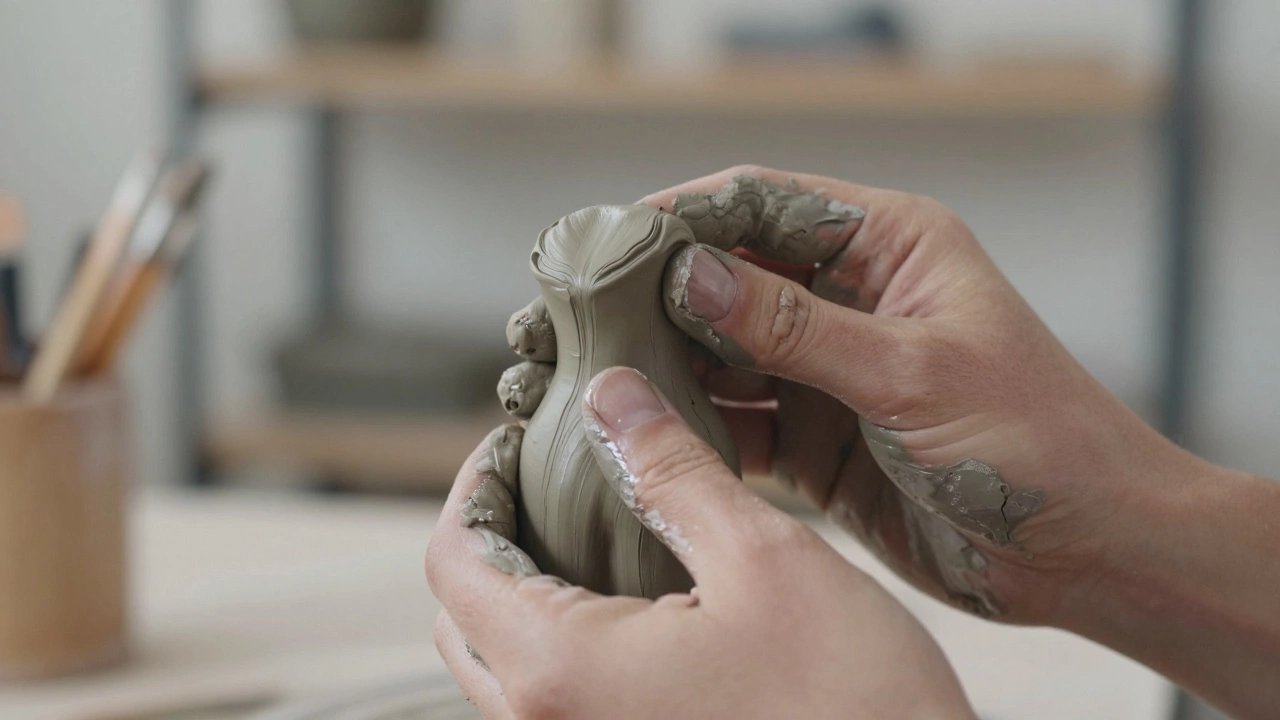
Modeling is probably the most common alternative to carving. You’ve likely seen kids playing with Play-Doh or clay. That’s modeling. Professional sculptors use wet clay, wax, or even paper-mâché. They push, pull, and roll the material to build the shape from the inside out. This method is forgiving. If you mess up the nose, you just pinch some clay off and try again. Once the model is done, it can be cast into bronze or plaster using molds.
Then there’s assemblage. This is where artists take found objects-old gears, scrap metal, plastic bottles-and join them together. Rube Goldberg machines are a fun example of assembly, but in art, it’s about creating a cohesive form from disparate parts. Picasso was famous for this; he’d glue bottle caps and bicycle seats onto canvas to create relief sculptures. It’s fast, it’s cheap, and it allows for complex shapes that would be impossible to carve.
| Technique | Process Type | Common Materials | Error Correction |
|---|---|---|---|
| Carving | Subtractive | Wood, Stone, Ice | Difficult (cannot add material back) |
| Modeling | Additive | Clay, Wax, Plasticine | Easy (malleable material) |
| Casting | Replication | Bronze, Plaster, Resin | Moderate (requires mold repair) |
| Assemblage | Construction | Metal, Found Objects | Easy (disassemble and reattach) |
The Lost-Wax Method: Casting Without Carving
You might have noticed that many outdoor statues are made of bronze. Bronze doesn’t come in blocks that you chip away. It comes in liquid form. To get it into a shape, artists use a process called casting. The most famous version is the "lost-wax" method, which has been used for thousands of years.
Here’s how it works in simple steps:
- The artist models a sculpture in wax.
- They cover the wax in a heat-resistant material to create a mold.
- They heat the mold, melting the wax out (hence "lost-wax").
- They pour molten bronze into the empty space left by the wax.
- Once cooled, they break away the outer mold to reveal the bronze sculpture.
This method allows for incredible detail and thin structures. Think of those ancient Greek statues with flowing drapery or modern kinetic sculptures with moving parts. You couldn’t carve those details into stone without them breaking. Casting lets the artist work freely in wax first, then replicate the result in durable metal.
Modern Twists: Fabrication and Digital Tools
In recent decades, the definition of sculpture has expanded even further. With the rise of industrial materials and digital technology, artists aren’t limited to hand-tools anymore.
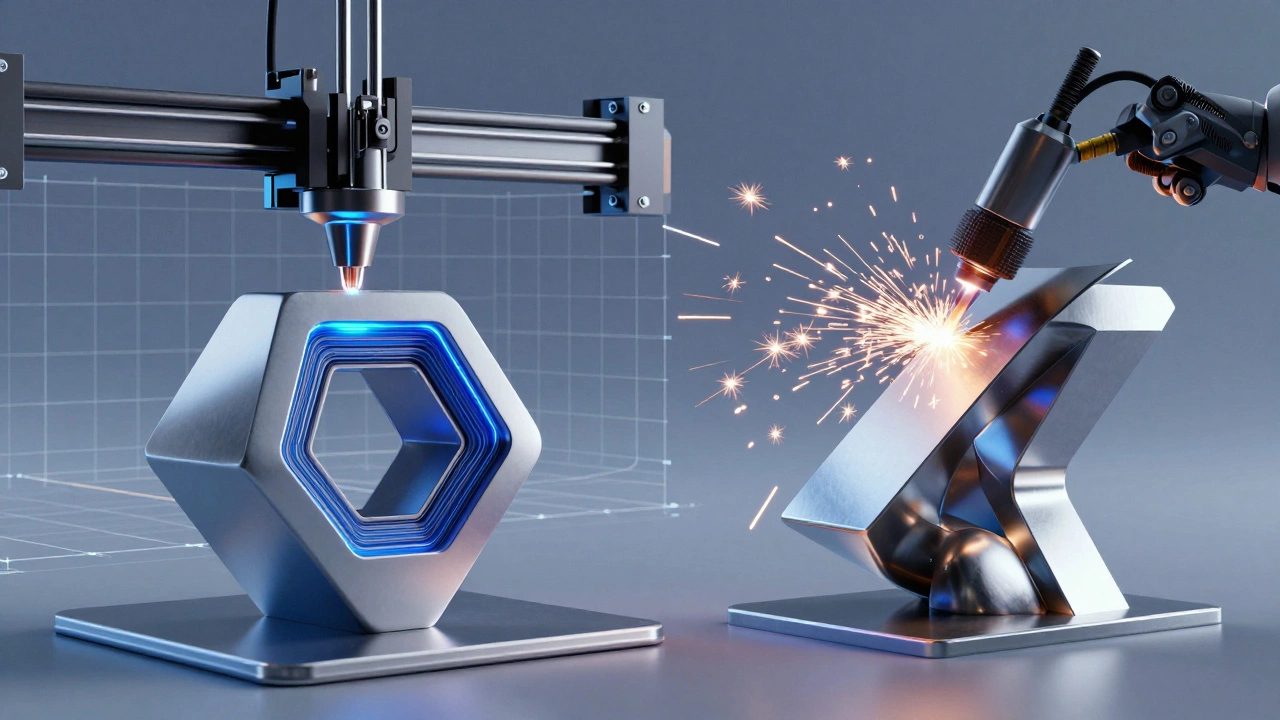
Fabrication involves welding and bending metal. Artists like David Smith used steel plates and rods, welding them together to create abstract geometric forms. This isn’t carving; it’s engineering meets art. You cut the metal to size and join it. It’s precise, strong, and perfect for large-scale public installations.
Then there’s 3D printing. Today, you can design a sculpture on a computer using CAD software and print it layer by layer using plastic, resin, or even metal powders. This is additive manufacturing. It allows for shapes that are mathematically complex and physically impossible to carve or model by hand. Some artists combine 3D printing with traditional finishing, sanding and painting the printed object to give it a human touch.
Even soft materials count. Fiber art, such as knitted or woven sculptures, creates three-dimensional forms without any rigid structure. Imagine a giant wool elephant sitting in a park. It holds its shape through tension and weight, not by being carved from a block.
Why Does the Method Matter?
You might wonder why we need to distinguish between carving, modeling, and casting. Isn’t it all just sculpture? Yes, it is. But the method changes the meaning and the feel of the work.
When you look at a carved stone figure, you sense the resistance of the material. The artist fought against the stone to release the form. It feels permanent and grounded. When you look at a welded steel sculpture, you see energy and movement. The lines are sharp and deliberate. A clay model feels organic and fluid, capturing a moment in time before it hardened.
Understanding these differences helps you appreciate the skill involved. It takes different muscles, different brains, and different patience levels to carve wood versus to weld steel. Next time you see a sculpture, look closely at the surface. Are there chisel marks? Smooth curves from molding? Weld seams? You’ll start to see the story of how it was made, not just what it looks like.
Choosing Your Own Path
If you’re thinking about trying your hand at sculpture, don’t feel pressured to buy a chisel and a block of marble. Start with what’s accessible. Clay is cheap and messy, but it teaches you about volume and balance. Wire and string can teach you about line and space. Cardboard and tape are great for prototyping large ideas before committing to expensive materials.
The goal of sculpture is to occupy space in a meaningful way. Whether you subtract from a block or add to a void, the result is yours. Don’t let the traditional image of the stoic carver limit your creativity. The best sculpture is the one that communicates what you want to say, using whatever tools help you say it best.
Is drawing considered sculpture?
No, drawing is typically a two-dimensional art form. However, some artists create "drawing sculptures" where lines extend into three-dimensional space, blurring the line between the two mediums. Generally, sculpture must have physical depth and volume.
Can ice be carved into a sculpture?
Yes, ice carving is a popular form of temporary sculpture. Artists use chainsaws, hot wires, and torches to shape blocks of ice. These sculptures are often displayed at festivals and melt over time, emphasizing their ephemeral nature.
What is the difference between modeling and casting?
Modeling is the act of shaping a pliable material like clay directly. Casting is the process of creating a copy of that model by pouring liquid material into a mold. Modeling is the original creation; casting is the replication method.
Do I need special tools to start sculpting?
Not necessarily. For clay modeling, your hands are the primary tool. You can use household items like spoons or sticks for detailing. For carving wood, you will need basic chisels and a mallet, but many kits are available for beginners.
Is 3D printing real sculpture?
Yes, 3D printing is a valid modern sculpture technique. It is an additive process that allows for high precision and complex geometries. Many contemporary artists use it alongside traditional methods to expand their creative possibilities.