Art Era Classifier
Not sure if a piece is "Modern" or "Contemporary"? Enter the details below to analyze its classification based on art history standards.
Classification
Please enter the artwork details to see the analysis.
Enter the year and focus to see the classification result here.
Quick Takeaways
- Contemporary art generally refers to work produced from the late 20th century (roughly 1970) to the present day.
- It is distinct from "Modern Art," which roughly spans from the 1860s to the 1960s.
- The transition is marked by a shift from searching for a "universal truth" to exploring diverse, global, and conceptual perspectives.
- It encompasses everything from digital NFTs to massive installations and social practice art.
The Great Divide: Modern vs. Contemporary
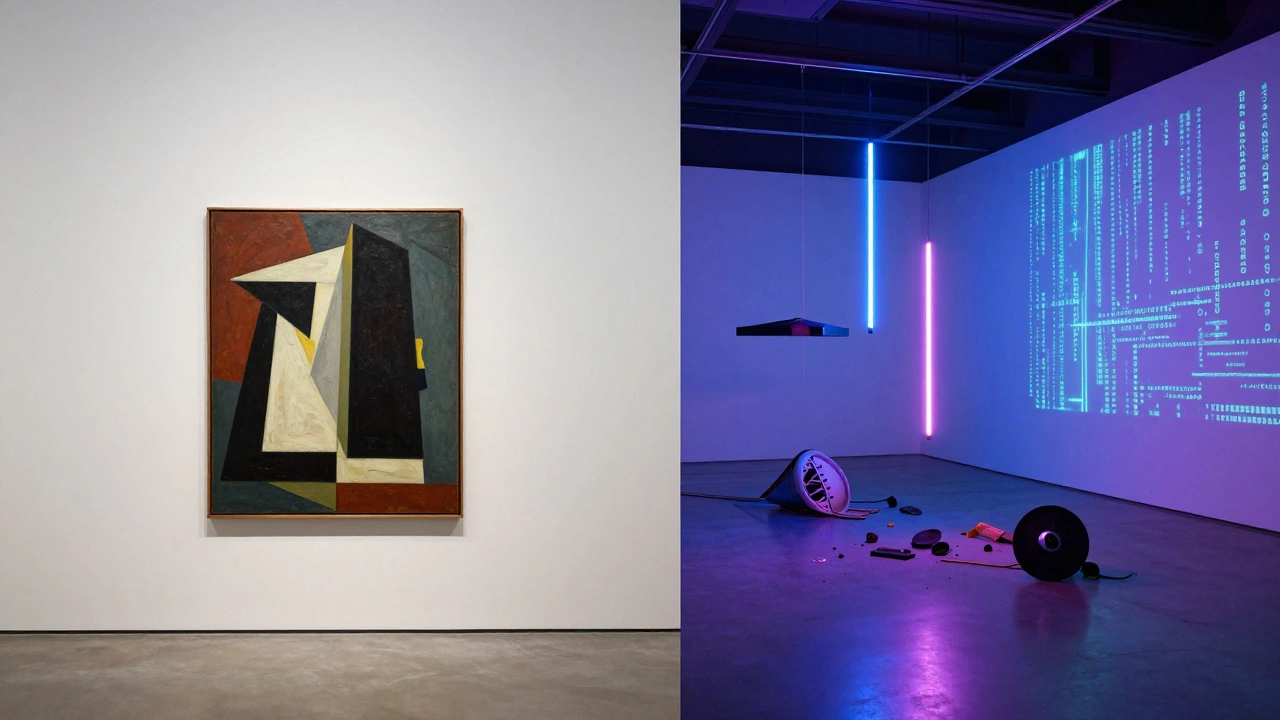
To understand where contemporary art begins, we have to look at where Modern Art is the period of artistic production from the mid-19th century up until roughly the 1960s or 70s. If you think of artists like Claude Monet or Pablo Picasso, you're in the Modern era. These artists were rebels, but they were mostly concerned with the medium-how to paint, how to sculpt, and how to push the boundaries of representation.
Then things shifted. Around the late 1960s, the focus moved away from the "object" and toward the "idea." This is where Contemporary Art is the art of today, produced in the late 20th and 21st centuries, characterized by a lack of a single unifying style. Unlike the Modernists, who often tried to find a pure way of painting or sculpting, contemporary artists don't care if they use oil paint, a pile of candy, or a VR headset. The material is just a tool to deliver a concept.
Think of it this way: Modern art was about the "new." Contemporary art is about the "now." One was a movement to change how we see the world; the other is a reflection of the world as it is, in all its messy, fragmented glory.
The 1970s: The Turning Point
If you need a specific decade to pin to a timeline, the 1970s is your best bet. This era saw the explosion of Postmodernism is a broad movement that emerged in the mid-to-late 20th century as a reaction against the perceived failures and strictures of modernism. Postmodernists stopped believing in a single "correct" way to make art. They started mixing high art with pop culture, using irony, and questioning the very idea of authorship.
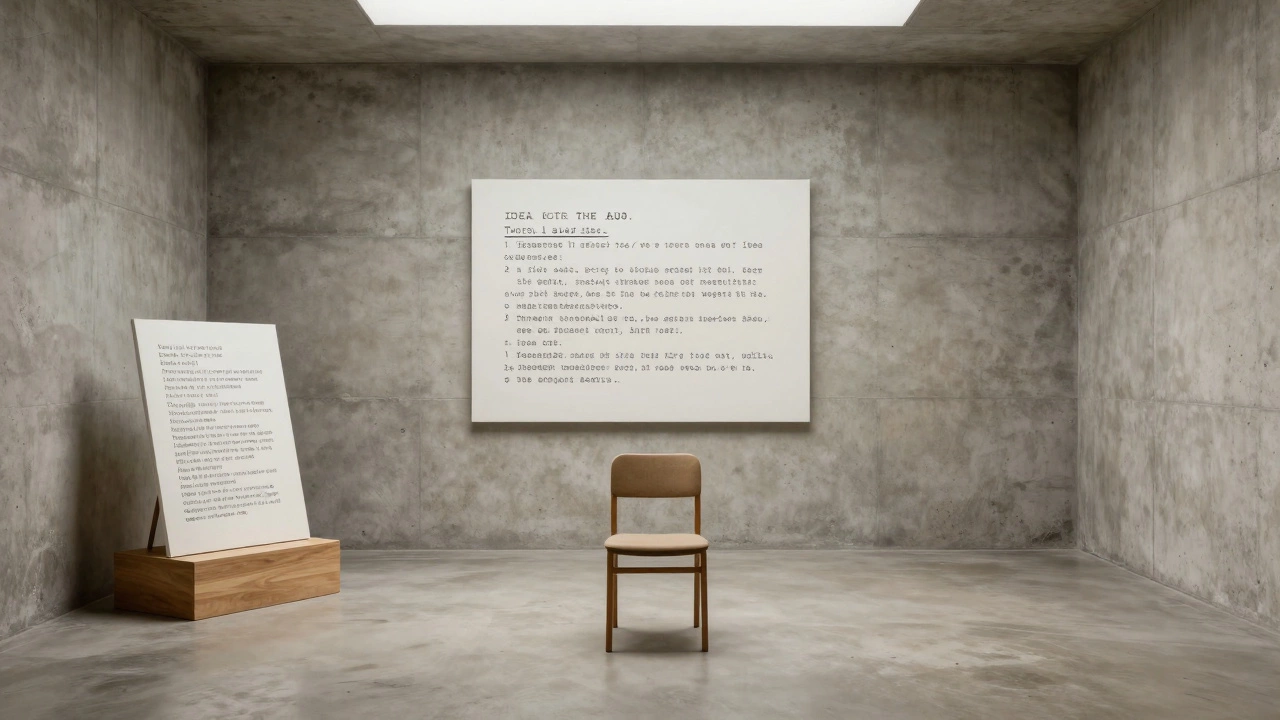
During this time, we saw the rise of Conceptual Art is an art movement where the idea or concept behind the work is more important than the finished physical object. Imagine a piece of art that consists solely of a set of instructions on how to perform a task. There's no "painting" to admire, just a thought to process. This fundamental shift is why many historians draw the line here. Once the idea became more important than the craft, the era of Modernism effectively ended.
The 70s also brought us the birth of the "Installation." Instead of a painting on a wall, artists began creating entire environments. When you walk into a room and the art is the room itself, you've entered the contemporary mindset. It's no longer about looking at a window into another world; it's about experiencing a physical space.
| Feature | Modern Art (approx. 1860s-1960s) | Contemporary Art (1970s-Present) |
|---|---|---|
| Primary Goal | Experimentation with form and style | Exploration of concepts and identity |
| Materials | Traditional (Paint, Clay, Bronze) | Anything (Digital, Found Objects, Light) |
| Philosophy | Searching for a universal truth | Pluralism; multiple truths and perspectives |
| Key Influence | Industrial Revolution, Psychology | Internet, Globalization, Social Justice |
The 21st Century and the Digital Leap
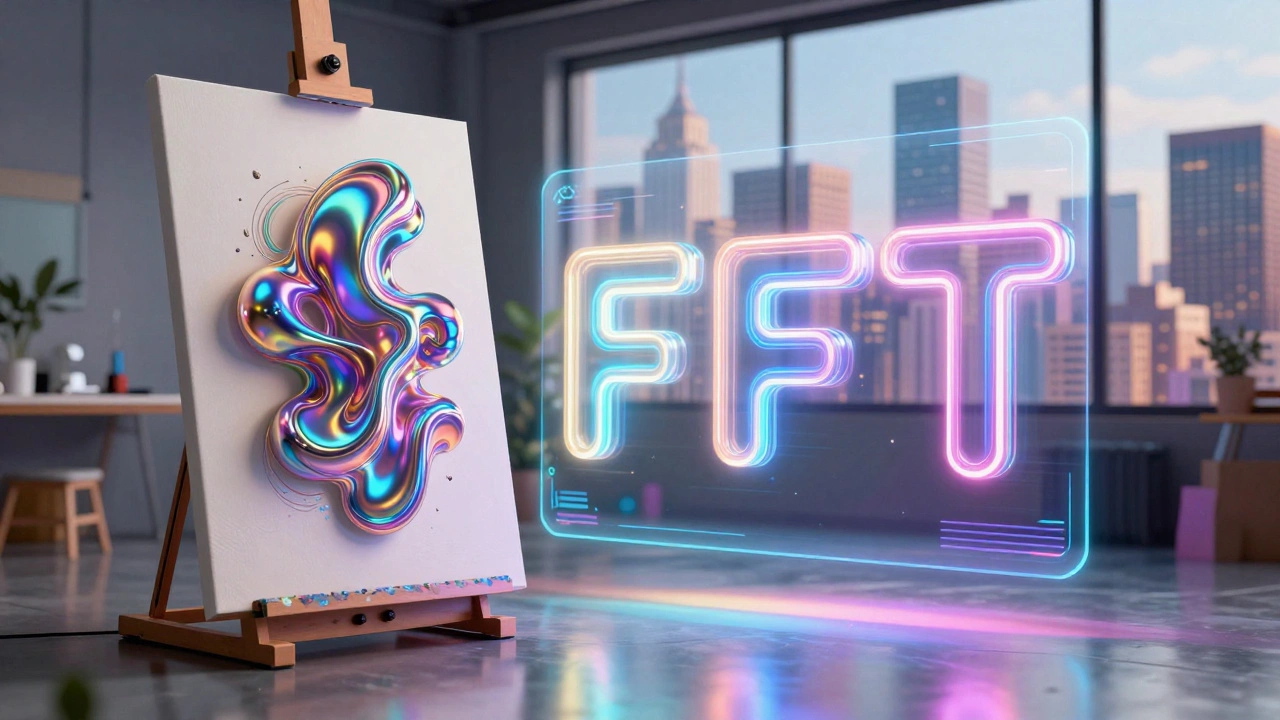
As we moved into the 2000s, the definition of contemporary art expanded even further. We aren't just talking about galleries anymore. The rise of Digital Art is artistic practice that uses digital technology as an essential part of the creative or presentation process changed the game. Suddenly, a piece of art could exist as code, a projection, or a file on a blockchain.
The introduction of NFTs (Non-Fungible Tokens) around 2020 created a massive debate about ownership and value. Does a digital image have the same "aura" as a physical canvas? While some critics scoff at it, these developments are quintessential contemporary art. They challenge the traditional gatekeepers-the galleries and curators-and allow artists to reach a global audience instantly.
We've also seen a massive surge in "Social Practice" art. This is where the art isn't an object at all, but a social interaction. For example, an artist might set up a free kitchen in a neighborhood to spark conversations about poverty and community. In this context, the "art" is the relationship built between people. This level of intersection between art, sociology, and politics is a hallmark of the current era.
Why the Date is Always Moving
Here is the secret: the "contemporary" label is a sliding window. In 1920, the Impressionists were the contemporary artists. In 1950, the Abstract Expressionists held that title. Today, we look back at those people and call them "Modern." Eventually, the art of 1980 will probably be categorized as "Late Modern" or "Early Postmodern," and the window will slide forward again.
This happens because art is always reacting to the current cultural climate. Contemporary art is inherently tied to the present. It deals with current issues like climate change, gender identity, and the influence of AI. Because these topics evolve, the art evolves with them. If a piece of art is still actively engaging with the current social and political dialogue, it remains contemporary.
If you're struggling to categorize a piece, ask yourself: Is this work trying to establish a new visual language (Modern), or is it using an existing language to comment on the current state of the world (Contemporary)? Usually, that's where your answer lies.
Common Pitfalls When Dating Art
One of the biggest mistakes people make is assuming that "Contemporary" just means "Abstract." While many contemporary works are abstract, there is a huge amount of contemporary figurative art-painting and sculpture that looks realistic but deals with modern themes. You can have a painting that looks like it was done in the 1800s, but if it was painted in 2024 to comment on modern loneliness, it is contemporary art.
Another trap is the "Contemporary vs. Modern" overlap. Some museums use the terms interchangeably, which is a nightmare for students. Always check the museum's specific curation policy. A "Museum of Modern Art" might still have a huge contemporary wing because they view contemporary art as a continuation of the modern spirit.
Finally, don't ignore the global context. While the 1970s mark a shift in the West, contemporary art in Asia, Africa, and South America developed on slightly different timelines, often reacting to colonization or rapid economic shifts. The "range" is not just a matter of years, but a matter of geography and politics.
Is art from the 1980s still considered contemporary?
Yes, absolutely. Most historians and curators place the start of the contemporary period in the late 1960s or early 1970s. Therefore, the 1980s fall squarely within the contemporary range. Works from this era often bridge the gap between the high-concept conceptualism of the 70s and the digital explosions of the 90s.
What is the main difference between Modern Art and Contemporary Art?
The main difference is both timing and intent. Modern art (roughly 1860s-1960s) focused on breaking away from traditional academic styles to experiment with form, color, and abstraction. Contemporary art (1970s-present) is more about the concept, social commentary, and a mix of various media, often rejecting the idea that there is one "correct" way to make art.
Can a piece of art be both Modern and Contemporary?
Technically, no, as they refer to different chronological eras. However, because the transition happened gradually between 1960 and 1980, some works from the "transitional" period are described as "late modern" or "early contemporary." It depends on whether the artist was pushing a formalist modern agenda or engaging in postmodern conceptualism.
Why is there no exact start date for contemporary art?
Art movements don't start and stop like a light switch. They bleed into each other. The shift from Modernism to Postmodernism happened over decades across different continents. Because "contemporary" literally means "of the same time," the definition naturally evolves as the years pass.
Does contemporary art have to be abstract?
Not at all. While abstraction is common, contemporary art includes hyper-realism, photography, digital renders, and performance art. The defining characteristic is not the style (how it looks), but the context (why it was made and what it says about the current world).
Next Steps for Art Lovers
If you're looking to deepen your understanding, start by visiting a local gallery and looking at the dates of the pieces. Try to spot the moment the artist stops focusing on the "beauty" of the object and starts focusing on the "message." If you're a collector, remember that contemporary art is often more volatile in value because it's tied to current trends and social shifts.
For those interested in the technical side, explore the world of generative art and AI. This is the current frontier of contemporary art, and it's challenging our ideas of creativity and authorship even more than the conceptualists did in the 70s. The boundary is moving again, and we're all watching it happen in real time.