5-Minute Abstract Art Challenge
Your Creative Challenge:
Choose a constraint...
After your timer ends, you'll see your personal art insight here.
People often think abstract art is something only trained painters can do. That you need years of school, fancy techniques, or a degree to make something that looks like a child’s scribble but costs thousands. But here’s the truth: abstract art doesn’t care about your resume. It doesn’t ask if you can draw a perfect circle or name every pigment in your tube. It only asks one thing-did you feel it?
What Abstract Art Really Is
Abstract art isn’t about hiding a picture inside a mess of paint. It’s not a puzzle you’re supposed to solve. It’s emotion made visible. Think of it like music without lyrics. You don’t need to know how to read sheet music to feel the tension in a cello’s low note or the joy in a trumpet’s high blast. Abstract art works the same way. It’s color, texture, movement, and rhythm speaking directly to your gut.
Wassily Kandinsky, one of the first abstract painters, said he saw colors when he heard music. He didn’t paint flowers or faces-he painted the feeling of a symphony. That’s not magic. That’s perception. Anyone who’s ever been moved by a storm, a heartbeat, or a silent moment in the morning can make abstract art. You don’t need to understand theory. You just need to be willing to let your hand move before your brain says no.
You Don’t Need to Be "Talented"
There’s a myth that artists are born with some special gift. That if you weren’t drawing cartoons as a kid, you’re out of luck. That’s not true. Talent is just practice in disguise. Most people stop before they get to the good part. They try once, see something that doesn’t look like a real thing, and say, "I’m not an artist."
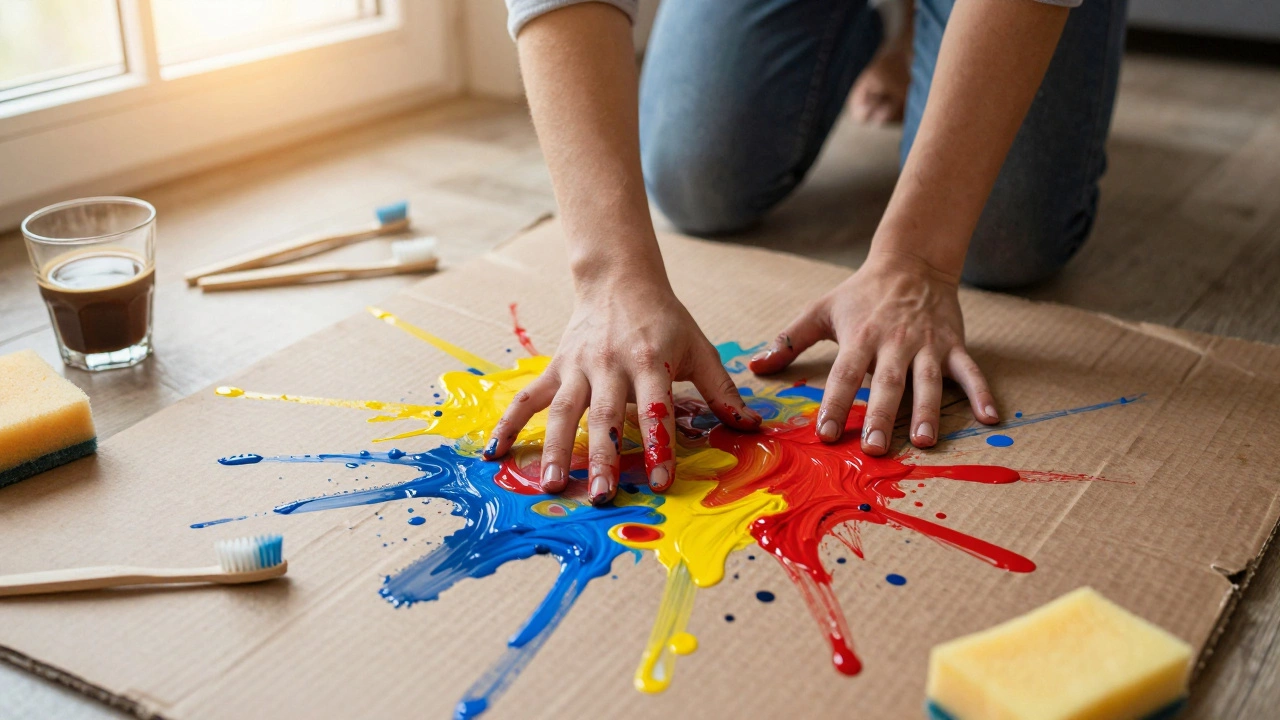
Try this: Grab a big sheet of paper. Use a brush, a sponge, even your fingers. Put on music you love. Don’t think about what it should look like. Just move. Let the rhythm guide you. Make a mark. Then another. Don’t fix it. Don’t erase it. Just keep going for five minutes. When you stop, look at it. Do you feel something? Maybe restlessness. Maybe calm. Maybe confusion. That’s it. That’s abstract art.
There’s no right or wrong. No teacher grading you. No gallery judging you. Just you and the surface you’re working on. That’s the freedom most people never give themselves.
Tools Don’t Make the Artist
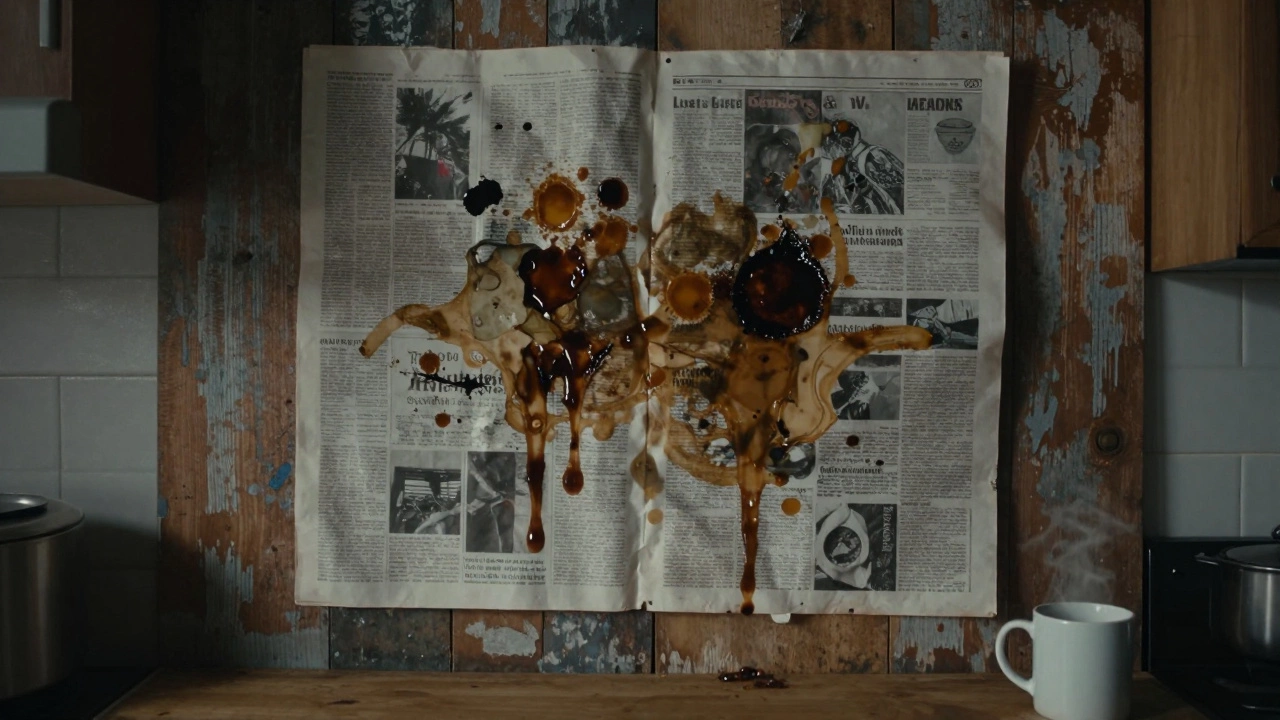
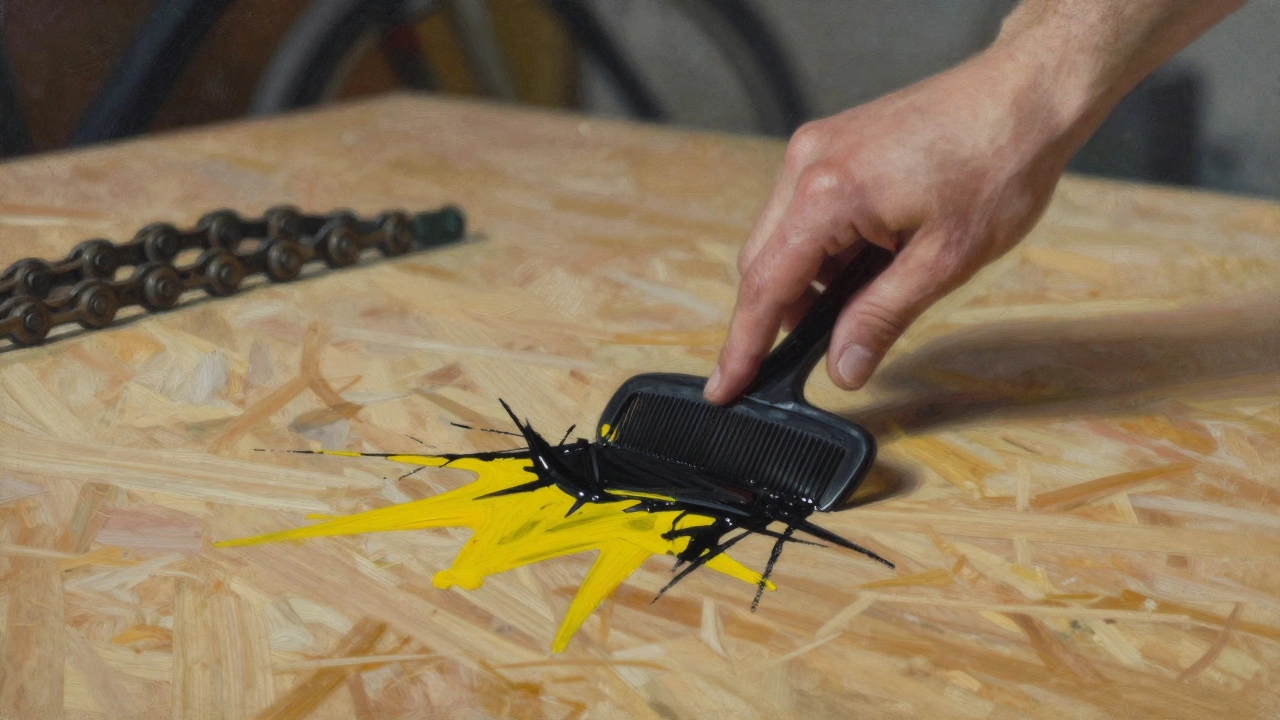
You don’t need expensive canvases, professional paints, or a studio. I’ve seen powerful abstract pieces made with house paint on cardboard. One woman in Sheffield used leftover wallpaper paste and coffee stains to make a series called "Morning After." It sold at a local pop-up show. Another guy used a squeegee and old bike chains to drag paint across plywood. He called it "Traffic."
Abstract art thrives on limitation. When you don’t have the "right" tools, you start using what’s around you. That’s where real creativity lives. It’s not in the brush you bought online. It’s in the way you press a crumpled newspaper into wet paint and leave the imprint.
Start with what you have. A plastic bag. A comb. A spoon. A spray bottle. The more you experiment, the more your hands learn to speak without your mind interrupting.
It’s Not About Skill-It’s About Presence
Most people get stuck because they’re trying to make something "good." They want it to look like something they’ve seen before. But abstract art isn’t about replication. It’s about revelation.
Think of it like meditation. You don’t meditate to become calm. You meditate to notice what’s already there-your breath, your thoughts, your restlessness. Abstract art is the same. You don’t paint to make a masterpiece. You paint to notice what’s inside you when you’re not controlling it.
One student I worked with kept saying, "I don’t know what I’m doing." I told her, "Good. That means you’re doing it right." She painted every day for two weeks. On day 14, she showed me a piece with thick black lines cutting through bursts of yellow. "That’s how I felt after my dad died," she said. She didn’t plan it. She didn’t sketch it. She just let it come out.
That’s the power of abstraction. It doesn’t ask you to explain. It just asks you to show up.
Why People Think You Need Training
Why does everyone assume you need a degree to make abstract art? Because the art world sells it that way. Galleries, museums, and critics often treat abstract art like a secret language only insiders can decode. They use big words-"gestural," "chromatic resonance," "non-representational"-to make it feel exclusive.
But here’s what they don’t tell you: most of those terms were invented after the fact. Artists didn’t sit down thinking, "I’m going to create a piece with chromatic resonance." They sat down because they needed to release something. Then someone else came along and gave it a fancy name.
The truth? Abstract art has always been for everyone. Ancient cave paintings used swirling reds and blacks to express fear, awe, or ritual. Indigenous cultures used patterns to tell stories without images. Children draw circles and lines to express joy or anger long before they learn what a "tree" looks like.
You’re not starting from zero. You’re remembering something you already knew.
What Stops People From Trying
The biggest barrier isn’t skill. It’s shame.
People are afraid their art will look "stupid." They worry someone will laugh. They think, "I’m not creative enough." But creativity isn’t a rare trait. It’s a habit. The more you practice making things without a plan, the more natural it becomes.
Here’s what I’ve seen work: set a timer for 10 minutes. No goal. No outcome. Just move. Do it every day for a week. Don’t show it to anyone. Don’t post it. Just keep it. At the end of the week, look at the pile. You’ll see change. You’ll see patterns you didn’t plan. You’ll see your mood in the colors. That’s not luck. That’s you.
And if you still feel like you "can’t"? Try this: paint with your eyes closed. Or use your non-dominant hand. Or paint while standing on one foot. Break the rules. Break your own expectations. That’s when the real work begins.
How to Start Today
You don’t need permission. You don’t need a class. You don’t need a studio. Here’s how to begin:
- Grab any surface: paper, wood, canvas, even a cardboard box.
- Use any tool: brush, sponge, stick, your fingers, a toothbrush.
- Use any material: paint, ink, coffee, food coloring, dirt.
- Set a timer for 5-10 minutes.
- Don’t think. Just move.
- When it’s done, don’t judge it. Just set it aside.
- Do it again tomorrow.
That’s it. That’s the whole practice. No theory. No critique. Just action.
It’s Not About Being Famous
Some people want to be the next Pollock. Others want to sell their work in New York. That’s fine. But that’s not why abstract art exists.
Abstract art is a way to be alone with yourself. To feel without words. To release what you can’t say out loud. It’s therapy without a couch. It’s rebellion without a protest sign.
One man I knew, retired from a factory job, started painting abstract pieces after his wife passed. He didn’t show them to anyone for three years. Then he gave one to his grandson. The kid hung it on his wall. That’s all it took. No gallery. No critic. Just a feeling passed from one person to another.
That’s the real power of abstract art. It doesn’t need an audience. It just needs you.
Final Thought
Can anyone be an abstract artist? Yes. Not because they’re skilled. Not because they’re trained. But because they’re human. And every human has felt something they couldn’t name. Abstract art is how you give that feeling a shape.
You don’t need to be good. You just need to be willing.
Do I need to know art history to make abstract art?
No. Art history helps you understand context, but it doesn’t help you create. Many of the most powerful abstract works were made by people who never set foot in a museum. What matters is your personal connection to color, movement, and emotion-not your knowledge of Kandinsky or Mondrian.
What if my art looks like a mess?
Good. Abstract art isn’t about looking neat. It’s about looking real. A mess can hold more truth than a perfectly balanced composition. Some of the most moving abstract pieces look chaotic because they’re honest. Let your mess be your voice.
Can I make abstract art without paint?
Absolutely. Collage, fabric, sand, ash, digital layers, even sound recordings can become abstract art. The medium doesn’t define it-your intention does. If you’re expressing emotion through texture, rhythm, or contrast, you’re making abstract art.
Is abstract art just random?
Not if you’re present. Randomness without awareness is just noise. But when you make marks with feeling-even if you don’t know why-you’re not being random. You’re being intuitive. That’s different. Intuition is the quiet voice beneath the noise.
How do I know if I’m doing it right?
You know you’re doing it right when you forget you’re making art. When time disappears. When you don’t care what it looks like. When you feel lighter afterward. That’s the sign. Not a gallery’s approval, not a like on social media. Just that quiet sense of release.