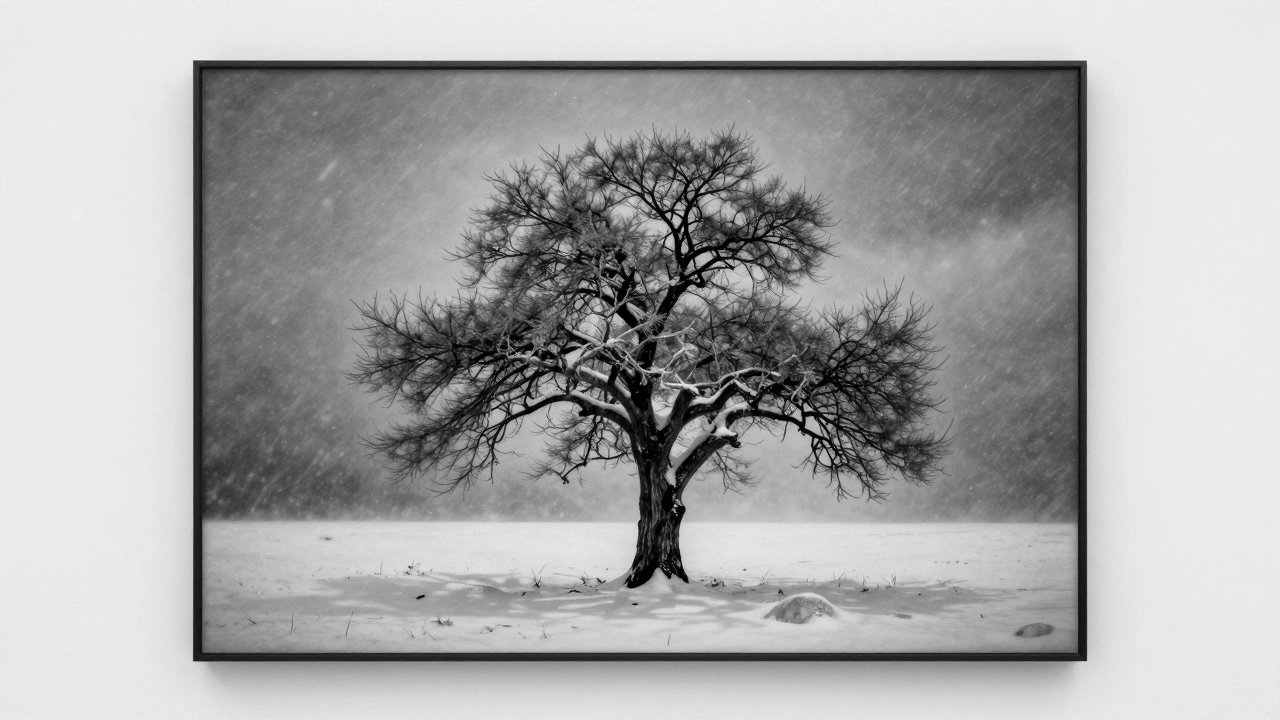
Fine art photography isn’t just taking pretty pictures. It’s about creating images that express an idea, emotion, or vision-just like a painting or sculpture does. You won’t find it in stock photo libraries or travel blogs. It lives in galleries, museums, and private collections. The goal isn’t to document reality, but to transform it.
It’s Not About What You See, But What You Feel
Think of a photograph of a lone tree in a snowstorm. If it’s a news photo, it’s there to show weather conditions. If it’s a commercial ad, it’s selling winter gear. But in fine art photography, that same tree might stand for isolation, resilience, or the passage of time. The photographer didn’t just capture the scene-they interpreted it.
There’s no rulebook for what makes a photo "fine art." Some use soft focus to blur edges and create dreamlike moods. Others use harsh lighting to emphasize texture and contrast. Some shoot in black and white to remove distraction and heighten emotion. The technique serves the message, not the other way around.
How It Differs From Other Types of Photography
Fine art photography doesn’t serve a function. It doesn’t need to sell, inform, or record. That’s what separates it from portrait, wedding, documentary, or product photography.
Take portrait photography. Its job is to show someone’s face clearly, often with flattering light and a neutral background. Fine art portraiture? It might distort the face, use unnatural colors, or place the subject in a surreal setting to explore identity or mental state. The difference isn’t in the camera-it’s in the intent.
Documentary photographers aim for truth. Fine art photographers aim for meaning. One shows what happened. The other asks why it matters.
Historical Roots and Key Influences
Fine art photography didn’t start as a separate category. In the 1800s, photographers struggled to be taken seriously as artists. Painters dominated the art world, and many dismissed photography as a mechanical trick.
Then came Alfred Stieglitz. In the early 1900s, he pushed photography into galleries alongside paintings and sculptures. He showed how light, shadow, and composition could carry the same emotional weight as brushstrokes. His series "Equivalents"-abstract clouds photographed without context-was revolutionary. He wasn’t documenting weather. He was expressing inner feelings through the sky.
Later, photographers like Man Ray, Diane Arbus, and Cindy Sherman pushed boundaries even further. Man Ray used solarization and photograms to create surreal, dreamlike forms. Arbus photographed people society ignored-not to pity them, but to force viewers to confront their own assumptions. Sherman staged herself as different characters to question identity and gender roles.
These artists didn’t just take photos. They built entire worlds inside the frame.
What Makes a Photo "Fine Art" Today?
There’s no checklist. But you’ll often see these traits:
- Intentional composition: Every element is placed deliberately-not by chance, but by design.
- Emotional or conceptual depth: The image makes you think, feel, or question something.
- Consistent style: The photographer has a recognizable voice across multiple works.
- Print quality and presentation: Fine art photos are often printed on high-quality paper, sometimes with hand-applied finishes. They’re framed and displayed like paintings.
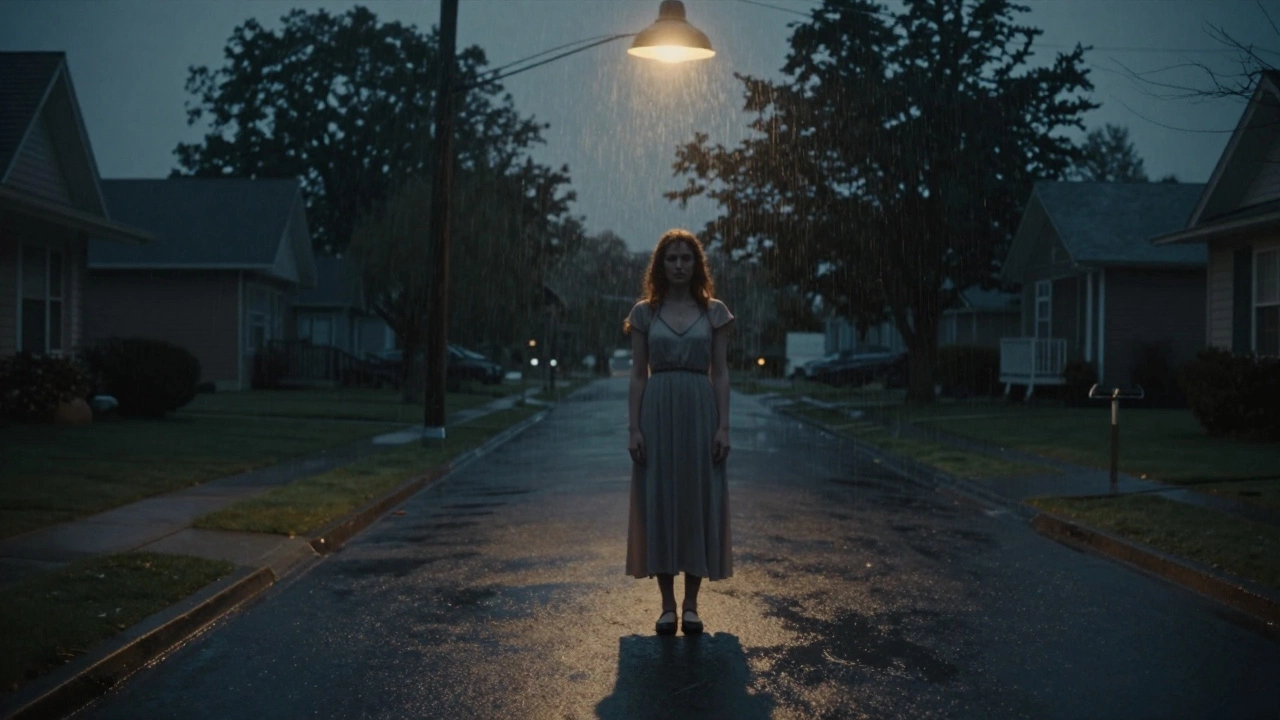
Look at Gregory Crewdson’s work. He spends months staging scenes in suburban neighborhoods, using film crews, lighting rigs, and actors. His photos look like stills from a movie-but they’re not from a film. They’re carefully constructed visions of loneliness and quiet dread. That’s fine art photography.
Or consider Sally Mann’s intimate portraits of her children, shot on large-format film with long exposures. The soft focus, the grain, the natural light-they’re not accidents. They’re choices meant to evoke memory, vulnerability, and time passing.
How to Recognize Fine Art Photography in a Gallery
If you walk into a gallery, here’s what to look for:
- The photo is printed large-often 24x36 inches or bigger.
- It’s mounted on a rigid backing, not just stuck in a standard frame.
- There’s no caption telling you what’s happening. You’re meant to interpret it yourself.
- The title is poetic or abstract: "Whisper of the Forgotten," "The Weight of Silence," not "Beach at Sunset, 2023."
Gallery labels might mention the artist’s intent, but rarely explain the image. That’s intentional. The work is meant to stand on its own.
Is It Still Photography If It’s Staged?
This is a common question. If a photographer builds a set, hires actors, and uses studio lights-is it still photography?
Yes. Because the medium hasn’t changed. The camera still records light. The difference is control. A street photographer waits for a moment to happen. A fine art photographer creates the moment. Both are using the same tool, but one is reacting, the other is composing.
Think of it like writing. A journalist reports what happened. A novelist invents a world. Both use words. One is factual. The other is artistic.
Where to Find Fine Art Photography
You won’t find it on Instagram feeds filled with filters. You won’t see it in ads for cameras or travel apps. It lives in places where meaning matters more than likes.
- Art museums like the MoMA, the Tate Modern, or the Getty
- Specialized photography galleries in major cities
- Art fairs like Photo Basel or AIPAD
- Books by artists like Robert Mapplethorpe, Ansel Adams (his later work), or Julia Margaret Cameron
Online, look for platforms like Artsy or 1x.com-not Flickr or 500px. The latter are communities of hobbyists. The former are curated spaces for artists who treat photography as a fine art form.
Can Anyone Create Fine Art Photography?
Yes-but not by accident. You don’t need expensive gear. You don’t need formal training. But you do need a reason to make the image.
Ask yourself: Why did I take this photo? Is it because it looked nice? Or because it made me feel something I couldn’t put into words? If it’s the latter, you’re already on the path.
Start by shooting a series-not single shots. Pick a theme: isolation, memory, transformation. Shoot 10 photos around that idea. Don’t edit them for perfection. Edit them for consistency. Then ask: Does this group of images say something deeper than the sum of its parts?
That’s fine art photography. Not a single great shot. A body of work that invites you to look again-and again.
It’s Not About the Camera. It’s About the Mind Behind It.
Fine art photography doesn’t care if you use a $5,000 medium format camera or a 20-year-old film point-and-shoot. What matters is what you’re trying to say.
It’s the difference between snapping a picture of your coffee cup and creating a series called "Morning Rituals"-where each cup, in different light, in different rooms, becomes a meditation on solitude, routine, and quiet beauty.
That’s fine art photography. Not what’s in the frame. But what’s in the mind that placed it there.