Test Your Knowledge: Modern vs. Contemporary Art
Loading question...
Can you really capture the chaos, beauty, and confusion of today’s art world in just one word? It sounds like a trick question. If you ask five curators, they might give you five different answers. But if you force them to pick the single most accurate descriptor for Contemporary Art is art produced in the present era, characterized by diverse media, global perspectives, and a focus on ideas over technique., that word is usually "Now."
That’s it. Now.
It’s not about oil on canvas. It’s not about perfect perspective or realistic shading. It’s about what is happening right this second. To understand why "Now" is the only word that fits, we have to look past the pretty pictures and dig into what actually makes an artwork "contemporary." You don’t need an art degree to get it; you just need to shift how you look at things.
The Time Trap: Why "Modern" Is Not "Contemporary"
The biggest reason people get confused is that we use these words interchangeably in daily life. We say something is "modern" when we mean new. But in the art world, those two labels are separated by a hard wall of time.
Modern Art refers to the period roughly between the 1860s and the 1970s, including movements like Impressionism, Cubism, and Abstract Expressionism. This was the era when artists broke away from traditional academic rules. Think of Picasso slicing up reality or Monet painting light. They were rebelling against the past. That rebellion ended decades ago.
Contemporary art picks up where Modern art left off. It starts around the late 1960s or early 1970s and continues until today. The key difference? Modern art was about finding a new visual language. Contemporary art is about using every possible language-including video, code, trash, and performance-to ask questions about our current reality.
| Feature | Modern Art (c. 1860-1970) | Contemporary Art (c. 1970-Present) |
|---|---|---|
| Time Period | Post-Industrial Revolution to Vietnam War | Post-Cold War to Digital Age |
| Main Goal | Break from tradition; explore form and color | Challenge concepts; reflect current society |
| Primary Media | Painting, Sculpture | Mixed Media, Video, Installation, Digital |
| Focus | Aesthetic innovation | Ideas, identity, politics, globalization |
If you see a painting that looks like a splash of paint but was made in 1950, that’s Modern. If you see a pile of dirty laundry arranged in a gallery in 2024, that’s Contemporary. The timeline matters because the context changes everything.
The Shift from Object to Idea
Why is "Now" the defining word? Because contemporary art is obsessed with the present moment. In the past, value was often placed on technical skill. Could you draw a hand perfectly? Could you mix colors to create depth? Today, those skills are less important than the idea behind the work.
This shift is called Conceptual Art is an art movement where the concept or idea behind the work is more important than the finished object. It started gaining traction in the 1960s and has become the backbone of contemporary practice. The artist isn’t necessarily trying to make something beautiful. They are trying to make you think.
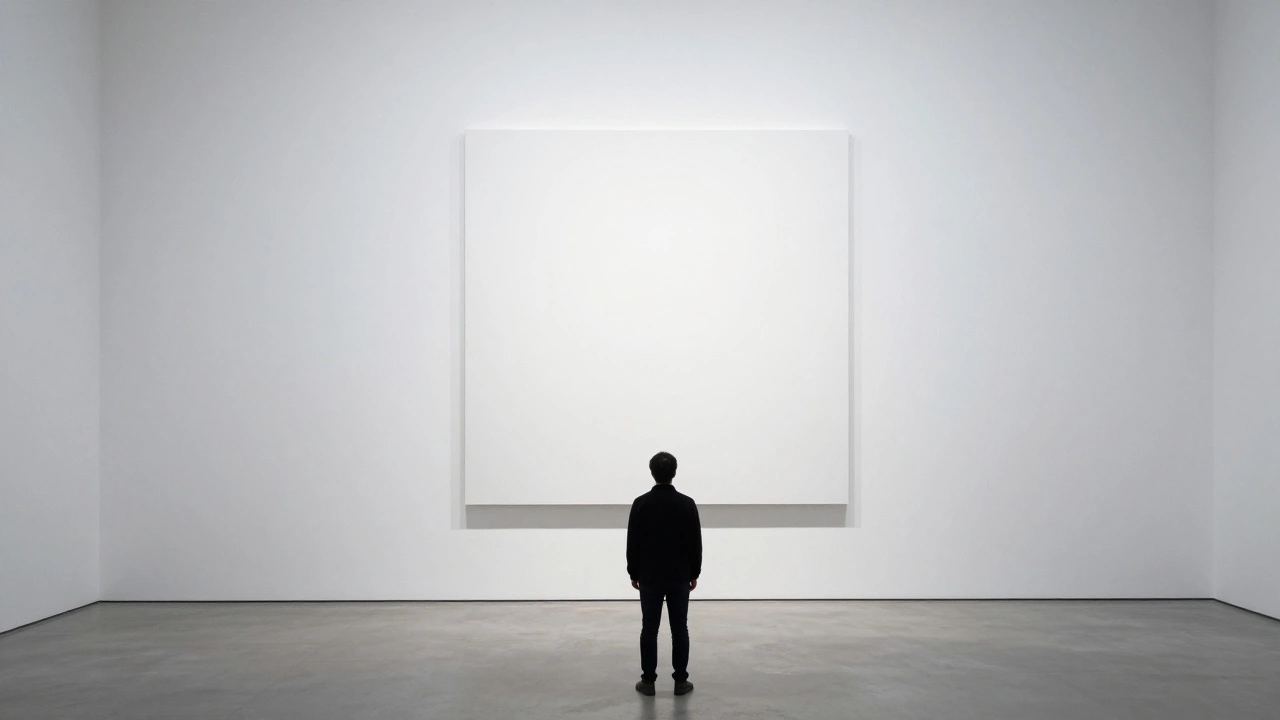
Consider a simple example. An artist places a blank white square on a wall. A viewer might ask, "Is this art? What does it mean?" That question is the point. The artwork exists in the conversation it sparks. It reflects the current state of consumerism, minimalism, or perhaps the emptiness of digital spaces. The physical object is secondary to the mental reaction it triggers in you, right now.
This is why contemporary art can feel frustrating. If you’re looking for a pretty picture to hang above your sofa, you might be disappointed. But if you’re looking for a mirror that reflects who we are as a society today-our anxieties, our technologies, our identities-you’ll find it here.
Media Without Borders
Another reason "Now" defines this era is the explosion of materials. Artists today are not limited to paint and clay. They use whatever tool helps them express their current reality.
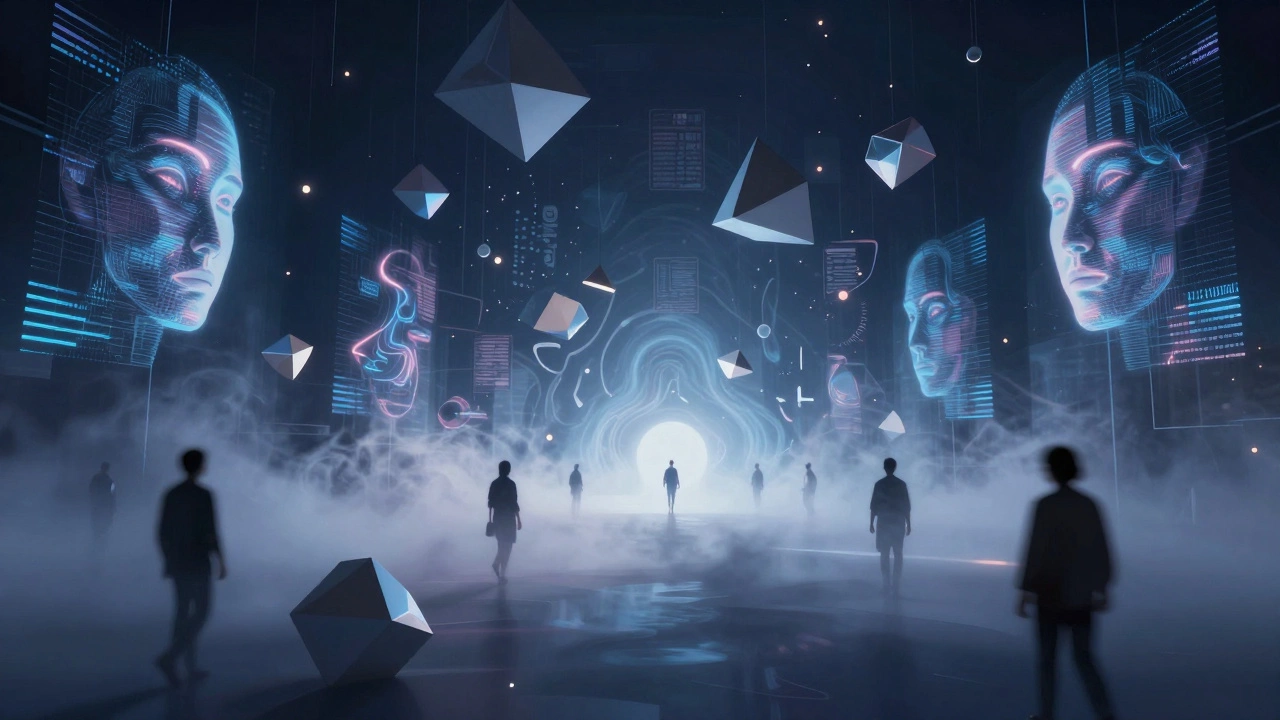
You will see Installation Art involves creating immersive environments that transform a space, often engaging multiple senses. Imagine walking into a room filled with fog, soundscapes, and floating objects. You aren’t just looking at art; you are inside it. This approach breaks down the barrier between the viewer and the piece.
Digital technology has also reshaped the field. Digital Art encompasses creative works that use digital technology as an essential part of the creation or presentation process. From AI-generated images to virtual reality experiences, artists are exploring how screens and algorithms change our perception of truth and beauty. In 2026, this isn’t a niche category; it’s central to the discourse. When an artist uses code to generate a portrait, they are commenting on privacy, data, and human connection in the digital age.
Performance art is another staple. Here, the artist’s body is the medium. A performance happens once, in real-time, and then it’s gone. It captures the fleeting nature of the present. There is no object to buy, only the memory of the event. This emphasizes the "now" even more strongly than a static sculpture ever could.
Global Voices, Local Stories
Historically, Western museums dominated the narrative of what counted as "important" art. Contemporary art has shattered that monopoly. Today, the center of the art world is everywhere.
Artists from Africa, Asia, South America, and indigenous communities are bringing their specific cultural histories and current political struggles into global galleries. This diversity means contemporary art is not a single style but a collection of thousands of different voices. One artist might be addressing climate change in the Arctic, while another is exploring migration patterns in the Mediterranean. Both are contemporary because both are responding to the urgent issues of today.
This global shift makes the art more relevant. It stops being about elite aesthetics and starts being about human experience. When you engage with contemporary art, you are often engaging with a specific person’s view of the world right now. It’s personal, immediate, and often political.
How to Look at Contemporary Art
If you walk into a gallery and feel lost, you’re not alone. Here is a practical way to navigate it without needing a PhD.
- Stop asking "Is it good?" Start asking "What is this doing?" Don’t judge the technical skill immediately. Look at the intent.
- Read the label. It’s not cheating. Contemporary art often relies on context. The title, date, and material list provide clues. If the work is titled "Untitled," that’s a clue too-it might be rejecting categorization.
- Notice your reaction. Do you feel uncomfortable? Bored? Angry? Your emotional response is data. The artist likely intended to provoke that feeling. Ask yourself why.
- Look for the connection to today. Does the work reference social media? Politics? Environmental crisis? Pop culture? Contemporary art is deeply embedded in the current zeitgeist.
For example, if you see a sculpture made of plastic waste, don’t just see a shape. See the commentary on consumption. If you see a video loop of someone staring at a phone, see the critique of attention spans. Connect the object to the world outside the gallery walls.
Why This Matters in 2026
We live in a world of rapid change. Artificial intelligence, climate uncertainty, and shifting social norms define our daily lives. Contemporary art is one of the few spaces where we can process these changes safely. It allows us to experiment with ideas, challenge assumptions, and see ourselves reflected back in strange new ways.
Defining it in one word is impossible if you want precision. But if you accept that art is a living, breathing record of our time, then "Now" is the best summary we have. It reminds us that art isn’t just something to admire in a museum; it’s a tool for understanding the present. So next time you encounter a confusing installation or a provocative image, remember: it’s not trying to confuse you. It’s trying to talk to you about today.
What is the main difference between modern and contemporary art?
The main difference is time and focus. Modern art covers the period from roughly the 1860s to the 1970s and focused on breaking from traditional techniques and exploring new forms. Contemporary art refers to art created from the late 1960s/1970s to the present day. It focuses more on ideas, concepts, and reflecting current societal issues rather than just aesthetic innovation.
Why is contemporary art so abstract or difficult to understand?
Contemporary art often prioritizes the idea or concept over realistic representation. Many artists use abstraction to evoke emotions, challenge perceptions, or comment on complex topics like politics or identity. The "difficulty" is often intentional, designed to make the viewer engage critically and personally with the work rather than passively consuming a familiar image.
Does contemporary art have to be digital?
No, contemporary art includes all media. While digital art, video, and AI are prominent today, contemporary artists still use painting, sculpture, photography, and traditional crafts. The defining factor is not the medium, but the context and intent. A traditional oil painting created today that addresses current themes is considered contemporary art.
Who decides what counts as contemporary art?
There is no single authority. Curators, critics, galleries, museums, and the market all play roles in defining the canon. However, the definition is fluid and constantly evolving. As new movements emerge and societal values shift, what is considered "contemporary" expands to include diverse voices and mediums from around the globe.
How can I start appreciating contemporary art if I find it confusing?
Start by shifting your mindset from judging beauty to seeking meaning. Read the artist statements and labels for context. Allow yourself to feel confused or uncomfortable-that’s often part of the experience. Visit local galleries, attend opening nights, and try to connect the artworks to current events or personal experiences. Over time, you’ll develop your own framework for interpretation.
