
Art Investment Calculator
How It Works
Based on historical data from Art Basel and UBS, blue chip art has delivered an average annual return of 6.8% over the past 25 years. This calculator estimates potential returns from fractional art investments through platforms like Masterworks or Arthena.
Key factors: - Historical annual returns: 6.8% (vs. S&P 500 at 6.3%) - Platform fees: 5-10% annually - Minimum investment: $20 - Typical holding period: 5-10 years
When people talk about blue chip art, they’re not referring to something you hang in a dorm room or buy at a street fair. Blue chip art is the kind of work that sells for millions, sits in major museums, and changes hands like rare stocks-only with brushstrokes instead of ticker symbols. If you’ve ever wondered why a painting by Picasso or Jean-Michel Basquiat can go for $100 million while another by a talented but unknown artist sells for $500, the answer lies in the concept of blue chip art.
What Makes Art "Blue Chip"?
The term "blue chip" comes from poker, where blue chips are the highest value. In finance, blue chip stocks are shares of large, stable, well-established companies like Apple or Coca-Cola. Blue chip art follows the same logic: it’s created by artists with proven track records, consistent demand, and institutional recognition.
These aren’t just pretty pictures. They’re cultural landmarks. A blue chip artwork has survived decades-if not centuries-of shifting tastes, economic crashes, and art trends. It’s been shown in top galleries, written about in major publications, and acquired by museums like the MoMA, Tate Modern, or the Louvre. It doesn’t just look good on a wall; it carries weight in art history.
Three things define blue chip art:
- Artist reputation: The artist must be internationally recognized, with a career spanning decades and a body of work that’s been critically examined and celebrated.
- Provenance: The history of ownership matters. If a painting was once owned by a famous collector or exhibited in a major museum, its value climbs.
- Market liquidity: Blue chip art sells regularly at auction houses like Christie’s and Sotheby’s, often with multiple bidders competing. You can’t just find it on Etsy-it’s traded in high-stakes environments.
Who Are the Artists Behind Blue Chip Art?
Not every famous artist makes the cut. Some names are consistently in the blue chip category:
- Pablo Picasso: With over 50,000 works across mediums, Picasso remains the most traded artist in history. His 1955 painting Women of Algiers sold for $179.4 million in 2015.
- Willem de Kooning: A leader of Abstract Expressionism, his 1955 painting Woman III sold for $137.5 million in 2006.
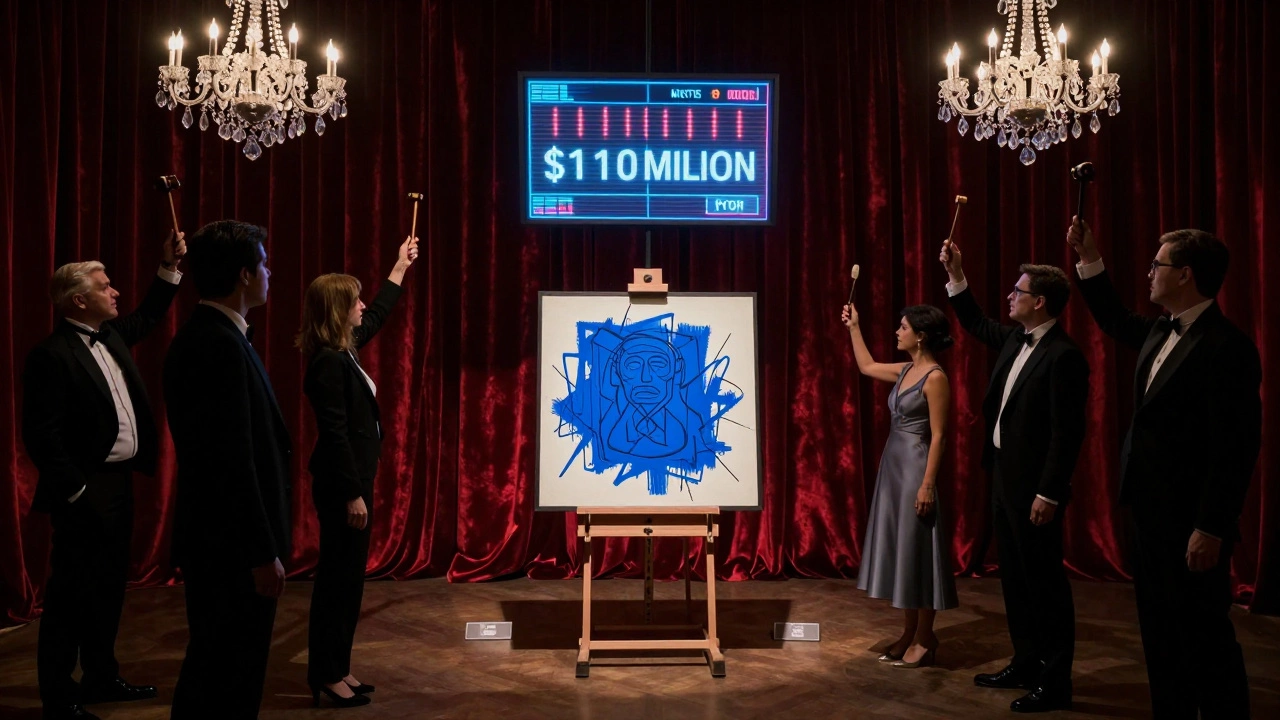
- Jean-Michel Basquiat: A modern example, Basquiat’s 1982 painting Untitled sold for $110.5 million in 2017-making him the most expensive American artist ever at auction.
- Mark Rothko: His color field paintings, like No. 6 (Violet, Green and Red), have sold for over $180 million.
- Andy Warhol: His Silver Car Crash (Double Disaster) fetched $105.4 million in 2013.
These artists aren’t just popular-they’re foundational. Their work changed how we think about art. Their pieces are studied in university courses, referenced in films, and displayed in the most prestigious institutions. That’s what makes them blue chip.
Why Do People Buy Blue Chip Art?
People don’t buy blue chip art just because they love it-though many do. They buy it because it behaves like an asset class.
Since the 1990s, art has become a serious investment vehicle. According to data from Art Basel and UBS, blue chip art has outperformed the S&P 500 over the past 25 years, with average annual returns of 6.8% compared to the index’s 6.3%. And unlike stocks, it doesn’t crash on bad earnings reports. It’s not tied to the economy in the same way.
There’s also prestige. Owning a Rothko or a Warhol signals taste, power, and cultural awareness. Billionaires don’t just collect-they curate legacies. The late Steve Cohen, for example, spent over $1 billion on art, including a $160 million Picasso. It wasn’t just about money; it was about being part of a story.
And then there’s tax benefits. In many countries, art can be held as a long-term asset with favorable capital gains treatment. Some collectors even use art as collateral for loans. In 2024, over $12 billion in art-backed loans were issued globally.
How Is Blue Chip Art Different From Other Art?
Not all expensive art is blue chip. A new artist might sell a painting for $200,000 because of a viral social media post or a trendy gallery show. But if that artist disappears from the scene, or their work isn’t acquired by museums, it’s not blue chip.
Here’s how blue chip art compares to other categories:
| Feature | Blue Chip Art | Contemporary Art | Emerging Artist Art |
|---|---|---|---|
| Artist Recognition | International, decades-long career | Known in galleries and biennials | Local or online presence |
| Market Liquidity | Regular auctions, multiple bidders | Some auction activity, limited buyers | Often sold privately, low turnover |
| Museum Presence | Collected by major institutions | Possibly in contemporary shows | Rarely in museums |
| Price Range | $1 million to $200+ million | $50,000 to $5 million | $1,000 to $50,000 |
| Investment Risk | Low to moderate | Moderate to high | Very high |
Contemporary art can be exciting, but it’s volatile. Emerging artists are even riskier-most never reach sustained market value. Blue chip art, by contrast, has weathered time. It’s been tested.
Can You Invest in Blue Chip Art Without Buying It?
You don’t need $10 million to get exposure to blue chip art. Platforms like Masterworks and Arthena let you buy fractional shares in high-value paintings. In 2023, Masterworks sold shares in a 1952 Jackson Pollock for $1.2 million, allowing investors to buy as little as $20 worth. The artwork is held in a secure vault, insured, and eventually auctioned. Investors get a cut of the profit.
These platforms aren’t perfect-they charge fees, and liquidity is limited. But they’ve opened the door for people who can’t afford a full Picasso. Over 150,000 people have invested in art through these platforms since 2020.
Another option: art funds. Private equity firms pool money to buy blue chip works, hold them for 5-10 years, then sell. Returns have averaged 8-12% annually, though they’re only open to accredited investors.
Is Blue Chip Art a Good Investment?
It’s not a get-rich-quick scheme. Art doesn’t pay dividends. It doesn’t trade on a stock exchange. You can’t sell it in a day if you need cash. It’s a long-term bet.
But over time, it’s held up. During the 2008 financial crisis, blue chip art prices dipped about 10%-then recovered within three years. In 2020, during the pandemic, auction sales dropped 40%, but blue chip works still sold at or above estimates. Buyers kept bidding.
The key is patience. If you buy a blue chip piece, plan to hold it for at least 10 years. Look for works with strong provenance, clear documentation, and a history of auction performance. Avoid pieces that are overhyped or lack museum backing.
And remember: the joy of owning blue chip art isn’t just financial. It’s emotional. Holding a piece of history-something that changed the course of art-gives you a connection to something bigger than money.
Where to Find Blue Chip Art
You won’t find blue chip art at a flea market. It’s sold through:
- Auction houses: Christie’s, Sotheby’s, Phillips-these are the main marketplaces.
- Top-tier galleries: Gagosian, Pace, Hauser & Wirth represent blue chip artists and often have waiting lists.
- Private sales: Many transactions happen off-record between collectors and dealers.
- Art fairs: Art Basel, Frieze, and TEFAF are where dealers and collectors meet.
If you’re serious, work with a reputable advisor. Art consultants help verify provenance, negotiate prices, and arrange shipping and insurance. A good advisor costs 5-10% of the purchase price-but saves you from buying a forgery or overpaying.
Final Thoughts
Blue chip art isn’t about trends. It’s about legacy. It’s the work that future generations will study, debate, and admire. Buying it isn’t just about owning a beautiful object-it’s about owning a piece of cultural memory.
If you’re thinking of investing, start by learning. Visit museums. Read auction catalogs. Follow what institutions collect. Don’t rush. The best blue chip art doesn’t sell quickly-it endures.
Is blue chip art only for billionaires?
No. While the most famous pieces sell for tens of millions, you can invest in blue chip art through fractional ownership platforms like Masterworks or Arthena, where you can buy shares starting at $20. Art funds also offer access, though they usually require accredited investor status. The key is understanding that you’re investing in the artist’s legacy, not just a painting.
Can blue chip art lose value?
Yes, but it’s rare. Blue chip art has shown resilience during economic downturns. However, if an artist’s reputation fades-due to scandals, poor critical reception, or lack of institutional support-prices can drop. That’s why provenance and museum history matter more than hype.
How do I verify if a piece is authentic?
Always request a certificate of authenticity from a recognized authority, like the artist’s estate or a scholarly catalog raisonné. Reputable auction houses conduct their own provenance research. For high-value works, hire an independent art appraiser or conservator. Never buy without full documentation.
What’s the difference between blue chip and investment art?
All blue chip art is investment art, but not all investment art is blue chip. Investment art includes any artwork bought for financial gain, including emerging artists or limited editions. Blue chip art specifically refers to works by historically significant artists with strong market liquidity and institutional backing.
Should I buy blue chip art for decoration?
You can, but it’s not ideal. Blue chip art is expensive to insure, maintain, and display. Many collectors keep these works in climate-controlled vaults and only display them occasionally. If you want art to live with you daily, consider high-quality prints or works by emerging artists. Save blue chip pieces for long-term holding and cultural value.
