Sculptor Terminology Quiz
Question 1: What is the precise professional term for someone who creates sculptures?
Question 2: Why is "sculptor" more precise than "artist"?
Question 3: What is the key difference between a sculptor and an artisan?
Ever walked through a park and stopped in front of a bronze statue, or seen a wild, twisting metal form in a gallery, and wondered-what do you call a person who makes sculptures? It’s not just "artist." That’s too broad. It’s not "maker"-that sounds like someone building furniture. There’s a specific word, and it carries centuries of history, skill, and even cultural weight.
The word is sculptor
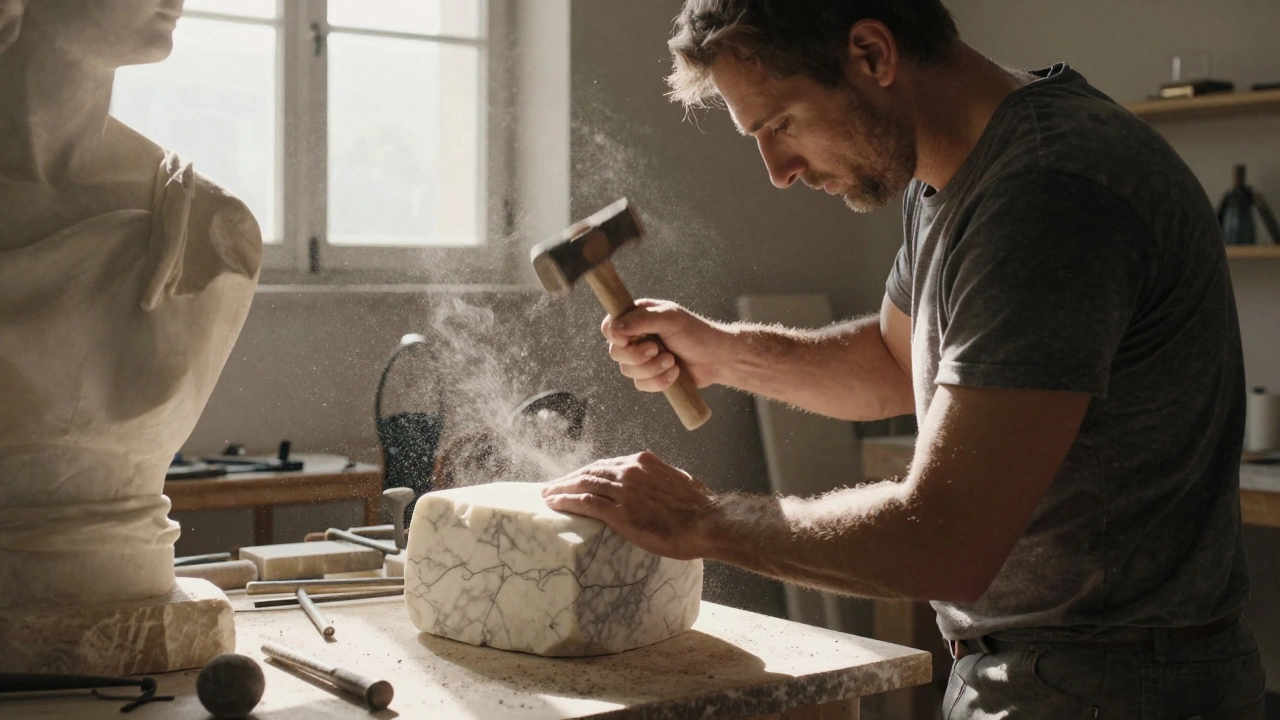
The correct term is sculptor. It’s not a fancy title. It’s not a trend. It’s the real, old-school word used since the Renaissance and before. A sculptor is someone who shapes materials like stone, wood, metal, clay, or even ice into three-dimensional forms. They don’t just carve-they think in volume, weight, balance, and space. A sculptor doesn’t just make something that looks good from one angle. They build something meant to be walked around, touched, felt from every side.
Think of Michelangelo’s David. That wasn’t painted. It wasn’t drawn. It was chiseled from a single block of Carrara marble by a sculptor who spent years understanding how the stone would break, where the grain would hold, and how light would hit the curve of a shoulder. That’s sculpting. That’s a sculptor’s job.
Why not just say "artist"?
You could say "sculpture artist," and people will understand you. But in professional circles, it’s redundant. All sculptors are artists, but not all artists are sculptors. A painter works with pigment on a flat surface. A photographer captures light on film or sensor. A sculptor works in the third dimension. They move around their subject while creating it. They have to think about gravity, tension, and how the piece will survive outdoors for 100 years.
Calling someone a "sculpture artist" is like calling a chef a "food cook." It’s not wrong-it’s just not precise. The art world, museums, galleries, and art schools all use the word sculptor. It’s the standard. It’s the term you’ll see on plaques, in catalogues, and in academic papers.
What tools do sculptors use?
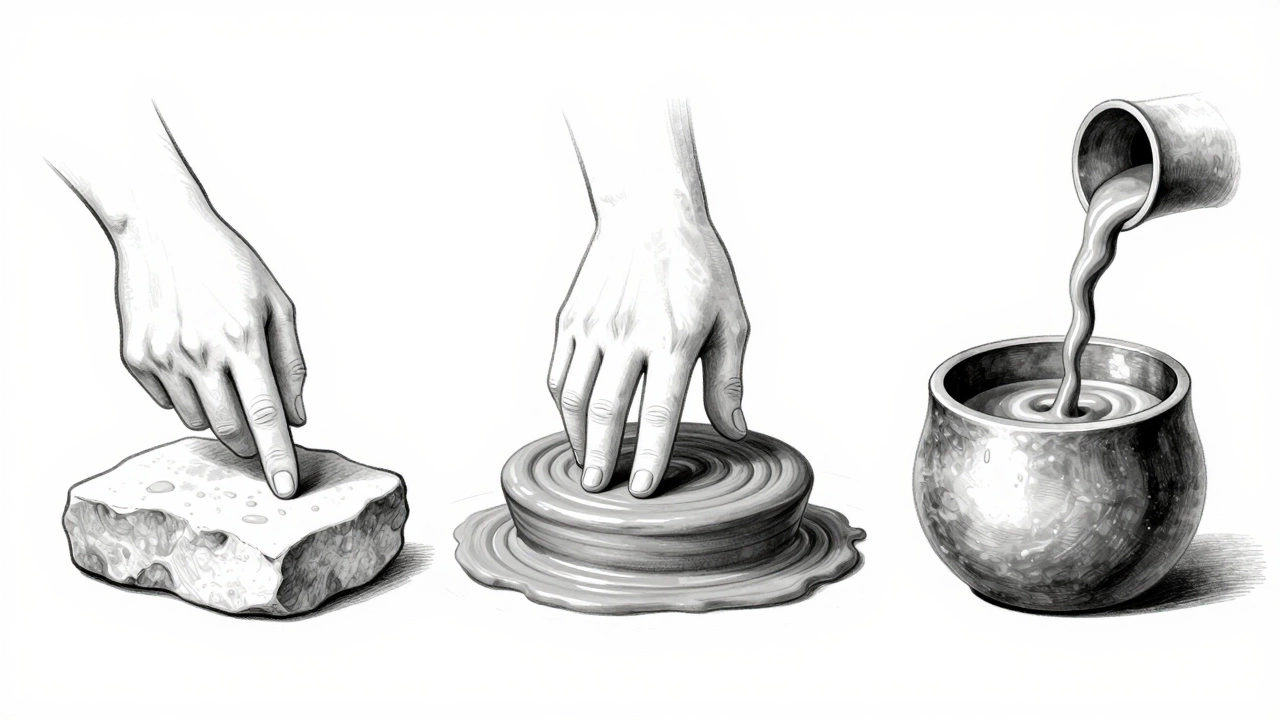
It’s not just chisels and hammers. Modern sculptors use power tools, 3D printers, welding rigs, and even CNC routers. But the core process hasn’t changed much: remove material (subtractive), build it up (additive), or mold it into shape.
- Subtractive sculpting: Chiseling marble, carving wood. Think of Rodin peeling away stone to reveal a figure trapped inside.
- Additive sculpting: Building with clay, welding metal pieces, stacking found objects. Like Louise Bourgeois stacking steel spheres into towering figures.
- Molding and casting: Making a model in clay, then pouring bronze or resin into a mold. This is how most public statues are made.
Some sculptors work alone in a dusty studio with nothing but a hammer and chisel. Others run teams of assistants, engineers, and fabricators. The scale doesn’t change the title. Whether they’re making a tiny figurine or a 30-foot steel spider, they’re still a sculptor.
Is there a difference between a sculptor and an artisan?
Yes. An artisan makes functional objects-pottery you can drink from, furniture you can sit on, jewelry you can wear. A sculptor makes objects meant for contemplation, not use. That’s the line.
Of course, the line blurs sometimes. A ceramicist might make a vase that’s beautiful enough to hang on a wall. A jeweler might create a brooch that feels like a tiny sculpture. But if the object’s primary purpose is aesthetic, not practical, it falls under sculpture. And the maker? Still a sculptor.
What about terms like "carver" or "modeler"?
Those are techniques, not titles. A carver is someone who carves-usually wood or stone. A modeler shapes clay or wax. A welder joins metal. But if you’re using those skills to make fine art, you’re still a sculptor. Those are just the tools in your toolbox.
Imagine a chef who uses a knife, a whisk, and a grill. You wouldn’t call them a "knife-user" or a "grill operator." You’d call them a chef. Same here.
Real-world examples
Take Rachel Whiteread. She’s a British sculptor known for casting the empty spaces under chairs, inside rooms, and beneath staircases. She won the Turner Prize in 1993. She’s not called a "space artist" or a "cast maker." She’s a sculptor.
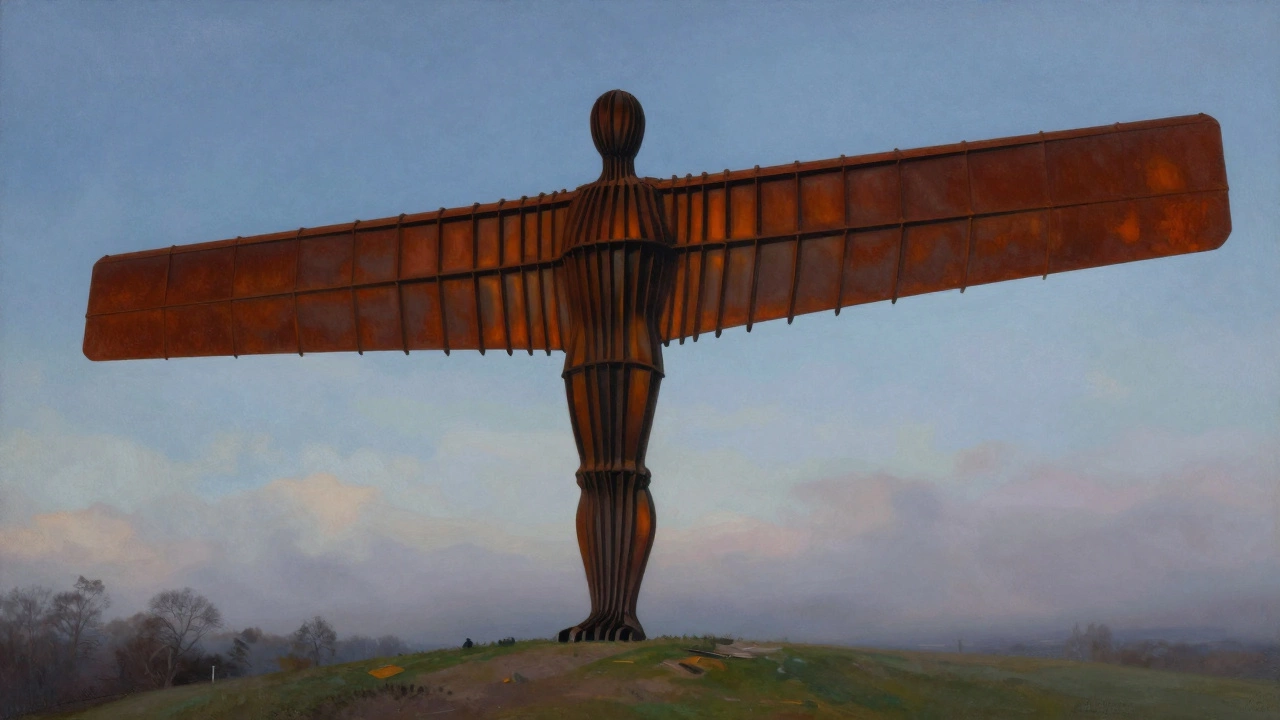
Or Antony Gormley, whose Angel of the North stands in Gateshead, England. That 20-meter-tall steel figure? Made by a sculptor. He’s worked with clay, iron, and even his own body as a mold. He’s not a "metalworker" or a "public installation designer." He’s a sculptor.
In Bristol, where I live, you’ll find sculptors at the Arnolfini gallery, in the city’s public parks, and even tucked into alleyways. One local sculptor, Sarah Lucas, uses mattresses, tights, and fried eggs to make surreal, funny, deeply human figures. She’s not a "found-object assembler." She’s a sculptor.
Why does the name matter?
Because language shapes how we see value. Calling someone a sculptor means you recognize the physical labor, the technical skill, the decades of training, and the deep understanding of form and space it takes to make something that lasts.
It’s not just about making something look nice. It’s about making something that holds weight-literally and metaphorically. A sculpture can outlive its maker. It can weather storms, survive wars, and still move people decades later. That’s not magic. That’s craft. And the person behind it? They’re a sculptor.
What if someone calls themselves something else?
Sometimes people use "artist," "creator," or "maker" because they want to sound modern or avoid labels. That’s fine. But if you’re asking what the correct, traditional, and widely accepted term is-it’s sculptor. It’s the word used in museums, textbooks, and by the people who’ve spent their lives doing it.
If you’re writing about them, applying for a grant, or studying art history, use "sculptor." It’s the term that opens doors. It’s the term that carries respect.
Final thought
So, what do you call a person who makes sculptures? A sculptor. Simple. Direct. Powerful. It’s not just a word. It’s a legacy.
