Oil Painting Medium Drying Time Calculator
Select Your Medium
Drying Properties
Critical Warning
Medium Comparison
Linseed Oil
Traditional standard for oil painting
Walnut Oil
Slow drying, minimal yellowing
Safflower Oil
Pale color, good for whites
Vegetable Oil
Avoid - causes rancidity and cracking
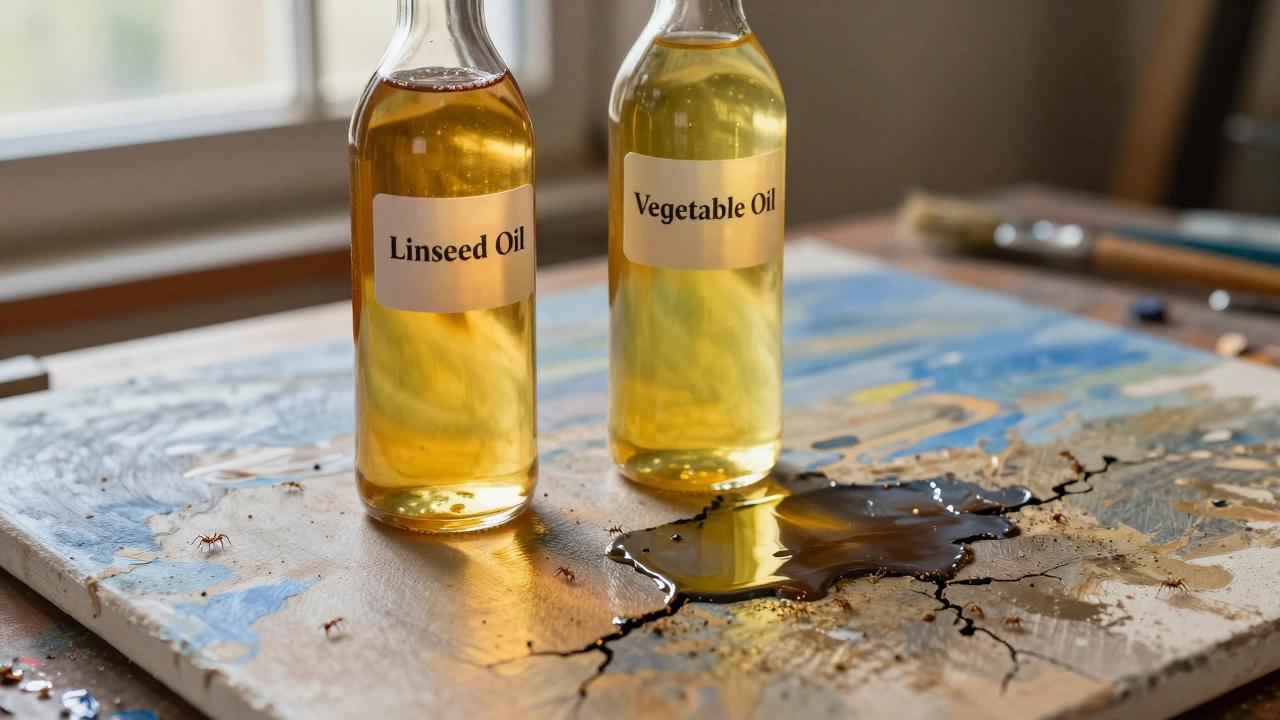
When you're mixing paints and your linseed oil runs out, it's tempting to grab the nearest bottle-maybe the one sitting beside your cooking oils. But can you really use vegetable oil instead of linseed oil in oil painting? The short answer is: no, not without serious consequences for your artwork.
Why Linseed Oil Is the Standard
Linseed oil has been the go-to medium in oil painting for over 500 years. It’s not just tradition-it’s chemistry. Made from flax seeds, linseed oil dries through oxidation, forming a tough, flexible film that binds pigment particles together. This film stays stable for decades, even centuries. Old masters like Rembrandt and Vermeer relied on it, and their paintings still hang in museums today.Linseed oil also has the right viscosity. It’s thick enough to hold brushstrokes, but thin enough to mix smoothly with pigments. It doesn’t yellow as badly as some alternatives, and modern refined versions (like stand oil or cold-pressed) minimize yellowing even further. Most importantly, it cures properly: not too fast, not too slow. Give it a week to dry, and it’s ready for the next layer.
What Happens If You Use Vegetable Oil?
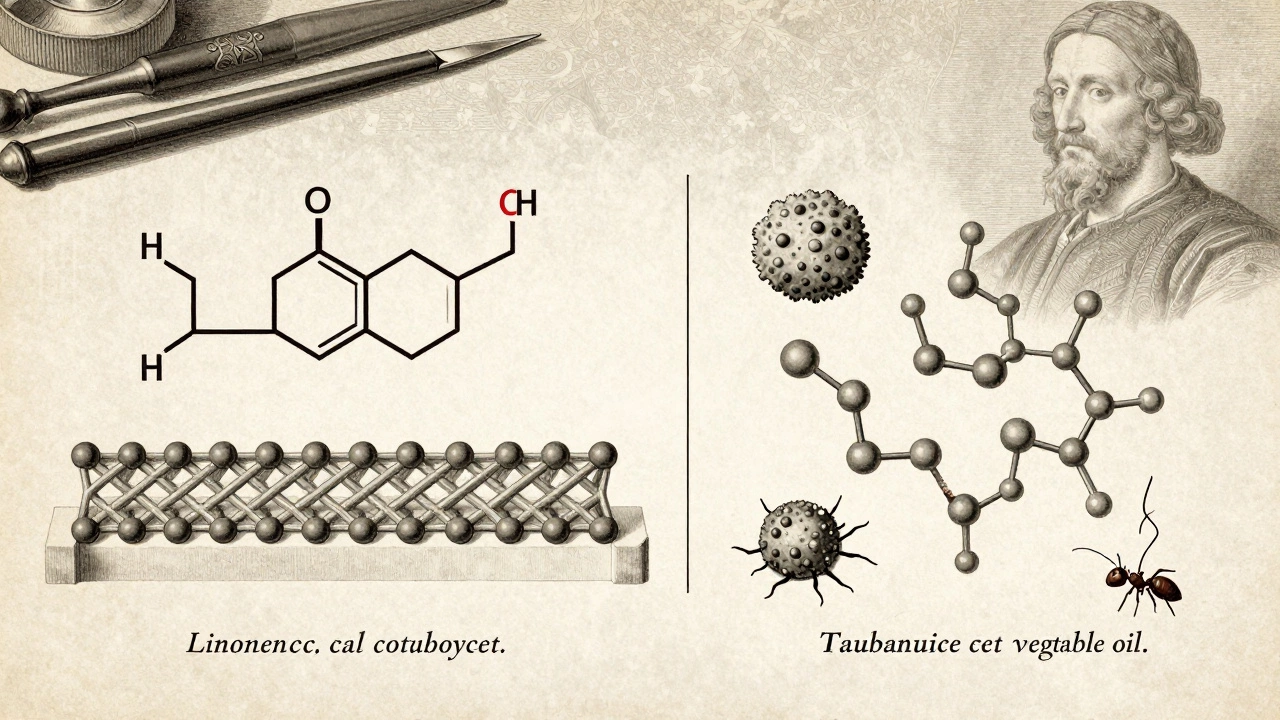
Vegetable oil-whether it’s sunflower, canola, or olive oil-is designed for food, not art. It’s a triglyceride, like linseed oil, but its chemical structure is completely different. It lacks the fatty acids (like linolenic acid) that allow for proper oxidation and polymerization.Here’s what you’ll actually see if you try it:
- Your paint won’t dry. Not in a week. Not in a month. Some artists report their vegetable oil-based paintings still feeling tacky after a year.
- The surface turns sticky. It collects dust, smudges, and attracts insects. No, really-there are documented cases of ants crawling over unfinished canvases.
- It yellows badly. Unlike linseed oil, which yellows slightly and then stabilizes, vegetable oil continues to darken over time, turning your blues into muddy greens and whites into dingy beige.
- It cracks. Without forming a strong polymer network, the paint film becomes brittle. After a few years, you’ll see fine spiderweb cracks, especially in thicker areas.
- It goes rancid. Yes, rancid. Vegetable oils contain unsaturated fats that break down over time, producing a faint but unmistakable odor. Your studio will start smelling like a kitchen that hasn’t been cleaned in months.
There’s no myth here. This isn’t anecdotal. The Getty Conservation Institute tested this exact scenario in the 1990s. They painted test panels with vegetable oil and monitored them for 15 years. The results were catastrophic. One panel developed mold. Another peeled off its canvas.
What About Other Oils? Are Any Safe?
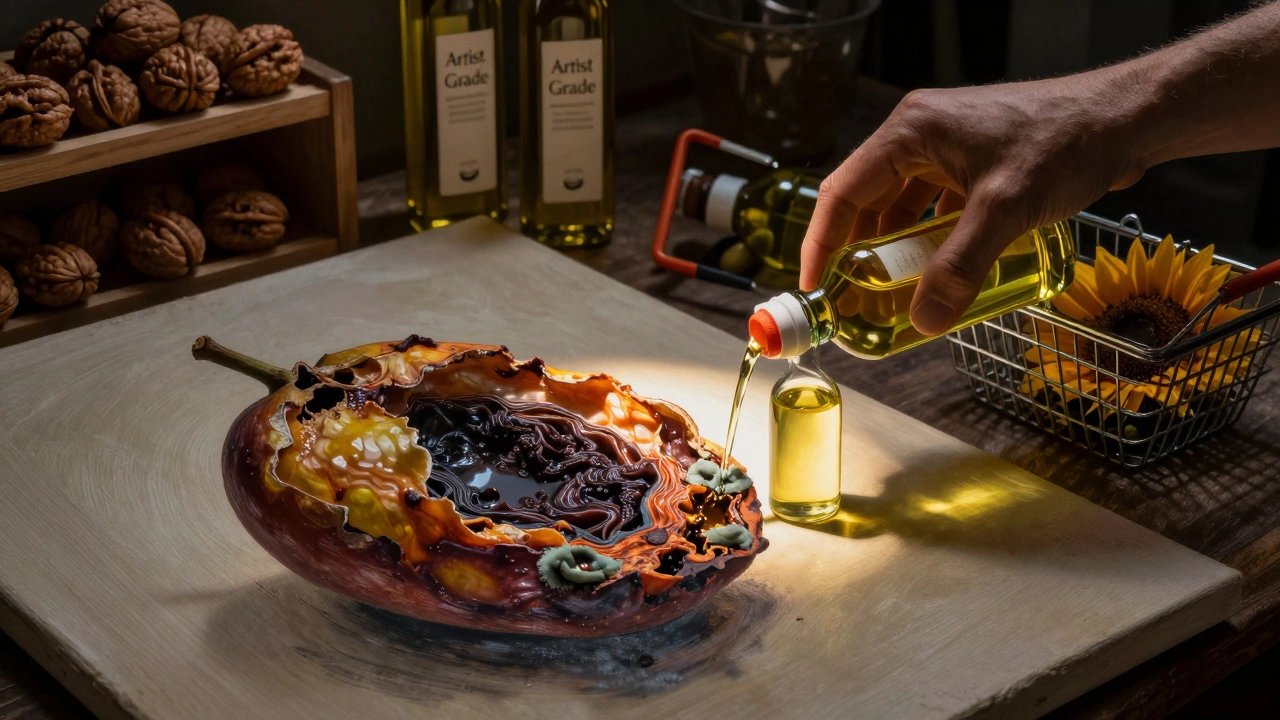
Not all oils are created equal. Some artist-grade oils are safe substitutes-just not the ones in your pantry.- Walnut oil: A popular alternative. Dries slower than linseed, less yellowing. Great for light colors. Used by many contemporary artists.
- Safflower oil: Very pale, minimal yellowing. Ideal for whites and pastels. But it’s fragile-don’t use it for thick impasto.
- Poppy seed oil: Even slower drying. Used for delicate glazes. Can crack if overused.
All of these are refined, purified, and specifically processed for artists. They’re sold in art supply stores-not grocery aisles. They’re also more expensive than vegetable oil, but that’s because they’re made to last.
Here’s the catch: even these alternatives need to be used correctly. You can’t just swap them 1:1 with linseed oil. Each has different drying times and working properties. Most artists mix them in small amounts, not as full replacements.
Why Do People Even Try This?
It’s understandable. You see a bottle of sunflower oil on your counter. You know it’s an oil. You know linseed oil is an oil. Logic says: “Why not?” But art materials aren’t like baking. You can’t substitute butter for shortening and expect the same cake.Some beginners think they’re saving money. Others are curious. A few are trying to go “natural” or avoid chemicals. But linseed oil isn’t toxic-it’s safe when used properly. And it’s cheaper than you think. A 500ml bottle costs less than £10 and lasts years.
There’s also a myth that “natural = better.” But nature doesn’t care if your painting lasts 200 years. It only cares if it rots. And vegetable oil? It’s designed to rot.
What Should You Do Instead?
If you’re out of linseed oil, here’s what to do:- Wait. Buy a new bottle. It’s not a crisis. Art supply stores ship fast.
- Use a different medium. Try a little turpentine or odorless mineral spirits to thin paint temporarily.
- Use a drying agent. A drop of cobalt dryer can speed up drying if you’re stuck with slow-drying paint.
- Switch to acrylics for now. They dry fast and don’t require oil.
Don’t compromise your painting’s future for convenience. A ruined canvas isn’t just a wasted afternoon-it’s a lost piece of your artistic journey.
Final Thoughts: It’s Not Worth It
Vegetable oil might seem like a harmless shortcut, but it’s a ticking time bomb for your artwork. The results aren’t just disappointing-they’re irreversible. Once your painting turns sticky, yellows, or cracks, there’s no fixing it. No varnish, no cleaning, no restoration will bring it back.Oil painting is a craft built on patience and material knowledge. Linseed oil isn’t just a medium-it’s the foundation. Respect it. Use it. And leave the cooking oils where they belong: in the kitchen.
Can I use vegetable oil as a painting medium if I mix it with linseed oil?
No. Even a small amount of vegetable oil can interfere with the drying process of linseed oil. The two don’t polymerize together, and the vegetable oil will remain unstable, leading to long-term cracking, yellowing, and stickiness. Always use artist-grade oils only.
Is linseed oil toxic?
Linseed oil itself is non-toxic and safe to handle. It’s even used in food-grade applications like wooden cutting boards. The only risk comes from solvents like turpentine, which should be used in well-ventilated areas. Pure linseed oil has no harmful fumes.
Why do some artists use walnut oil instead of linseed oil?
Walnut oil dries slower and yellows less than linseed oil, making it ideal for light colors like whites, blues, and pastels. It’s a popular choice for artists who want to preserve color purity. However, it’s not as strong as linseed, so it’s not recommended for thick impasto layers.
How long does linseed oil take to dry?
A thin layer of linseed oil takes 3-7 days to dry to the touch, and 2-4 weeks to fully cure before varnishing. Thicker applications or humid conditions can extend this. Always wait until the surface feels firm, not tacky, before painting over it.
Can I use olive oil for oil painting?
Absolutely not. Olive oil is even more unstable than other vegetable oils. It contains high levels of monounsaturated fats that oxidize poorly and turn rancid quickly. Paint made with olive oil will darken, crack, and smell within months. It’s one of the worst choices you can make.
