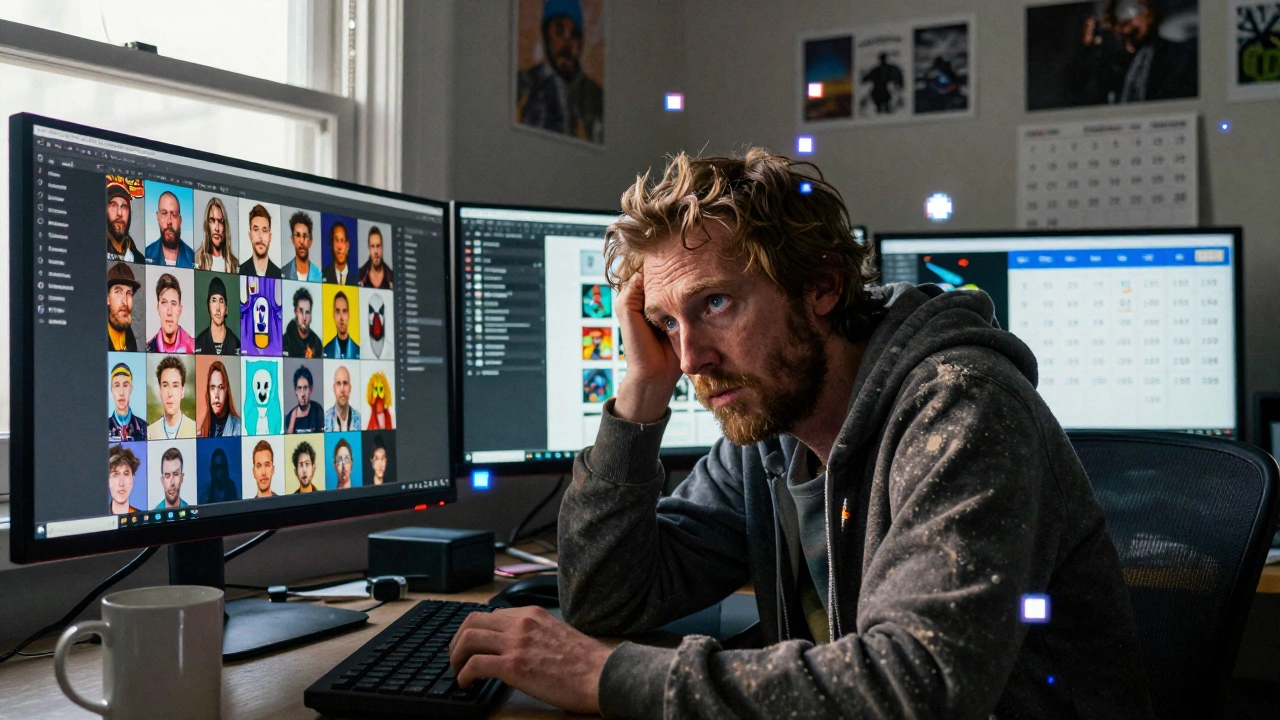
Digital Artist Success Calculator
How Your Daily Art Practice Compares to Beeple
The article shows how Mike Winkelmann (Beeple) created 5,000 digital pieces over 13 years before his $69 million NFT sale. See how your consistent output could impact your success.
Your Daily Art Practice
Beeple Benchmark
Your Digital Artist Profile
Key Metrics
Earnings Potential
Key Success Factors
When you hear the name Beeple, you’re hearing the voice of a new art economy. In March 2021, a digital collage called Everydays: The First 5000 Days sold for $69 million at Christie’s. It wasn’t a painting on canvas. It wasn’t a sculpture. It was a JPEG-created by a man named Mike Winkelmann, who goes by Beeple. That sale didn’t just break records. It rewrote the rules of what art is, who makes it, and who pays for it.
How Beeple Became the Highest Paid Digital Artist
Mike Winkelmann didn’t start out rich. He was a graphic designer in South Carolina, working regular 9-to-5 jobs. But every single day, since May 1, 2007, he made one digital image. No excuses. No breaks. Not even for holidays or sickness. He called it Everydays. Over 13 years, he made 5,000 pieces. That’s the collection that sold for $69 million.
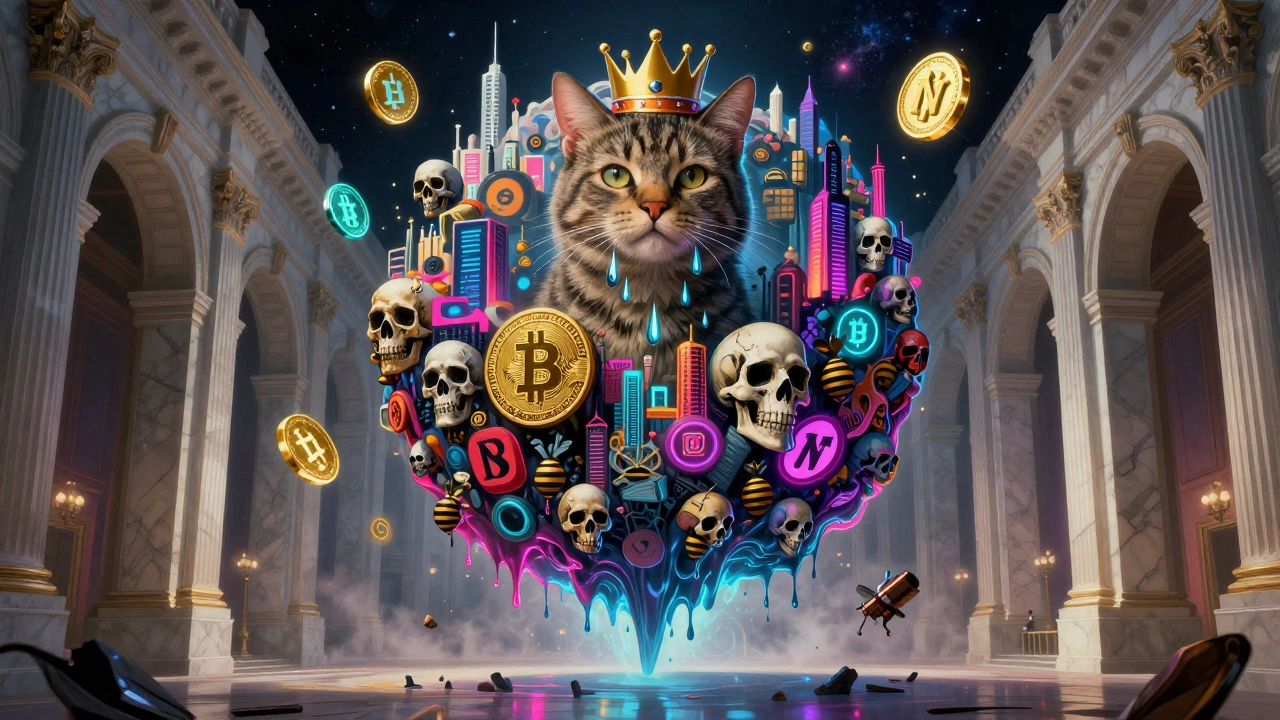
His work isn’t just technically impressive-it’s chaotic, funny, terrifying, and deeply human. One piece shows a giant cat wearing a crown, sitting on a pile of skulls. Another shows a floating head made of Bitcoin symbols, crying raindrops of crypto coins. He blends pop culture, politics, and apocalyptic humor. It’s not what most people think of as ‘fine art.’ But that’s exactly why it resonated.
What made the difference wasn’t just the art. It was timing. He was one of the first artists to sell NFTs on a large scale. NFTs-non-fungible tokens-gave digital art something it never had before: proof of ownership. Before NFTs, anyone could right-click and save a digital image. After NFTs, someone could own the original, verified version. That changed everything.
The NFT Boom That Changed Everything
Before 2021, digital artists struggled to make a living. Galleries didn’t want their work. Collectors didn’t trust it. Even if you made something beautiful, it was hard to sell it for more than $50. Then came OpenSea, SuperRare, and Foundation-platforms where artists could mint their work as NFTs and sell directly to buyers.
Beeple didn’t just ride the wave. He built the boat. He was one of the first to partner with Christie’s, a 250-year-old auction house that had only ever sold physical paintings. His sale proved that digital art could be as valuable as a Picasso. After that, other artists started seeing six-figure sales. Pak, a mysterious digital artist, sold a collection called The Merge for $91 million later that year. But Beeple still holds the record for the highest single-piece sale by a living artist.
It’s not just about the money. It’s about legitimacy. Museums started taking notice. The Smithsonian added Beeple’s work to its permanent collection. The Tate Modern included his pieces in exhibitions. Even traditional art critics, who once dismissed digital art as ‘just pixels,’ had to acknowledge the cultural shift.
Who Else Is Making Big Money in Digital Art?
Beeple isn’t alone. The top earners in digital art are mostly NFT creators who built communities around their work. Pak, for example, is known for abstract, algorithmic pieces that sell as collectible ‘cubes’ or ‘atoms.’ Their sales are often auctioned in bulk, with collectors buying thousands at once.
Then there’s XCOPY, a reclusive artist from the UK whose glitchy, dark animations sell for millions. One piece, Right Click & Save As, went for $6.9 million. It’s a looping animation of a hand reaching for a screen, surrounded by floating text that reads: ‘You can copy it, but you can’t own it.’ It’s ironic. It’s powerful. And it sold for nearly $7 million.
Other names like Fewocious, Grimes, and Refik Anadol have also made headlines. Fewocious, a teenager from Texas, sold digital portraits for over $10 million before turning 20. Grimes, the musician, released a series of digital art pieces tied to her music and earned $6 million in minutes. Refik Anadol uses AI to turn data into immersive installations-his work hangs in MoMA and the Guggenheim.
But none of them have matched Beeple’s single-sale record. And none have maintained the same level of consistent output over decades.
Why Beeple Still Holds the Title
It’s not just the $69 million. It’s the discipline. He didn’t wait for the market to catch up. He kept making art every day, even when no one was watching. He posted his work on Instagram, built a following of 2 million people, and stayed true to his weird, unfiltered style.
He also understood the technology. He didn’t just make art-he learned how blockchain worked. He knew how to mint NFTs, how to set royalties, and how to connect with collectors. He treated his art like a business. And he didn’t chase trends. He made what he loved, and the market followed.
Other artists made big sales, but many of them faded after the NFT market crashed in 2022. Beeple didn’t disappear. He kept creating. He launched his own platform, Beeple Studios, to help other digital artists. He partnered with brands like Nike and Louis Vuitton. He even designed digital fashion for the metaverse.
Today, he still sells new work regularly. His pieces go for $100,000 to $1 million. He’s not just the highest paid digital artist-he’s the most influential.

Can Anyone Become a Top-Earning Digital Artist?
Yes-but not the way you think. You don’t need to be a genius. You don’t need fancy software. You don’t need to wait for a market boom.
You need consistency. You need to show up every day. You need to make something, even if it’s bad. You need to share it. You need to build a community. And you need to understand that digital art isn’t just about the image-it’s about the story behind it.
Beeple’s success wasn’t luck. It was volume. It was persistence. It was authenticity. He didn’t try to be the best. He just kept going.
Today, there are thousands of digital artists making $10,000 to $50,000 a year selling NFTs. A few make six figures. But only one has broken the $60 million barrier. And that’s not because he’s the most talented. It’s because he never stopped.
What’s Next for Digital Art?
The NFT market isn’t what it was in 2021. Prices dropped. Scams happened. Many artists lost money. But the core idea-that digital art can be owned, collected, and valued-is here to stay.
Museums are adding digital pieces to their collections. Universities are offering degrees in NFT art. Governments are exploring digital ownership laws. Even traditional galleries now have VR rooms for digital exhibits.
Artists are using AI tools to generate new visuals. Others are blending physical and digital art with AR and holograms. Some are selling limited-edition prints that unlock digital versions. The boundaries are blurring.
One thing is certain: the highest paid digital artist today isn’t just an artist. They’re a creator, a technologist, a marketer, and a storyteller. And the next one might be sitting in a bedroom right now, making their 100th piece, wondering if anyone will ever see it.
They should keep going.
Who is the highest paid digital artist as of 2026?
As of 2026, Mike Winkelmann, known as Beeple, remains the highest paid digital artist. His NFT artwork Everydays: The First 5000 Days sold for $69 million at Christie’s in March 2021-the highest price ever paid for a digital artwork by a living artist. He continues to sell new pieces and maintain his lead in both sales and influence.
How did Beeple make so much money from digital art?
Beeple made his fortune by combining daily artistic discipline with early adoption of NFT technology. He created one digital image every day for over 13 years, building a massive portfolio. When NFTs became popular, he sold his collection as a single NFT on a major auction house, Christie’s. This gave digital art legitimacy and proved it could be owned like physical art. His consistent output and understanding of blockchain made him the first digital artist to reach that level of financial success.
Are NFTs still valuable for digital artists today?
Yes, but the market is more selective. After the 2022 crash, many low-quality NFTs lost value. However, artists with strong concepts, consistent output, and real communities still sell well. Platforms like SuperRare and Foundation now focus on curated, high-quality work. Royalties from secondary sales also provide ongoing income. NFTs are no longer a gold rush-they’re a tool for ownership and monetization, used wisely by serious creators.
Can digital art be sold without NFTs?
Yes, but it’s harder. Before NFTs, digital artists sold prints, licenses, or commissioned work. Today, many still do-selling limited-edition prints, offering subscriptions, or licensing art for games and films. However, without NFTs, it’s difficult to prove original ownership or earn royalties from resales. NFTs solve that problem, which is why most top-earning digital artists use them-even if they also sell physical versions.
What software do top digital artists use?
Most top digital artists use industry-standard tools like Adobe Photoshop, Procreate, Blender, and Cinema 4D. Beeple uses a combination of Cinema 4D and After Effects for his 3D animations. Others use AI tools like Midjourney or DALL·E for concept generation, then refine manually. The software doesn’t make the artist-it’s the vision, consistency, and storytelling behind the work that matters.
Is digital art considered real art?
Absolutely. Major institutions like the Museum of Modern Art, the Tate Modern, and the Smithsonian now include digital art in their permanent collections. The medium doesn’t define the art-the creativity, intent, and execution do. Digital art has been around since the 1960s. NFTs just gave it a new way to be owned and valued. It’s not ‘just pixels.’ It’s a new form of expression, just like photography was once dismissed.