There’s a lot of confusion around what makes an artwork contemporary. You see a painting with bold colors, a sculpture made of recycled plastic, or a video installation showing social media feeds, and you think, "This is contemporary art." But is it really? Or are you just guessing because it looks new? The truth is, "contemporary" doesn’t mean "new" or "modern." It’s not about when it was made-it’s about what it’s doing.
Contemporary art isn’t about age
A lot of people think if an artwork was made after 2000, it’s contemporary. That’s a common mistake. A painting done in 2023 that copies the style of Picasso from the 1920s isn’t contemporary. It’s a copy. Contemporary art doesn’t care about when it was made-it cares about the context it was made in. It responds to the world right now: politics, technology, identity, climate, inequality, digital life. If an artwork is asking questions about today’s society, even if it uses old techniques, it’s contemporary.
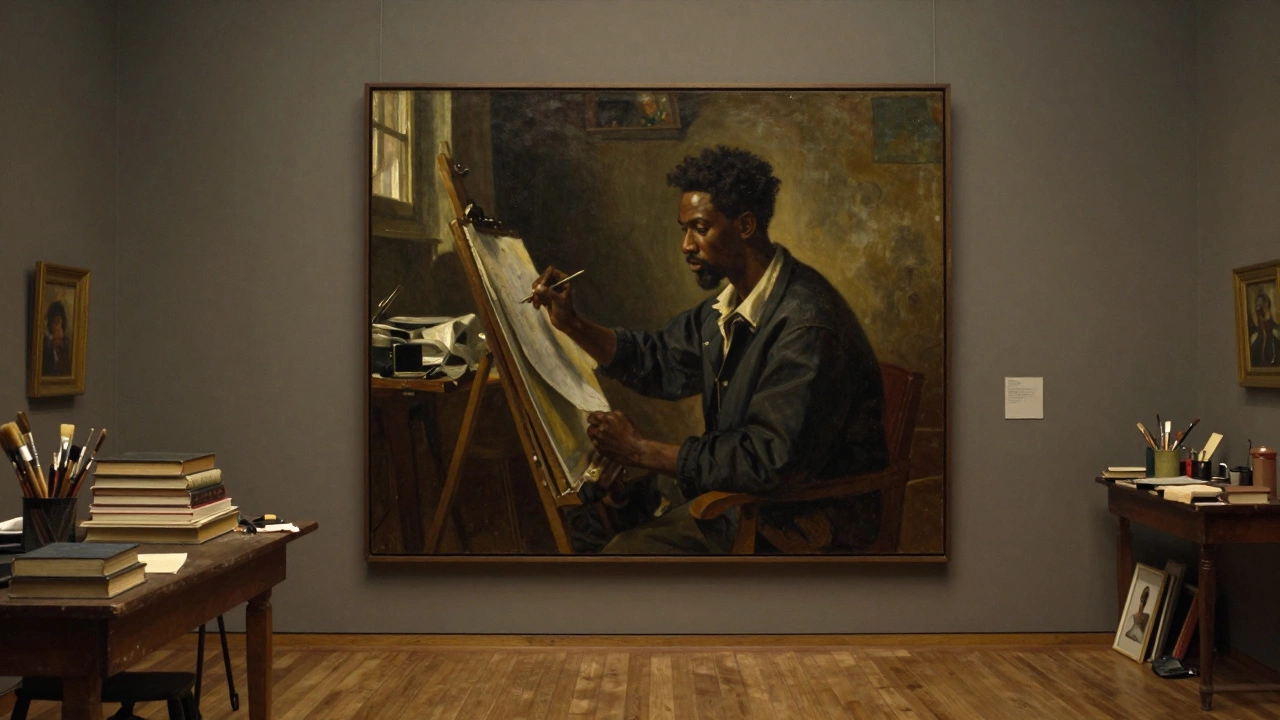
Take the work of artist Kerry James Marshall. He paints in a style that looks like 19th-century academic art. But his subjects? Black Americans living in urban neighborhoods, often ignored in traditional art history. His 2016 painting Untitled (Studio) shows a Black artist at work, surrounded by books and tools. It’s not modern-it’s contemporary because it challenges who gets to be seen in art.
Contemporary art is made by artists alive today
There’s a simple rule: if the artist is still alive, their work is likely contemporary. This isn’t a hard-and-fast law, but it’s a useful starting point. Contemporary art is made by living artists responding to the world as it unfolds. That’s why we don’t call Van Gogh’s paintings contemporary, even though they’re still emotionally powerful. He died in 1890. His work belongs to a different moment.
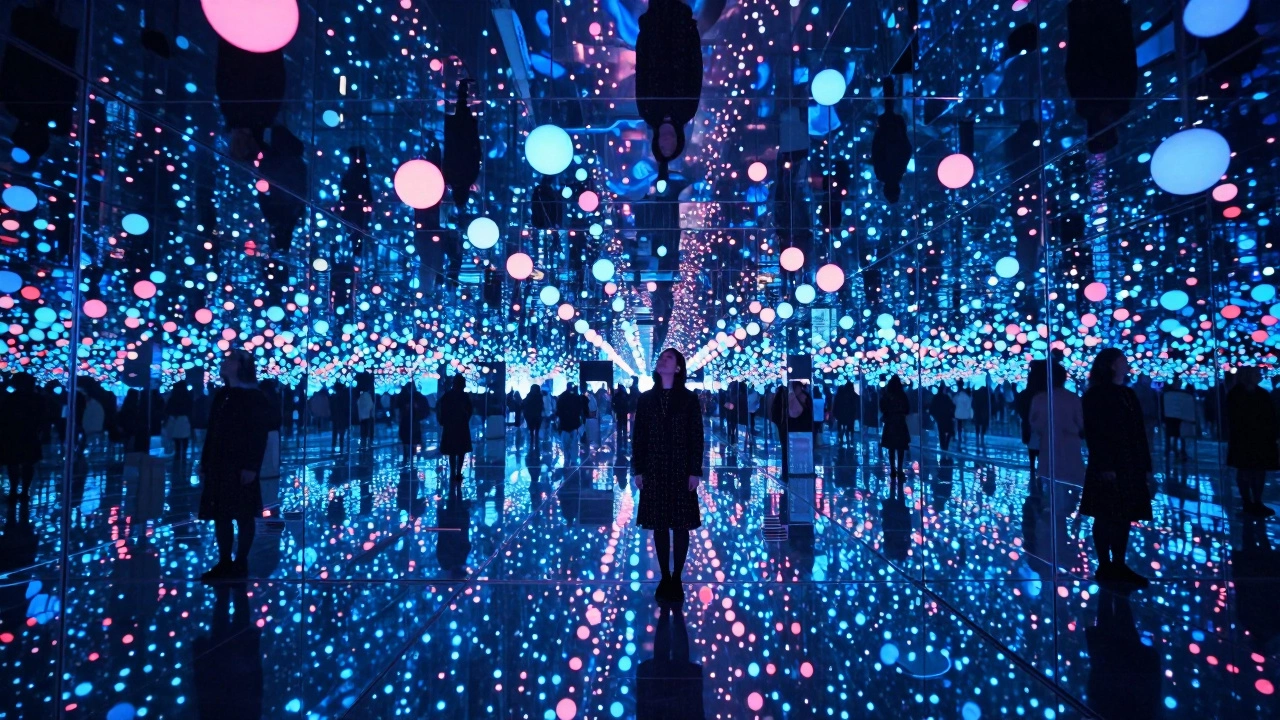
Compare that to Yayoi Kusama. She was born in 1929 and is still creating art today. Her infinity rooms, covered in mirrors and polka dots, aren’t just visually stunning-they’re about isolation, mental health, and the human need for connection. She’s been working for over 70 years, but her recent installations (like the ones shown in 2024 at the Tate Modern) are unmistakably contemporary because they speak to how we experience space and self in the digital age.
It’s not about style-it’s about ideas
Modern art, from Picasso to Mondrian, was obsessed with form: breaking perspective, reducing shapes, exploring color. Contemporary art doesn’t care about style as much as it cares about meaning. A contemporary artwork might be a video, a performance, a social experiment, or even a tweet turned into a printed poster.
Think of Tania Bruguera’s Immigrant Movement International. She didn’t make a painting. She set up a community center in Queens, New York, to support undocumented immigrants. She held workshops, legal clinics, and public discussions. Was it art? Yes-because it used art’s power to create real change. It wasn’t meant to hang on a wall. It was meant to disrupt systems. That’s contemporary art: not about beauty, but about impact.
Technology is a tool, not a definition
You might assume that digital art-NFTs, AI-generated images, interactive apps-is automatically contemporary. But that’s not true. An AI-generated landscape of mountains, trained on 19th-century Romantic paintings, isn’t contemporary. It’s a simulation of the past. What makes digital work contemporary is how it engages with today’s realities.
Take Hito Steyerl’s How Not to Be Seen: A Fucking Didactic Educational .MOV File. It’s a 12-minute video that uses glitch effects, green screens, and internet humor to talk about surveillance, invisibility, and who gets erased by technology. It’s funny. It’s weird. It’s deeply serious. It uses digital tools, but its power comes from its critique of power. That’s contemporary.
It’s often uncomfortable
Contemporary art doesn’t want you to feel safe. It wants you to question. You might walk into a gallery and see a pile of dirty clothes, a recording of someone crying, or a room filled with smoke and silence. It’s not random. It’s intentional.
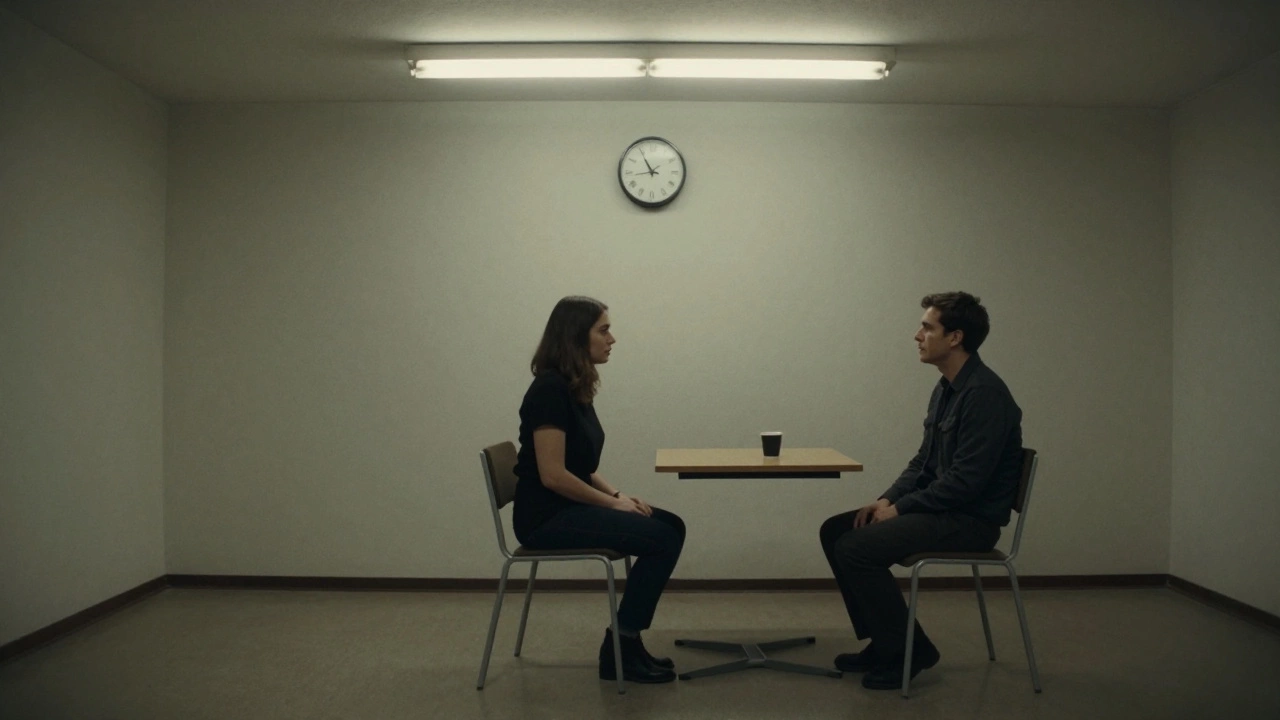
Marina Abramović’s The Artist Is Present (2010) had her sitting silently across from strangers for seven and a half hours a day, three months straight. No talking. No moving. Just eye contact. People cried. Some stayed for hours. Others walked away confused. That piece didn’t need a title card to explain it. It worked because it forced people to confront loneliness, presence, and vulnerability-issues that feel more urgent now than ever.
What it’s not
Contemporary art isn’t:
- Just abstract or weird for the sake of it
- Anything made after 1950
- What’s popular on Instagram
- What’s sold for millions at auction (though some of it is)
- Only made by famous artists
There are thousands of emerging artists right now making work in basements, community centers, and online platforms that never show up in museums-but they’re still making contemporary art. A student in Lagos using WhatsApp voice notes to create a sound installation about migration is making contemporary art. A teenager in Mexico City painting murals about gender identity on abandoned buildings is making contemporary art. It’s not about the gallery. It’s about the message.
How to tell if something is contemporary
If you’re looking at a piece and wondering whether it’s contemporary, ask yourself:
- Is the artist alive today?
- Does the work respond to current social, political, or cultural issues?
- Does it challenge how we think about art, identity, or society?
- Is it using new or unexpected materials or methods to make its point?
- Does it make you feel something unexpected-not just admiration, but discomfort, curiosity, or urgency?
If you answer yes to at least two of these, you’re probably looking at contemporary art.
It’s always changing
What’s considered contemporary today might look strange in five years. Art doesn’t stand still. In 2020, NFTs exploded. In 2024, many artists are rejecting them, calling them environmentally harmful or exploitative. The conversation shifted. The art changed. That’s the point.
Contemporary art is a conversation-not a category. It’s not about fitting into a box. It’s about asking questions that no one else is asking. It’s about making the invisible visible. It’s about saying, "This matters now. And you need to pay attention."