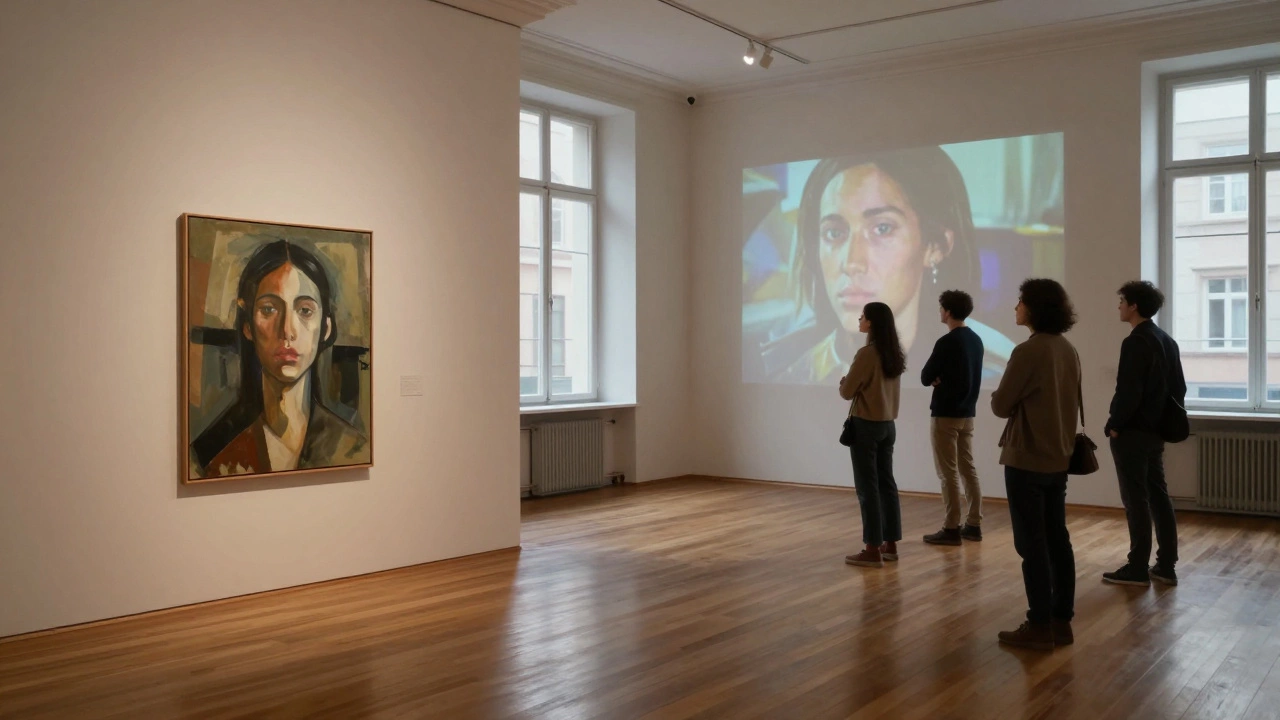
An art exhibition is more than just a room full of paintings on the wall. It’s a carefully planned experience where artists, curators, and institutions come together to tell a story-through color, form, texture, and sometimes silence. If you’ve ever walked into a gallery and felt confused, overwhelmed, or even moved without knowing why, you’ve experienced an art exhibition. But what exactly makes it different from just hanging art in a space?
It’s Not Just Displaying Art
Many people think an art exhibition is simply about putting artwork in a room and letting people look. That’s not it. An exhibition is a curated narrative. Every piece is chosen because it connects to the others-thematically, historically, or emotionally. A curator doesn’t pick random paintings. They ask: What idea do I want visitors to walk away with? Is it about identity? Climate change? Memory? The passage of time?
Take the 2023 Art Exhibition at the Tate Modern called ‘Being: New Photography’. It didn’t just show photos. It showed how modern photographers use the medium to explore gender, race, and belonging. The selection included portraits, installations, and even video pieces-all linked by one central question: Who gets to be seen?
Where Do Art Exhibitions Happen?
You might picture a white-walled gallery with spotlights, but exhibitions happen everywhere. Museums like the MoMA or the Louvre host large-scale exhibitions that draw international crowds. But smaller ones appear in empty storefronts, libraries, community centers, and even subway stations.
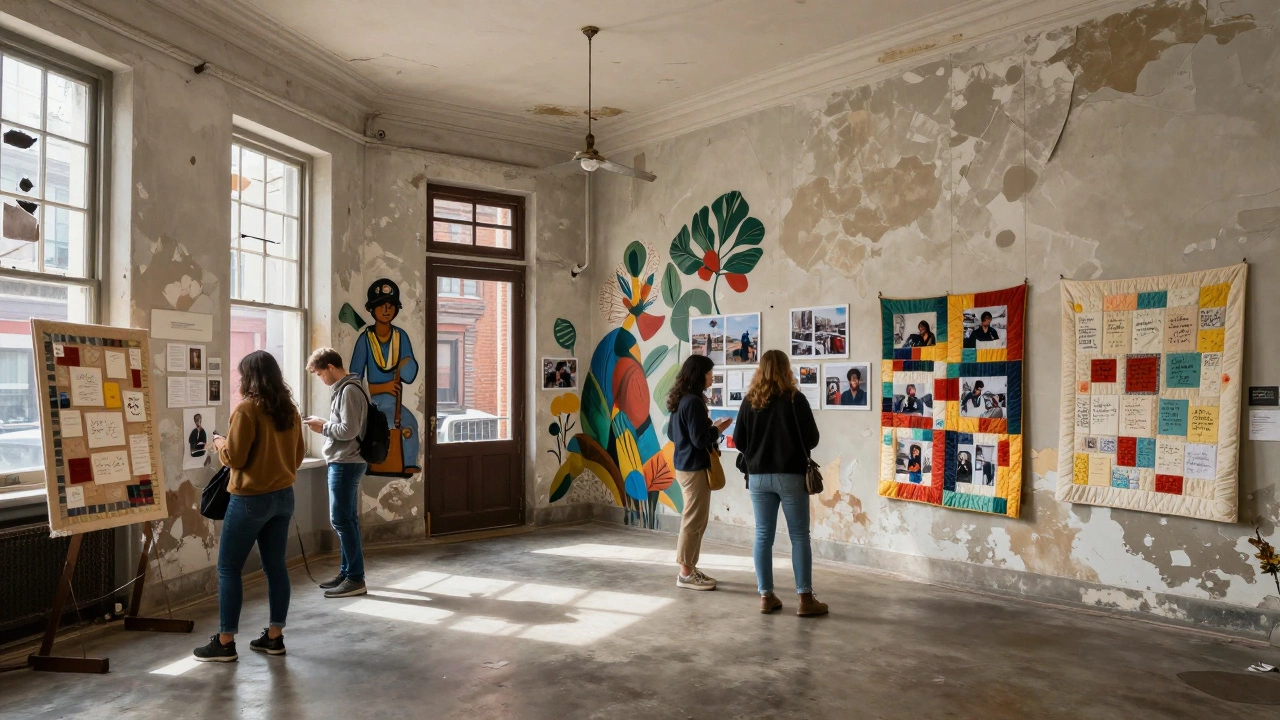
In 2024, a pop-up exhibition in Detroit turned a vacant bank building into a space for local artists to display work responding to economic hardship. No ticket needed. No velvet rope. Just art, placed where people already walked every day. That’s the power of context. The same painting can mean something different hanging in a luxury penthouse versus a neighborhood clinic.
Types of Art Exhibitions
Not all exhibitions are the same. There are several common types, each with its own purpose:
- Solo exhibitions focus on one artist. These let you see how their style evolved over years-or even decades. Think of a Georgia O’Keeffe show tracing her shift from abstract flowers to New Mexico landscapes.
- Group exhibitions bring together multiple artists around a theme. These are common in art schools, non-profits, and commercial galleries. A group show might be called ‘Water in the Anthropocene’ and include sculpture, painting, and sound art.
- Retrospectives are large, often museum-led exhibitions that cover an artist’s entire career. These are rare and usually happen after an artist has died or retired. The 2022 Yayoi Kusama: Infinity Mirrors retrospective toured globally and drew over 1 million visitors.
- Temporary exhibitions last weeks or months. They’re often tied to current events, anniversaries, or new discoveries. A museum might open a temporary show on Renaissance tools after finding a lost sketchbook.
- Permanent collections aren’t technically exhibitions, but many people confuse them. These are the artworks a museum owns and keeps on view year-round. An exhibition is always temporary, even if it lasts a year.
Who Makes an Art Exhibition Happen?
Behind every exhibition is a team. It’s not just the artist. There’s the curator-the person who picks the work and writes the story. Then there’s the conservator, who makes sure the painting doesn’t fade under the lights. The designer arranges the layout so people move naturally through the space. The educator creates programs for school groups. The security staff watches over priceless pieces. And the marketing team gets the word out.
Curators don’t just pick what they like. They research. They read letters, diaries, and old reviews. They talk to artists’ families. They check provenance-where the artwork came from. A painting from a Holocaust survivor’s family carries a different weight than one bought at auction. That context matters.
Why Do Art Exhibitions Matter?
They’re not just for art lovers. Exhibitions shape how we see the world. In 2020, the Smithsonian opened ‘Refugee Voices’-a collection of drawings, letters, and videos from displaced people. It wasn’t about technique. It was about humanity. Visitors left not talking about brushstrokes, but about connection.
Exhibitions also preserve culture. A 500-year-old Japanese ink painting might be too fragile to travel. But a digital scan, paired with audio narration and tactile reproductions, lets blind visitors experience it. That’s innovation in service of access.
And they spark conversation. In 2023, a Berlin gallery displayed a sculpture made from plastic waste collected from the North Sea. The piece sold for $120,000. The money went to ocean cleanup groups. The exhibition didn’t just show art-it changed behavior.
What Should You Do When You Visit?
You don’t need an art degree to enjoy an exhibition. Here’s what actually helps:
- Read the wall text. It’s not filler. It tells you why the artist made this, what they were thinking, and how it fits into the bigger picture.
- Stand back, then get close. Sometimes a painting looks messy up close but forms a powerful image from afar. Other times, you’ll see brushstrokes or hidden details only visible at 6 inches.
- Ask yourself: How does this make me feel? Not ‘Is it good?’ but ‘Does it make me uneasy? Calm? Angry? Nostalgic?’ That’s the point.
- Don’t rush. The average visitor spends 27 seconds per artwork. That’s less time than you spend scrolling past a meme. Try spending two full minutes with one piece. Notice how your thoughts change.
- Talk to someone. Even if it’s just a stranger standing next to you. You might hear a perspective you never considered.

How Are Art Exhibitions Different From Art Fairs?
Art fairs like Art Basel or Frieze are marketplaces. Dealers bring work to sell. Buyers negotiate prices. The focus is on commerce. Exhibitions are about meaning. Sure, art is often sold during exhibitions-but that’s not the goal. The goal is to provoke thought, not close a deal.
At a fair, you’ll see hundreds of booths in a convention center. At an exhibition, you’ll walk through a quiet, thoughtfully lit space where silence is part of the experience.
Can Anyone Start an Art Exhibition?
Yes. You don’t need a museum budget. In 2021, a group of college students in Minneapolis turned their dorm hallway into a month-long exhibition called ‘Home is a Verb’. They displayed handwritten letters, photos, and a shared quilt made by 17 residents. No gallery wanted it. But over 3,000 people visited. It went viral on TikTok.
Start small. Borrow five pieces from friends. Hang them on a blank wall. Write a short note explaining why you chose them. Invite people over for coffee. That’s an exhibition. It doesn’t have to be perfect. It just has to mean something.
Final Thought: Art Exhibitions Are About People
At their core, art exhibitions are about human connection. They’re the rare spaces where strangers pause, look, and sometimes cry. They’re where history speaks through pigment and clay. Where silence becomes louder than words.
Next time you walk into one, don’t worry about understanding everything. Just let yourself be there. The art is waiting-not to be decoded, but to be felt.
What is the difference between an art exhibition and a gallery?
A gallery is a physical space-like a building or room-where art is displayed. An art exhibition is the actual event or collection of artworks shown within that space. A gallery can host many exhibitions over time. Think of it like a theater (the gallery) and a play (the exhibition).
Do I need to pay to see an art exhibition?
Some do, some don’t. Major museums often charge admission, especially for temporary exhibitions. But many public galleries, university spaces, and community centers offer free entry. In cities like Berlin, London, and Amsterdam, many museums have free days or hours. Always check ahead.
How long do art exhibitions usually last?
Most last between 2 and 6 months. Solo shows or smaller exhibitions may run 4-8 weeks. Retrospectives or blockbuster shows can last up to a year, especially if they tour multiple cities. Temporary exhibitions are designed to create urgency-so you don’t miss them.
Can I take photos in an art exhibition?
It depends. Many places allow non-flash photography for personal use. But some prohibit it entirely-especially if the artworks are on loan or sensitive to light. Always look for signs or ask staff. Flash photography can damage pigments over time.
What if I don’t ‘get’ the art in an exhibition?
That’s completely normal. Art doesn’t have to make sense to be powerful. Sometimes the point is discomfort, confusion, or silence. Instead of asking ‘What does this mean?’, try asking ‘How does this make me feel?’ or ‘Why did the artist choose this material?’ There’s no right answer.