Sculpture Master Quiz
Test Your Sculpture Knowledge
How well do you know the masters of sculpture? Take this quiz to discover which sculptor best represents your artistic eye.
When people think of sculpture, they often picture marble figures in museums or giant metal shapes in city squares. But who actually made those pieces? The artists behind sculptures aren’t just craftsmen-they’re storytellers, engineers, and visionaries who shaped how we see form, space, and emotion in three dimensions. If you’ve ever stood in front of a statue and felt something stir inside you, you’re not alone. That reaction is exactly what these artists planned for.
Michelangelo Buonarroti: The Master of Marble
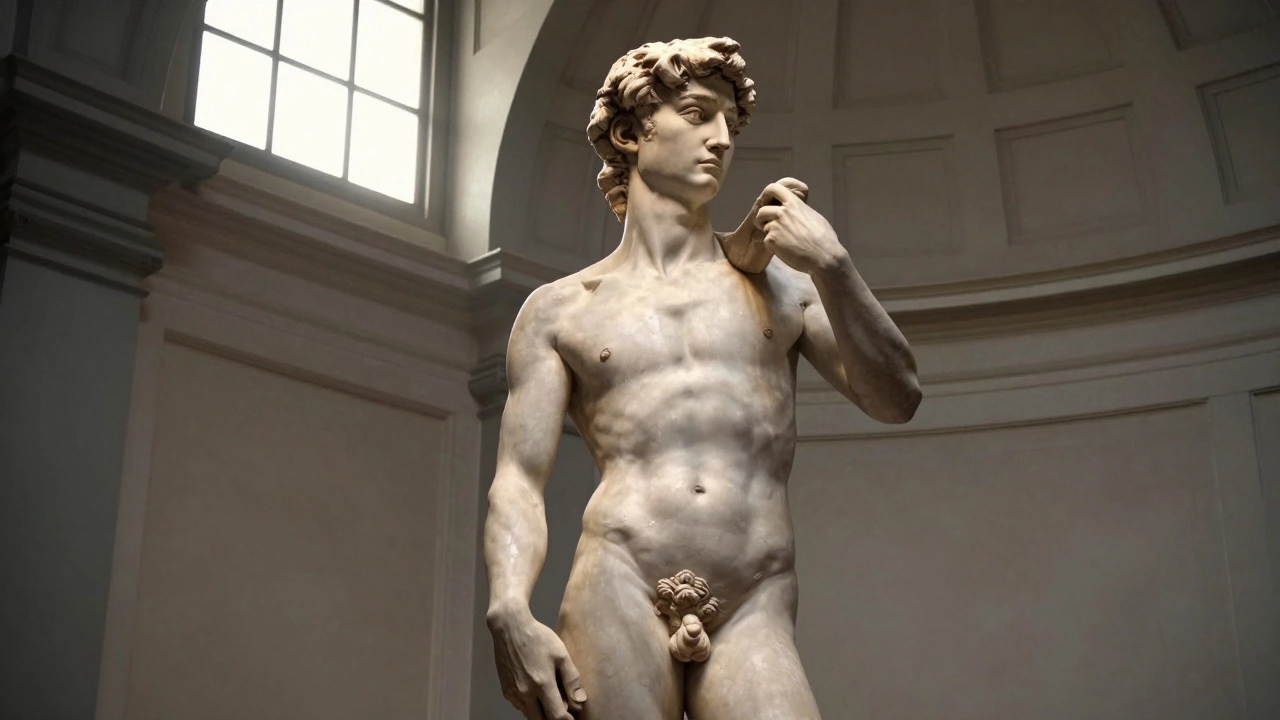
Michelangelo didn’t just carve statues-he revealed them from stone. His David, carved from a single block of Carrara marble in 1504, isn’t just a representation of a biblical hero. It’s a study of human tension, balance, and quiet power. At 17 feet tall, David’s muscles ripple with life. His gaze isn’t fixed on Goliath-he’s already thinking three steps ahead. Michelangelo claimed he didn’t create the figure; he simply removed everything that wasn’t David. That philosophy defined his approach: sculpture as revelation, not construction.
He also sculpted the Pietà, showing Mary holding the body of Jesus. The tenderness in her face, the weight of his limp arms, the folds of her robe-all carved from one piece of marble. No one had made marble look so soft before. Even today, restorers marvel at how he made stone breathe.
Auguste Rodin: Breaking the Rules
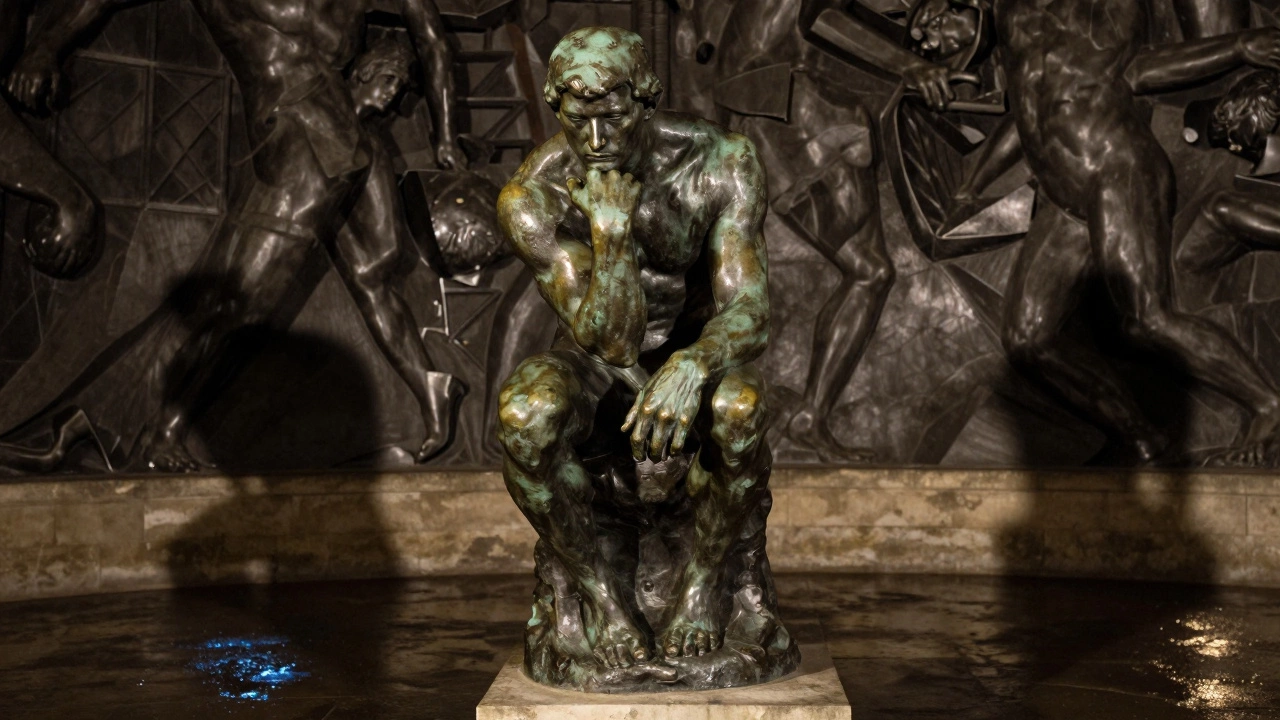
If Michelangelo gave us perfection, Rodin gave us truth. In the late 1800s, when sculptures were still expected to be idealized and polished, Rodin showed us cracked skin, wrinkled hands, and raw emotion. His most famous work, The Thinker, started as part of a larger piece called The Gates of Hell. It wasn’t meant to be a symbol of contemplation-it was meant to be Dante, weighing the sins of the damned. But people saw something else: a man lost in thought, muscles tensed, brow furrowed. That’s why it became iconic.
Rodin didn’t smooth out his bronzes. He left fingerprints. He left tool marks. He left imperfections. That was the point. He wanted you to feel the artist’s hand in the work. His Monument to Balzac was rejected by the commissioning group because it didn’t look like the writer. Rodin didn’t care. He captured Balzac’s energy, his mind, his presence-not his face. That sculpture now stands in Paris as one of the most powerful portraits in art history.
Constantin Brâncuși: Simplifying the Essence
Brâncuși didn’t want to make things look real. He wanted to make them feel true. In the early 1900s, while others were carving detailed faces and limbs, he was stripping away everything extra. His Bird in Space series looks like a single smooth curve rising into the air. No feathers, no wings, no beak. Just motion. Just flight. He carved them in marble, bronze, and even wood. Each version felt different-some heavy, some floating-but all of them captured the idea of rising, not the mechanics of flying.
He once said, "Simplicity is complexity resolved." His Endless Column, made of stacked diamond shapes, rises over 90 feet in Romania. It doesn’t tell a story. It doesn’t depict a person. It just makes you feel something endless. That’s the power of his work. He didn’t need detail to move people. He needed presence.
Henry Moore: Organic Forms and Public Spaces
Henry Moore brought sculpture out of the gallery and into the park. In post-war Britain, he created large, curved forms that looked like weathered stones or sleeping figures. His Reclining Figure series-over 100 versions-doesn’t show a woman lying down. It shows the shape of rest, the weight of earth, the curve of a hill. You can sit on some of them. You can walk around them. They’re not meant to be admired from a distance-they’re meant to be experienced.
Moore used bronze and stone, but he didn’t polish them to a shine. He left the surface rough, like it had been shaped by wind and time. He often carved hollows into his figures, letting light pass through. That’s rare in sculpture. Most artists fill space. Moore let it breathe. His work changed how cities thought about public art. Today, you’ll find his pieces outside museums, in hospital courtyards, and on university campuses around the world.
Louise Bourgeois: Emotion in Form
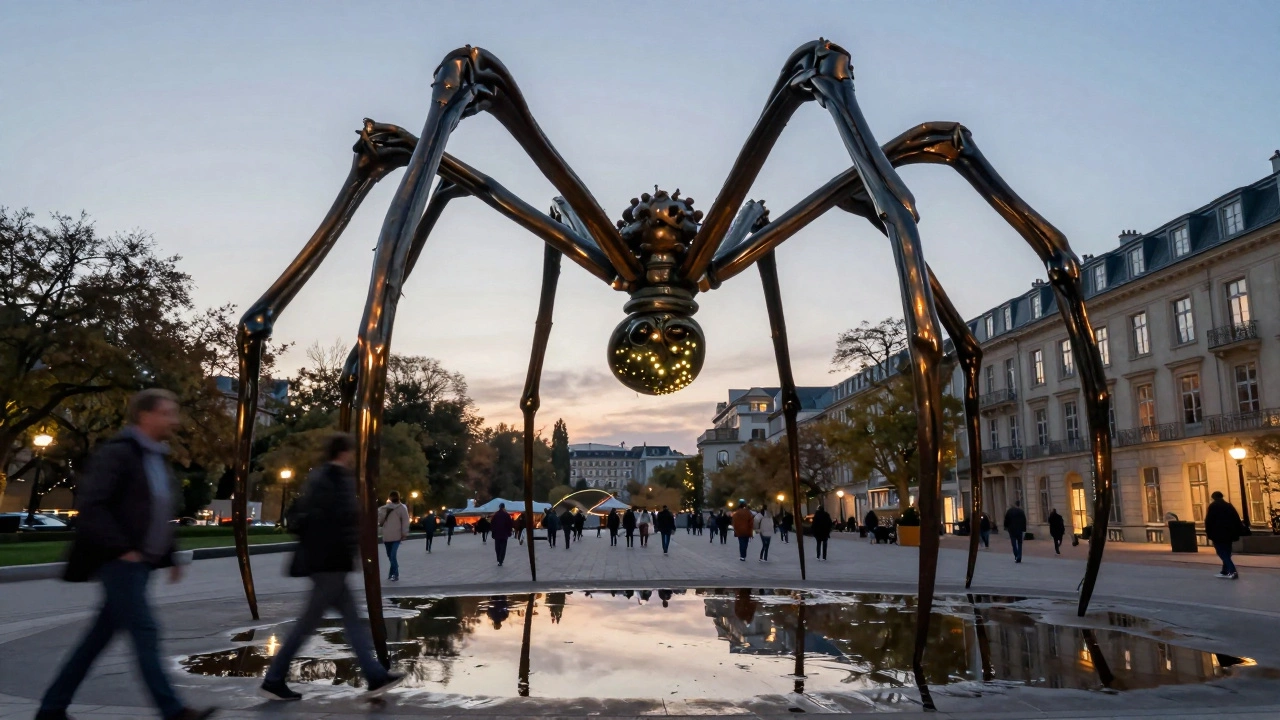
While most sculptors focused on the body, Louise Bourgeois focused on the mind. Her work wasn’t about beauty-it was about memory, fear, anger, and healing. Her Maman sculpture-a 30-foot-tall spider made of bronze and stainless steel-stands in cities from Tokyo to London. At first glance, it’s terrifying. Then you notice the egg sac under its belly. The spider isn’t a monster. It’s a mother. Bourgeois said her mother was her best weaver, her protector. The spider became her symbol of strength and care.
She worked into her 90s. Her later pieces were made from old clothes, furniture, and even her own childhood bed. She turned domestic objects into emotional landscapes. One piece, Cell (Eyes and Mirrors), is a room filled with mirrors and glass eyes. You walk in and see yourself everywhere-fragmented, multiplied, watched. That’s the power of her work. She didn’t sculpt bodies. She sculpted feelings.
Contemporary Sculptors: New Materials, New Voices
Sculpture didn’t stop with marble and bronze. Today’s artists use plastic, resin, steel, fabric, even recycled electronics. Ai Weiwei’s Sunflower Seeds filled the Tate Modern’s floor with 100 million hand-painted porcelain seeds. Each one different. Each one made by Chinese artisans. It wasn’t just art-it was a statement about mass production and individuality.
Yayoi Kusama’s Pumpkin sculptures, covered in polka dots, appear in gardens and museums worldwide. They’re playful, yes-but also obsessive, repetitive, almost hypnotic. They reflect her lifelong struggle with mental health.
Then there’s Ursula von Rydingsvard, who builds massive cedar sculptures by hand, stacking thousands of wooden beams. Her pieces look like torn fabric or ancient ruins. They’re rough, heavy, and deeply personal. She doesn’t use power tools. She carves with axes and chisels, just like her ancestors did in Poland. Her work connects ancient craft to modern emotion.
Why Sculpture Still Matters
Why do we still care about sculpture in a world of digital images and virtual reality? Because it’s real. You can touch it. You can walk around it. You can feel its weight. A painting hangs on a wall. A sculpture occupies space like a person does. It takes up room. It demands attention. It doesn’t disappear when you look away.
Every sculpture is a conversation between the artist and the material. Michelangelo fought with marble. Rodin argued with bronze. Bourgeois wrestled with memory. They didn’t just make objects-they made presence.
If you’ve ever stood in front of a statue and felt something shift inside you-that’s not magic. That’s sculpture. And the artists behind it? They didn’t just make things. They made us feel.
Who is the most famous sculptor of all time?
Michelangelo is widely considered the most famous sculptor due to masterpieces like David and the Pietà. His ability to transform raw marble into lifelike, emotionally powerful figures set a standard that still influences artists today. But fame varies by culture and era-Rodin, Brâncuși, and Bourgeois are equally revered in modern art circles.
What materials are commonly used in sculpture?
Traditional materials include marble, bronze, wood, and clay. Bronze is popular for outdoor sculptures because it withstands weather and captures fine detail. Marble is prized for its smooth texture and luminous quality. Modern sculptors use steel, aluminum, plastic, resin, fiberglass, and even recycled materials like electronics or fabric. The choice of material affects how the sculpture feels-whether it’s heavy and permanent or light and temporary.
Can anyone become a sculptor?
Yes. Sculpture doesn’t require formal training-many artists start by carving soap, shaping clay, or welding scrap metal. What matters is observation, patience, and the willingness to work with your hands. Michelangelo trained for years, but Louise Bourgeois didn’t start sculpting seriously until her 40s. The key is learning how to see form in material and letting the process guide you.
Where can I see famous sculptures today?
Major museums like the Louvre in Paris, the Vatican Museums in Rome, the Tate Modern in London, and the Museum of Modern Art in New York hold iconic works. Outdoor sculptures are often found in public plazas-David is in Florence’s Accademia Gallery, while Rodin’s Thinker sits in Paris and Philadelphia. Many cities have sculpture parks, like the Olympic Sculpture Park in Seattle or Yorkshire Sculpture Park in England.
How do I tell if a sculpture is valuable?
Value comes from the artist’s reputation, the rarity of the piece, the quality of craftsmanship, and its condition. A bronze cast signed by Rodin or a marble original by Michelangelo will be worth millions. But even smaller works by lesser-known artists can hold value if they’re well-made and historically significant. Provenance-knowing where it came from-is just as important as the material. Always get an expert appraisal if you’re unsure.
If you’ve ever wondered why people spend hours staring at statues, it’s because they’re not just looking at stone or metal. They’re looking at the mind of someone who dared to shape the world in three dimensions-and made us feel something real in the process.