Art Trend Compatibility Checker
Which art trends connect with you?
Based on the article, select what matters most to your art preferences in 2024
Your 2024 Art Trend Match
Where to find this art
Visit local gallery openings in neighborhoods like Shoreditch, Williamsburg, or Clifton. Check out university graduate shows from Goldsmiths, RISD, and the Slade.
When you walk into a gallery in London, New York, or even a small studio in Bristol, you don’t just see paintings or sculptures-you see what people are willing to pay for right now. In 2024, the art market isn’t just about beauty or tradition. It’s about connection, identity, and urgency. The pieces that sell aren’t always the most technically perfect. They’re the ones that make you stop, think, and feel like the artist knew exactly what you were going through.
Small-scale works with big emotion are winning
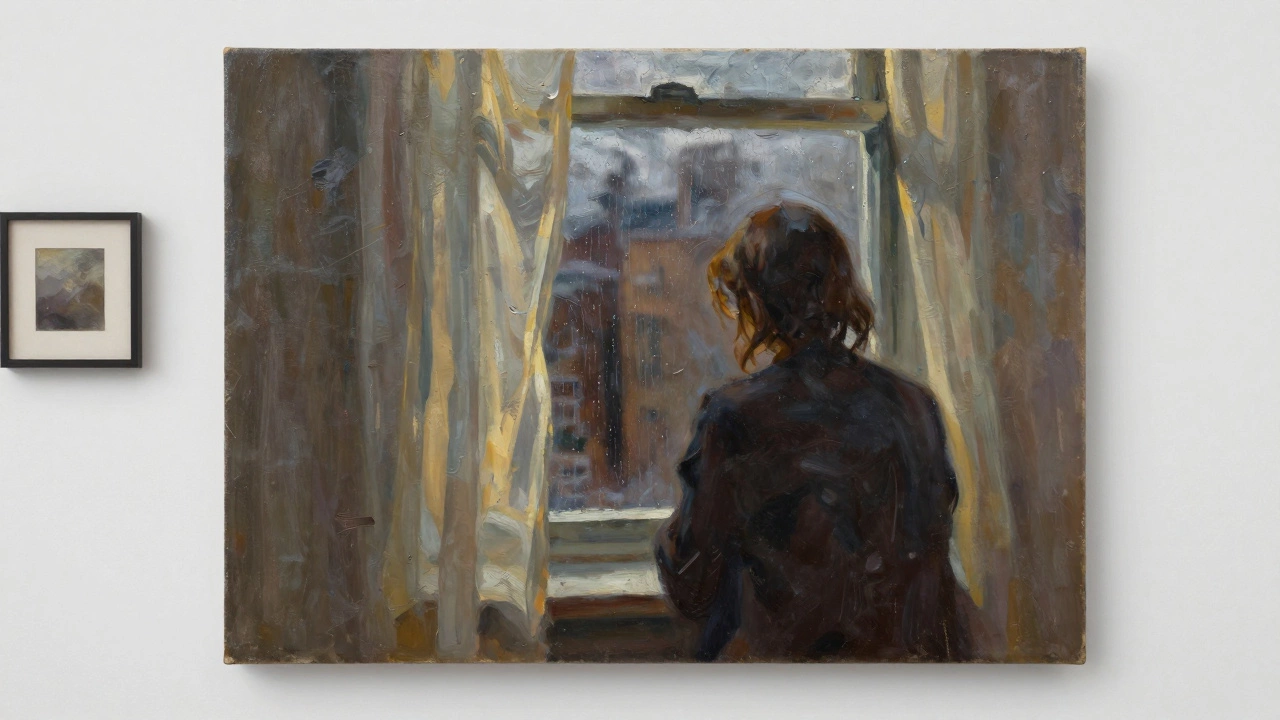
Large, bold canvases used to dominate auction houses. But in 2024, collectors are shifting toward intimate, hand-sized pieces. A 12x16 inch oil painting of a lone figure staring out a window, painted with thick, imperfect brushstrokes, sold for £8,500 at a London fringe fair last spring. Why? Because it felt real. Not staged. Not decorative. The artist, a 29-year-old graduate from Goldsmiths, painted it after her mother’s death. Buyers didn’t just buy a painting-they bought a moment of quiet grief, something they recognized in themselves.
Small doesn’t mean cheap. In fact, many of the top-selling works in 2024 are under 18 inches. They fit in urban apartments, they’re easier to hang, and they carry emotional weight without overwhelming a space. Galleries are noticing. Instead of hanging five huge pieces on a wall, they’re curating clusters of five small ones-each telling its own story, together forming a larger narrative.
Art that speaks to climate anxiety
It’s no surprise that climate change is shaping art. But in 2024, it’s not just about polar bears or melting glaciers. Collectors are drawn to work that shows the quiet collapse of everyday life. A series of watercolors by a Berlin-based artist depicts abandoned suburban swimming pools, filled with algae and broken toys. Each piece is titled with the year the pool was last used. One sold for £12,000 at Art Basel Miami. The buyer, a tech executive from San Francisco, said it reminded him of his childhood pool-now dry, cracked, and overgrown. He didn’t want to decorate his home. He wanted to remember what’s been lost.
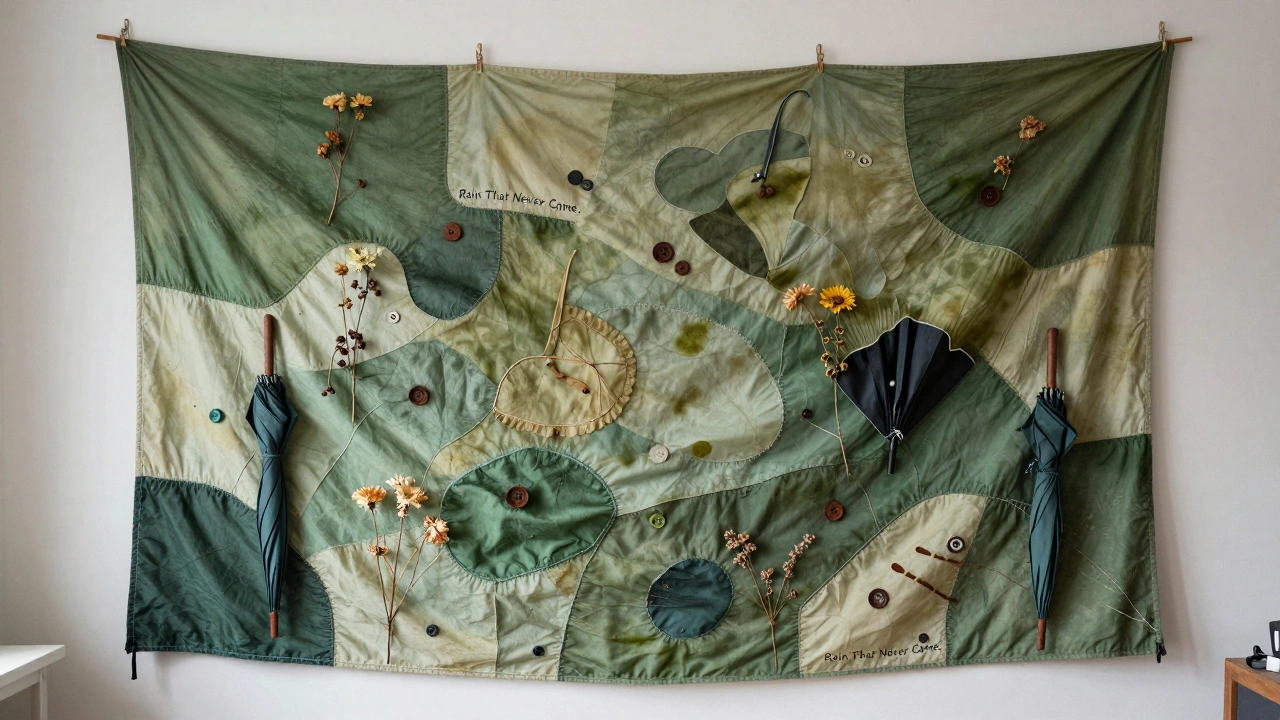
Another trend: art made from recycled materials. Not just as a statement, but as a necessity. Artists are using plastic waste, old circuit boards, and discarded textiles. One artist in Bristol collects discarded umbrellas from city bins, dyes them with natural pigments, and stitches them into large, flowing wall hangings. They’re called ‘Rain That Never Came.’ Five sold in three weeks at a pop-up show in Clifton. The price? £3,200 each. Not because they’re pretty. Because they’re honest.
Artists from underrepresented regions are breaking through
For years, the global art market revolved around a handful of cities: New York, London, Paris, Tokyo. But in 2024, collectors are actively seeking work from places rarely seen on gallery walls. Artists from Nigeria, Vietnam, Chile, and the Philippines are getting serious attention. A 24-year-old painter from Lagos, Nigeria, named Adebayo Oluwaseun, made headlines when three of his small acrylic portraits sold for over £20,000 each at a London auction. His subjects are ordinary people-market vendors, schoolgirls, mechanics-painted with vivid, almost glowing colors. He doesn’t use references. He paints from memory. Buyers say they see their own relatives in his work.
What’s different this year? Galleries aren’t just showcasing these artists as ‘exotic’ or ‘diverse.’ They’re positioning them as essential voices. A curator in Berlin told me, ‘We’re not collecting diversity. We’re collecting truth. And truth doesn’t come from one place.’
Art that moves-or makes you move
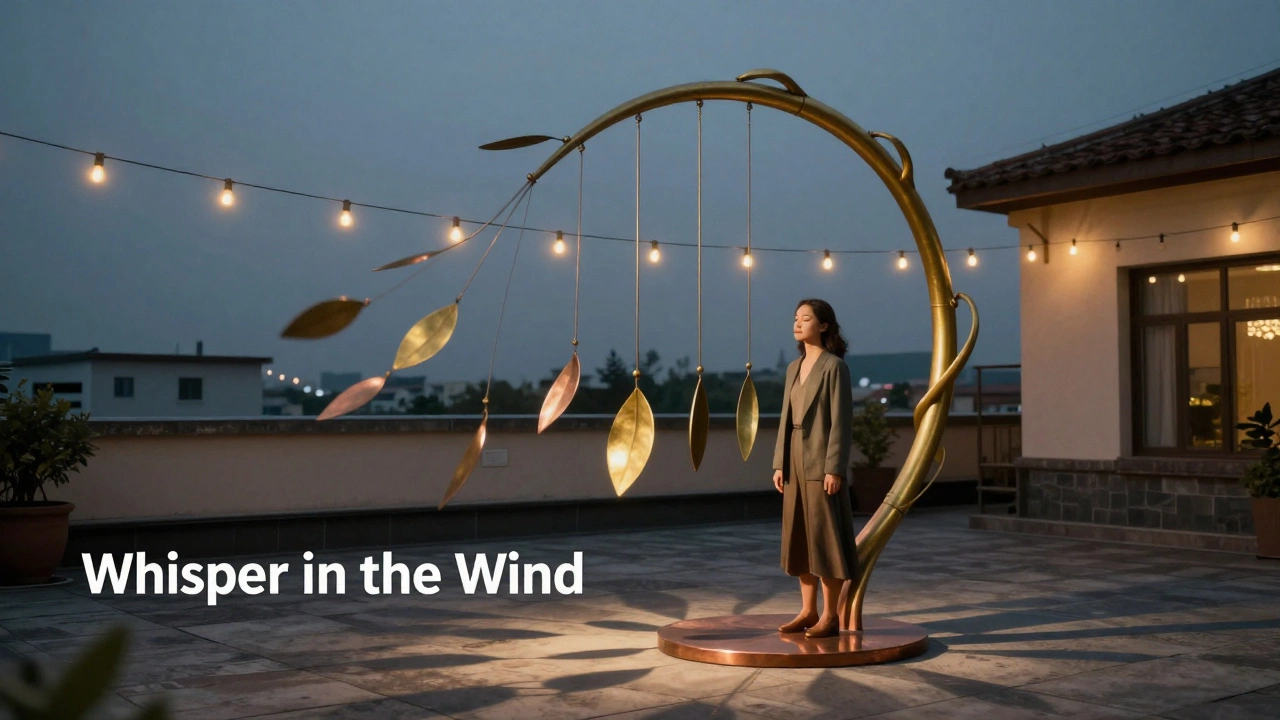
Static art is losing ground. Collectors want pieces that respond. Not necessarily with tech, but with presence. A sculptor in Mexico City, Mariana Ruiz, creates kinetic installations from brass and copper. When the wind blows through a courtyard, the pieces shift, clink, and hum. One of her works, titled ‘Whisper in the Wind,’ sold for £28,000 at a Mexico City art fair. The buyer, a collector from Toronto, installed it on his rooftop terrace. He says he doesn’t look at it-he listens to it. Every morning, for ten minutes, he just stands there and hears it move.
Even digital art is shifting. NFTs are no longer the focus. Instead, collectors are buying digital pieces that only appear under certain conditions. One artist in Tokyo created a video loop that only plays when the viewer’s heart rate rises above 90 bpm, detected by a wearable sensor. It’s not a gimmick. It’s a mirror. The art doesn’t exist unless you’re emotionally engaged. Two of these sold for £15,000 each, both to therapists who use them in sessions with clients with PTSD.
Artists who tell stories-not just make images
People aren’t buying art to fill a blank wall. They’re buying it to carry a story. A London-based artist, Lena Park, creates mixed-media pieces that include handwritten letters from strangers. She asks people to mail her a letter describing a moment they felt truly seen. She weaves the paper into canvas, adds ink, thread, and small objects from the letter’s context-a train ticket, a dried flower, a button. One piece, titled ‘The Bus Stop Where I Wasn’t Alone,’ sold for £14,000. The buyer had written the letter. She didn’t know it would become art. When she saw it in the gallery, she cried. She didn’t buy it to own it. She bought it to remember that someone else had seen her too.
This is the new rule: art that sells doesn’t just look good. It makes you feel less alone.
What’s not selling anymore
Don’t waste time on generic landscapes. Abstract swirls with gold leaf. Overdone floral still lifes. These were big in 2020. Now, they sit unsold in storage. Buyers are tired of decoration. They want meaning. A gallery owner in Bristol told me, ‘If your art doesn’t make someone pause and say, ‘I’ve felt that,’ it’s not going to sell.’
Even ‘investment art’-the kind bought purely for resale-is fading. The hype around blue-chip artists like Basquiat or Koons is cooling. Young collectors are more interested in emerging voices than auction records. One buyer in Manchester told me, ‘I don’t care if it goes up in value. I care if it stays with me.’
Where to find this art in 2024
You won’t find most of it in the big auction houses. Look instead at:
- Small gallery openings in neighborhoods like Shoreditch, Williamsburg, or Clifton
- Art fairs focused on emerging artists-like Frieze New Writers, or the Bristol Art Fair
- Instagram accounts of artists who post process videos, not just finished pieces
- University graduate shows-especially from Goldsmiths, RISD, and the Slade
Many of the best pieces are sold directly from the studio. No middleman. No markup. Just the artist, their story, and someone who gets it.
What this means for collectors
If you’re buying art in 2024, don’t ask, ‘Is this valuable?’ Ask, ‘Does this change how I feel when I look at it?’ The most expensive art isn’t always the most powerful. But the art that stays with you? That’s the art that sells.
Buy what moves you. Not what you think you should buy. Not what’s trendy. Not what your friends have. Buy what makes you feel less alone. That’s the only rule that matters now.
What type of art sold the most in 2024?
Small-scale works with emotional depth sold the most in 2024. These included intimate oil and acrylic paintings under 18 inches, often depicting personal or universal moments of grief, connection, or quiet resilience. Artists from underrepresented regions and those using recycled materials also saw strong demand, especially when their work told a clear, human story.
Is digital art still popular in 2024?
Traditional NFTs have faded, but interactive digital art is growing. Pieces that respond to the viewer’s biometrics-like heart rate or movement-are gaining traction. These aren’t collectibles for speculation; they’re tools for emotional reflection. A few sold for over £15,000, mostly to therapists and collectors seeking art that engages the body, not just the eyes.
Are big-name artists still driving the market?
No. The market has shifted away from blue-chip artists like Basquiat or Koons. Collectors now prioritize emerging voices, especially those from non-Western regions or marginalized communities. Art that feels authentic and personal is valued more than auction history or brand recognition.
Where should I look to buy art in 2024?
Start with local gallery openings, university graduate shows, and small art fairs like the Bristol Art Fair or Frieze New Writers. Many of the most compelling pieces are sold directly from the artist’s studio, without galleries or middlemen. Instagram is also a strong tool-follow artists who share their process, not just finished work.
What should I avoid buying in 2024?
Avoid generic landscapes, abstract swirls with gold leaf, and mass-produced floral still lifes. These are seen as decorative, not meaningful. Buyers in 2024 are rejecting art that doesn’t connect emotionally or tell a story. If a piece doesn’t make you pause and think, ‘I’ve felt that,’ it’s unlikely to hold value.
