Abstract Elements in Art: What They Are and How Artists Use Them
When you see a painting that doesn’t look like anything real—no trees, no faces, no buildings—you’re looking at abstract elements, the fundamental visual components artists use to create emotion, movement, and meaning without depicting the physical world. Also known as non-representational forms, these elements are the raw material of modern and contemporary art, stripped of literal meaning to speak directly to feeling. Think of them like musical notes: a single note isn’t a song, but combine them in the right way, and you get something powerful, even if you can’t name what it’s about.
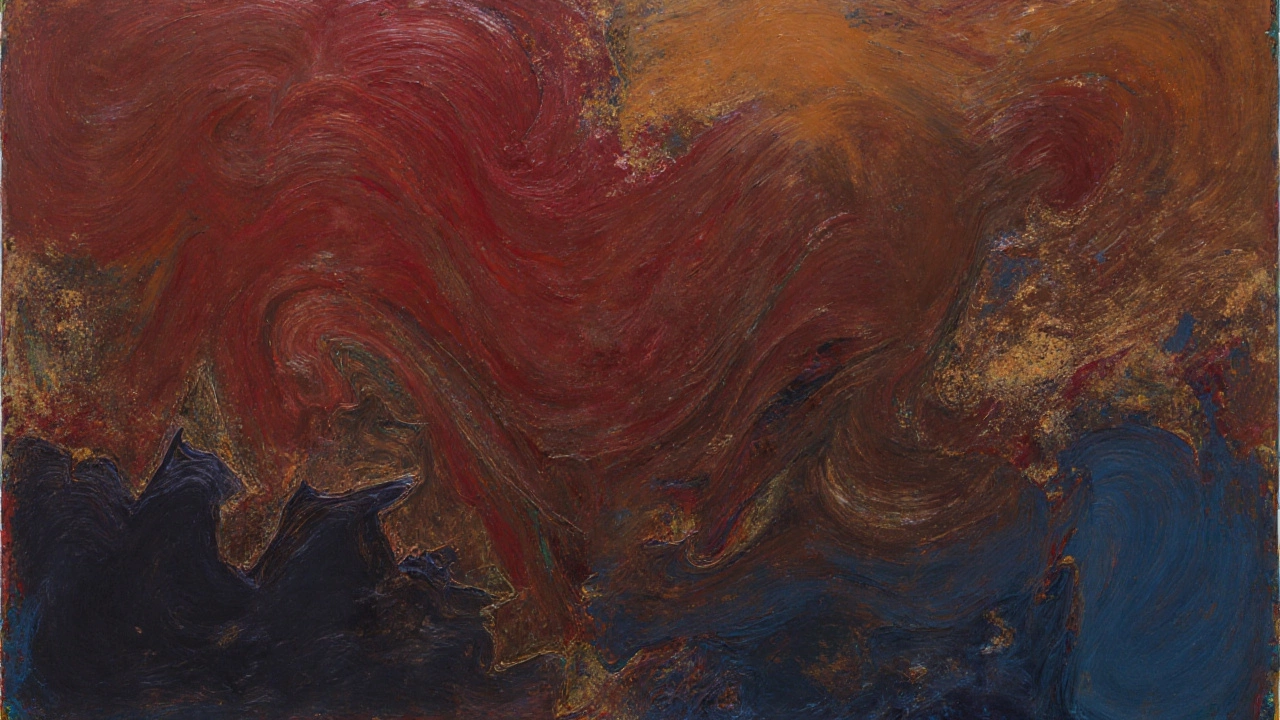
Artists don’t just randomly splash paint. They build with color, the emotional driver in abstract work—how red can feel urgent, blue calm, or yellow chaotic, shape, whether organic curves or sharp geometric blocks that create tension or harmony, line, the path your eye follows—thick, jagged, or whisper-thin—to guide attention or create rhythm, and texture, the surface quality you can almost feel, from smooth glazes to thick impasto. These aren’t just tools—they’re the language of abstraction. You won’t find a landscape in a Kandinsky, but you’ll feel the storm. You won’t see a person in a Pollock, but you’ll sense the energy. That’s the power of abstract elements working together.
Today’s artists use these elements to ask questions, not answer them. In digital art, abstract elements become pixels and algorithms. In sculpture, they turn into stacked metal sheets or poured resin. Even in street art, where graffiti once meant tags and names, you now see large-scale abstract murals that use color and form to stir emotion in public spaces. The same principles that drove early modernists like Mondrian or Rothko still drive artists today—just with new tools and new contexts. You’ll find this in posts that break down how artists mix color for emotional impact, how they build texture without brushes, and why some pieces feel chaotic while others feel balanced.
What makes abstract art confusing for many isn’t the lack of meaning—it’s the lack of a clear story. But that’s the point. Abstract elements don’t tell you what to think. They invite you to feel. And that’s why this collection of posts matters. Whether you’re trying to understand why a painting costs thousands without a single recognizable object, or you’re an artist wondering how to start working abstractly, the articles below give you real examples, real techniques, and real insight—not theory, not jargon. You’ll learn how artists use these elements to create work that sells, that moves people, and that lasts.
20 Nov 2025
Abstract art isn't about what you see-it's about what you feel. Learn what truly defines it: intention, emotion, and the power of color and form without representation.
Continue reading...