Watercolor Paper Selection Calculator
Find Your Perfect Watercolor Paper
Select your painting style, skill level, and environment to get personalized recommendations for paper weight and type to prevent ripples.
Recommended Paper
300 lb paper (640 gsm)
Best For Your Style
Cold-pressed cotton paper
Why This Works
This paper has the right balance of absorbency and strength to handle your technique while resisting ripples. It's heavy enough to stay flat during wet applications and works well with your environment.
Note: If you're using wet-on-wet techniques, consider stretching your paper for even better results.
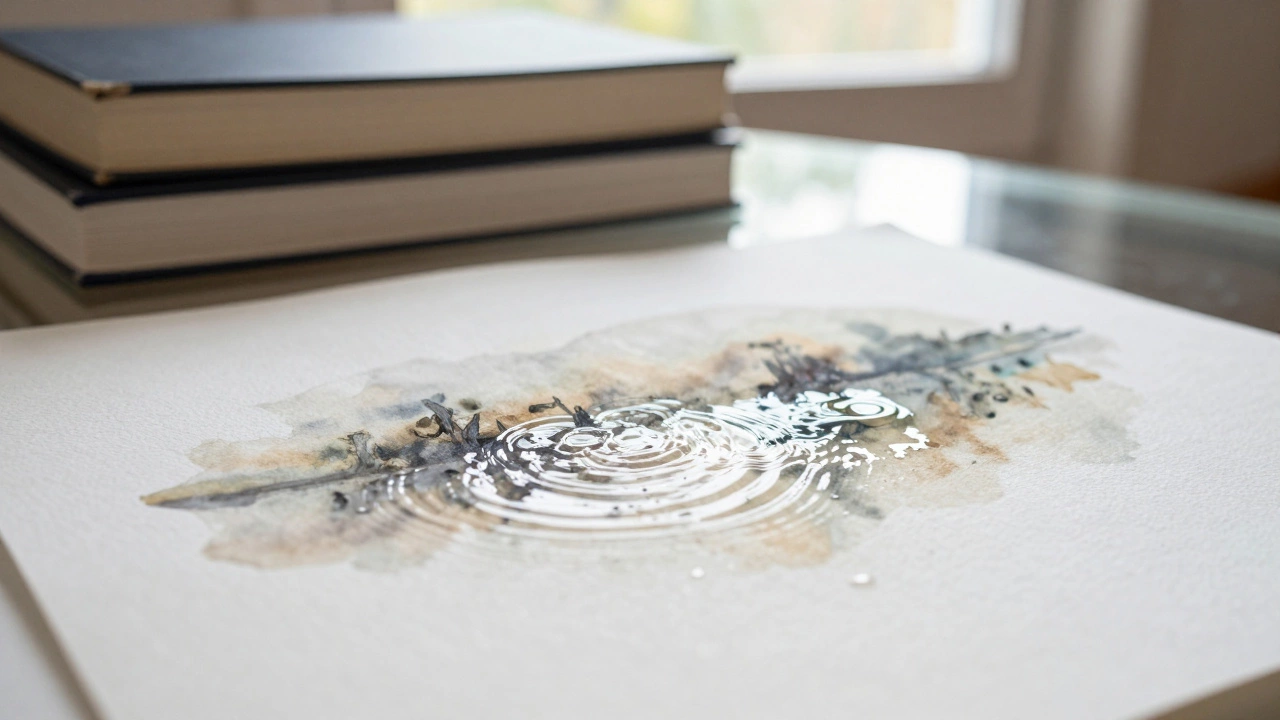
Watercolor paintings are beautiful, but those pesky ripples-those wavy, uneven bumps in the paper-are one of the most common frustrations for artists. You spend hours blending soft washes, only to see your canvas buckle like a wrinkled shirt left in the rain. It’s not a flaw in your skill. It’s physics. Water expands paper fibers, and when they dry unevenly, they curl, ripple, or buckle. The good news? You can fix it. And better yet, you can prevent it from happening again.
Why Watercolor Paper Ripples
Watercolor paper isn’t just paper. It’s made from cotton or wood pulp, and it’s designed to soak up water. That’s great for pigment flow, but bad for flatness. When you apply wet paint, the fibers swell. If one area gets more water than another-say, a heavy wash on the left and a light glaze on the right-the fibers dry at different rates. The wetter side shrinks more as it dries, pulling the paper into waves. Thinner papers (140 lb or less) are especially prone to this. Even 300 lb paper can ripple if you use too much water or skip proper stretching.
How to Fix Ripples After the Painting Is Dry
If your painting is already done and you’re staring at ripples, don’t toss it. Here’s how to flatten it safely:
- Lightly mist the back of the painting with clean water using a spray bottle. Don’t soak it-just dampen the surface evenly. You want the fibers to relax, not dissolve the paint.
- Place the painting face-down on a clean, flat surface like a glass table or a large cutting board.
- Cover it with a sheet of absorbent paper-newsprint or plain white paper towel works fine.
- Place a heavy, flat object on top. A stack of books, a piece of plywood with weights, or even a large cutting board with bricks on the corners.
- Let it sit for 24 to 48 hours. Don’t rush it. If you lift it too soon, the paper might spring back.
After this, your painting should lie flat. If you still see minor ripples, repeat the process. Some artists keep a dedicated flattening station: a glass tabletop with weights, always ready for post-drying rescue missions.
How to Prevent Ripples Before You Start Painting
The best fix is no fix. Prevent ripples before you even pick up your brush.
Stretch Your Paper
Stretching is the gold standard for professional watercolorists. It’s simple, cheap, and foolproof.
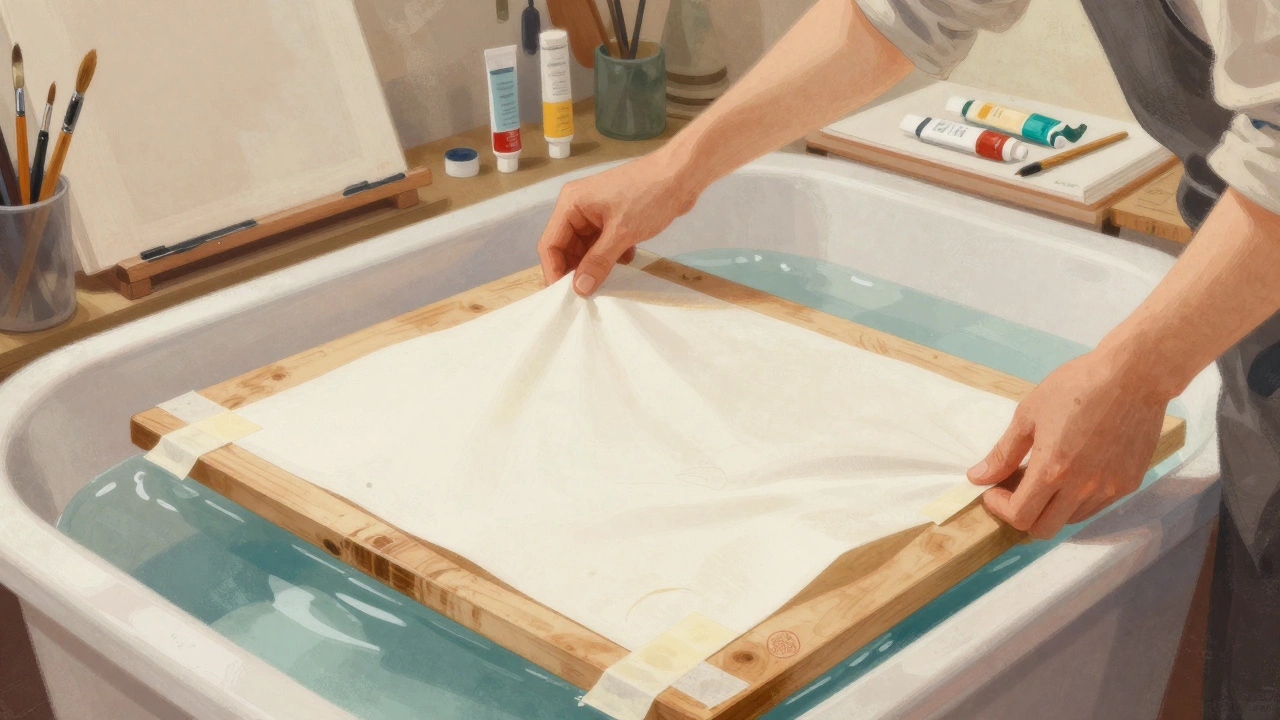
- Soak your paper in a tub of clean water for 3 to 5 minutes. Let it fully absorb water-no bubbles, no dry spots.
- Remove it and gently shake off excess water. Don’t wring it.
- Lay it flat on a rigid board-hardboard, plywood, or even a thick foam core board.
- Use artist’s tape (also called gummed paper tape) to secure all four edges. Press it down firmly. The tape should stick to both the board and the paper.
- Let it dry completely. This can take 4 to 8 hours, depending on humidity.
As the paper dries, it tightens like a drumhead. Once it’s dry, you can paint on it with heavy washes and never see a ripple. The tape holds it taut, and the fibers stay locked in place. When you’re done, just cut the tape off. The paper stays flat.
Use Heavier Paper
300 lb (640 gsm) paper is thick enough to handle most washes without stretching. It’s more expensive, but it saves time and frustration. If you’re doing large landscapes or wet-on-wet skies, 300 lb is worth the investment. 140 lb paper? Only use it for quick sketches or dry brush work.
Control Your Water
Don’t overload your brush. Load it, then tap the excess water on a paper towel before applying it to the paper. Work in layers instead of dumping water all at once. If you’re doing a large wash, wet the paper first, then apply pigment evenly. This reduces the shock to the fibers.
Tools That Help
Some tools make a real difference:
- Watercolor blocks: These are pads where the paper is glued on all four sides. You paint on the top sheet, and when it dries, you peel it off-flat and ready. Great for plein air or travel.
- Watercolor boards: These are rigid panels with a watercolor surface. No stretching needed. Ideal if you paint often and want consistency.
- Pressing boards: Some artists keep a weighted board in their studio, always ready to flatten paintings overnight.
What Doesn’t Work
Don’t try these common fixes-they’ll ruin your painting:
- Ironing: Heat can melt the sizing in the paper, causing colors to bleed or fade.
- Using a hairdryer: It dries the surface too fast, locking in ripples instead of releasing them.
- Pressing with a hot towel: Same issue as ironing. You risk staining or warping the paint layer.
Patience is your best tool. Rushing the drying process is what causes most ripples in the first place.
Real Artist Tip: The Bristol Method
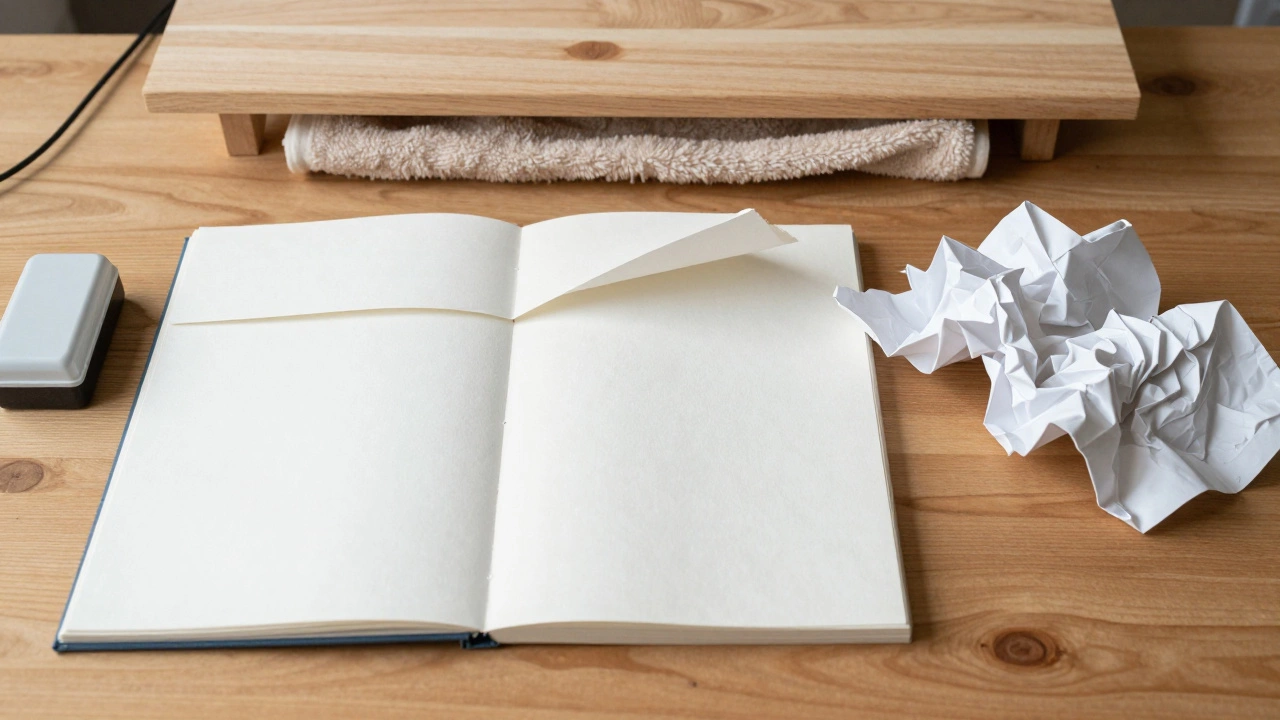
In Bristol, where the humidity swings between damp winters and dry summers, many artists use a hybrid approach. They stretch their 300 lb paper, then place it on a heated drying rack-like the kind used for ceramics-set to low heat. The gentle warmth helps the paper dry evenly without tension. You can replicate this at home with a small electric blanket set on the lowest setting under your board. Just cover it with a towel and let it dry overnight.
Final Thought: Ripples Aren’t Always Bad
Some artists intentionally use buckled paper for texture-especially in abstract or experimental pieces. If the ripple enhances the mood-like waves in a stormy sea-it can become part of the art. But if you’re going for a clean, traditional look, control the water, stretch your paper, and let patience do the rest.
Can I fix ripples in a watercolor painting without re-wetting it?
No, you can’t reliably flatten ripples without re-wetting the paper. The fibers need to relax to lie flat again. Dry pressing alone won’t work-the paper needs moisture to release the tension. But you can do it safely with a light mist and weights, as described above.
Does all watercolor paper ripple the same way?
No. 100% cotton paper, like Arches or Fabriano, absorbs water more evenly and resists buckling better than wood pulp papers. Cold-pressed paper tends to ripple less than hot-pressed because its surface texture holds water more uniformly. Heavier weights (300 lb+) ripple far less than lighter ones (140 lb or below).
How long should I leave my painting under weights?
At least 24 hours. In humid climates, 48 hours is better. Don’t check it too early. If you lift it before the fibers fully settle, the paper can spring back. Wait until the paper feels completely dry and rigid under the weights.
Can I use masking tape instead of gummed paper tape for stretching?
No. Regular masking tape won’t hold wet paper securely. It can peel off, leave residue, or tear the paper edge. Always use artist’s gummed paper tape-it activates with water and bonds tightly to both the board and the paper. It’s designed for this exact purpose.
Is stretching necessary if I use watercolor blocks?
No. Watercolor blocks are pre-stretched. The paper is glued on all four sides, so it stays flat while you paint. You only need to remove the top sheet after you’re done. They’re perfect for beginners or artists who want to skip the stretching process.
Next Steps
If you’re just starting out, buy a 300 lb watercolor block and try painting on it without stretching. You’ll see the difference immediately. If you’re ready to level up, invest in a stretching board and gummed tape. Practice stretching one sheet, then paint a full landscape on it. Compare it to an unstretched piece. You’ll never go back.
Watercolor is about control and surrender. You control the brush, the water, the paper. But you let the pigment flow. Ripples happen when you fight the paper instead of working with it. Once you learn how to prepare it right, your paintings will lie flat-and so will your stress.
