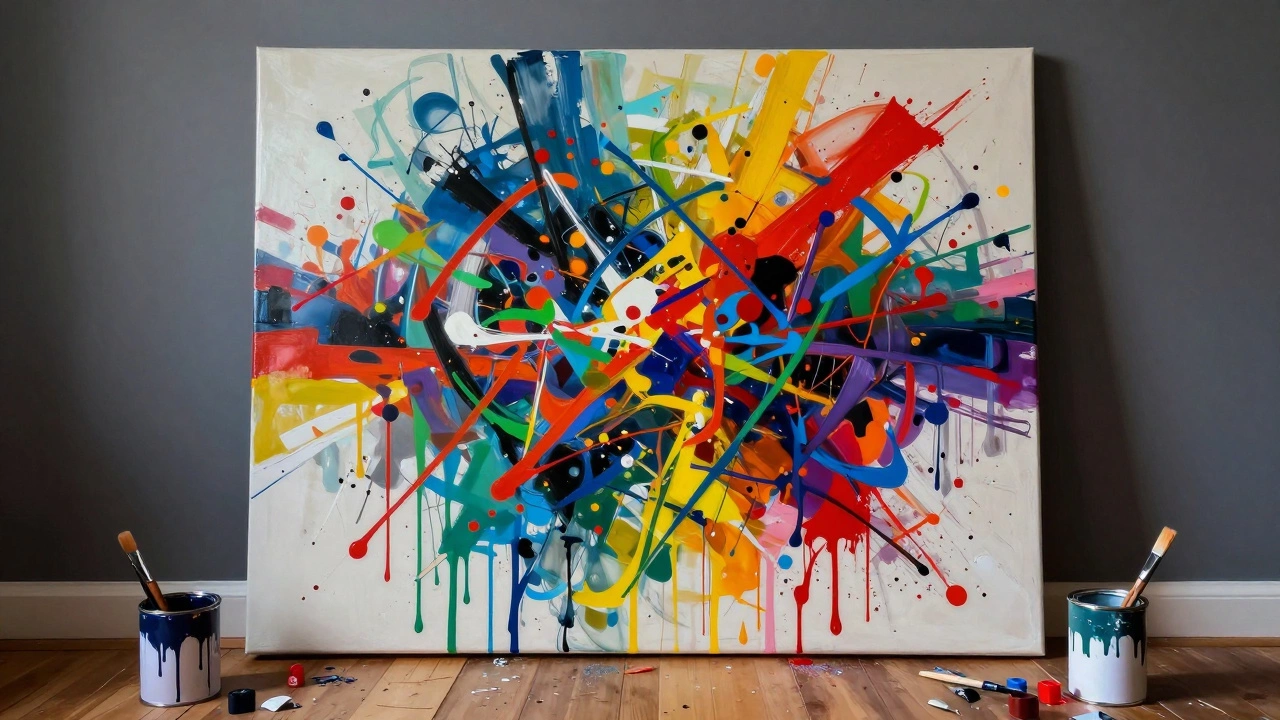
Modern art isn’t just about pretty pictures or strange shapes. It’s a rebellion. A loud, messy, sometimes confusing shout against everything art had been for centuries. If you’ve ever stood in front of a Picasso painting or a Pollock drip and thought, ‘My kid could do that’, you’re not alone. But that’s exactly the point. Modern art doesn’t want to be beautiful in the old way. It wants to make you question what art even means.
Breaking the Rules of Tradition
| Traditional Art | Modern Art |
|---|---|
| Accurate representation of people, landscapes, or scenes | Abstraction, distortion, or complete rejection of realism |
| Painted to please patrons or the church | Created for personal expression or social critique |
| Followed strict rules of perspective and anatomy | Ignored or broke those rules on purpose |
| Art was a craft, often passed down through apprenticeships | Art became a radical act of individual vision |
Before the 1860s, art was mostly about skill. Artists trained for years to copy nature perfectly. A portrait had to look like the person. A landscape had to feel real. But then came photography. Suddenly, anyone could capture a perfect image. Why should painters spend years learning perspective when a camera could do it in seconds?
That’s when modern art began. Artists like Monet started painting how things felt, not how they looked. He painted water lilies in shifting light, not as static objects. His brushstrokes were loose, colors bold. Critics called it unfinished. Today, it’s seen as revolutionary.
The Main Idea: Art as an Idea, Not Just an Image
The main idea of modern art is simple: art is about meaning, not mimicry. It shifted from showing you the world to making you think about it. A painting wasn’t just a window into a scene-it became a mirror for ideas.
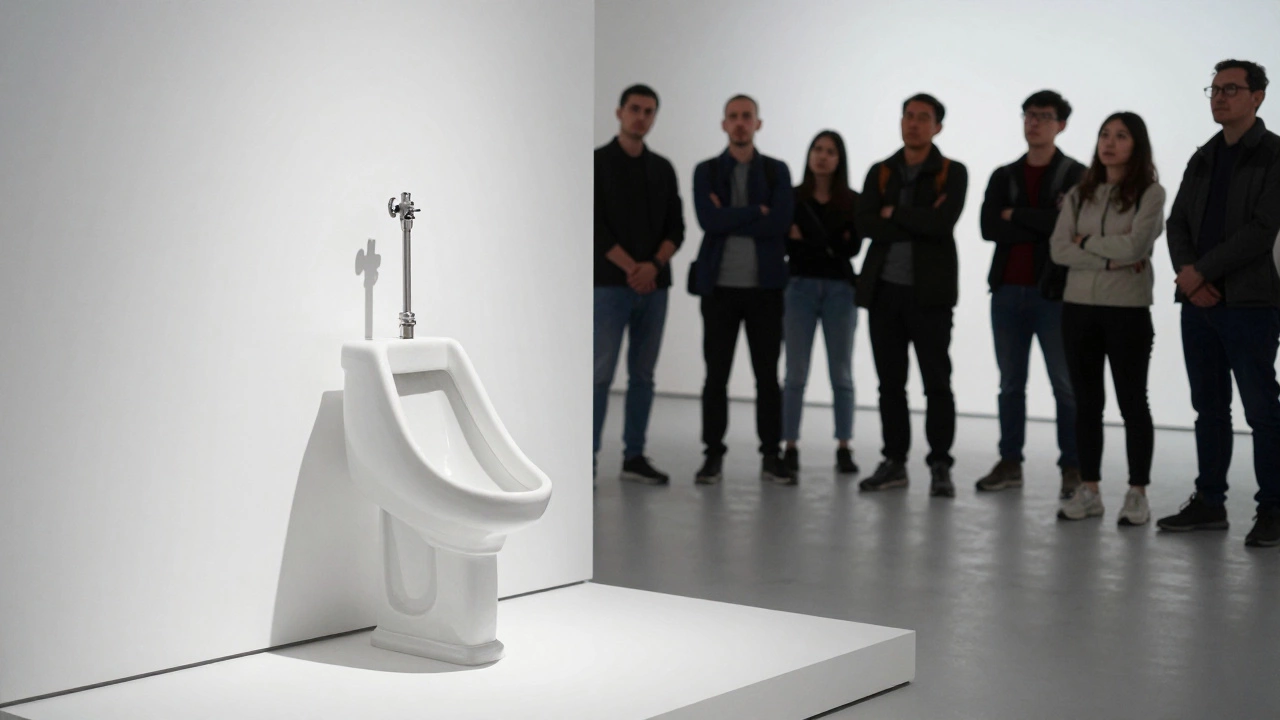
Take Duchamp’s Fountain-a porcelain urinal signed ‘R. Mutt’ and presented as art in 1917. Was it art? Many said no. But that question was the art. Duchamp didn’t care if it looked good. He cared if you’d stop and ask: Who decides what art is?
That’s the heartbeat of modern art. It’s not about talent. It’s about challenge. It asks: Why do we value certain things? Who gets to say what’s beautiful? What if the everyday is sacred? What if chaos has meaning?
Modern Art Reflects a Changing World
Modern art didn’t appear in a vacuum. It grew alongside industrialization, war, urbanization, and new science. Freud was exploring the unconscious. Einstein was rewriting time and space. Cities were exploding with noise and speed.
Artists responded. Cubists like Braque and Picasso broke faces into geometric shards-not because they couldn’t draw, but because they wanted to show multiple viewpoints at once, like how we experience reality now, fragmented by media and motion.
Expressionists like Munch painted inner torment. His The Scream isn’t a landscape-it’s a scream you can feel in your chest. It’s not about what he saw. It’s about what he felt.
Even abstract artists like Kandinsky believed color and shape could carry emotion without any recognizable object. He said art should speak to the soul like music does. No figures needed. Just lines, dots, and hues.
Why Modern Art Still Matters Today
Modern art didn’t die. It became the foundation for everything after it. Contemporary art-what you see in Tate Modern or the Guggenheim today-is just modern art’s next chapter.
Think of Banksy. His stenciled protest images aren’t just graffiti. They’re modern art in action: using public space to question power, consumerism, and war. He doesn’t need a gallery. He uses walls. That’s the modern art spirit alive: no permission needed.
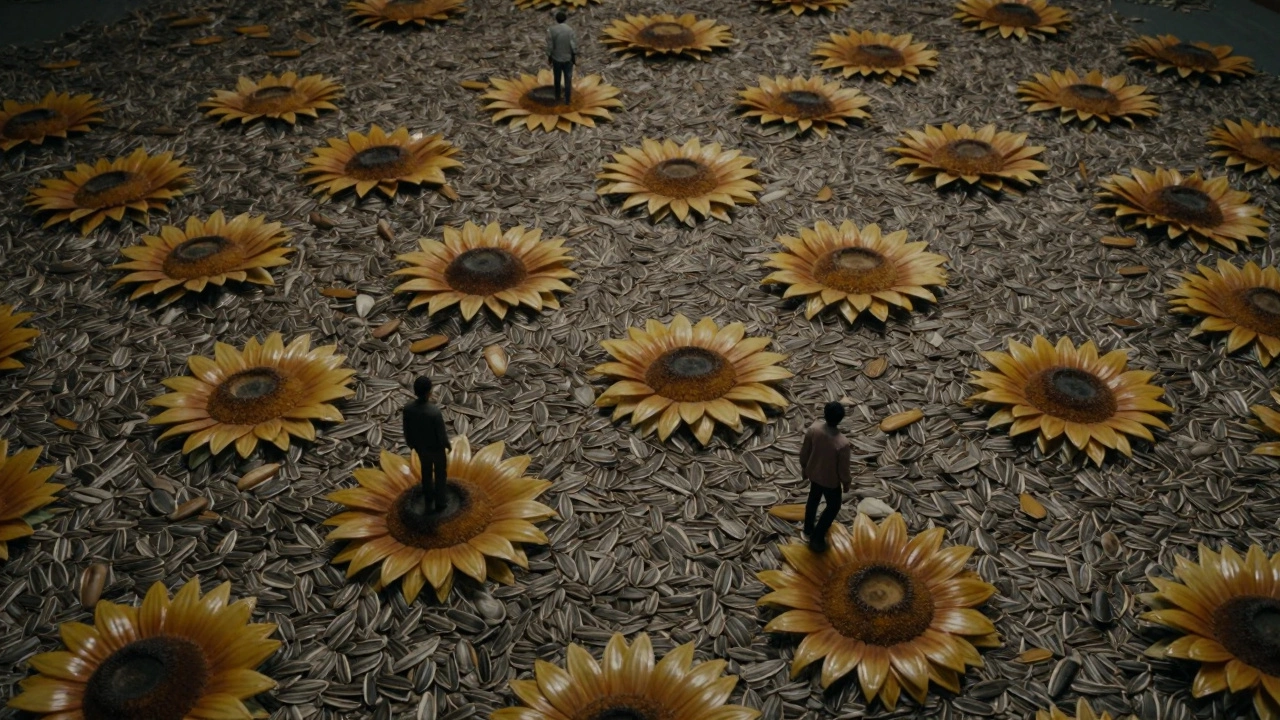
Or consider Ai Weiwei’s Sunflower Seeds-a floor covered in 100 million hand-painted porcelain seeds. It looks like a simple installation. But it’s about mass production, individuality in China, and the cost of conformity. The idea is the artwork. Not the seeds themselves.
Modern art teaches us that creativity isn’t about perfection. It’s about honesty. About asking hard questions. About refusing to accept the status quo.
It’s Not About Understanding-It’s About Feeling
You don’t need to ‘get’ modern art to appreciate it. You don’t need to know the theory behind a Rothko. You just need to stand in front of it and let it do something to you. Maybe it makes you feel calm. Maybe it makes you uneasy. Maybe it makes you angry. That’s success.
Modern art doesn’t give you answers. It gives you space to find your own. It’s not a puzzle to solve. It’s a conversation to join.
That’s why museums still fill up. People don’t come to admire technique. They come to feel something real. To be reminded that art can be dangerous. That it can change how you see the world.
Modern Art Is a Mindset, Not a Style
There’s no single style that defines modern art. It’s not just Cubism, Surrealism, or Fauvism. Those are just chapters. The real thread is the attitude: question everything. Reject easy answers. Make the familiar strange.
It’s why a can of soup by Warhol can be as powerful as a Rembrandt. It’s not about the paint. It’s about the idea: What if mass-produced objects are just as worthy of attention as sacred images?
Modern art doesn’t ask you to like it. It asks you to care. To think. To wonder. And that’s why, over 150 years later, it still has power.
Is modern art just random splatters and nonsense?
No. While some works look chaotic, they’re rarely random. Even Jackson Pollock’s drips were carefully controlled. He moved around the canvas, used different paints, and layered them intentionally. The chaos is deliberate-it’s meant to express energy, emotion, or subconscious thought. The value isn’t in the look, but in the intention behind it.
Why do people say modern art is ‘not real art’?
Because it breaks centuries of tradition. For hundreds of years, art was judged by skill-how well it copied nature. Modern art rejects that. It values ideas over technique. That’s threatening to people who believe art must be ‘beautiful’ or ‘well-made.’ But art has always evolved. What was once shocking-like Impressionism-became accepted. Modern art is just the next step.
Can anyone call anything modern art?
Technically, no. Calling a doodle ‘modern art’ doesn’t make it so. Real modern art comes from a context: it responds to history, culture, or philosophy. It’s not just weird for the sake of being weird. It’s a conversation with the past. That’s why Duchamp’s urinal mattered-it challenged who gets to decide what art is. A random coffee stain doesn’t carry that weight.
Do I need to study art history to understand modern art?
Not to feel it. But it helps. Knowing that Picasso was reacting to African masks, or that Kandinsky was inspired by music, adds layers. Still, you don’t need a degree. Stand in front of a painting. Notice how it makes you feel. Ask yourself why. That’s the heart of modern art. The history just deepens the experience.
Why is modern art so expensive?
Because it changed art forever. Works by Picasso, Matisse, or Pollock didn’t just sell-they redefined what art could be. Their ideas became cultural landmarks. The price isn’t for the paint or canvas. It’s for the shift in thinking they caused. A $100 million Pollock isn’t a painting. It’s a symbol of how art broke free from tradition.
Where to Go Next
If you want to feel modern art-not just read about it-visit a local gallery. Look at one piece for five minutes. Don’t read the plaque first. Just look. What do you notice? What do you feel? Then read the label. See if it matches your reaction.
Modern art isn’t about knowing the right answer. It’s about learning to ask better questions. And that’s why it still matters.