Modern Art Concepts Quiz
1. What was the primary motivation for artists to abandon realistic representation?
2. Which movement is most associated with showing multiple perspectives of a single subject simultaneously?
3. What was the significance of Marcel Duchamp's "Fountain"?
4. How did Surrealist artists like Dalí and Magritte challenge reality?
5. What was a key innovation in materials and techniques during modern art?
Results
Modern art isn’t just about paintings that look strange or sculptures that don’t resemble anything real. It’s a radical shift in how artists think about the world-and how they show it. Between the late 1800s and the mid-1900s, artists broke away from centuries of tradition. They stopped trying to copy reality and started asking bigger questions: What is art for? Can color express emotion? Does form have to be recognizable? These questions led to movements that still shape how we see art today.
Rejection of Realism
Before modern art, most paintings showed clear scenes: landscapes, portraits, religious stories. Artists trained for years to get every shadow, fold of fabric, and perspective just right. But around the 1870s, that changed. Painters like Claude Monet started painting how light changed over time, not how things looked at one moment. His Water Lilies series isn’t about the pond-it’s about the shimmer, the reflection, the feeling of being there. This wasn’t sloppy work. It was a new kind of truth.
Photography made realism less necessary. If a camera could capture a perfect likeness, why should a painter try? Instead, artists turned inward. They began exploring emotion, perception, and even subconscious thought. Realism didn’t disappear-it just stopped being the only goal.
Abstraction
Abstraction is one of the most important ideas in modern art. It means letting go of recognizable shapes. Wassily Kandinsky is often called the first artist to make completely abstract paintings. In 1910, he painted works with swirls of color and lines that didn’t represent anything from the real world. He believed color and shape could move people the same way music does. A red triangle doesn’t need to be a sign or a roof-it can feel like anger or energy.
Abstraction didn’t come out of nowhere. It grew from earlier experiments. Paul Cézanne broke objects into geometric shapes. Picasso and Braque took that further with Cubism, showing multiple views of a subject at once. Soon, artists like Kazimir Malevich were painting pure black squares on white backgrounds. The meaning wasn’t in what you saw-it was in what you felt.
Expressionism
Expressionism flips realism on its head. Instead of showing the world as it is, expressionist artists show how they feel about it. Think of Edvard Munch’s The Scream. The sky isn’t red because of sunset. It’s red because the person inside the painting is terrified. The lines twist. The face distorts. The emotion is the subject.
German expressionists like Ernst Ludwig Kirchner and Emil Nolde used bold, unnatural colors and jagged brushstrokes. They weren’t painting landscapes-they were painting anxiety, alienation, and raw human feeling. Their work came from a time of rapid industrial change, war, and social upheaval. Art became a way to scream when words failed.
Cubism
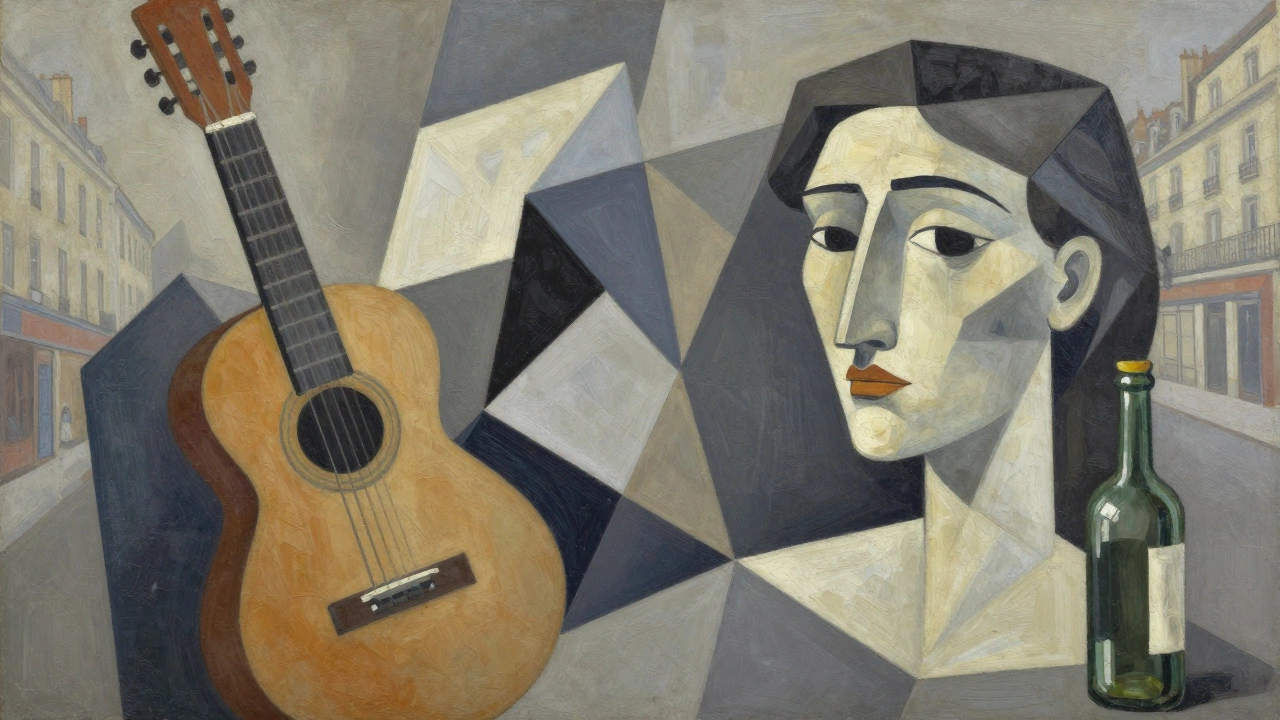
Cubism didn’t just change how things looked-it changed how you see them. Picasso and Braque started cutting up objects and rebuilding them on canvas from multiple angles. A guitar in a Cubist painting might show the front, side, and top all at once. It’s not a mistake. It’s a new way of understanding space and form.
They were influenced by African masks and Iberian sculpture, which didn’t follow Western rules of perspective. Cubism told viewers: don’t just look at the object. Think about how you experience it. Your eye moves around it. Your mind pieces it together. That’s more real than a single fixed view.
Surrealism
Where Cubism broke form, Surrealism broke logic. Led by André Breton, Surrealist artists wanted to tap into dreams, the unconscious, and irrational thought. Salvador Dalí’s melting clocks aren’t about time-they’re about how time feels when you’re dreaming. René Magritte painted a pipe with the words “This is not a pipe.” He wasn’t confused. He was showing how language and images lie to us.
Surrealists used strange combinations: a lobster on a telephone, a face made of clouds. They didn’t try to explain them. They wanted to unsettle you, to make you question what’s real. Their work was deeply influenced by Freud’s theories about the mind. Art became a doorway into the hidden parts of ourselves.
The Role of the Artist
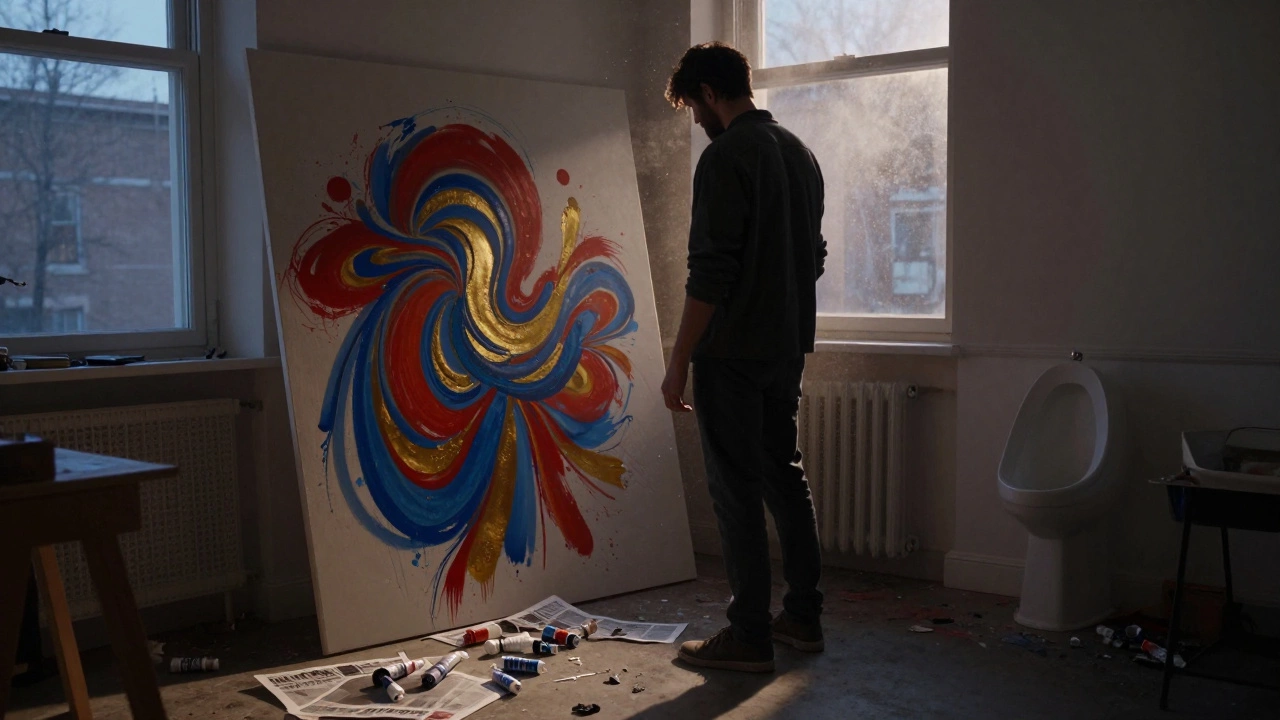
In traditional art, the artist was a skilled craftsman. In modern art, the artist became a thinker, a provocateur, even a rebel. Marcel Duchamp turned a urinal into a work of art called Fountain in 1917. He didn’t make it. He chose it. That simple act changed everything. It said: art isn’t about making something beautiful. It’s about asking questions.
Modern artists stopped waiting for approval from academies or patrons. They held their own exhibitions, wrote manifestos, and challenged the public. Art became a conversation, not a decoration. The artist’s idea mattered more than the brushstroke.
Materials and Techniques
Modern artists didn’t stick to oil paint and canvas. They used anything that could express their ideas. Kurt Schwitters glued trash into collages. Pablo Picasso pasted newspaper into his paintings. Jackson Pollock dripped paint onto huge canvases laid on the floor. Yves Klein used blue pigment and human bodies to make prints.
These weren’t gimmicks. They were deliberate choices. Using industrial materials meant connecting art to everyday life. Using the body meant making art physical, visceral. The medium became part of the message.
Modern Art Isn’t Just About Looking
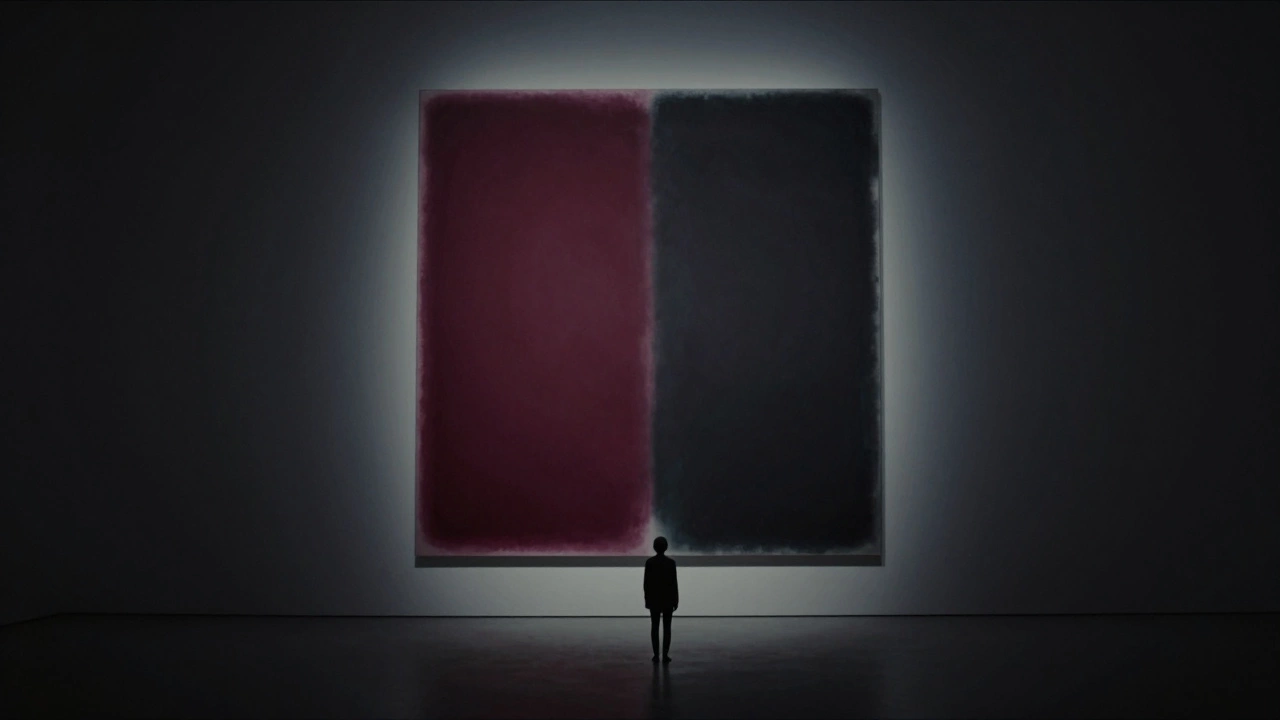
Modern art asks you to do more than admire. It asks you to think. To feel. To question. A Rothko painting might look like two rectangles of color. But if you stand in front of it long enough, you start to feel the weight of silence, the ache of loneliness. That’s not luck. That’s intention.
Modern art doesn’t have one rule. It has one goal: to break open the way we see. Whether it’s through a fractured face, a splash of paint, or a bathroom fixture on a pedestal, modern art says: there’s more to reality than what meets the eye.
What makes art "modern"?
Art is called "modern" when it breaks from traditional rules of representation, especially those developed before the 19th century. Modern art focuses on personal expression, experimentation with form and materials, and ideas over realism. It emerged in the late 1800s and lasted through the mid-1900s, with movements like Impressionism, Cubism, and Surrealism leading the way.
Is abstract art really art if it doesn’t look like anything?
Yes. Abstract art isn’t about depicting objects-it’s about expressing emotion, energy, or ideas through color, shape, and line. Artists like Kandinsky and Mondrian believed art could communicate like music: without words or images. A swirl of blue might not look like the ocean, but it can feel like calm. The value isn’t in recognition-it’s in reaction.
Why did artists stop painting realistic scenes?
Photography took over realistic representation, so artists turned to what cameras couldn’t capture: emotion, perception, and inner experience. Movements like Impressionism showed how light changes. Expressionism showed how fear or joy distorts reality. Cubism showed multiple viewpoints at once. They weren’t giving up skill-they were expanding what art could do.
Can modern art be understood without training?
Absolutely. Modern art doesn’t require a degree. It asks you to feel, not analyze. Stand in front of a painting. What do you notice? What does it make you think or feel? That’s the first step. Background helps, but emotion and curiosity matter more. Many people connect with Rothko’s colors or Pollock’s energy without knowing any art history.
How did technology influence modern art?
Technology didn’t just give artists new tools-it changed their worldview. The invention of portable paint tubes let Impressionists paint outdoors. Photography freed painters from copying reality. Industrial materials like enamel and metal inspired collage and assemblage. Even mass production influenced artists like Duchamp, who used ready-made objects to question originality and value.
